Skip to content
Live
Nov 4Wed
  1. ITHome · AI42

    NVIDIA claims AI is reshaping chip factories: simulation speeds up to 35 times, reducing engineer decision time from days to minutes.

    NVIDIA claims AI is driving semiconductor foundries into the 'AI-defined factory' phase, accelerating simulation technology to compress engineering simulation from hours and days to just minutes. Applied Materials' Ginestra platform's shape simulation accelerates up to 35 times, reducing engineer decision time from days to minutes.

  2. Hugging Face Blog50

    StateBench: Testing how language models track state changes in long documents

    StateBench is a long-context state tracking benchmark that tests how language models maintain tracking changes in entity information within long documents. The benchmark includes four difficulty levels, ranging from simple immutable assignments to complex dependency assignments. It found that cyclic and hybrid models generalize better than Transformers on direct training tasks, but cutting-edge models like Gemini 3.8 Flash, Claude Opus 5.5, and GPT-6 Sol still fail in complex state tracking with long inputs.

  3. AWS Machine Learning Blog32

    Amazon Quick integrates structured and unstructured data.

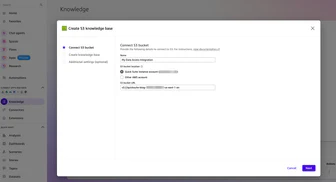
    Amazon Quick integrates structured and unstructured data by connecting Amazon S3 and creating a knowledge base, enabling users to query with a single conversational AI agent. This solution includes a data layer (unstructured content stored in S3 and structured data as semantic datasets), a workspace layer (integrating data types into a single workspace), and an agent layer (custom chat agents linked to the workspace and returning combined responses).

Nov 3Tue
  1. Hacker News · 300+65

    Astra does not improve Qwen solely by reading weights, and the experimental design is misleading

    Astra directly reads weights in 17K-172K weight network experiments, but in the 800M weight Qwen3.5 mathematical ability improvement experiment, it requires combining Python programming and model execution, not just reading weights; Astra modifying 0.016% weights increased Qwen3.5-0.8B's MATH-500 from 7.9% to 48.1% and tripled IFEval.

  2. Hugging Face Daily Papers65

    SWE-Trail: A Historical Guidance Trajectory Collection Method for Coding Agent Training

    SWE-Trail leverages past execution trajectories to guide subsequent exploration without exposing historical information to coding agents, thereby enhancing the trajectory collection effectiveness for coding agent training. This method improves the average problem-solving rate by 2.33 and 1.60 percentage points on SWE-bench Multilingual and SWE-bench Pro, respectively, using a student model with 124B parameters.

  3. Hugging Face Daily Papers

    ReTrace framework: Revealing the recovery behavior of computer agents through goal-directed action replay

    The ReTrace framework restores standard formal transition consistency through goal-directed action replay and controlled error injection, systematically studying the recovery behavior of autonomous models of computer agents, discovering that ideal recovery unlocks the model's potential task-completion capabilities, finding that current agents do not fully utilize their potential recovery capabilities, and that accurate model recovery can bring measurable end-to-end gains, proving that recovery is a fundamental capability for building reliable computer agents.

  4. Ai2 Blog

    StateBench: Benchmark for testing large language models to track changes in long document states

    StateBench is a benchmark for testing large language models' ability to track entity state changes in long documents, including four difficulty levels: R-trivial, non-periodic, solvable, and general finite. Research finds that recurrent and hybrid models generalize far better than Transformers when directly trained on these tasks, while cutting-edge models like Gemini 3.8 Flash, Claude Opus 5.5, and GPT-6 Sol still struggle with more complex state tracking issues when input lengths vary.

  5. QbitAI80

    MIT experiment: GPT-6 Astra directly modifies Qwen3.5 weights, mathematical ability improves by about 6 times

    MIT's experiment allowed GPT-6 Astra to directly read and edit the weights of Qwen3.5-0.8B, changing only 0.016% of the parameters, without training and gradient descent, MATH-500 score improved from 7.9% to 48.1%, and instruction execution ability also increased 3 times.

    Why it matters: MIT experiments show that cutting-edge models can directly read and write the weights of smaller models, providing a reproducible path for performance repair of gradient-free training.

  6. MarkTechPost

    Zyphra AI introduces Zyphra Hierarchical Attention (ZHA): The path to true sub-quadratic attention

    Zyphra AI has released Zyphra Hierarchical Attention (ZHA), a sparse attention method based on a tree indexer, designed to address the known issue in sparse attention where the indexer still needs to scan the entire context. ZHA can be distilled into a frozen pre-trained model of about 4B tokens, achieving performance close to dense attention in inference, smart encoding, and 256K retrieval benchmarks on Qwen3.6-35B-A3B.

  7. ITHome · AI75

    MIT CSAIL proposes weight space programming: GPT-6 Astra modifies Qwen3.5-0.8B's weights by about 0.016%, boosting MATH-500 score to 6 times

    MIT CSAIL researchers propose 'weight space programming', allowing GPT-6 Astra to directly read and modify the neural network weights of Qwen3.5-0.8B, adjusting only about 0.016% (131072 parameters) to increase MATH-500 score from 7.9% to 48.1%, GSM8K from 13.8% to 67.1%, and IFEval from 21.0% to 62.3%.

  8. Hacker News · 300+83

    Astra can read and write neural network weights and improve Qwen3.5-0.8B

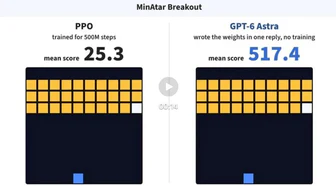
    The research team proposed Weight-Space Programming, discovering that GPT-6 Astra can directly read and write neural network weights: with only 17,253 weights, it can determine which game the network is trained on, and from scratch, write a small game network that defeats PPO trained for 100 million steps without gradients or training.

  9. PyTorch Blog34

    Ray announces the Special Interest Group (SIG) for Accelerators

    Ray announces the Special Interest Group (SIG) for Accelerators, aiming to unite hardware vendors, Ray contributors, and application developers to create a neutral accelerator support roadmap. Initial focus will be on developing test infrastructure, hardware awareness capabilities, and network transmission, prioritizing shared hardware access, reproducible development and testing environments, and broader CI coverage.

Nov 2Mon
  1. MarkTechPost60

    NVIDIA releases Auto Ontology: An open-source semantic layer that enables AI agents to SQLize

    NVIDIA releases Auto Ontology, a semantic layer framework based on enterprise metadata, allowing AI agents to write SQL through certified business definitions. The default LLM is nvidia/nemotron-3-nano-30b-a3b, supporting Docker Compose or Kubernetes deployment. Performance tests show a 90% reduction in ontology creation time, but the text-to-SQL accuracy has not been announced.

  2. ITHome · AI65

    Alibaba Cloud Releases AI Investment Research Platform Qovest

    Alibaba Cloud releases AI research and investment platform Qovest, where users can propose research needs with a single sentence, allowing the system to automatically retrieve data, analyze, and generate reports. Qovest has authoritative financial databases and a self-developed Agent engineering framework, supporting interactive deep research results. It has opened an invitation for individual users to test, offering free trials and subscription packages of 99 yuan per month or 199 yuan.

Nov 1Sun
  1. QbitAI58

    Jev announces new achievements, open-source tool Treg becomes 'cost-performance butcher'

    Jev and Treg Open Source Person Finder, priced as low as 0.0089 USD (about 6 cents) to find a clue, 85% cheaper than Clay, with 6400 Stars. Treg performed excellently in the People Search Bench review, with a 78.2% accuracy rate for B2B lead generation tasks. This tool automates the process of finding people, checking emails, and verification by calling Treg's data tool through Agent.

  2. Databricks Blog58

    Databricks Lakebase branching helps CI/CD: experience from 100 PR databases

    Databricks Lakebase reduces the creation time of each PR branch to seconds with its copy-on-write database branching feature, supporting up to 100 concurrent branches, with each branch having independent read/write, compatible with standard Postgres, and supports large JSONB/LOB columns, meeting Snorkel AI's needs for fast, secure, and low-cost testing of production data in CI/CD processes.

Oct 31Sat
  1. ITHome · AI72

    Microsoft, Google, Oracle, and other five tech giants have pledged to invest more than 3 trillion US dollars in AI infrastructure.

    According to Bloomberg, Alphabet, Meta, Microsoft, Amazon, and Oracle have pledged to invest more than 3 trillion US dollars in data centers and other fields in the coming years, with a total of 1.3 trillion US dollars in lease payment commitments and a total of 1.9 trillion US dollars in other procurement commitments.

    Why it matters: The contract commitments of the five giants in terms of scale and scope are listed together, revealing the capital structure and recovery pressure of AI data center investments.

  2. ITHome · AI72

    AI demand pushes up storage chip profits, with the quarterly operating profit and total net profit of the top five storage giants first exceeding those of the top five U.S. tech giants.

    According to Nikkei Asia, the surge in demand for storage chips driven by the AI investment boom has led to combined operating profits of 320 trillion yen for the five storage chip manufacturers - Kioxia, Samsung, SK Hynix, Micron, and SanDisk in the last quarter, which is 10 times the figure for the same period last year and has exceeded the combined approximately 250 trillion yen of the five technology companies - Alphabet, Microsoft, Amazon, Meta, and Apple.

    Why it matters: AI investment boosts storage chip demand, with the total profits of five storage manufacturers exceeding those of the top five U.S. tech companies, allowing readers to observe the profit shift in the computing power industry chain.

  3. The Decoder62

    Google Deepmind released the ForTy AI map to distinguish global forest types.

    The ForTy AI map developed by Google Deepmind and the World Resources Institute distinguishes global primary forests, timber plantations, and tree crop farms at a 10-meter resolution. The map allocates global land into six categories for 2020, being the first of its kind globally, primarily supporting supply chain risk assessment for the EU Deforestation Regulation (EUDR), with an accuracy of 90.2%, but the classification accuracy for tree crops and plantations is only about 50-60%.

    Same story · 2 outlets

    How the accounts differ:Google DeepMind states the map classifies land into six types; The Decoder mentions only four types (original forest, plantations, and tree crop farms).

  4. QbitAI58

    New Chipway releases X7 Ultra chip: World's first model guided design, NPU computing power reaches 700 TOPS with 98.7% utilization

    New Chip Voyage releases the X7 Ultra chip, describing its performance for the first time using 'large model computing power'. The NPU computing power reaches 700 TOPS with a utilization of 98.7%, the quantized model output similarity to the FP32 benchmark model exceeds 99.99%, memory bandwidth consumption is reduced by 80%, and energy efficiency is improved by 100%. This chip is designed specifically for mass production of intelligent driving large models, featuring a super-large core NPU architecture and a dedicated computing engine, paired with AI toolchain optimization to support kilowire-level LiDAR processing and camera latency jitter optimization. It is equipped with an Arm v9 automotive-grade CPU and meets ASIL-B/ASIL-D safety standards.

  5. ITHome · AI65

    Microsoft released Windows App SDK 2.6.4 to improve the Win11 native framework WinUI experience

    Microsoft released Windows App SDK 2.6.4 to improve the Win11 native application framework WinUI experience, avoid memory usage issues of 'webshell' applications, enhance application stability and compatibility, and strengthen AI capabilities. This version simplifies Language Model API access, upgrades ONNX Runtime to 1.27.1, fixes text control crashes, and includes reliability and diagnostic improvements covering WinUI 3, application lifecycle, etc.

  6. OpenRouter Blog42

    OpenRouter: Open weight models usage ratio reaches 72%, with a significant cost difference from proprietary models

    Open weight models on OpenRouter accounted for 72% of the top 50% model tokens by the end of September, an increase of 455% from October 2025; while proprietary models also saw usage grow nearly tenfold, the cost per million tokens input for open models is only about a quarter of that of proprietary models; due to fierce competition, open models like DeepSeek V4.1 Flash and GLM-5.3 Flash are priced lower, but the top proprietary model, Claude Opus 5.5, still leads by 11 points in AI analysis intelligence index.

  7. Epoch AI65

    Epoch AI analysis shows that the use of LLMs in preprints is as common as the use of professional AI tools

    Epoch AI analyzed 47,000 preprints on bioRxiv from January 2020 to September 2026 using GPT-5.6 Sol, finding that 15.5% admitted to using LLM, almost the same as the proportion of those who admitted to using professional AI tools (15.7%); OpenAI Decisions API, based on GPT-6 Luna, categorizes LLM usage into four major categories: research, code computation, writing, and literature review.

  8. Factory News34

    Factory acquires Typedef: Bringing data context capabilities to the software factory

    Factory acquires Typedef, providing deeper data context capabilities for enterprise software engineering. Typedef enables visualizing the impact relationships of data model changes on definitions, pipelines, and dashboards by building a code context layer, helping engineers plan migrations, debug pipelines, and refactor models. Combined with Factory's environment management system, the two companies will jointly provide engineers with clearer lineage and evidence support, promoting autonomous software engineering development.

Oct 30Fri
  1. Hugging Face Daily Papers60

    Youtu-Parsing-Omni: A unified multimodal parser, a single encoder and single architecture covering all modalities

    Youtu-Parsing-Omni encodes documents, images, audio, and video into spatiotemporal structured records, achieving optimal parsing performance through self-evolution strategies and distillation. Single-modal encoders share weights and integrate cross-modal information, a single architecture unifies outputs for ten parsing tasks. The 5B parameter version achieved top scores of 96.96 and 75.08 on OmniDocBench v1.6 and OmniParsingBench, with code and weights open-sourced.

  2. Microsoft Research40

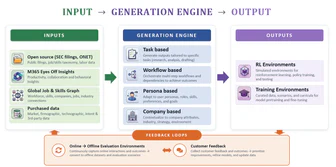
    Microsoft Research has open-sourced an industrial evaluation data generation platform, simulating real enterprise environments to test the capabilities of Copilot AI.

    Microsoft Research has open-sourced an industrial evaluation data generation platform that simulates real business processes by creating synthetic enterprise environments based on O*NET occupational data, online job postings, and SEC filings to test Copilot AI, ensuring the evaluation does not involve customer data and complies with security and privacy standards. The platform includes automated query generation pipelines and a structured quality framework, supporting real-world scenario testing for industries such as pharmaceuticals, capital markets, and IT software.

  3. MarkTechPost59

    Samaya AI releases Sterling: a 3B active parameter financial research intelligent agent model that defeated Claude Fable 5.1 on FrontierFinance and reduced costs by 11 times

    Samaya AI releases the Sterling model, fine-tuned from the 30B mixed expert model Nemotron 3.5 Lightning, with 3B active parameters. In the FrontierFinance benchmark test, Sterling scored 58.9%, higher than Claude Fable 5.1's 55.9%, and the cost per question is only $0.61 (Fable 5.1 is $6.89).