deepagents-code v0.1.85 has been released
deepagents-code v0.1.85 released, fixing a bug that suppressed ownership warnings during root installation and improving performance by avoiding resetting transcription history upon message insertion.


vLLM v0.32.0rc1 released with dependency updates, removing the NVFP4 scaling work bypass; this version does not explicitly mention parameter size, benchmark scores, speed multipliers, price, context length, or availability.
Claude Opus 5.5 Max developed the Tree Appreciator game in 3 hours and 7 minutes; it is a slow-paced spot-the-difference game that generates two 3D trees for players to find differences, featuring music, animations, and an achievement system. Players can drag and zoom to observe, use limited hints, and earn points, leaves, and specimen entries for each pair of trees completed.
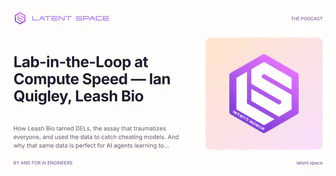
Leash Bio optimizes DNA encoding library (DELs) data collection by attaching dozens of barcodes on molecules, its AI agents are on par with Boltz on public benchmarks, and has released a verifiable scientific reasoning AI tool named Minos and an open-source dataset.
Claude Code's cloud chat runs on cloud virtual machines, supporting offline continuity, mobile initiation, and parallel processing. It is suitable for Pro, Max, Team plans, as well as enterprise advanced or Chat + Claude Code seat users, and is counted towards plan limits with no additional computational costs.
Mistral AI releases Timestral-123M time series base model, with 123M parameters, using a patch-based Transformer architecture, context length of 32,768 time steps, single prediction covers 1,024 time steps, outputs 21 quantiles. The model achieves optimal accuracy in zero-shot prediction on GIFT-Eval, TIME, and fev-bench evaluations, and is licensed under the Modified MIT License.
LangChain Deep Agents manage context windows through middleware, preventing unnecessary information from entering and filtering existing content. It employs techniques such as offloading (saving large tool results and user messages to files), summarization (compressing old messages), skills (loading on demand), sub-agents (separating noisy tasks), and long-term memory (preserving learning across sessions). These techniques are implemented by inserting middleware at critical points like model calls and tool calls, allowing users to use them without writing code.
Google has launched the Geospatial Reasoning intelligent agent, integrating Earth AI base models (including WeatherNext, PDFM, etc.) and data sources like Google Maps, handling planetary-scale geographical data through modular skills and planning capabilities.
Google has launched the Deep Review intelligent document verification system, providing rigorous feedback and technical validation for complex documents, supporting PDF and plain text input, offering 2 free reviews per week, and integrating advanced API, collaborating with 4 top computer conferences such as STOC 2026 and ICML 2026, processing over 16,000 pre-submission feedbacks for papers.
Google Research has announced 10 new achievements, including Google Earth AI (integrating 70 geospatial tools, including RSFM and PDFM base models, supporting public health threat prediction, etc.).
Mistral AI releases Timestral-5M time series base model, the 5M parameter version supports zero-shot prediction, context length up to 32,768 time steps, single forward prediction can cover 1,024 time steps, and outputs 21 quantiles. In GIFT-Eval, TIME, and fev-bench evaluations, Timestral-209M achieves state-of-the-art accuracy for zero-shot prediction, and all Timestral models outperform other models at their parameter scale.
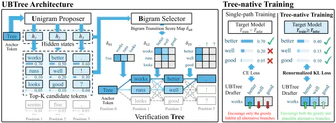
inclusionAI released the Ling-3-Flash-UBTree-B16 model, combining a five-layer DFlash backbone and a learned bigram selector, proposing multiple candidate continuations for Ling3-Flash for target model validation, with 482M parameters, achieving 3x+ E2E speed improvement on benchmarks like MMLU, and the UBTree adaptation is not yet open source, with SGLang integration support expected to be released soon.
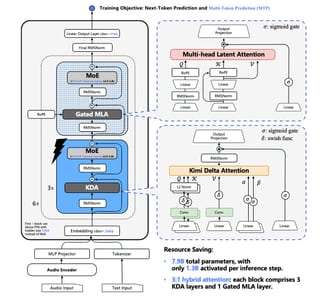
inclusionAI/Ming-3.0-asr-tiny combines Ling-tiny-v3 language backbone and audio encoder, supporting single-round Chinese and English speech transcription and recognition of 15 dialects, improves professional term recognition rate through hot words or dialogue context, model parameter size not mentioned, evaluated in noisy speech and 5 application areas, provides PyTorch/Transformers inference examples and MIT license.
Third Moment Research runs 10,000 agents for 36+ hours, with its AI lab using GPT-6 Astra and GPT-6.1 Sol, Codex, and Daybreak models to build agents focused on long-term tasks that improve with use.
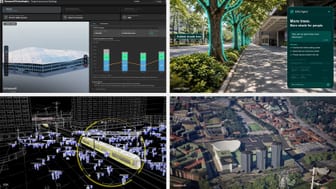
Multiple cities in Europe, along with software, infrastructure, and integration partners, are using NVIDIA's accelerated computing to build physical AI agents and digital twin systems to optimize urban operational decisions. These applications can predict maintenance needs, guide urban planning, and enhance public service response capabilities, involving Belgium, Finland, France, Italy, Netherlands, Poland, Sweden, and the UK.
Google has launched Gemini 4 Argon globally, used for coding, knowledge work, enterprise workflows, and cybersecurity defense, with paid Gemini API and Gemini platform access available.
Google DeepMind partnered with the Singapore government's tech agency, GovTech Singapore, to fine-tune the privacy-preserving device-side fraud detection model Gemma to combat over half of the crime in Singapore (over 4 billion SGD in losses). The model issues real-time warnings by analyzing conversation patterns on the device, and as it runs on the device side, user privacy is not compromised.
LangChain Deep Agents 0.7.25 released, supporting reading inline skill tools from model configuration, fixing file system permission rules and interruption approval check issues, and improving sandbox search performance.
Whisper-small achieved an average F1 score of 0.798 across 14 language pairs in the CS-FLEURS benchmark test, surpassing CNN's 0.776 and HuBERT's linear baseline's 0.751. The method detects language switching directly from speech by identifying the language-selective hidden state dimension in pre-trained speech encoders, and only requires a small amount of code to convert the dataset to fine-tune decision rules.
Apple Machine Learning Research has for the first time pre-trained a tri-modal masked diffusion model (MDM) from scratch on text, image-text, and audio-text data, analyzing multi-modal extension patterns.
GitHub released a dedicated secret detection model that combines a fine-tuned ModernBERT classifier with regular expressions, reducing false positives by 11.5% while achieving a higher acceptance rate and shortening post-push scan execution time by 86%, with a cost reduction of 98%. The model distinguishes real credentials from similar items by analyzing file paths, variable names, and contextual code, making general secret detection extendable to push protection possible.
Replit launches the Solution Partner Program, connecting enterprise customers with system integrators, consultants, and institutions to help customers identify AI opportunities, develop solutions, and enable teams to use Replit efficiently; the program provides more support for solution partners with existing collaboration experience and offers a certification path for potential partners to access Replit's enterprise features.
Orange Business has deployed its flagship AI platform Live Intelligence to 120,000 employees and over 150 customers.
IBM announced that it will launch an early research and development process design kit (PDK) for 7-nanometer nanoscale stacking technology in the first quarter of 2027, to help semiconductor companies evaluate the technology before large-scale adoption. The kit will provide a standard cell library for logic functions and SRAM design examples, supporting layout and routing, early module-level layout, and density and power performance evaluation. Nanoscale stacking technology achieves 3D layout at the transistor level for the first time on logic wafer technology by stacking transistors vertically rather than placing them side by side, which is significantly different from current nanosheet transistor architectures.

NVIDIA RTX Spark integrates the capabilities of gaming PCs, creative studios, and personal AI supercomputers into a single superchip, equipped with up to 128GB of unified memory and 1 petaflop of AI computing power.
IBM Research uses an open-source agent factory to optimize quantum error correction hardware, achieving 52x acceleration with a cost of about $26; with the same budget, a closed-source cutting-edge model configuration costs $299 (11.5x higher) but provides 204x acceleration, with the open-source configuration achieving hardware optimization with a smaller area; the agent factory assigns tasks to parallel working agents through a coordinator, combining code modification with hardware effect evaluation, exploring various architectural possibilities.
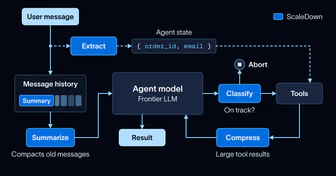
ScaleDown optimizes context management for long-running agents through compression and extraction techniques, its model is 41 times cheaper and 2.7 times faster than general models like GPT-5.5 in benchmark tests. ScaleDown provides four models: Summarize, Compress, Extract, and Classify, respectively for summarization, compression, extraction, and classification, supporting up to 1M tokens of input, and supporting image and PDF input.
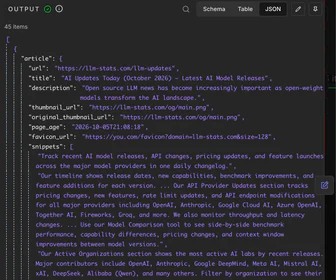
Jev answers three questions for each news article to filter out truly important developments, You.com node searches for daily news and deduplicates, You.com Research writes short summaries for each topic and posts via Slack, the entire process costs less than four cents, effectively avoiding interference from irrelevant information.
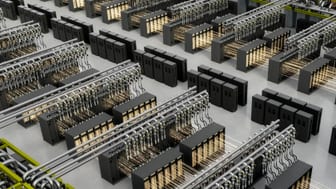
NVIDIA Announces New Investments in French Startups such as Doctolib, Entalpic, Genesis AI, and Pigment, which are using AI to address challenges in areas such as healthcare, material discovery, physical AI, and business planning.
Origin app market opens for public beta today, integrating Cloudflare, Linear, Sentry, and more than 20 tools to support deployment, CI/CD, code review, security, monitoring, and project management. Teams can submit apps for listing.
Gemini 4 Argon has been running for 11 hours without human intervention, proposing 6 optimization suggestions by analyzing the ADK Python repository with 205,000 lines of code. Ultimately, 2 of them were adopted and deployed, reducing the memory session preparation time by about 40% and increasing the cold package import speed by 21%. The model followed the repository maintainer's guidelines during the optimization process and ran all 16,892 unit tests.
OpenHands v1.27.0 now supports creating and managing DigitalOcean-hosted agents directly through Agent Canvas, expanding the execution environment options based on DigitalOcean Serverless Inference.
Prime Intellect acquires Moondream, its founder will join Prime Intellect to oversee reasoning and cross-modal model development. Moondream 3.1 performs excellently in object detection, aerial images, charts, and crowded scenes (such as shelves), processing 34 requests per second, 24 times faster than the next accurate open-source model, and costs only one-thousandth of Meta's new model Muse Wonder when achieving 80% accuracy.
GitHub Copilot can allow users to convey project rules, encapsulate repeatable processes, provide professional guidance, and connect external tools to improve collaboration efficiency through custom instructions, proxy skills, custom agents, and the Model Context Protocol (MCP) server. Custom instructions define code standards, proxy skills encapsulate repetitive tasks, custom agents handle complex work, and MCP servers extend Copilot functionality.
Microsoft Research has open-sourced the multimodal model StudentSim for simulating student learning behavior. It is trained on publicly anonymized learning records to create a personalized student simulator that outperforms benchmarks in areas such as chess, English writing, and mathematics. It provides early feedback signals for AI tutoring systems but is not intended to replace teachers or classroom teaching.
NVIDIA announced at the OCP Global Summit that it will open-source the NVIDIA Vera Rubin rack and compute shelf design. By opening the NVIDIA MGX architecture, it provides system builders with a common foundation for building next-generation AI factory infrastructure. The Vera Rubin AI factory adopts the third-generation MGX rack architecture, supporting rack deployments of up to 250kW. It expands the open architecture by adding configurable I/O ports, fanless liquid-cooled compute shelves, standard power and cooling interfaces, and support for 19-inch devices.


Claude Code v2.1.159 is released, available for free on GitHub, supporting reasoning with 8k context length, and can run 9B models on 9 hardware types, but models below 30B parameters still error out during full replication.
Cognition released the FrontierCode 1.1 coding benchmark, evaluating whether AI model code is of sufficient quality to be merged by open-source maintainers, not only looking at test pass rates but also evaluating modification extent, scope, and file relevance.