Skip to content
Live
Nov 4Wed
  1. OpenHands Blog71

    OpenHands and Snowflake introduce a workflow for training models using their own Agent harness

    OpenHands partnered with Snowflake AI Research, allowing developers to directly use the existing OpenHands Agent harness for reinforcement learning and training without rebuilding the harness in the training framework.

    Why it matters: The original text provides specific configuration methods and code locations for directly using the existing Agent harness for RL training, allowing readers to judge whether training and deployment can share a single harness.

  2. NVIDIA Newsroom38

    How AI is reshaping the work of semiconductor wafer factories - engineers accelerating decision-making due to it

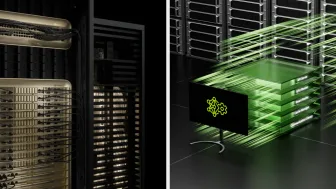
    AI is changing the way semiconductor wafer factories work, accelerating decision-making for engineers. NVIDIA's cuDSS library accelerates COMSOL's multiphysics simulation 10 times, Applied Materials' Ginestra platform simulation 10 times, ACE+ platform 35 times, and Siemens' Calibre lithography software simulation 17 times. NVIDIA's PhysicsNeMo framework enables Lam Research to predict plasma behavior at the millisecond level, replacing full simulations that took days.

Nov 3Tue
  1. ITHome · AI65

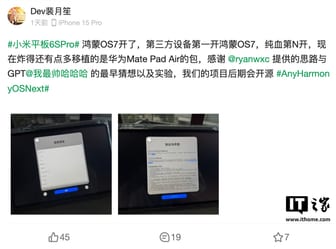
    Developers flash Apple iOS 16.5 test firmware pack for Xiaomi REDMI K20 Pro

    Developer 'You say you like it but you're lying' has flashed the Apple iOS 16.5 test firmware package for Xiaomi REDMI K20 Pro phone, supporting dual systems and data persistence, requiring Android data to be cleared and TWRP Recovery to be replaced. It can switch systems through normal startup or Magisk module under Root privileges, but the developer emphasizes that this solution is a test version and carries the risk of bricking.

  2. NVIDIA Technical Blog65

    Use NVIDIA Attribution to diagnose distributed AI workload failures

    NVIDIA Attribution can help users locate the initial failure point in distributed AI workloads by analyzing NCCL errors, scheduler state changes, and downstream message cascading symptoms, revealing the source of anomalies rather than just reporting the stop location. This tool is suitable for diagnosing cross-node issues caused by GPU or network fabric events, by visualizing and tracing the root cause of problems through thousands of message links.

  3. LangChain Blog38

    LangChain points out new challenges in late 2026 for agent context engineering

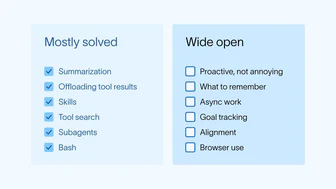
    LangChain points out new challenges for agent context engineering in late 2026, including how to proactively notify users without being annoying, agent memory management, asynchronous task processing, goal tracking and alignment, and browser usage, among other difficulties. These challenges involve how agents balance notification frequency when running in the background, decide on memory content, coordinate asynchronous tools and sub-agents, break down and iterate on goals, and prevent agents from over-optimizing goals.

Nov 2Mon
Nov 1Sun
  1. Databricks Blog58

    Databricks Lakebase branching helps CI/CD: experience from 100 PR databases

    Databricks Lakebase reduces the creation time of each PR branch to seconds with its copy-on-write database branching feature, supporting up to 100 concurrent branches, with each branch having independent read/write, compatible with standard Postgres, and supports large JSONB/LOB columns, meeting Snorkel AI's needs for fast, secure, and low-cost testing of production data in CI/CD processes.

Oct 31Sat
  1. AWS Machine Learning Blog

    End-to-end method for managing Amazon Bedrock costs: playbook for FinOps and platform teams

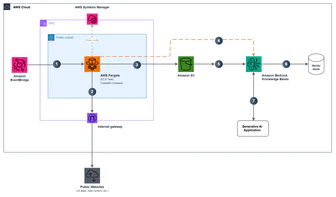
    Amazon Bedrock cost management requires attributing every dollar spent to identity, team, and application, and monitoring, enforcing budgets, optimizing platform default settings, and then transforming data into decisions through regular reviews. Bedrock automatically attributes inference costs to IAM entities and requires CUR 2.0 and cost allocation tags to achieve this. To resolve shared role issues, user session management must be adopted to independently attribute each user request.

  2. NVIDIA Technical Blog65

    Running AI models in edge application development using a few commands

    Developers are building next-generation intelligent agents at the edge for monitoring driver attention and cabin conditions, helping robots understand environmental planning tasks, and coordinating machine clusters on production lines. These physical AI applications require models for perception, reasoning, and action that run within strict memory, power consumption, and latency budgets.

  3. NVIDIA Technical Blog65

    Building controllable specialized agents using NVIDIA NemoClaw

    Developers use NVIDIA NemoClaw to build autonomous agents, a framework that includes models, executors, and domain-specific tools, and supports secure deployment. NemoClaw provides policy enforcement runtime, optimization, and observability tools to ensure the reliability and security of agents when accessing real enterprise systems and data.

Oct 30Fri
  1. Latent Space65

    AIE CODE 2026 Highlights: Three Themes Focus on AI Programming Agent Development

    AIE CODE 2026 will explore three themes: redundant-free expansion, system-one model, and raising ambition, focusing on AI programming agent development, attracting 1000 top smart agent engineers globally. The conference will showcase the practical application of the System One model and focus on software rewrite cases from browser to Adobe Photoshop Suite.

  2. OpenHands Blog38

    How to set up an AI code review agent with OpenHands

    OpenHands Agent Canvas can set up an AI code review agent within minutes, automatically reviewing GitHub pull requests and adhering to coding standards. The agent uses OpenHands's `code-review` skill to prioritize identifying logic errors, security vulnerabilities, performance regressions, and missing use cases that affect production, avoiding minor formatting issues, and directly publishing feedback containing issues, severity, and suggested fixes in GitHub PRs.

  3. Google Developers Blog62

    Build generative UI applications with A2UI and CopilotKit agents

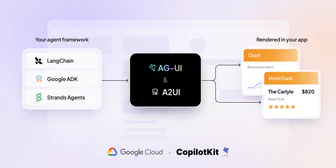
    Google introduces its framework-agnostic open standard A2UI, allowing agents to describe interfaces declaratively in JSON, rendered by applications using existing components, and integrated with the AG-UI protocol of CopilotKit to connect to agent frameworks like LangChain, Google ADK, Mastra, Strands, etc.

    Why it matters: The original text provides complete integration code and bidirectional interaction examples for A2UI and CopilotKit, which can be used to determine the implementation method for generative UIs.

Oct 29Thu
  1. OpenRouter Blog

    How to Use LLM to Extract Tables from PDFs

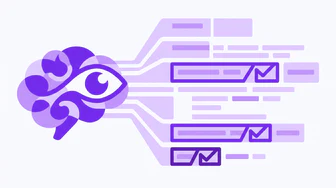
    The Anthropic/claude-haiku-5.5 model paired with a strict JSON schema can extract tables from PDFs and return typed rows. Tested five PDFs (including scans) successfully extracted all 644 cells; failure cases were due to PDF processing paths, not model capability. Note empty results and output length limits.

  2. AWS Machine Learning Blog58

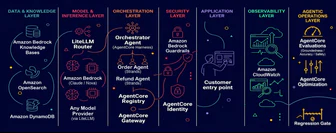
    Build an enterprise-grade agent platform based on Amazon Bedrock AgentCore

    Amazon Bedrock AgentCore provides modular services such as runtime, gateway, identity, memory, policy, registration, and evaluation, supporting large-scale agent construction, deployment, and operation. The enterprise-grade agent platform blueprint based on AgentCore adds enterprise-level constraints such as ownership, account boundaries, software delivery, observability, cost governance, and retirement, achieving controlled access through inference gateway and tool gateway, and including an evaluation process to ensure agents are validated before production deployment.

  3. Google Developers Blog58

    How Agents CLI optimizes Agent quality through Hill-Climbing

    Agents CLI v1.8.0 achieves Hill-Climbing optimization of Agent quality through commands like eval generate, eval grade, etc., using the custom_response_quality metric to rate 4 cases from 1 to 5, finding that changing the system prompt to a chef role reduced the average score from 4.0 to 2.75. This tool supports model backend experiments and automatic alerts, improving Agent performance through iterative cycles.

  4. LangChain Blog

    How to use crons to build proactive agents with LangChain

    LangChain found that nearly 70% of Managed Deep Agents run from scheduled tasks. Crons enables agents to have proactivity, personalization, and ambient characteristics by implementing mechanisms such as memory ('dreaming'), proactivity (exploring new actions), intelligent filtering (monitoring event streams), and reminders (scheduled tasks).

Oct 28Wed
  1. Databricks Blog

    Databricks improves document extraction accuracy through ai_extract and MLflow Prompt Registry

    Databricks improves document extraction accuracy by building a document extraction process that includes a review step, using ai_extract combined with JSON schema and global instructions, and leveraging MLflow Prompt Registry for versioned configuration. Finally, it validates the improvement effect on a fixed set of manually labeled data, enhancing the overall performance of the system.