Skip to content
Live
Nov 13Fri
Nov 12Thu
  1. PyTorch Blog

    Integrate SGLang into IBM Spyre within less than a week using AI tools

    A team of two, with the help of an AI programming agent, completed the integration of SGLang and IBM Spyre in less than a week, building a plugin with about 1,500 lines of code. SGLang's inference throughput on Spyre is about 3.6 times higher than the reference PyTorch implementation (using torch-spyre) and performs comparably to vLLM on Granite 3.3 8B and Gemma 4 26B A4B workloads.

  2. O'Reilly Radar

    Why Git needs help: From file to system for source code control

    Anthropic will struggle with traditional Git infrastructure by the end of 2026 when autonomous agent activities cause daily merge volumes per repository to exceed 30,000. Claude Sonnet 4.6 replaces string diffs of 2,000+ lines with AST node transformations, reducing the cost of modifying each file to O(node_delta) and enabling subsecond dependency analysis, but standard Git still discards reasoning history such as agent execution logs and compilation feedback.

  3. The Decoder61

    Google Deepmind released AlphaGenome 2, advancing genomic AI from organizational-level prediction to single-cell type resolution.

    AlphaGenome 2 predicts the effects of genetic variations on specific human cell types, discovering nearly double the related gene changes compared to its predecessor. The model is trained on data encompassing 107 million cell phenotypes across 68 tissues, achieving single-cell-level precise predictions by combining DNA sequences with specific biological states as input.

  4. QbitAI

    Galaxy Smart Learning's Little Deer Love Learning introduces a dual-core technology architecture to support scalable personalized instruction.

    Galaxy Smart Learning has launched an AI education product, Xiao Lu Ai Xue, which adopts a dual-core architecture of the Doubao large model and a self-researched intelligent learning engine. It achieves learning situation diagnosis by analyzing students' answer records and develops functions such as learning situation diagnosis, ability assessment, learning difficulty matching, and task planning. The student-side intelligent agent recommends learning tasks and explains the basis, while the teacher-side intelligent agent summarizes student performance for personalized guidance reference. The product has served over 500 schools, covering 24 provinces, and supports teachers in adjusting teaching strategies through a human-machine co-education model.

  5. ITHome · AI

    Runway launches robot model Praxis-1, 15.6 times faster and cost reduced to 1/51

    Runway has launched the robot model Praxis-1, based on the Runway video foundation model with 27 billion parameters. In the RoboLab-120 benchmark test, it achieved a success rate of approximately 46.2%, with a speed increase of 15.6 times and a cost reduction to 1/51. This model is licensed under Apache 2.0 and both weights and code are open-sourced.

  6. 36Kr · AI65

    SpaceX is developing the Kessel AI chip rack to reduce reliance on NVIDIA

    SpaceX is developing the Kessel AI chip rack, using a passive PCB middle board to replace the NVLink cable box, retaining 72 GPU modules, 18 computing trays, and 9 switching trays, planning to procure chip modules directly from NVIDIA and purchase the remaining components independently to bypass NVIDIA's L6 computing board and enhance supplier selection and procurement autonomy.

  7. Hugging Face Daily Papers

    TOME-Math: A mathematical proof supervisory corpus based on structured textbooks

    TOME-Math transforms 2,118 university mathematics textbooks into approximately 380K structured proof supervision records, preserving chapter order, proposition-proof links, and dependency references, used for fine-tuning to improve the mathematical reasoning ability of language models by 16.7 percentage points, surpassing all three public instruction datasets. This corpus will be released to promote structured mathematical supervision research.

  8. Hugging Face Daily Papers65

    One Table Benchmark launched: a benchmark test for general table models in generation, interpolation, and prediction tasks

    The One Table Benchmark tested the table generation, imputation, and prediction capabilities of 46 models on 56 datasets, finding that these tasks share conditional information but have different fidelity and target interactions. Fixed models exhibit a trade-off between utility and fidelity, while frozen base models perform outstandingly in prediction and numerical imputation, indicating that unified table models have the potential to improve classification reconstruction and joint sampling.

  9. ITHome · AI

    Baidu Tianchi 1024 Card Super Node Released: Can support training of 5 trillion parameter models, to be launched next year.

    Baidu Tianchi's 1024 card super-node is launched, equipped with optical engine technology, inter-card interconnection bandwidth increased 3 times, training performance increased 2.5 times, and inference performance increased 3 times. Accompanied by G3.5 KV Cache GPU memory acceleration cabinet, long context inference performance increased 2 times, multi-round dialogue cache hit scenario TTFT decreased by 90%, and throughput increased 7 times. A single node can support the training of large models with 500 billion parameters, with the ability to scale to ten thousand cards, and will be launched next year.

  10. ITHome · AI

    Doubao Work has integrated third-party models such as DeepSeek V4.1 Flash and Kimi K3.1 Pro, and has also launched a usage credit multiplier and limited-time offers.

    Beanpod Work expands model selection, with the first batch of Kimi K3.1 Pro, GLM 5.3, and DeepSeek V4.1 Flash three third-party models. Simultaneously, the quota consumption multiplier and limited-time offers are launched. The model selection page marks the quota consumption multiplier, allowing users to weigh effectiveness, speed, and cost. During specified hours on weekdays and holidays, using participating models for activities can enjoy a discount on quota consumption. The quota consumption multiplier for Beanpod 2.1 Lite and DeepSeek V4.1 Flash is reduced.

  11. 36Kr · AI

    The core technical team of Tongxin Intelligent has started a business on AGI architecture chip, obtaining hundreds of millions of investment from Tsinghua System and other funds.

    Tongxin Intelligence has completed tens of millions of yuan in seed and angel funding within half a year, with an average chip industry experience of over 20 years for the founding team. The company designs native chips supporting vector, tensor computation, and physical intelligence based on the CUV cognitive architecture proposed by Professor Zhu Songchun. The first product is positioned as a high-value inference chip, targeting Nvidia's Thor series on the edge and B300 series on the cloud, with FPGA prototype verification planned for early December. Funds will be used for core architecture design and R&D before chip fabrication.

  12. AWS Machine Learning Blog

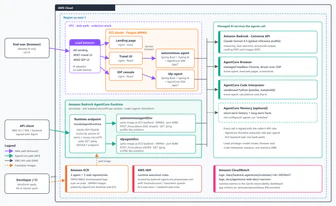
    Build autonomous AI agents using Amazon Bedrock and Spring AI

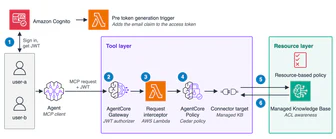
    Java teams can leverage Amazon Bedrock and Spring AI to build autonomous AI agents, addressing scalability, governance, security, and operational challenges. Spring AI brings AI capabilities to the JVM through the Spring framework (auto-configuration, dependency injection, composable advisors), while the Amazon Bedrock AgentCore platform supports framework and model-agnostic agent construction, connection, and optimization.

  13. OpenRouter Blog

    How to Benchmark LLM with OpenRouter

    Running the same tasks on OpenRouter, GPT-6.1 Sol passed 180/180 tests in 60 synthetic tasks, DeepSeek had the lowest cost passing 157/180 times, but the correlation with the public ranking is low (Spearman correlation coefficient 0.109). Need to check the number of task repetitions, the number of answers, and billing verification.

  14. OpenRouter Blog

    How does OpenRouter Agent SDK prevent AI agents from falling into infinite loops?

    The OpenRouter Agent SDK, by enabling doom-loop detection, prevents infinite loops in six tested models when the third identical tool call is received; combining stepCountIs(40) and maxCost(x) can limit the number of runs and cost; the credit limit of the API key can control total expenditure, these measures effectively reduce the number of tool calls (from 314 to 64) and costs (from $0.29 to $0.05).

  15. AWS Machine Learning Blog

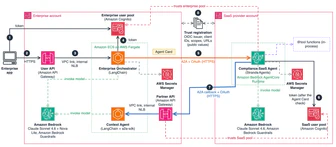
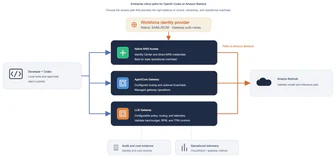
    Deploying OpenAI Codex on Amazon Bedrock Practice

    Developers use OpenAI Codex for code exploration and engineering work through Amazon Bedrock. Amazon Bedrock supports Codex inference and can be integrated with AWS Identity, IAM, and observability practices. It is recommended to start with Native AWS Access for small-scale pilots, use GPT-5.6 Sol for validation, authenticate through IAM Identity Center, and configure model permissions and observability targets.

  16. 36Kr · AI

    Google launches Gemini Decisions API, charges $0.10 per million input tokens.

    Google launches the Gemini Decisions API, driven by the Gemini Decision1 model, allowing developers to evaluate up to 1000 questions for multimodal input, scoring preset options in a single forward pass and returning probabilities and confidence levels, with end-to-end latency of 150–250 milliseconds, and a fee of 0.10 USD per million input tokens.

  17. Hugging Face Daily Papers65

    MACaQ: A Fast, Model-Agnostic Calibration Quantization Method

    MACaQ is a post-training quantization method for MXFP4 W4A4, which reduces costs while maintaining accuracy in language and diffusion models by using online activation transformations and Hessian-aware refinement to independently quantize each linear layer. MACaQ achieves only a 2.3% end-to-end overhead increase on Qwen3-32B with vLLM, has a lower perplexity than DuQuant++ and MR-GPTQ, and reaches the best perplexity of Llama-3-8B in 11 times shorter quantization time.

  18. Simon Willison

    Google releases Gemini Decisions API

    Google has released the multimodal decision-making model Gemini Decisions API, supporting text, image, audio, video, and PDF, similar to Jev and OpenAI's decision models but more confident; the price is 10 cents per million input tokens, output is free, more expensive than Jev (4.2 cents per million tokens) and OpenAI (same price)

  19. The Decoder78

    Google launches Gemini Decision 1 and Gemini Decisions API, capable of processing 1000 issues at a time

    Google DeepMind launches Gemini Decisions API, targeting yes/no, multiple choice, and scale scoring for closed-form judgments. The underlying model, Gemini Decision 1, can handle up to 1000 independent questions at once, covering text, images, audio, video, and PDF.

  20. MarkTechPost60

    Google DeepMind releases AlphaGenome 2 for cell-type specific variant effect prediction

    Google DeepMind releases AlphaGenome 2, a DNA model that predicts the effects of specific cell type mutations. The model reads 1 Mb DNA and target cell state, significantly improving single-cell eQTL prediction performance through conditional sequence to functional architecture, increasing recall from 23% to 43% on the TenK10K benchmark, and can adapt to unseen datasets without fine-tuning.

  21. Apple Machine Learning Research

    Weighted State Souping for Efficient Long-Context Retrieval

    Weighted State Souping proposes query dependency weighting to combine cached State state encodings, significantly improving long-context performance on tasks such as single-hop and multi-hop document question answering, pinpoint retrieval, variable tracking, and tool use. The method can be adapted into an efficient sparse variant, achieving near-constant encoding costs while maintaining (or sometimes improving) performance.

  22. Apple Machine Learning Research

    Gating Mechanisms of State Space Models (SSMs): Memory and Contextual Learning Research

    State Space Models (SSMs) lag behind Transformers in contextual learning and precise retrieval tasks, as their gating mechanism leads them to first learn memory solutions, delaying or preventing the convergence of correct contextual learning solutions, but the gating mechanism is beneficial for improving long sequence generalization.