Skip to content
Live
Nov 11Wed
  1. Meta Engineering

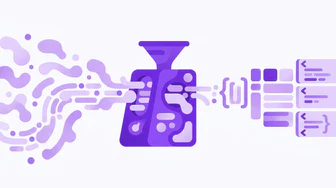
    Meta open-sources Triton Low-Level Extensions (TLX): a hardware-native GPU compiler optimized for large-scale production ML

    Meta open-sources Triton Low-Level Extensions (TLX) compiler, enhancing GPU performance by introducing explicit warp-group and cluster-level orchestration, supports RecSys training/inference and LLM pre-training, achieving end-to-end performance improvements over standalone libraries on NVIDIA and AMD GPUs.

  2. Meta Engineering

    Meta launches Your Algorithm tool to make Facebook recommendation content more transparently personalized

    Meta has launched the Your Algorithm tool, allowing users to edit interest lists ("Interested In"/"Not Interested In") in natural language to adjust Feed and Reels recommendations in real-time. The system uses LLM to process user preferences and integrate user behavior, achieving responsive adjustments through retrieval, reordering, and pushing optimization stages. New interest content will appear quickly but will not dominate recommendations.

  3. AWS Machine Learning Blog

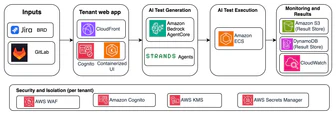
    How TCS uses Amazon Bedrock AgentCore to build an agentic test orchestrator

    TCS has built an Agentic test orchestrator for BFSI clients, transforming requirements into executable controlled tests through Amazon Bedrock AgentCore, breaking down tests into dedicated tasks and executing them using their respective agents, tools, and validation rules, while meeting project-specific context, API, and browser UI testing, tenant-level security isolation, and repeatable test path requirements, significantly improving test throughput and allowing engineers to focus on risk analysis and exploratory testing.

Nov 10Tue
  1. ITHome · AI

    Adobe Creative Cloud integrates with third-party AI agents, supporting local photo and video editing in the future

    Adobe announced new features at the MAX conference, allowing third-party AI agents to directly access and modify Creative Cloud projects via the Local Model Context Protocol (MCP), supporting AI agents from companies like OpenAI, Google, and Anthropic for background processing of regular tasks, and the Firefly AI assistant beta version adds planning mode, model selector, and Firefly Boards support.

  2. TechCrunch · AI

    Otter AI expands support to transcribe meetings in over 30 languages.

    Otter AI has launched a cross-language meeting transcription feature supporting over 30 languages, which can automatically detect and switch languages during the same meeting. New support for 27 languages has been added, bringing the total number of supported languages to 31. Currently, 13 new languages are available, and the remaining 14 will be launched soon, aiming to help global teams overcome language barriers.

  3. Hugging Face Daily Papers

    Frontier3DBench: A 3D creation benchmark test for code intelligent agents in open worlds across objects, scenarios, and interactions

    Frontier3DBench uniformly evaluated the ability of code agents in object, scene, and interactive 3D world creation across 145 tasks, GPT-6.1-sol performed best at the object and scene levels, with a total score of 66.02/100, but all configurations had reference reconstruction scores lower than text-driven generation in object and scene tasks. The generated world averaged 83.08/100 in local mechanisms, but only 20.82 and 30.26 respectively in motion removal and stateful workflow, showing that coordinated activity completion remains a core bottleneck

  4. Hacker News · 300+

    Meta launches Muse Ember: its smallest and most efficient model

    Meta launches Muse Ember, its smallest and most efficient model designed for complex reasoning tasks, outperforming Claude Haiku 5.5 and GPT-6 Luna in smartness-to-cost ratio, with a cost of 0.10 USD per million input tokens and 0.50 USD per million output tokens, supporting a 1M context window and 512K output tokens.

  5. Hugging Face Daily Papers

    LingBot-Touch Released: An Heterogeneous Tactile Representation Learning Model Supporting General Dexterity Operations

    LingBot-Touch is a tactile foundational model that learns a unified, scalable representation across different tactile sensors (resistive, magnetic, visual tactile), producing plug-and-play tactile tokens, and continuously enhancing the dexterity of diffusion strategies and visual language action (VLA) models (such as π_{0.5} and LingBot-VLA). Experiments show that this tactile representation significantly improves performance in complex manipulation tasks in both simulation and real robot deployment while maintaining strong computational efficiency.

  6. Hugging Face Daily Papers

    Fast and Exact Relative-Position Attention via Structure-Aware Kernels

    A precise tile attention algorithm integrates additive relative position terms into the computation similar to FlashAttention, reducing memory and computational overhead, accelerating long-context relative position Transformers. The method (1) uses offset-aware tiles to avoid redundant index and memory access, (2) only computes necessary key/query relation products and reuses them in forward and backward passes, and (3) uses offset-based gradient sharding and aggregation to eliminate atomic contention.

  7. Hugging Face Daily Papers

    OneTrans-GSR: A generative ranking list paradigm, unifying re-ranking and hybrid sorting

    OneTrans-GSR generates unified recommendation ranking lists through a single autoregressive Transformer, improving business metrics and reducing re-ranking and hybrid sorting latency. After deployment in industrial recommendation systems, GMV/u increased by 2.63%, advertiser value increased by 2.06%, and repurchase rate increased by 2.03%, while end-to-end latency was reduced by 13%.

  8. MarkTechPost

    Meta launches Muse Ember: a high-capacity intelligent model with 1M context

    Meta releases Muse Ember, its smallest and most efficient model, designed for repetitive steps in agents. Muse Ember scores 36 on the AA Intelligence Index, matching Claude Haiku 5.5 (max effort), with a cost of about 0.14 USD per task.

  9. ITHome · AI

    Meta launches lightweight AI model Muse Ember: benchmark scores comparable to Claude Haiku 5.5, with a single-task cost of just 1/3

    Muse Ember is Meta's smallest and most efficient AI model, performing comparably to Claude Haiku 5.5 on the Artificial Analysis rankings, but with a single-task cost of only 1/3 and surpassing GPT-6 Luna.

  10. Claude.dev Blog

    Which Claude model should Anthropic use? Fable, Opus, Sonnet, or Haiku?

    Anthropic has launched four Claude models for users to choose from: Claude Haiku 5.5, Claude Sonnet 5.5, Claude Opus 5.5, and Claude Fable 5.2.

    Same story · 3 outlets

    How the accounts differ:TechCrunch states the input price of Fable is reduced to $8 per million tokens; others do not mention the price.

  11. One Useful Thing78

    Ethan Mollick practically tests Claude Fable 5.2: Close but not complete AGI

    Ethan Mollick, after trying out Claude Fable 5.2 before its public release, believes that according to the definition of 'achieving the level of most human experts on most available computer-completed intellectual tasks,' it is close to AGI but still has a gap.

    Why it matters: The author uses six cross-domain practical cases to illustrate that the model's ability has approached general intelligence, but lacks the ability to judge whether works are good or bad.

  12. Claude · YouTube75

    Anthropic released Claude Fable 5.2

    Anthropic released Claude Fable 5.2, stating that it has improved in coding, reasoning, and vision, targeting the most complex and open-ended technical work. The official recommendation is to start most coding and knowledge tasks from Opus 5.5, and Fable 5.2 has been launched in the Pro, Max, Team, and Enterprise packages.

    Same story · 3 outlets

    How the accounts differ:TechCrunch states the input price of Fable is reduced to $8 per million tokens; others do not mention the price.

  13. Claude · YouTube75

    Anthropic released Claude Fable 5.2

    Anthropic releases Claude Fable 5.2, designed for the most challenging technical challenges, with improvements in coding, reasoning, and vision, suitable for the most ambitious open-ended technical work. The official recommendation is to use Opus 5.5 for most coding and knowledge tasks, and Fable 5.2 is now available in the Pro, Max, Team, and Enterprise packages.

    Same story · 3 outlets

    How the accounts differ:TechCrunch states the input price of Fable is reduced to $8 per million tokens; others do not mention the price.

    Why it matters: The official statement explains the positioning and applicable scenarios of Fable 5.2, and provides a choice suggestion between Opus 5.5, making it easier to decide which model to use.

  14. AWS Machine Learning Blog38

    CrossnoKaye on How to Achieve Industrial Physical AI with Amazon Bedrock AgentCore

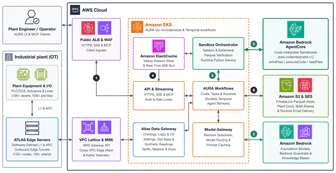
    CrossnoKaye achieves industrial physical AI on Amazon Bedrock AgentCore through its ATLAS platform and AURA agent, improving production efficiency by 11-17% and reducing energy consumption by 21%. AURA leverages AgentCore's code interpreter capabilities to run Python workloads in isolated micro VMs to verify numerical calculations, while achieving closed-loop control through edge clusters and cloud optimization systems.

  15. Epoch AI

    How is Inference Performance Index (IPI) Measured for Inference Capability

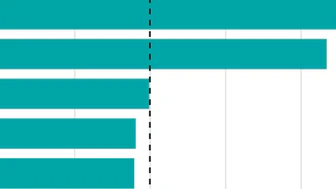
    Nvidia GB300 offers a 25-fold improvement in capability compared to H100 for intelligent agent inference tasks, far exceeding the 2.5-fold increase in 8-bit FLOP/s. The IPI index measures inference capability by comparing the number of requests a chip can handle simultaneously under various output speed requirements. GB300 is set as the baseline value of 1, and chips scoring 1 can serve twice as many users under the same conditions. IPI version 1 combines results from four representative models, using GB300 as the reference benchmark.

  16. Comfy Blog65

    ComfyUI v0.44 introduces multiple quality improvement features

    ComfyUI v0.44 introduces multiple quality improvement features, including the new Branch Node and Stack LoRAs Node, simplifying model selection and stacking processes. Templates and models can now automatically download sample inputs for users to run directly. Additionally, the new export feature allows users to download multiple output files at once, improving work efficiency.

  17. TechCrunch · AI72

    Meta releases lightweight model Muse Ember, highlighting agent execution and low cost.

    Meta Superintelligence Lab releases lightweight model Muse Ember, priced at 10 cents per million tokens, focusing on high-frequency agent tasks such as tool calling, coding subtasks, routing, extraction, and long document parsing.

    Why it matters: Meta uses a pricing of 10 cents per million input tokens and the Artificial Analysis comprehensive benchmark to place the lightweight model in the agent execution context, comparing it with Haiku and Luna.