Skip to content
Live
Oct 18Sun
  1. Browser Use

    What is a browser agent? Its working principle and applicable scenarios

    The browser agent operates web pages through AI models to achieve goals. After the user describes the task, the agent automatically opens pages, navigates, selects operations, and checks results to continue. It is particularly suitable for uncertain workflows that require flexibility and decision-making, composed of three parts: the model (decides actions), the suite (provides context, tools, and loops), and the browser (manages website sessions). Main uses include data extraction, research, form filling, etc., but there are drawbacks such as inconsistent results, task failure, website blocking, prompt injection, and unpredictable costs.

  2. NVIDIA Blog

    NVIDIA RTX Spark laptops are officially launched, featuring Blackwell RTX GPUs and an AI platform.

    NVIDIA RTX Spark laptops are now available, equipped with Blackwell RTX GPUs, up to 128GB unified memory, and the full NVIDIA AI platform, starting at $2399. They are launched by ASUS, Dell, HP, Lenovo, Microsoft, and MSI, bringing powerful local AI, content creation, and gaming capabilities to portable devices. NVIDIA held global launch events, including one in Berlin, where founder Jensen Huang made a surprise appearance.

Oct 17Sat
  1. Interconnects

    Meta launches Muse Spark Open, changing the landscape of US open-source large models

    Meta has released the Muse Spark Open model, with parameters reaching 816B and a context window of 1M tokens. Its performance is between GLM 5.2 and DeepSeek V4.1 Flash, making it the current strongest open-source model in the U.S. The license includes several restrictions, such as requiring the product to be labeled 'Built with Muse' and needing additional licenses for revenue exceeding $200,000, sparking discussions about the open-source model.

  2. ChinaTalk

    Saif Khan's debut in China: Why DUV control has become a key US strategy to balance AI

    Saif Khan first shared in ChinaTalk about his newly established technology and governance think tank (CTS), which released a report predicting that if the US stops exporting semiconductor equipment, China's AI chip production by the mid-2030s could be reduced to only 1/100 of that of the US, making DUV control the most critical means for the US to influence the AI balance; CTS is committed to filling the gap in forward-looking research in the AI policy ecosystem by understanding the physical reality of the AI supply chain to identify patterns and predict the future.

  3. LangChain Deep Agents releases17

    LangChain Deep Agents 0.1.86 Released

    LangChain Deep Agents released version 0.1.86, adding NVIDIA OpenShell as a sandbox provider, fixed multiple bugs including improved alias matching, accurate reporting of workspace rejection, replacing duplicate thread recovery errors, replacing chat input on recall prompts, displaying expiration prompts in the footer, providing actionable errors when Groq tools are limited, and comparing effective interpreter permissions, etc.

  4. AWS Machine Learning Blog

    Amazon Bedrock AgentCore: Building Trustworthy AI Agents with a Production-Ready Evaluation Framework

    Amazon Bedrock AgentCore Evaluation Framework helps AWS internal sales team handle business problems with multi-agent systems, identifying differences in agent performance between demonstrations and actual production; through services like Amazon Bedrock Guardrails and Amazon CloudWatch, the framework verifies answer accuracy before release and during ongoing production, tracing errors back to data, prompts, or code, avoiding user trust breakdown due to agents answering confidently yet incorrectly.

Oct 16Fri
  1. Tencent Hunyuan · Hugging Face new models

    Qwen3-8B-DSpine-b16 released: Speculative decoding model with parallel drafting and deep conditional injection

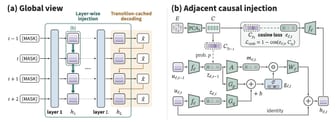
    Qwen3-8B-DSpine-b16 released by Qwen, employing speculative decoding technology with parallel drafting and deep conditional injection, achieving an average acceptance length score of 10.55 on Qwen3-8B. The model supports a context length of 8192 tokens, uses bfloat16 data type and fa3 attention backend, installation requires git clone and pip install, and runs via sglang serve.

  2. Meta Engineering

    Meta How to Build Forum Applications with Native AI Engineering

    Meta uses AI agents to participate in the construction of engineering processes for Forum applications, viewing AI as a participant in the engineering process rather than an auxiliary tool. This experiment measures success by production-ready outcomes rather than lines of code, using a Human-On-The-Loop model to allow AI to autonomously execute planning, implementation, testing, and validation, with engineers responsible for setting goals, supervision, and acceptance.

  3. Baseten Blog

    Meta releases Muse Spark Open: an open-source weight model designed for code agents

    Meta releases Muse Spark Open, an open-source weight model with 816B parameters designed for code agents, featuring 42.7B active parameters, a 1M token context window, and full-modal input (text, image, video, audio), performance comparable to cutting-edge lab models, using a compressed MoE architecture and hybrid global/local attention mechanisms to optimize inference efficiency, reducing model size to 540GB via NVFP4 checkpoints.

  4. Google DeepMind

    How does Google Antigravity accelerate the discovery of antibacterial peptides?

    The Google Antigravity platform works through its intelligent agent workbench and ProtNLM model, helping biologists quickly discover, structure evaluate, and prioritize potential antimicrobial peptide targets, compressing searches previously scattered across multiple databases into a single session. The platform uses ProtNLM to predict protein function and supports researchers in scanning millions of uncharacterized proteins in the UniProt database. Researchers collaborate with AI agents on a shared 3D canvas, compressing the time required for the antimicrobial peptide discovery process from several days to a single session.

  5. Microsoft Research

    Magnetar achieves provable general computation

    Magnetar proves that programs written in Rust, Go, or C are, on average, 10 to 39 times faster than the fastest comparable systems, and achieves security solely by relying on standard hash functions, solving the three major challenges of zero-knowledge proofs: efficiency, generality, and usability. It significantly reduces proof overhead by leveraging repetitive computations and early termination of the proof process, making proof generation as routine as running a program, and can be used in scenarios such as AI agent behavior verification and financial transaction validation.

Oct 15Thu
  1. Mistral AI

    Mistral AI launched the Timestral time series foundational model family

    Mistral AI released the Timestral time series foundational model family, with the smallest model at only 209M, ranking first in three major benchmark tests (GIFT-Eval, TIME, and fev-bench), outperforming models with larger parameter sizes; this series includes four sizes ranging from 5M to 209M parameters, supports past and future covariates, runs efficiently on CPUs, and can be fine-tuned for specific domains via Mistral Forge.

  2. Liquid AI Blog

    d1-ultra: Launching the world's best decision model

    d1-ultra is the newly released decision model by Liquid AI that supports multimodal inputs, outperforming d1 and Jev 1.14 in 112 evaluations, providing more reliable probability outputs. The model is based on a larger open-weight model and has been customized for improvements, excelling in knowledge-related tasks, priced at $0.042 per million input tokens, and can be accessed via the Liquid API.

  3. Google Developers Blog

    How to evaluate AI agents: Beyond sensory checks.

    Evaluating AI agents cannot rely solely on perception checks, as agents may fall into retry loops or produce hallucinatory responses that still appear normal, leading to soaring cloud costs and token usage. A repeatable evaluation process should be established, starting with defining key user journeys (CUJ), using simulated user testing, and employing multiple layers of checks such as unit tests, deterministic metrics, LLMs as judges for scoring standards, and integration tests. Combining manual review tracking with automated validation can detect latent regressions early in development and expand the evaluation framework as agent capabilities grow.

  4. Browser Use75

    Browser Use vs Firecrawl: Use Cases, Pricing, and Performance Comparison

    Browser Use is suitable for AI-driven browser automation and stealth browser infrastructure, while Firecrawl focuses on data extraction pipelines, including scraping and crawling. Browser Use has a faster response time (33.23 seconds) in browser automation tasks than Firecrawl (41.78 seconds), whereas Firecrawl is 2.85 times faster in data extraction speed (7.25 seconds vs 20.65 seconds).