Skip to content
Live
Oct 22Thu
  1. Databricks Blog55

    Hamlet platform uses Databricks Lakebase Postgres to test production data changes

    Hamlet platform uses Databricks Lakebase Postgres to create production data branches for each pull request, allowing engineers and AI coding agents to test changes without touching the production environment, while still requiring manual approval to merge. The platform indexes and transcribes meetings of thousands of city councils, planning commissions, and zoning commissions across the United States, enabling real estate developers, journalists, researchers, and citizens to instantly search meeting records, track local policy developments, and set real-time alerts.

  2. Synced65

    Shengshu Technology Motubrain Team Discloses Full Process of Physical AI Training

    The Motubrain team of Shengshu Technology has been live-streaming for half a month, openly showing the entire process of Physical AI training. Previously, Luo Fuli, the former head of Xiaomi's MiMo, had already disclosed the training progress of the MiMo-V2.6 reinforcement learning stage.

  3. Synced65

    DeepSeek open-source reasoning framework DeepInfer and token encoding/decoding component deepseek-recipe

    DeepSeek has open-sourced DeepInfer, the foundational framework supporting its large-scale reasoning service, along with the accompanying token codec component deepseek-recipe, under the Apache 2.0 license. DeepInfer is the core of DeepSeek's reasoning service; after the framework is open-sourced, users can achieve an AI gross margin of 82%.

  4. Synced58

    Adobe Research and UCLA jointly propose the Tev model, an open-source 27B model that matches the performance of GPT-6 Astra and Claude Opus 5 on long-range reasoning tasks.

    The Tev model proposed by Adobe Research and UCLA matches the performance of GPT-6 Astra and Claude Opus 5 on long-range reasoning tasks. This model is an open-source 27B parameter model that enhances agent capabilities by constructing a 'world of answers' and designing long-range questions.

  5. Mastra Blog65

    Mastra Observability Getting Started Guide

    Mastra Observability is a managed platform that connects directly to the Mastra framework project, providing traces, metrics, and evals functions to continuously improve agents. Users can search and filter traces, monitor performance cost and correctness, and optimize agents through eval loops; the platform offers 100,000 events per month for free, with paid plans starting at $250 per month including 1 million events.

  6. The Decoder

    OpenAI agents analyzed mouse brain data in 32 minutes, while humans take months to complete the task.

    OpenAI, together with PerturbAI and Scripps Research, deployed thousands of AI agents to analyze biological data from millions of mouse cells on GPT-Rosalind, completing the full-brain CRISPR spectrum analysis in 32 minutes, whereas manual analysis takes months to a year. Human experts preferred the reports of distributed agents 75% of the time in blind tests; the 'reasoning graph' has been open-sourced on GitHub, and related papers are published on bioRxiv.

  7. ITHome · AI

    Ant Group Technology released the decision-making model LingDT-Decision-1.0, reducing token consumption by over 90%.

    Ant Group Technology released the decision-making model LingDT-Decision-1.0, which outperforms models such as Microsoft-Decision-1 and Jev 1.13. in 23 open-source benchmark tests. Its 27B version achieves the highest accuracy, reducing token consumption by over 90% and improving response time by 10 times in real-world business scenarios.

  8. MarkTechPost

    Google has open-sourced TorchTPU: a native PyTorch backend for cloud TPU.

    Google has open-sourced TorchTPU, a native PyTorch backend designed for cloud TPU, replacing PyTorch/XLA and supporting eager-first execution.

    Same story · 2 outlets

    How the accounts differ:MarkTechPost states TorchTPU is a native PyTorch backend for cloud TPU designed to replace PyTorch/XLA and supports eager-first execution; TechCrunch mentions it as an attack on Nvidia's AI developer ecosystem.

  9. MarkTechPost

    Vercel has open-sourced durable-harness to prevent crashes in encoding agents.

    Vercel has released the open-source package durable-harness, which prevents encoding agents from session interruption due to crashes or timeouts by persisting logs. This package supports existing harnesses such as Pi, OpenCode, Claude Code, and Codex, writing each step to a persistent log, allowing recovery from logs after a crash and avoiding the repetition of completed calls, preventing token duplicate billing.

  10. ITHome · AI

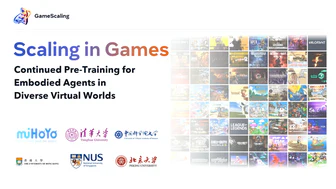
    MiHoYo, in collaboration with Tsinghua and Peking Universities, has released the open-source GameScaling game model, covering parameter scales from 0.8B to 27B.

    MiHoYo, in collaboration with Tsinghua and Peking Universities, has released the open-source GameScaling game model, covering parameter scales from 0.8B to 27B. This series of 8 models is based on the Qwen3.5 visual language model for continued pre-training, with training data involving games such as Minecraft and Doom. The model generates subsequent instructions based on game screens and operation records, supporting real-time game interaction. There are two versions for each of the 4 parameter scales: S1 and S3, and they are licensed under Apache 2.0.

  11. The Decoder

    Anthropic has released Claude Duet, to address Grok Bot, Meta Muse, and OpenAI Dots

    Anthropic released Claude Duet, an always-on agent that proactively handles tasks and requires user approval for sensitive operations. The app is based on Claude Opus 5.5 and supports iOS, Android, and web versions, interacting with services like Gmail and Slack through 6,000+ connectors. Users can assign tasks via text or voice. The agent runs in a virtual machine, protecting user privacy and requiring user approval for high-risk operations.

  12. Tencent Hunyuan · Hugging Face new models72

    Tencent Mixuan open-sourced the real-time simultaneous translation model Hy-SimulMT-30B-A3B

    Tencent Mixuan has released and open-sourced the real-time simultaneous translation model Hy-SimulMT-30B-A3B, supporting bidirectional Chinese-English voice-to-voice translation, capable of continuously outputting translated text and speech during speech, and supporting real-time voice cloning.

    Why it matters: The official provides a comparison of latency and quality for real-time simultaneous translation, and opens up multiple quantitative versions and inference deployment scripts, which can be used to evaluate the deployment cost.

  13. MarkTechPost75

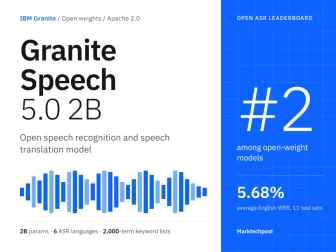
    IBM AI Released Granite Speech 5.0 2B Open Source Multilingual Speech-to-Text and Translation Model

    IBM releases Granite Speech 5.0 2B, an open-source speech language model with 2B parameters, supporting speech-to-text and translation in 6 languages, ranking second on the Open ASR list, with an average WER of 5.68% for English. The model uses YaRN to extend to 16k positions, supports GPU, Apple Silicon, and local CPU deployment, and includes 2000 keyword bias features.

    Same story · 2 outlets

    How the accounts differ:Hugging Face Blog states the model is trained on 390,000 hours of data; MarkTechPost does not mention the training data duration.

  14. NVIDIA Blog

    European pioneers deploy the open-source NVIDIA Earth-2 model to empower real-world weather and climate prediction.

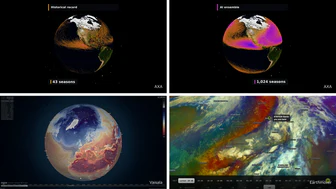
    StormScope EU has become the latest model to join NVIDIA Earth-2, which is trained using European weather and climate data and supports global weather forecasting, detailed regional forecasting, and environmental research. Developers can use the Earth-2 model to combine with their own data and create customized applications through the NVIDIA computing platform, including short-term weather forecasting (StormScope), weather data enhancement with local details (CorrDiff), and air quality modeling, among others.

  15. NVIDIA Blog

    NVIDIA helps Europe's retail industry transform: from digital discovery to physical operations.

    European retailers are leveraging open models and physical intelligence, such as e-commerce platforms that reduce inference costs by 90%, and distribution centers that simulate collaboration of different robot fleets through digital twins. Shopify uses NVIDIA-accelerated open models to integrate NVIDIA Nemotron 3.5 Lightning into the GraphQL sub-agent of Sidekick through post-training, achieving a 90% cost reduction and a 7-fold increase in response speed.

  16. NVIDIA Blog

    NVIDIA Cosmos platform expands new tools to train, evaluate, and deploy world models

    NVIDIA expands the Cosmos platform with new training tools, simulation checkpoints, and Cosmos Data Factory blueprints to help developers quickly build world models. Cosmos Data Factory provides 5 cloud-native blueprints, supporting tasks such as autonomous driving data generation and image attribute enhancement through channels like GitHub and Azure, with Porsche and ANYbotics already applying them to accelerate physical AI development.

  17. MarkTechPost

    Perplexity and NVIDIA researchers have launched JOLT: a joint teacher-student reinforcement learning method.

    Perplexity and NVIDIA have jointly launched JOLT, a post-training method for language models that uses joint online learning and teaching, where a single model plays both teacher and student roles. The teacher model receives privileged information and accepts KL punishment to approach the student model, while the student model learns through token-level distillation signals from the teacher model.

  18. MarkTechPost55

    Cactus Whistle 16.9 MB Speech Model Performance Evaluation on CPU: Comparison Results with Whisper Base

    The Cactus Whistle speech model transcribes seven languages on the CPU with a 16.9 MB file size and returns word timestamps and probabilities. Tests show it outperforms Whisper Base on its test-other dataset, but there is no significant difference from beam search, with the speed advantage shrinking as audio length increases. Additionally, it tested 30-second window audio processing, streaming latency, timestamps, keyword bias, other languages, noise, embedding, and speech-to-tool calling features.

  19. LangChain Deep Agents releases40

    LangChain Deep Agents v0.7.30 released

    LangChain Deep Agents v0.7.30 released, supporting asynchronous sub-agent queues to follow up on tasks without interrupting current work, fixes issues such as asynchronous sub-agent check report problems during server cancellation, thread read failure retries, removal of summary-related reasoning blocks, and local Shell backend output limits