Skip to content
Live
Oct 23Fri
  1. n8n Blog

    How does n8n manage stateful and stateless contexts in AI agent construction?

    n8n allows engineering teams to choose between stateful or stateless architectures in AI agent construction based on requirements. Stateful architectures achieve continuity by retaining information across requests or sessions but require additional infrastructure management for state; stateless architectures improve scalability and fault tolerance by processing each request independently. Stateful systems are suitable for scenarios that depend on previous interactions (such as conversations, multi-step processes), while stateless systems are more adaptable for applications like REST APIs that require rapid scalability and simple maintenance.
  2. Google Developers Blog

    Google API Gateway supports streaming: Real-time AI-ready APIs without changing specifications.

    Google API Gateway now supports streaming, allowing real-time API calls without changing the specification. Streaming supports Server-Sent Events (SSE), chunked transfer encoding, HTTP response streaming, and WebSocket, with the longest connection time up to one hour. During the public preview, the streaming feature was enabled when creating the gateway using the `--enable-streaming` flag, and it is planned to be automatically enabled in the official release without additional configuration.

Oct 22Thu
  1. NVIDIA Blog

    NVIDIA has launched the Minerva platform, providing end-to-end observability for AI factories.

    NVIDIA announced the Minerva platform today, which integrates telemetry data from infrastructure and AI workloads and applies proprietary AI models to transform it into timely, actionable insights, helping teams identify problems earlier and maintain the productivity of their AI factories.

    Same story · 2 outlets

    How the accounts differ:NVIDIA Blog states Minerva helps teams identify problems earlier and maintain AI factory productivity; NVIDIA Technical Blog focuses on transforming telemetry chaos into peak GPU productivity by integrating complex systems.

  2. ITHome · AI75

    XPeng IRON Humanoid Robot Capability Upgrade: Re-rreasoning every 0.2 seconds, can predict action changes within 6 seconds

    The XPeng IRON humanoid robot re-rreasons every 0.2 seconds, can predict action changes within 6 seconds. It can flexibly respond to temporary 'moves' when interacting with people, such as handshakes, high fives, and slaps, and adjust responses. The robot is equipped with a large model of the physical world, featuring 3 Turing AI chips, building a high-level brain combination of VLT+VLA+VLM.

  3. Synced65

    DeepSeek open-source reasoning framework DeepInfer and token encoding/decoding component deepseek-recipe

    DeepSeek has open-sourced DeepInfer, the foundational framework supporting its large-scale reasoning service, along with the accompanying token codec component deepseek-recipe, under the Apache 2.0 license. DeepInfer is the core of DeepSeek's reasoning service; after the framework is open-sourced, users can achieve an AI gross margin of 82%.


  4. Mastra Blog65

    Mastra Observability Getting Started Guide

    Mastra Observability is a managed platform that connects directly to the Mastra framework project, providing traces, metrics, and evals functions to continuously improve agents. Users can search and filter traces, monitor performance cost and correctness, and optimize agents through eval loops; the platform offers 100,000 events per month for free, with paid plans starting at $250 per month including 1 million events.

  5. ITHome · AI

    Ant Group Technology released the decision-making model LingDT-Decision-1.0, reducing token consumption by over 90%.

    Ant Group Technology released the decision-making model LingDT-Decision-1.0, which outperforms models such as Microsoft-Decision-1 and Jev 1.13. in 23 open-source benchmark tests. Its 27B version achieves the highest accuracy, reducing token consumption by over 90% and improving response time by 10 times in real-world business scenarios.

  6. MarkTechPost

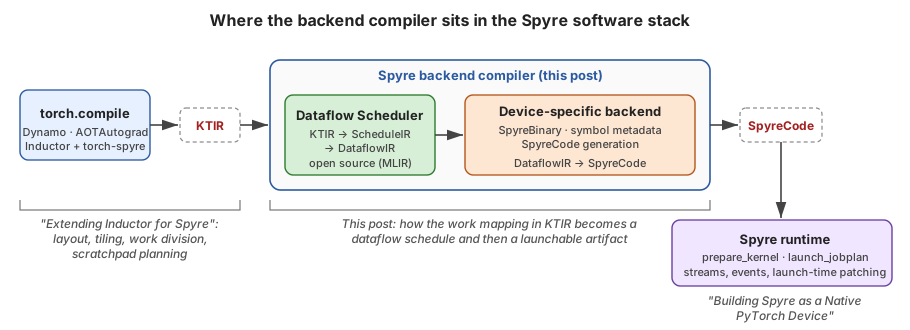
    Google has open-sourced TorchTPU: a native PyTorch backend for cloud TPU.

    Google has open-sourced TorchTPU, a native PyTorch backend designed for cloud TPU, replacing PyTorch/XLA and supporting eager-first execution.

    Same story · 2 outlets

    How the accounts differ:MarkTechPost states TorchTPU is a native PyTorch backend for cloud TPU designed to replace PyTorch/XLA and supports eager-first execution; TechCrunch mentions it as an attack on Nvidia's AI developer ecosystem.

  7. MarkTechPost

    Mistral AI releases Voxtral 3: an SDK for speech-to-text, text-to-speech, and voice intelligence agents

    Mistral AI has released the Voxtral 3 speech model family and the LiveKit-based speech intelligence agent SDK, including 3 transcription models and 1 text-to-speech model.

    Same story · 2 outlets

    How the accounts differ:The Decoder mentions a text-to-speech model (Voxtral Mini TTS 3) that is not detailed in the first report.

  8. MarkTechPost75

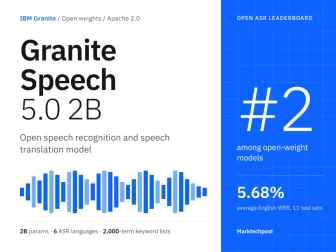
    IBM AI Released Granite Speech 5.0 2B Open Source Multilingual Speech-to-Text and Translation Model

    IBM releases Granite Speech 5.0 2B, an open-source speech language model with 2B parameters, supporting speech-to-text and translation in 6 languages, ranking second on the Open ASR list, with an average WER of 5.68% for English. The model uses YaRN to extend to 16k positions, supports GPU, Apple Silicon, and local CPU deployment, and includes 2000 keyword bias features.

  9. NVIDIA Blog

    NVIDIA helps Europe's retail industry transform: from digital discovery to physical operations.

    European retailers are leveraging open models and physical intelligence, such as e-commerce platforms that reduce inference costs by 90%, and distribution centers that simulate collaboration of different robot fleets through digital twins. Shopify uses NVIDIA-accelerated open models to integrate NVIDIA Nemotron 3.5 Lightning into the GraphQL sub-agent of Sidekick through post-training, achieving a 90% cost reduction and a 7-fold increase in response speed.

  10. NVIDIA Blog

    NVIDIA Cosmos platform expands new tools to train, evaluate, and deploy world models

    NVIDIA expands the Cosmos platform with new training tools, simulation checkpoints, and Cosmos Data Factory blueprints to help developers quickly build world models. Cosmos Data Factory provides 5 cloud-native blueprints, supporting tasks such as autonomous driving data generation and image attribute enhancement through channels like GitHub and Azure, with Porsche and ANYbotics already applying them to accelerate physical AI development.

  11. MarkTechPost

    Perplexity and NVIDIA researchers have launched JOLT: a joint teacher-student reinforcement learning method.

    Perplexity and NVIDIA have jointly launched JOLT, a post-training method for language models that uses joint online learning and teaching, where a single model plays both teacher and student roles. The teacher model receives privileged information and accepts KL punishment to approach the student model, while the student model learns through token-level distillation signals from the teacher model.

  12. Browser Use38

    Introduction to Browser Use Cloud MCP server and open-source MCP server

    Browser Use Cloud MCP server runs proxies in cloud browsers via API V3, offering 11 model selections, supports 10 parallel tasks, charges approximately 0.02 USD per minute, but only supports API V3 and has no GPT-6 Luna; its open-source version Browser Use open-source MCP runs locally for free, includes 16 direct control tools, allows custom models, suitable for long tasks.

  13. The Verge · AI65

    Anthropic releases Claude Duet AI agent.

    Anthropic releases Claude Duet, an AI agent for professionals and small business owners, as a research preview. It supports standalone iOS and Android apps and a web version, built on Claude Opus 5.5. It can send daily summaries, monitor applications, and handle tasks, equipped with a browser virtual machine and a security system. It is currently in an early version and requires a paid subscription.

  14. The Verge · AI

    Walmart invites AI intelligent entities to shop on its website

    Walmart will allow users to connect their AI agents to shop on its website, where users can approve and review purchases and set spending limits. The agents will connect to a new 'Agent Profile,' with all purchases requiring user approval by default, but budgets can also be set (e.g., up to $100). Walmart will establish an 'Agent Gateway,' connecting agents via the Model Context Protocol to prevent them from accessing users' shopping history and personal information.

  15. Hugging Face Blog78

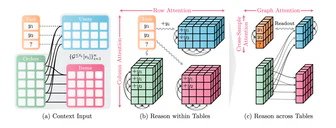
    NVIDIA releases Kumo Relational relational foundation model, capable of prediction without training

    NVIDIA releases pre-trained relational foundation model Kumo Relational, enabling direct prediction on enterprise databases without task-specific training, feature engineering, or table flattening. The model outperforms supervised relational deep learning and expert feature engineering gradient boosting trees on 41 tasks across 15 databases, achieving an MRR 8% higher than AutoGluon ensemble on the SAP SALT benchmark.

    Why it matters: The original provides a comparison result of pre-trained relation models on 41 tasks and an open-source entry, allowing readers to judge whether it can replace the existing XGBoost pipeline.

  16. Hugging Face Blog

    How to reduce inference cost by 77% in real-world applications using a specialized SLM vocabulary list.

    Qwen3-4B's specialized vocabulary list VocabX reduces inference cost by 77% by focusing on the cost of each token rather than frequency, without changing the base model. This method for the Portuguese essay scorer reduces the output layer vocabulary from about 152,000 lines to about 65,000 lines, significantly reducing the computational overhead of token splitting and unused vocabulary items.

  17. Baseten Blog58

    Baseten Releases Global Top Decision Models mammoth-1 and elephant-1

    Baseten Releases Global Top Decision Models mammoth-1 (27B) and elephant-1 (9B), Ranked 1st in Jev Decision Index 0.4 and 1st in 9B Decision Model respectively. Both are open-source and can be tried for free for one week on Baseten model API (default zero data retention).