vLLM Blog5858
vLLM provides zero-day support for MiniMax-M3.1-Flash
vLLM provides zero-day support for MiniMax-M3.1-Flash on NVIDIA Blackwell, Rubin, and AMD MI350 series GPUs, performing excellently on agent workloads.
vLLM Blog5858vLLM provides zero-day support for MiniMax-M3.1-Flash on NVIDIA Blackwell, Rubin, and AMD MI350 series GPUs, performing excellently on agent workloads.
 Sakana AI
 has launched the Sakana Aquarium platform for building, executing, and running AI agents. It integrates organizational information through ontology, supporting the efficient construction and secure operation of AI agents. The platform includes three core mechanisms: ontology, governance, and agent execution base, achieving systematic organizational judgment criteria and task automation.
 LangChain Deep Agents releases4545
`deepagents-code` 0.2.0 version now requires Python 3.14 and has removed low-value startup tests.
 Amazon Science
 releases the open-source backend TorchNeuron, which translates PyTorch code into executable instructions for the AWS Trainium system, supporting existing PyTorch code to run on Trainium. It achieves efficient execution through optimizations like adaptive eager mode and multi-level cache, and uses an AI agent to screen 841 representative models and tens of thousands of tensor dimensions for benchmark testing.
 Databricks Blog3838
Fraud Analyst AI Coworker can detect telecom fraud in real-time on a single platform. The AI addresses the shortcomings of traditional fraud detection systems in terms of architecture through techniques such as cross-channel correlation, behavioral modeling, and device simulation. Its context window covers 6-7 system data sources, with a speed increase of 3.4 times, but the original text does not mention specific parameter scale, benchmark scores, price, and availability (open source/closed source/API).
 OpenAI News3535
OpenAI launches Decisions API, providing applications with fast, focused, and low-cost decision-making capabilities.
 AWS Machine Learning Blog2727
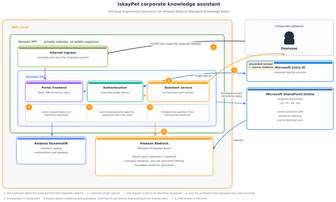
IskayPet has built an enterprise knowledge assistant using Amazon Bedrock Managed Knowledge Bases, which can answer employee questions in four areas (retail operations, veterinary care, HR onboarding, and procurement), across three countries and four languages, without managing RAG infrastructure.
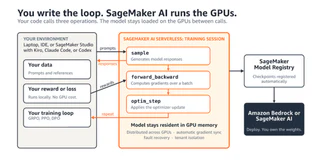
AWS Machine Learning BlogAWS Machine Learning Blog5858The Amazon SageMaker Training Session API allows users to drive GPU-accelerated sessions from a local Python process, enabling algorithmic freedom through operations like forward_backward(), optim_step(), and sample(). SageMaker AI manages GPU resources.
AWS Machine Learning BlogSageMaker AI introduces model customization features without GPU management, allowing users to control post-training logic through training sessions without managing underlying infrastructure. Supports technologies such as SFT, DPO, RLVR, RLAIF, and multi-round RL, with options for LoRA or full fine-tuning.
AWS Machine Learning Blog3434Rescale utilizes Strands Agents and the AI-DLC framework to set up intelligent routing agents on AWS in five days and deploy them in production within weeks. The agent classifies end-to-end test failures at night by calling Claude Opus 4.8, retrieves historical failure patterns from the knowledge base, queries MCP logs for runtime evidence, and generates remediation reports containing file references, function names, and recommended fixes for engineers to review.
 Google Developers Blog
Google API Gateway now supports streaming, allowing real-time API calls without changing the specification. Streaming supports Server-Sent Events (SSE), chunked transfer encoding, HTTP response streaming, and WebSocket, with the longest connection time up to one hour. During the public preview, the streaming feature was enabled when creating the gateway using the `--enable-streaming` flag, and it is planned to be automatically enabled in the official release without additional configuration.
 NVIDIA Blog
NVIDIA announced the Minerva platform today, which integrates telemetry data from infrastructure and AI workloads and applies proprietary AI models to transform it into timely, actionable insights, helping teams identify problems earlier and maintain the productivity of their AI factories.
 NVIDIA Newsroom
European transportation leaders Bolt with Lucid, Mercedes-Benz, Volkswagen Commercial Vehicles, and Einride are showcasing autonomous traffic applications on the NVIDIA Hyperion computing platform, demonstrating potential applications for Level 3 and Level 4 vehicles and future autonomous taxi fleets.
NVIDIA NewsroomAgile Robots has released the Agile ONE SN humanoid robot reference platform, equipped with NVIDIA Isaac GR00T and Jetson Thor, plans to integrate the NVIDIA Halos safety system, providing developers with a complete humanoid robot development and validation platform.
 PyTorch Blog3030
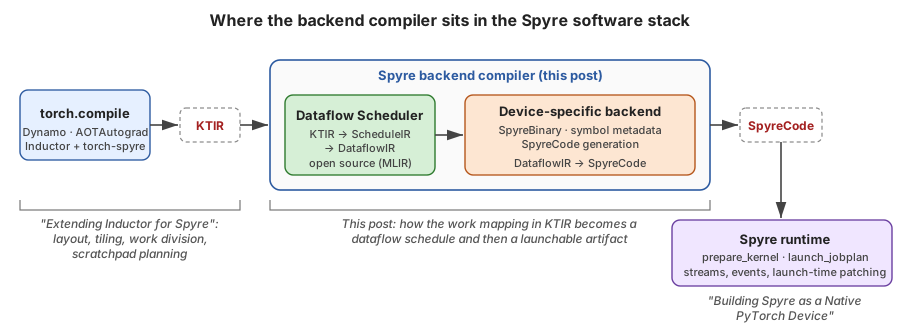
Torch-spyre's Inductor determines how each kernel's work is allocated on Spyre's core and manages the residency of tensors between on-chip Scratchpad and off-chip memory, and the backend compiler translates these decisions into instructions that hardware can actually run.
NVIDIA BlogEuropean retailers are leveraging open models and physical intelligence, such as e-commerce platforms that reduce inference costs by 90%, and distribution centers that simulate collaboration of different robot fleets through digital twins. Shopify uses NVIDIA-accelerated open models to integrate NVIDIA Nemotron 3.5 Lightning into the GraphQL sub-agent of Sidekick through post-training, achieving a 90% cost reduction and a 7-fold increase in response speed.
NVIDIA BlogCompanies are using the NVIDIA DSX AI Factory platform to integrate power grids with AI Factory systems, planning, simulating, and operating from substations to racks to solve the problem of power becoming the biggest bottleneck in infrastructure.
NVIDIA BlogNVIDIA expands the Cosmos platform with new training tools, simulation checkpoints, and Cosmos Data Factory blueprints to help developers quickly build world models. Cosmos Data Factory provides 5 cloud-native blueprints, supporting tasks such as autonomous driving data generation and image attribute enhancement through channels like GitHub and Azure, with Porsche and ANYbotics already applying them to accelerate physical AI development.
NVIDIA BlogEuropean financial services institutions showcase proprietary intelligent systems based on NVIDIA accelerated computing at GTC Berlin, running Open models on their own infrastructure.
AWS Machine Learning BlogThe Adaptive Agentic Intelligence Framework (AAIF) uses Strands Agents to process routine tasks with local small language models (SLMs), and routes complex requests to Amazon Bedrock cloud models, reducing costs while maintaining low latency.
 Hugging Face BlogFeatured7878
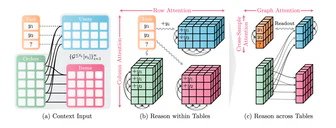
NVIDIA releases pre-trained relational foundation model Kumo Relational, enabling direct prediction on enterprise databases without task-specific training, feature engineering, or table flattening. The model outperforms supervised relational deep learning and expert feature engineering gradient boosting trees on 41 tasks across 15 databases, achieving an MRR 8% higher than AutoGluon ensemble on the SAP SALT benchmark.
Why it matters: The original provides a comparison result of pre-trained relation models on 41 tasks and an open-source entry, allowing readers to judge whether it can replace the existing XGBoost pipeline.
PyTorch BlogPyTorch users can accelerate dense and grouped GEMM, fused multi-head attention, MXFP8/MXFP4 scaled GEMM, RMSNorm, and TopK on AMD MI350 series GPUs using FlyDSL with existing operator API without calling custom kernels
 Google Research
's AI model is validated on JAMA Network Open for its accuracy in assessing gestational age using blind ultrasound scanning technology
Hugging Face BlogHugging Face introduced how to use TorchNeuron for system-level inference performance analysis on AWS Trainium, capturing clean traces with torch.profiler configured for the Neuron backend, and using key_averages() to identify time-consuming operations.
Hugging Face BlogQwen3-4B's specialized vocabulary list VocabX reduces inference cost by 77% by focusing on the cost of each token rather than frequency, without changing the base model. This method for the Portuguese essay scorer reduces the output layer vocabulary from about 152,000 lines to about 65,000 lines, significantly reducing the computational overhead of token splitting and unused vocabulary items.
 Ant Group inclusionAI · Hugging Face new models3535
inclusionAI released the UBTree fine-tuned version of Ling-3.0-tiny, Ling-3.0-tiny-UBTree-B16, with 183.1M parameters, combining a five-layer DFlash backbone and a bigram selector, achieving 2.6-3.5 times speed improvement on benchmarks like GSM8K and MATH-500. This model needs to be used in conjunction with the target model. The UBTree adaptation for the open-source version of SGLang has not yet been released.
 IBM Research Blog
IBM releases vLLM-Hook MIA Plugin, implementing runtime monitoring and control in the vLLM inference engine, 20 times faster than its predecessor vLLM-Hook and 14 times faster than similar methods inserting code inside the model, with only a 2%-6% increase in latency. The plugin allows developers to observe and adjust model states in real-time, such as rejecting malicious prompts, marking hallucinatory facts, or editing response tone and accuracy, while almost not reducing performance.
NVIDIA BlogFeatured6262NVIDIA expands its family of open models to cover language, robotics, biology, and quantum computing, including the new Nemotron 3.5 Super VL and Nemotron 3.5 Bolt.
Why it matters: NVIDIA has rolled out open models across four lines: language, robotics, biology, and quantum, allowing readers to judge the coverage of its open-source ecosystem based on this.
 Mistral AI5050
Mistral is collaborating with NVIDIA to integrate AI models with NVIDIA accelerated computing and physics modeling tools, accelerating engineering simulations and enabling closed-loop AI-driven design. The collaboration will launch public benchmarks and open datasets, standardizing the evaluation of physics and agent AI in computer-aided engineering, and leveraging NVIDIA Omniverse for 3D simulations and resource creation.
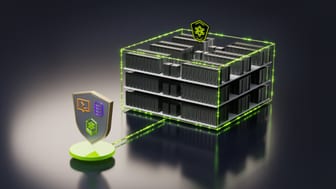
NVIDIA Blog5555NVIDIA Confidential Computing protects models and data execution through hardware root isolation and encrypted authentication, adding Confidential Bare Metal deployment options, enabling cutting-edge model builders to run sensitive workloads on third-party infrastructure while retaining model data control.
NVIDIA Blog5858NVIDIA European partners are expanding regional computing capabilities to support model training and inference, helping developers build agentic and physical AI applications. Nscale achieves 37% more GPUs and 50% higher inference throughput using the NVIDIA DSX platform, Crusoe develops a liquid-cooled AI factory for low-latency inference, and Nebius adopts the NVIDIA Groq 3 LPX to accelerate sensitive applications.
NVIDIA BlogNVIDIA showcased its full lineup of local AI hardware at GTC Berlin, with RTX Spark now available to support personal agents on Windows PCs, DGX Spark enabling developers to build and scale Linux applications, and DGX Station designed for Linux enterprise teams to run cutting-edge workloads, with the Windows version launching in December.
Databricks BlogDatabricks releases AI Runtime (AIR), bringing managed GPU infrastructure directly into its platform, allowing customers to train high-demand models at their enterprise data location. AIR provides GPU infrastructure, developer tools, and data governance features, supporting large-scale training, rapid iteration, and load safety, with customers not needing to manage a separate GPU stack.
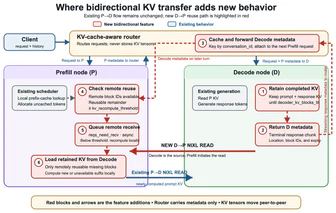
AWS Machine Learning Blog5858vLLM's bidirectional KV transmission mechanism reduces redundant calculations by allowing the decoding node to return previously computed KV cache to the pre-filled node in subsequent dialogue turns. In multi-round benchmark tests on AWS EC2 P5en instances, it improved the TTFT of Qwen3-32B by 1.6x and zai-org/GLM-5-FP8 by 3.3x. This feature is implemented by extending the NIXL KV connector and utilizing a KV cache-aware router to coordinate KV reuse across dialogue turns.
AWS Machine Learning Blog4949vLLM introduces a push-based NIXL connector, by moving post-pre-filled transmission coordination and setup out of the critical path, reducing time to the first token (TTFT) and time per output token (TPOT), enhancing application responsiveness.
AWS Machine Learning Blog3232Deepgram deploys the Nova-3 speech recognition model to PyTorch via AWS Trainium2, running 8 replicas on a single trn2.3xlarge instance, processing offline batch workloads with 11-70% more audio per dollar, and using the NKI library and Neuron Explorer/NAD toolchain for kernel-level tuning to improve inference efficiency.
AWS Machine Learning Blog5858TwelveLabs' Pegasus 1.5 video language model is now available on Amazon Bedrock, which can convert long videos into structured, timestamped metadata, supports analyzing the entire video based on user-defined standards and returns JSON data of matching segments, analysis duration extended to two hours per request, no pre-indexing required and data remains within AWS boundaries.
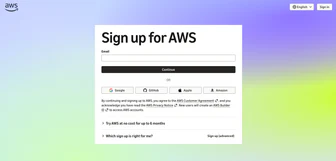
AWS Machine Learning Blog3434The new AWS experience allows new SageMaker AI customers to enter a fully configured SageMaker Studio environment with just a few steps after registration, without setting up an advanced AWS account or manually configuring the environment. New customers also receive $100 in AWS Free Tier credit.