Codex releases55
GitHub Copilot rust-v0.166.0-alpha.4 released
GitHub Copilot rust-v0.166.0-alpha.4 released, this version includes new feature improvements and performance optimizations.
Codex releases55GitHub Copilot rust-v0.166.0-alpha.4 released, this version includes new feature improvements and performance optimizations.
 Claude Code releases1515
Claude Code v2.1.312 released, adding OIDC user ID claim support, full-screen send prompt optimization, skill path fixes, etc.; fixed VS Code extension session setting retrieval.
 Gemini CLI releases1515
Gemini CLI v0.66.0-nightly.20261013.g204db94ae released, fixes UI output synchronization, terminal buffer flickering, and tool container scroll bar bleed
Gemini CLI releases1212Gemini CLI v0.67.0-preview.0 released, adds CLI functionality to bridge IDE companion to container sandbox, and fixes the core issue of repeatedly loading agents when the workspace is the home directory.
 Together AI Blog3838
Together AI has launched an auto-repair feature for GPU clusters, which continuously monitors node health on both virtual machines and host machines. When a failure is detected, it recommends minimizing repair actions and provides evidence, allowing users to choose automatic execution or manual approval. This feature is now fully available, supporting passive health checks, repair recommendations, automatic repair policies (including fault and node-level authorization), idle wait control, upgrade tiers, and safety guards, and is performed via API and console; the preview version provides repair commitment support based on node tags for third-party detection systems.
 Databricks Blog
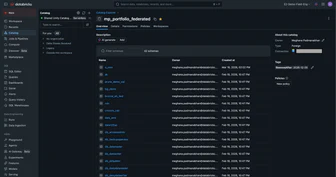
Databricks Lakehouse Federation allows users to query data directly from external databases (such as SQL Server, PostgreSQL, etc.) using standard SQL without migration.
Databricks Blog4545Databricks Vital Skills enhances Genie Code's knowledge in the healthcare and life sciences field through the open-source Agent Skills standard, achieving a score improvement in the BiomniBench benchmark test.
Codex releases1010GitHub Copilot rust-v0.166.0-alpha.3 has been released, version number 0.166.0-alpha.3.
 LangChain Deep Agents releases1515
LangChain QuickJS 0.3.11 Released, resolving issues in the evaluation phase by delaying QuickJS runtime initialization. This version improves code execution efficiency and raises the minimum requirement for the 'all' dependency.
 Hugging Face BlogFeatured7676
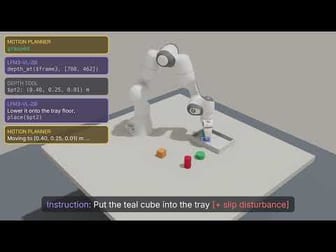
Liquid AI releases the new generation Liquid Foundation Models, LFM3, deriving six 2B-level models from the shared backbone LFM3-1.7B-Base, covering text, vision, audio, multimodal, and decision, all open weights on Hugging Face.
Why it matters: Liquid AI derives six modality models from the same 2B-level backbone and provides single-card fine-tuning and edge deployment paths, which can be used to judge the specialization route for small models.
 LangChain BlogFeatured7171
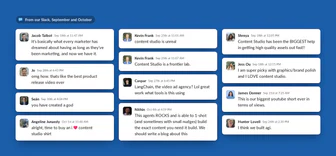
LangChain introduces the internal design of its intelligent agent Content Studio, which can generate videos, social media graphics, UI diagrams, and presentations in Slack with a single prompt word, with all materials generated by code.
Why it matters: LangChain has disclosed the complete setup process of its design agent Content Studio, including skills, wiki, inspection gates, and the division of labor between asynchronous sub-agents, which can serve as a reference for building vertical agents.
Hugging Face BlogHugging Face releases Old Ideas, Novel Problems study, evaluating the reliability of six LLMs (GPT-5.1 to 5.4, Claude Sonnet 4.5 to 4.6) in judging the reliability of research innovation.
 NVIDIA Blog
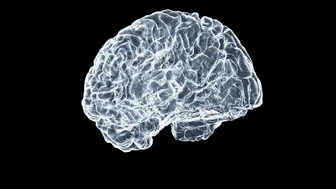
C-BRAIN and NVIDIA are using AI to change the pace of dementia research. They are accelerating the development of new therapies by integrating previously unpublished Alzheimer's research data, including unpublished results and controlled proprietary data. C-BRAIN employs a hybrid centralized and federated architecture to protect data privacy, deploying 64 NVIDIA data center GPUs and cloud nodes, and plans to introduce the NVIDIA Blackwell system to support its expansion goals.
 IBM Research Blog3838
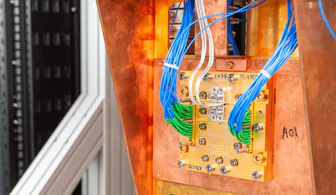
IBM researchers use four meter-scale l-couplers to connect two IBM Quantum Nighthawk processors, achieving 99% quantum state transfer fidelity, demonstrating reliable quantum information transfer between processors. This new inter-chip connection design is compatible with IBM Quantum Nighthawk and can be scaled to IBM Quantum Starling and more advanced quantum computers.
 Ant Group inclusionAI · Hugging Face new models5858
inclusionAI/Ling-3.1-flash-1019 released, 560B parameter size, 25B active parameters/Token, 1M context window, improved reasoning ability, AA-Briefcase score 1524 Elo, AutomationBench-AA 68%, Artificial Analysis Intelligence Index v4.3.2 44 points. Supports SGLang and vLLM inference.
Codex releases55GitHub Copilot rust-v0.166.0-alpha.2 has been released.
 Ai2 Blog
Ai2 has released a study titled 'Old Ideas, Novel Problems,' evaluating the reliability of six LLMs (GPT-5.1 to 5.4, Claude Sonnet 4.5 to 4.6) in judging the innovativeness of scientific research. The study found that fine-tuning prompts can lead to accuracy differences of over 50%. The research constructed a benchmark dataset containing 154 human-generated and 154 AI-generated scientific ideas, confirming that models have insufficient stability in judgment and require more reliable methods to evaluate new ideas proposed by AI.
Ant Group inclusionAI · Hugging Face new models5858SingProbe is a streaming safety probe based on Qwen/Qwen3.8-Flash-Next, which scores query intent, response unsafety, and hallucination risk at each step of generation by reusing the hidden states of the base model, with less than 0.5% overhead during decoding.
Ant Group inclusionAI · Hugging Face new models5858inclusionAI releases a lightweight streaming security probe SingProbe based on GLM-5.3-Flash, which scores query intent, response unsafety, and hallucination risk in real-time by reusing the hidden states of the base model.
Codex releases00Rust v0.165.0-alpha.1.2 released, including 143 major commits.
 Sakana AI
In 2026, Sakana AI released Sakana Chat, Sakana Marlin, Sakana Fugu, and Sakana Translate, transitioning from a research company to a product delivery phase, with its GTM team officially launching in September 2026.
Ant Group inclusionAI · Hugging Face new models3838inclusionAI/Ling-3.0-flash-Sante-fp8 released FP8 quantized version, retaining 124B parameters (5.1B/Token) and BF16 performance, reducing memory and improving deployment efficiency, supporting medical inference, research, and tool-assisted workflows, requiring professional manual review. Stable performance on benchmarks like Healthbench, ReDisQA, achieving efficient inference through block FP8 quantization (128x128 blocks).
Gemini CLI releases1212Gemini CLI v0.67.0-nightly.20261027.g363a13119 release, fixed project spending limit error classification, MCP server and tool metadata permission requests, command line chat list auto-completion and numeric setting editor validation issues, new contributor @duvanka-prasad
Databricks BlogLakeflow Connect supports wikis, project management tools, and AI base models through native connectors, enabling downstream AI agents to obtain complete business context. The platform provides fully managed native connectors that support SaaS applications, databases, and file sources, with data directly imported into the Databricks platform, and incremental import of Unity Catalog tables through point-and-click UI or API configuration.
Codex releases1010GitHub Copilot rust-v0.166.0-alpha.1 has been released, version number 0.166.0-alpha.1.
Claude Code releases1515Claude Code v2.1.311 released, new --hold-idle-file and --max-hold-min parameters to keep idle sessions, and fixed stuttering issues at startup and after file reading/editing.
LangChain Deep Agents releases1212LangChain QuickJS 0.3.10 released, fixes PTC prompt cache issue, now caches prompts by slot and tool identity.
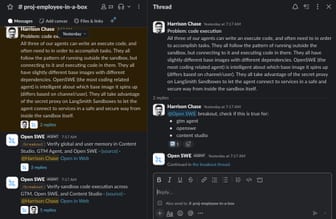
LangChain Blog5858LangChain's internal agents integrate with Slack to execute tasks as a user or with fixed credentials, featuring global and user-level memory, executing code in a sandbox, and supporting background scheduling. Its architecture includes three agents: GTM, OpenSWE, and Content Studio, which handle GTM activities, engineering code reviews, and marketing content creation, respectively. The 'breakout' feature optimizes user experience and addresses core issues like authentication.
Codex releases55GitHub Copilot rust-v0.165.0-alpha.3 released.
 Apple Machine Learning Research
The GHARP method animates 3D heads in real-time using a small amount of input images and expression signals, divided into an offline identity phase (constructing geometry and appearance representations) and a runtime animation phase (predicting expression residuals). This method performs animation in the semantic structure latent space of the pre-trained reconstruction model, limiting the expression change space to achieve efficient residual prediction, and achieves SOTA quality on the Ava-256 benchmark, with a 13x speedup on A100 GPUs and an 8x reduction in the number of Gaussians.
LangChain Deep Agents releases55LangChain Modal 0.0.7 released, fixes file permission and directory errors. This update improves the stability of the package.
 AWS Machine Learning Blog3838
Amazon SageMaker SDK v3 released, training anomaly detectors and defect classifiers for each camera through dual-branch SageMaker Pipelines, and setting quality gates to prevent underperforming models.
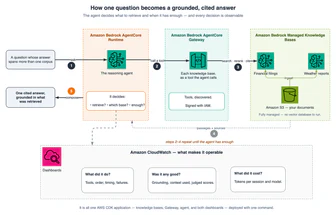
AWS Machine Learning Blog4848Building enterprise-grade intelligent retrieval on Amazon Bedrock knowledge base using AWS CDK, providing multi-round planning and tool-driven retrieval through the reasoning agent and AgenticRetrieveStream API, returning referenced answers. The solution deployment includes a CDK application with Amazon S3 corpus, knowledge base, and reasoning agent, supporting semantic routing and multiple retrievals, and built-in Amazon CloudWatch monitoring and evaluation features.
Codex releases1010GitHub Copilot rust-v0.165.0-alpha.2 released, version number 0.165.0-alpha.2.
 Google Developers Blog5858
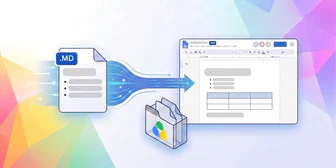
Google Workspace allows users to natively preview, edit, and collaborate on Markdown (.md) files in Google Docs and Drive without converting file types, preserving the underlying document. This feature supports real-time collaboration, version history tracking, and allows formatted Markdown files to be previewed in Drive, facilitating work between humans and AI agents. Any user with a Google or Workspace account can start using it immediately.
 Meta Engineering5858
Meta shared network innovations at the 2026 OCP Global Summit to support its latest AI models Muse Wonder and Muse Spark and Prometheus clusters.
IBM Research Blog5858IBM and the PyTorch Foundation announce that Spyre accelerator will become the first-class backend for PyTorch and support multi-accelerator scheduling. The torch-spyre compiler, Spyre vLLM plugin, and continuous integration efforts enable models and workflows to run on Spyre, an architecture optimized for inference, suitable for IBM Z, LinuxONE, and Power systems.
Ant Group inclusionAI · Hugging Face new models1010inclusionAI releases LBS-27B large language model, with a parameter size of 27B, but does not provide README content and specific benchmark scores, currently no inference providers are deployed.
 Ollama BlogFeatured6262
Ollama adds text-to-speech capability, the first integrated speech model is the small TTS model family Phonon from Gradium, currently supporting macOS, Windows, and Linux with support for Linux to be released soon.
Why it matters: The original text provides throughput comparison, accuracy, and OpenAI-compatible interface after Ollama integrates speech models, which can be used to judge the local TTS implementation method.
Ant Group inclusionAI · Hugging Face new models5858inclusionAI/Ling-3.1-flash-base is released, a sparse MoE architecture large model with 560B total parameters and 25B active parameters. It adopts a hybrid linear attention mechanism (63 KDA + 9 Gated MLA) and performs excellently in 47 cross-domain benchmark tests spanning eight fields. It supports continuous pre-training, domain adaptation, and post-training research. The model is trained with FP8 precision and released with BF16 precision, following the MIT license.