Skip to content
Live
Nov 2Mon
Nov 1Sun
  1. Databricks Blog58

    Databricks Lakebase branching helps CI/CD: experience from 100 PR databases

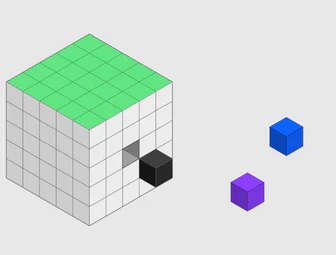
    Databricks Lakebase reduces the creation time of each PR branch to seconds with its copy-on-write database branching feature, supporting up to 100 concurrent branches, with each branch having independent read/write, compatible with standard Postgres, and supports large JSONB/LOB columns, meeting Snorkel AI's needs for fast, secure, and low-cost testing of production data in CI/CD processes.

Oct 31Sat
Oct 30Fri
  1. Google DeepMind58

    PlanAssist tool can reduce the time planning officials spend assessing housing applications by 58%

    PlanAssist tool can reduce the time planning officials spend assessing housing applications by 58%, has been piloted in Barnet, Camden, and Dorset in the UK, and is now being rolled out to 12 more local planning authorities. The tool was developed by Google DeepMind in collaboration with the UK government, Google Cloud, and Faculty, based on the Gemini architecture. It accelerates the process by automatically verifying documents, checking policy constraints, and drafting reports, while retaining the final decision-making authority of officials.

  2. Ant Group inclusionAI · Hugging Face new models38

    inclusionAI/ZwZ2-9B-GGUF GGUF format weights release

    inclusionAI releases ZwZ2-9B GGUF format weights, belonging to the Zooming without Zooming v2 project, including language models (FP16, Q8_0, Q4_K_M) and visual encoders and projectors (mmproj, FP16, Q8_0, Q4_K_M), requiring pairing with llama.cpp Qwen3.5 multimodal support for use, supporting CLI inference and Web Chat deployment.

  3. Ant Group inclusionAI · Hugging Face new models

    inclusionAI/ZwZ2-4B-GGUF model weights released

    The inclusionAI/ZwZ2-4B-GGUF model weights have been released. This model is part of Zooming without Zooming v2 and is divided into a language model (FP16, Q8_0, Q4_K_M) and a visual encoder and projector (mmproj, FP16, Q8_0, Q4_K_M), offering multiple precision combinations. It needs to be used with llama.cpp (supporting Qwen3.5 multimodal).

  4. Claude Code releases15

    Claude Code v2.1.314 released

    Claude Code v2.1.314 released, added write permission interception outside the working directory, optional identity group upstream routing, Bedrock upstream guard logs, idle conversation summary feature, fixed multiple session interruption, model switching, TLS connection, and tool call issues.

  5. LangChain Blog67

    LangChain adds browser capabilities to Managed Deep Agents

    LangChain adds browser capabilities to Managed Deep Agents, allowing developers to export browser configurations through define_browser, enabling managed agents to read page rendering results and perform click operations.

    Why it matters: The original text provides the integration method for browser tools, handoff mechanisms, and WebVoyager experimental data, which can be used to determine how managed agents can cover web tasks without APIs.

  6. Amazon Science

    Amazon Science explores technology to accelerate language models in travel applications

    Amazon Science combines knowledge distillation (KD) and the Medusa framework to optimize the travel platform LLM. After fine-tuning, KD training, and Medusa head modification, the TinyLlama 1.1B model achieves performance close to the 70B parameter Llama-3.1 teacher in AI travel planning, intelligent filtering, and accommodation description generation scenarios, with costs reduced by two-thirds and speed increased by 10-20 times.

  7. AWS Machine Learning Blog42

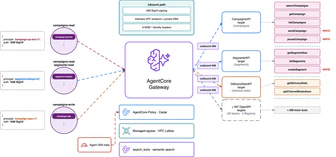
    MoEngage on how to use AgentCore Gateway to convert 400 APIs into intelligent agent tools

    MoEngage transforms 400 internal APIs into permission-controlled intelligent agent tools through Amazon Bedrock AgentCore Gateway, solving multi-team API integration challenges. This solution eliminates the need to set up MCP servers or configure networks, reducing the time to launch new APIs from days to hours while meeting constraints such as keeping APIs within the VPC, controlling identities from the server side, and ensuring tool definitions do not occupy the reasoning context window.

Oct 29Thu
  1. Hugging Face Blog

    Project ProtoStar project release: Promoting the AI compatibility of publicly funded scientific research

    Project ProtoStar is announced, aiming to unlock the potential of publicly funded scientific research by making datasets, models, and code more accessible and reusable. The project brings together universities, research institutions, industry, and the open science community, supporting the release of scientific achievements in AI-compatible, machine-actionable formats, and demonstrating its value through a series of public challenges. The first challenge, hosted by Carnegie Mellon University, will launch on November 2.

  2. Hugging Face Blog85

    Mistral Large 4 (Le Chonk) released on Hugging Face

    Mistral releases multimodal MoE model Mistral Large 4 (Le Chonk), with approximately 1T total parameters, 49B activation parameters, a context window of 1M tokens, offering two official versions FP8 and NVFP4, as well as GGUF made by Unsloth and llama.cpp teams.

    Why it matters: The original text provides specific scores for the 1T total parameter, 49B activation multimodal MoE model on cybersecurity and coding benchmarks, along with measured throughput for local and endpoint deployment.

  3. Hugging Face Blog

    Hugging Face Granite Switch 4.1.1 released: software-based model update

    Hugging Face releases Granite Switch 4.1.1, an incremental update based on 4.1, maintaining full backward compatibility. New features include multilingual speech-to-text models (supporting 10 languages with native punctuation) and a decision adapter for improved performance on the Jev decision index test set. The team achieves rapid deployment by updating only the adapter without recalculating the base model, and future support for third-party custom adapters is planned.

  4. Mistral AI82

    Mistral releases open-source model Mistral Large 4 (Le Chonk) with trillion parameters

    Mistral releases open-weight version of its flagship trillion-parameter native multimodal model Mistral Large 4 (Le Chonk), which has been in public preview for three weeks.

    Why it matters: The official provides data on the encoding, security, and inference efficiency of the trillion-parameter open-source model, as well as weight downloads and self-hosting paths.

  5. ByteDance Seed · Hugging Face new models

    ByteDance-Seed/GenFirst releases: A generative pre-reconstruction method for stable end-to-end latent generation modeling

    ByteDance-Seed/GenFirst trains a latent VAE and combines it with a generative prior to avoid latent collapse, which usually makes end-to-end training unstable. The two-stage plan of this method is used for prior and entropy weights: the first stage lets the prior shape the latent geometry, and the second stage reduces both weights tenfold, allowing the decoder to recover details.

  6. Databricks Blog

    Databricks launches voice agents, delivering real customer value through context.

    Databricks releases voice intelligence agents, which adjust responses in conversations based on real-time contextual decisions, enabling language switching, transferring to a human, or providing personalized services. These agents need to process customer requests within 200 milliseconds and rely on the context, ontology, and governance capabilities provided by Databricks. They integrate customer, order, product, and policy data, and follow the access rules of the enterprise data catalog.

  7. AWS Machine Learning Blog58

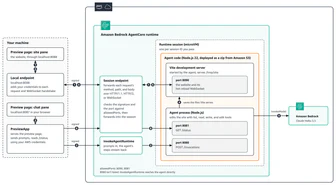
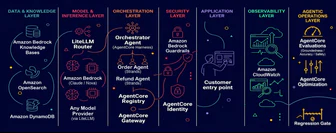
    Build an enterprise-grade agent platform based on Amazon Bedrock AgentCore

    Amazon Bedrock AgentCore provides modular services such as runtime, gateway, identity, memory, policy, registration, and evaluation, supporting large-scale agent construction, deployment, and operation. The enterprise-grade agent platform blueprint based on AgentCore adds enterprise-level constraints such as ownership, account boundaries, software delivery, observability, cost governance, and retirement, achieving controlled access through inference gateway and tool gateway, and including an evaluation process to ensure agents are validated before production deployment.

  8. Google Developers Blog58

    How Agents CLI optimizes Agent quality through Hill-Climbing

    Agents CLI v1.8.0 achieves Hill-Climbing optimization of Agent quality through commands like eval generate, eval grade, etc., using the custom_response_quality metric to rate 4 cases from 1 to 5, finding that changing the system prompt to a chef role reduced the average score from 4.0 to 2.75. This tool supports model backend experiments and automatic alerts, improving Agent performance through iterative cycles.

  9. LangChain Blog

    How to use crons to build proactive agents with LangChain

    LangChain found that nearly 70% of Managed Deep Agents run from scheduled tasks. Crons enables agents to have proactivity, personalization, and ambient characteristics by implementing mechanisms such as memory ('dreaming'), proactivity (exploring new actions), intelligent filtering (monitoring event streams), and reminders (scheduled tasks).

Oct 28Wed
  1. Hugging Face Blog78

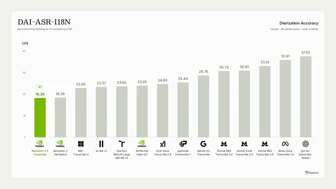
    NVIDIA has released Nemotron 3.5 Transcribe and the Granary v2 data pipeline.

    NVIDIA has released the open-source weight model Nemotron 3.5 Transcribe, integrating transcription, speaker separation, translation, and audio Q&A into a single checkpoint, supporting transcription in 40 languages, translation between 31 languages and English, and speaker annotation in 13 languages, capable of processing the longest 1-hour recordings and annotating up to 8 speakers.

    Why it matters: The original text provides a unified weighting model for multilingual transcription, speaker separation, and translation, along with an open data pipeline and fine-tuning recipes, which can be used to determine the adaptation path for voice scenarios.