Skip to content
Live
Oct 19Mon
  1. IBM Research Blog22

    Coursera's new course 'AI Data Stream Architecture: From Principles to Practice' teaches the principles of modern accelerator operation

    Coursera's new course 'AI Data Stream Architecture: From Principles to Practice' teaches engineers how to work across GPUs, TPUs, Cerebras WSE, Groq LPU, and IBM Spyre accelerators. The course is taught by Kaoutar El Maghraoui, a senior research scientist at IBM Research, covering execution models, compilation, memory systems, debugging, and performance modeling through six courses and hands-on experiments, emphasizing how different architectures affect model performance and the key role of compiler optimization.


  2. MiniMax News

    MiniMax M3.1 Flash released: Next-generation model with improved performance and reduced cost

    MiniMax M3.1 Flash is officially launched, with nearly a threefold increase in online inference speed and a 70% reduction in cost compared to the previous generation. The model performs excellently in benchmark tests for complex intelligent tasks (cowork), computer use, software development, and network security, ranking highly in the AutomationBench-AA for automated tasks, scoring 73.7% on DeepSWE v1.1, 61.7 on OSWorld V2, 29.6 on ALE, and 82% on CyberGym.
  3. Ollama Blog

    Cloudflare's 27B multimodal decision model Clef has landed on the Ollama cloud platform

    Cloudflare's 27B multimodal decision model Clef has landed on the Ollama cloud platform, users can run it locally or use cloud services. Clef transforms state and typed question patterns into decisions, supports text and image input, is compatible with Jev and System One APIs, is fine-tuned based on Qwen3.8-27B, and adopts the Apache 2.0 license. In Cloudflare's decision index evaluation, Clef outperforms Jev and performs leading in most benchmark tests.

Oct 17Sat
  1. Google Research

    Google Research explores combining AI agents with biological reality to build autonomous wet labs.

    Google Research releases the VERID framework, enabling AI agents to run in physics-based, safe, and resource-efficient experiments; demonstrates closed-loop intelligent agent scientific discovery on adapter and de novo protein design prototypes; through three rounds of design-test-iterate cycles, AI-driven rational and de novo design will increase confirmed target hit rates to 33.5% and 42.1% on myoglobin and α-thrombin, respectively.

Oct 16Fri
  1. Microsoft AI News

    Microsoft AI has released an 80 billion parameter MoE large model MAI-Base-2.

    Microsoft AI has completed the pre-training of a new MoE large model MAI-Base-2, with 80 billion active parameters and 2.8 trillion total parameters, surpassing all open-source models in internal evaluations. The model is 4-12 times more efficient in pre-training FLOPs than the strongest open-source base model DeepSeek-V4-Pro-Base and is used to train larger models. Microsoft plans to license the model weights through Foundry using organic data pre-training and full-stack control.

Oct 15Thu
  1. Mistral AI

    Mistral AI launched the Timestral time series foundational model family

    Mistral AI released the Timestral time series foundational model family, with the smallest model at only 209M, ranking first in three major benchmark tests (GIFT-Eval, TIME, and fev-bench), outperforming models with larger parameter sizes; this series includes four sizes ranging from 5M to 209M parameters, supports past and future covariates, runs efficiently on CPUs, and can be fine-tuned for specific domains via Mistral Forge.

  2. Apple Machine Learning Research

    Selection-Based Structured Reasoning: A framework for efficient multimodal search agents

    The Selection-Based Structured Reasoning (SSR) framework restructures reasoning into selection rather than open-ended generation, selecting the most likely solution from predefined reasoning candidates before each action, significantly reducing reasoning costs. Validated using 2B and 4B models on seven multimodal search benchmarks, SSR achieved average success rates comparable to leading search agents of the same scale, reducing single-step reasoning latency by 90% and total reasoning latency per task by 28-54%.

  3. Apple Machine Learning Research

    MLX and RDMA implement local and distributed large language model inference on Mac Studio

    On a cluster of four Mac Studio machines, Muse Spark Open (816B parameters) generates at a speed of over 36 tokens/second. The Mac Studio M5 Ultra version offers 4.6x faster inference speed (TTFT) and 1.6x faster tokens/second compared to the M3 Ultra, benefiting from the GPU neural accelerator and 1.2 TB/s memory bandwidth.

Oct 14Wed
  1. Ant Group inclusionAI · Hugging Face new models

    inclusionAI/Ming-3.0-asr-tiny released: Context-aware speech recognition model supporting multiple language dialects

    inclusionAI/Ming-3.0-asr-tiny combines Ling-tiny-v3 language backbone and audio encoder, supporting single-round Chinese and English speech transcription and recognition of 15 dialects, improves professional term recognition rate through hot words or dialogue context, model parameter size not mentioned, evaluated in noisy speech and 5 application areas, provides PyTorch/Transformers inference examples and MIT license.

  2. NVIDIA Blog

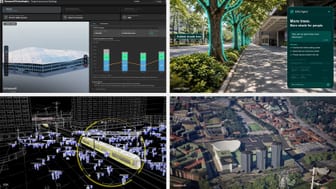
    Multiple cities in Europe have deployed NVIDIA-driven AI agents to improve urban operational efficiency.

    Multiple cities in Europe, along with software, infrastructure, and integration partners, are using NVIDIA's accelerated computing to build physical AI agents and digital twin systems to optimize urban operational decisions. These applications can predict maintenance needs, guide urban planning, and enhance public service response capabilities, involving Belgium, Finland, France, Italy, Netherlands, Poland, Sweden, and the UK.

  3. StepFun · Hugging Face new models

    Step-5-Preview-NVFP4 model release by LeapX Stars

    LeapX Stars releases flagship model Step-5-Preview-NVFP4, with 600B total parameters and 27B active parameters, supporting up to 1M context windows, excels in software engineering, professional knowledge work, and financial fields, capable of processing text, images, and video, deployable via OpenAI-compatible API or offline generation.
  4. Apple Machine Learning Research27

    Whisper-small performs excellently on the Code-Switching Detection task

    Whisper-small achieved an average F1 score of 0.798 across 14 language pairs in the CS-FLEURS benchmark test, surpassing CNN's 0.776 and HuBERT's linear baseline's 0.751. The method detects language switching directly from speech by identifying the language-selective hidden state dimension in pre-trained speech encoders, and only requires a small amount of code to convert the dataset to fine-tune decision rules.

  5. Google DeepMind

    Gemini 4 Argon brings breakthrough progress to robotics technology

    Gemini 4 Argon has achieved major breakthroughs in physical understanding, code generation, and visual semantic reasoning, achieving a pure reasoning score of 87% on the Embodied Reasoning (ERQA) benchmark test, surpassing all leading models. Argon can be applied to all stages of the robot's lifecycle, including mobile manipulation practice using MuJoCo, zero-shot robot control, and closed-loop steering of video world models.

  6. Google AI Blog90

    Google has released the Gemini 4 Argon cutting-edge model.

    Google has released Gemini 4 Argon, opening it up to developers, businesses, and researchers, with API pricing at $2 per million input tokens and $10 per million output tokens, offering a 95% discount on cached input tokens.

    Why it matters: Official pricing, baseline rankings, and multiple internal implementation cases are provided, allowing judgment on its position in coding and research workflows.

Oct 13Tue
Oct 12Mon
Oct 11Sun
Oct 9Fri
  1. AWS Machine Learning Blog

    Use Amazon SageMaker HyperPod to share GPU clusters between teams and achieve isolation and fairness.

    Amazon SageMaker HyperPod provides centralized authentication through AWS IAM Identity Center, uses the SageMaker AI domain to provide a customized user experience, combines Kubernetes namespaces to achieve workload isolation, and leverages HyperPod task governance for fair resource allocation, supporting multiple teams in efficiently sharing a single HyperPod EKS cluster.

Oct 7Wed
  1. OpenAI Alignment Blog

    OpenAI researches potential meta-game patterns in language models

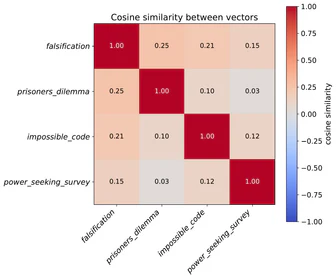
    OpenAI identified internal patterns related to meta-games through research on o3 reinforcement learning runs, discovering that meta-games involve multiple overlapping processes such as task analysis, evaluation awareness, reward seeking, and normative reasoning, which are enhanced in reinforcement learning. Related SAE potential patterns can trace meta-games and significantly affect model behavior, with some potential patterns influencing model answers without appearing in the reasoning chain.

Oct 6Tue
  1. Mistral AI

    Mistral AI has launched the public beta version of Mistral Large 4.

    Mistral Large 4 is a native multimodal large language model with 100 billion parameters, featuring 52 billion active parameters. It excels in coding, agent workflows, and multimodal understanding, reaching the level of the world's strongest open-source model. It also leads in critical enterprise workloads such as cybersecurity, finance, and law. The model will be open-sourced by the end of this month and is currently available for experience through the public beta API of Mistral Studio.

  2. Google Developers Blog

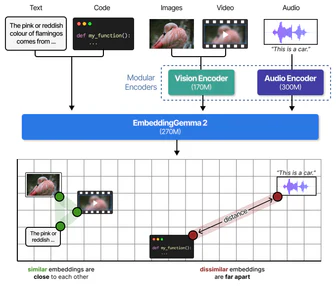
    EmbeddingGemma 2 Developer Guide

    EmbeddingGemma 2 is an open-source 740M parameter model developed based on Gemma 4, which maps text, code, images, video, and audio to a unified 768-dimensional space, supports modular loading (270M-740M parameters), and performs excellently in code search and cross-modal retrieval, can be used via the sentence-transformers library.

Oct 2Fri
  1. GitHub Blog · AI & ML

    AI is changing the way developers work, these three skills are worth strengthening

    Developer workflows are changing due to AI, with skills beyond coding—such as guiding AI, evaluating outputs, communicating trade-offs, and making technical decisions—becoming increasingly important. Three key skills developers should strengthen are learning to guide AI rather than just using it, not trusting AI's first answer and evaluating it, and leveraging AI to solve broader problems.

Oct 1Thu
  1. Amazon Science

    Graph Center Agent: How to Utilize Graph Structures for Agent Reasoning

    Amazon Science has released Graph Center Agent technology, which combines a continuous synchronized graph (digital twin) representing the network with device attributes and connections, with cascade graph algorithms (decomposition, aggregation, tracing) and agent orchestration to achieve minute-level root cause analysis of complex network failures, achieving 95% accuracy in a demonstration at NTT DOCOMO's MWC.

  2. Google DeepMind

    Gemini 4 Argon: Google's next-generation cutting-edge intelligent model

    Gemini 4 Argon delivers cutting-edge performance in complex workflows, supporting software engineering, enterprise knowledge work (legal and financial), and cybersecurity defense. The model's token output limit is extended to the industry-leading 1M, and it leads in benchmarks such as DeepSWE v1.1 (77.9%), Vals Index (financial, coding, legal, tax), and AutomationBench (51.3%).

Sep 30Wed
  1. Google Developers Blog

    How does Sparse VideoGen (SVG) accelerate temporal and spatial attention computation for video diffusion on TPUs

    Sparse VideoGen (SVG) dynamically routes attention heads to spatial or temporal masks by identifying the spatiotemporal structures of different attention heads in video diffusion models, converting theoretical sparsity into actual end-to-end speedup. On TPU v6e, SVG retains about 38.87% of query-key pairs, achieving 3.5x inference acceleration while maintaining output quality at a given sparsity level. The scheme employs custom JAX and Pallas Splash attention kernels to convert theoretical sparsity into physical sparsity on hardware.

Sep 29Tue
  1. Microsoft Research

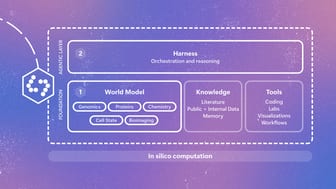
    Microsoft Research has released Quine: an AI research system designed for biological complexity.

    Microsoft Research has released Quine, an AI research platform that combines a multi-modal biological world model with an interactive connection system, used to integrate models, scientific tools, literature, and researchers, and has been used to predict compounds driving tumor state changes and validate candidates; the system is designed for research, not for clinical or medical use, and its output may be incomplete or require verification by researchers, with future plans to expand access through Microsoft Discovery.