Skip to content
Live
Nov 11Wed
  1. Claude · YouTube

    Claude enhanced interactive connector function, can use the full tool version directly within the application

    Claude adds interactive connector functionality, allowing users to directly open the full version of the tool within applications like Adobe, Atlassian, and Box for collaboration. The video demonstrates adding a plan summary in Confluence, applying a dither effect in Adobe, and checking flat design standards in Box, among other operations, and supports users to modify it themselves or have Claude assist with it. This feature has started rolling out on web and desktop versions.

  2. Meta Engineering

    Meta open-sources Triton Low-Level Extensions (TLX): a hardware-native GPU compiler optimized for large-scale production ML

    Meta open-sources Triton Low-Level Extensions (TLX) compiler, enhancing GPU performance by introducing explicit warp-group and cluster-level orchestration, supports RecSys training/inference and LLM pre-training, achieving end-to-end performance improvements over standalone libraries on NVIDIA and AMD GPUs.

  3. Meta Engineering

    Meta launches Your Algorithm tool to make Facebook recommendation content more transparently personalized

    Meta has launched the Your Algorithm tool, allowing users to edit interest lists ("Interested In"/"Not Interested In") in natural language to adjust Feed and Reels recommendations in real-time. The system uses LLM to process user preferences and integrate user behavior, achieving responsive adjustments through retrieval, reordering, and pushing optimization stages. New interest content will appear quickly but will not dominate recommendations.

  4. LangChain Blog

    Workday how to build an AI intelligent agent platform with LangGraph and LangSmith

    Workday has utilized LangGraph for agent orchestration and LangSmith for tracking and evaluation, reducing prototype development time from 5 months to within 1 day with a 4-person team by 2025 and supporting production environment deployment. Its Python SDK 'Workday LangChain' encapsulates LangChain core components and routes through internal services (including LLM gateway, RAG retrieval) while meeting enterprise-level security and compliance requirements.

  5. AWS Machine Learning Blog

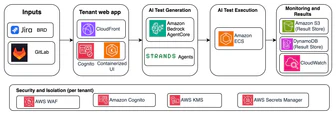
    How TCS uses Amazon Bedrock AgentCore to build an agentic test orchestrator

    TCS has built an Agentic test orchestrator for BFSI clients, transforming requirements into executable controlled tests through Amazon Bedrock AgentCore, breaking down tests into dedicated tasks and executing them using their respective agents, tools, and validation rules, while meeting project-specific context, API, and browser UI testing, tenant-level security isolation, and repeatable test path requirements, significantly improving test throughput and allowing engineers to focus on risk analysis and exploratory testing.

  6. MiniMax News80

    MiniMax releases open-source image generation model H3-Image

    MiniMax has released an open-source weight image generation model based on H3, H3-Image, which supports text-to-image, reference image generation, and image editing, capable of generating 4096 × 4096 4K images within 10 seconds, and supports up to 16 reference images.

    Why it matters: The official provides 4K generation speed, reference image quantity, and pricing range, which can be used to judge the gap between open-source image models and closed-source solutions.

  7. Google DeepMind87

    Google DeepMind releases the Gemini 4 Carbon cutting-edge model

    Google DeepMind has opened Gemini 4 Carbon to developers, enterprises, scientists, and consumers, claiming it has reached cutting-edge levels in network security capabilities and long-range intelligent agent workflows.

    Why it matters: The official provides the positioning division of roles between Carbon and Argon, multiple benchmark rankings, and cost comparisons per task to help determine when to use a heavier model.

Nov 10Tue
  1. Google DeepMind76

    Google DeepMind releases Gemini Robotics 2.5 vision-language-action model

    Google DeepMind released Gemini Robotics 2.5, claiming it is the most capable vision-language-action (VLA) model to date, with a 30% to 100% increase in success rate on 200 tasks compared to previous baselines, and 20% to 30% faster task completion speed.

    Why it matters: Officially disclosed were 200 task evaluations and actual production line test data showing a 96% success rate for Mercedes-Benz, which can be used to judge the extent of VLA model deployment in real industrial scenarios.

  2. Hugging Face Blog

    Exploring the application of decision models from Hugging Face in non-text generation scenarios

    Hugging Face explores the application of decision models in non-text generation scenarios, such as using LLMs for customer support systems to handle refund requests. The model directly evaluates options and returns a probability distribution instead of generating text. Decision models take state and questions as input and output structured decisions and probabilities, which are superior to LLMs generating JSON directly, as the latter may not follow the request format and is inefficient. Decision models differ from classification models in that the former's output categories can be dynamically adjusted, while the latter's output categories are fixed and require retraining to expand.

  3. LangChain Blog

    How LangChain improves AI agents through Eval-Driven Development (EDD)

    LangChain improves AI agents through evaluation-driven development (EDD), defining agent behavior standards, building evaluations, adjusting code, and comparing results. EDD draws inspiration from test-driven development (TDD), targeting agents with non-deterministic outputs, measuring performance through evaluation metrics, and guiding development. Specific steps include defining agent behavior specifications, building test datasets containing inputs and reference outputs, and writing code or LLM evaluators to verify whether the behavior meets expectations.

  4. Anthropic Research

    Anthropic tested the capabilities of Claude Fable 5.2 in real electronic design.

    Anthropic partnered with Diode Computers to test the ability of Claude Fable 5.2 to design electronic devices, a model capable of completing electronic hardware from design to prototyping.

    Same story · 2 outlets

    How the accounts differ:Anthropic Research states Claude Fable 5.2 completes hardware from design to prototype, while Claude mentions designing a working voice assistant center including PCB layout, CAD modeling, and firmware.

  5. AWS Machine Learning Blog

    How skills and agents work in AWS Quick

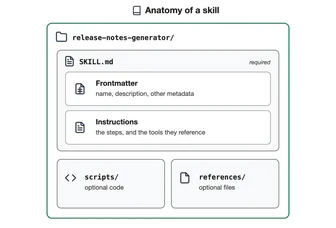
    AWS Quick processes natural language requests through agents, which call skills and use connectors to operate data sources to complete tasks. Quick comes with default agents, and users can configure custom agents to limit their permissions and functions. System skills support basic operations such as document generation and web browsing. Users can build and share skills to meet team needs.

  6. LangChain Deep Agents releases15

    LangChain Deep Agents 0.7.35 released

    LangChain Deep Agents 0.7.35 released, fixing bugs such as preserving the parent agent's prompt cache prefix for child agents, retaining symbolic link names in virtual file system results, marking `read_file` media and Nemotron nudge as harness notifications, etc.

  7. Claude.dev Blog

    Which Claude model should Anthropic use? Fable, Opus, Sonnet, or Haiku?

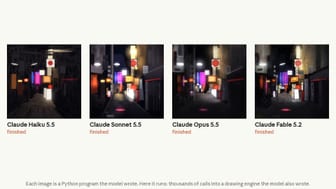
    Anthropic has launched four Claude models for users to choose from: Claude Haiku 5.5, Claude Sonnet 5.5, Claude Opus 5.5, and Claude Fable 5.2.

    Same story · 3 outlets

    How the accounts differ:TechCrunch states the input price of Fable is reduced to $8 per million tokens; others do not mention the price.

  8. Google Research

    Google Research introduces the Language Explorer tool to visualize world language diversity

    Google Research launches Language Explorer online platform, presenting global language diversity through visualization and data. The tool integrates the open-source LinguaMeta dataset, supporting 1,000 languages, aimed at helping researchers, educators, and enthusiasts explore language differences. The platform has been showcased as an interactive installation at the new exhibition at the Berlin Communication Museum and offers an online version for public access.

  9. AWS Machine Learning Blog

    Anthropic launched Claude Fable 5.2 and Claude Mythos 5.2 on AWS

    Anthropic Launches Claude Fable 5.2 and Claude Mythos 5.2 on AWS, Fable 5.2 is its most powerful general model for coding and scientific fields, supporting unsupervised operation for days; Mythos 5.2 is provided through a validation program and performs more reliably in cybersecurity and life science fields.

    Same story · 3 outlets

    How the accounts differ:TechCrunch states the input price of Fable is reduced to $8 per million tokens; others do not mention the price.

  10. Databricks Blog

    Databricks commits to building three new regions in Europe to meet sovereignty requirements

    Databricks has invested ten years in Europe, serving 17 cloud regions, adding three European sovereign cloud regions: Azure Italy, Azure Spain, and AWS European Sovereign Cloud (AWS ESC), meeting strict compliance and residency requirements, supporting EU data boundaries, and allowing customers to choose data storage locations and access permissions. Databricks will provide Azure Databricks services on Microsoft Sovereign Public Cloud and AWS European Sovereign Cloud, ensuring European customer data and production environments remain under European control.