Skip to content
Live
Oct 21Wed
  1. Hugging Face Blog66

    NVIDIA has released the Cosmos3-H-Dreams surgical generative simulation model.

    NVIDIA has released Cosmos3-H-Dreams, extending interactive generative simulation to clinical gallbladder removal scenarios, capable of generating surgical scenes in real-time based on instrument movements.
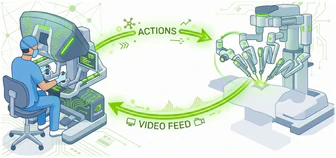
    Why it matters: The original text explains the migration path from desktop stitching to clinical cholecystectomy scenarios, as well as the trade-off between quality and delay between four-step and two-step distillation checkpoints.

  2. Hugging Face Blog58

    FairStress: A benchmark for a more in-depth evaluation of LLM decision fairness

    FairStress benchmark evaluated LLM performance in demographic fairness across 300 decision scenarios across 29 fields (such as recruitment, healthcare), including 13 million test cases. The study found that the same persuasive prefixes (adversarial prefixes) have varying impacts on model decisions across different demographic groups, and there are differences in how models explain decisions containing demographic information.

Oct 20Tue
Oct 19Mon
  1. MiniMax News

    MiniMax M3.1 Flash released: Next-generation model with improved performance and reduced cost

    MiniMax M3.1 Flash is officially launched, with nearly a threefold increase in online inference speed and a 70% reduction in cost compared to the previous generation. The model performs excellently in benchmark tests for complex intelligent tasks (cowork), computer use, software development, and network security, ranking highly in the AutomationBench-AA for automated tasks, scoring 73.7% on DeepSWE v1.1, 61.7 on OSWorld V2, 29.6 on ALE, and 82% on CyberGym.

  2. Ollama Blog

    Cloudflare's 27B multimodal decision model Clef has landed on the Ollama cloud platform

    Cloudflare's 27B multimodal decision model Clef has landed on the Ollama cloud platform, users can run it locally or use cloud services. Clef transforms state and typed question patterns into decisions, supports text and image input, is compatible with Jev and System One APIs, is fine-tuned based on Qwen3.8-27B, and adopts the Apache 2.0 license. In Cloudflare's decision index evaluation, Clef outperforms Jev and performs leading in most benchmark tests.

  3. Together AI Blog

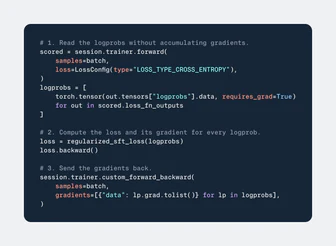
    Together Post-Training: Flexible and efficient model fine-tuning service

    Together AI has launched Post-Training services, supporting the construction of custom models through reinforcement learning and supervised fine-tuning without complex infrastructure. The service provides flexible training loop definition capabilities and optimizes the underlying system and infrastructure to improve model quality and training speed. It supports mainstream open-source models such as Muse Spark Open, GLM 5.3, Kimi K3, and Qwen 3.8-27B, running on dedicated GPU resources to ensure efficient and numerically consistent training.

Oct 18Sun
  1. NVIDIA Blog

    NVIDIA RTX Spark laptops are officially launched, featuring Blackwell RTX GPUs and an AI platform.

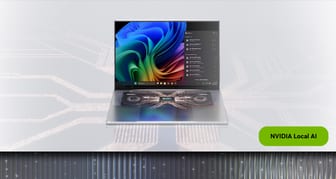
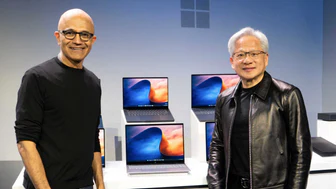
    NVIDIA RTX Spark laptops are now available, equipped with Blackwell RTX GPUs, up to 128GB unified memory, and the full NVIDIA AI platform, starting at $2399. They are launched by ASUS, Dell, HP, Lenovo, Microsoft, and MSI, bringing powerful local AI, content creation, and gaming capabilities to portable devices. NVIDIA held global launch events, including one in Berlin, where founder Jensen Huang made a surprise appearance.

Oct 17Sat
Oct 16Fri
  1. Tencent Hunyuan · Hugging Face new models

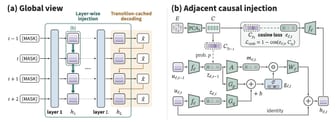
    Qwen3-8B-DSpine-b16 released: Speculative decoding model with parallel drafting and deep conditional injection

    Qwen3-8B-DSpine-b16 released by Qwen, employing speculative decoding technology with parallel drafting and deep conditional injection, achieving an average acceptance length score of 10.55 on Qwen3-8B. The model supports a context length of 8192 tokens, uses bfloat16 data type and fa3 attention backend, installation requires git clone and pip install, and runs via sglang serve.

  2. Microsoft AI News

    Microsoft AI has released an 80 billion parameter MoE large model MAI-Base-2.

    Microsoft AI has completed the pre-training of a new MoE large model MAI-Base-2, with 80 billion active parameters and 2.8 trillion total parameters, surpassing all open-source models in internal evaluations. The model is 4-12 times more efficient in pre-training FLOPs than the strongest open-source base model DeepSeek-V4-Pro-Base and is used to train larger models. Microsoft plans to license the model weights through Foundry using organic data pre-training and full-stack control.

Oct 15Thu
  1. Mistral AI

    Mistral AI launched the Timestral time series foundational model family

    Mistral AI released the Timestral time series foundational model family, with the smallest model at only 209M, ranking first in three major benchmark tests (GIFT-Eval, TIME, and fev-bench), outperforming models with larger parameter sizes; this series includes four sizes ranging from 5M to 209M parameters, supports past and future covariates, runs efficiently on CPUs, and can be fine-tuned for specific domains via Mistral Forge.

  2. OpenAI Deployment Safety

    GPT-Live-1.1 System Information Card

    GPT-Live-1.1 and GPT-Live-1.1 Quip are trained on a diverse dataset including public internet information, third-party collaboration data, and user-generated content, employing advanced data filtering processes to reduce personal information and using secure classifiers to prevent harmful content. The performance metric comparison value is based on the latest version data of published models.

  3. Mistral AI · Hugging Face new models

    Mistral AI releases Timestral-123M time series base model

    Mistral AI releases Timestral-123M time series base model, with 123M parameters, using a patch-based Transformer architecture, context length of 32,768 time steps, single prediction covers 1,024 time steps, outputs 21 quantiles. The model achieves optimal accuracy in zero-shot prediction on GIFT-Eval, TIME, and fev-bench evaluations, and is licensed under the Modified MIT License.

Oct 14Wed
  1. Mistral AI · Hugging Face new models

    Mistral AI releases Timestral-5M time series base model

    Mistral AI releases Timestral-5M time series base model, the 5M parameter version supports zero-shot prediction, context length up to 32,768 time steps, single forward prediction can cover 1,024 time steps, and outputs 21 quantiles. In GIFT-Eval, TIME, and fev-bench evaluations, Timestral-209M achieves state-of-the-art accuracy for zero-shot prediction, and all Timestral models outperform other models at their parameter scale.

  2. Ant Group inclusionAI · Hugging Face new models

    inclusionAI/Ling-3.0-flash-UBTree released: Speculative decoding model based on UBTree technology

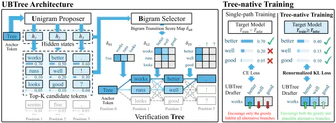
    inclusionAI released the Ling-3-Flash-UBTree-B16 model, combining a five-layer DFlash backbone and a learned bigram selector, proposing multiple candidate continuations for Ling3-Flash for target model validation, with 482M parameters, achieving 3x+ E2E speed improvement on benchmarks like MMLU, and the UBTree adaptation is not yet open source, with SGLang integration support expected to be released soon.

  3. Ant Group inclusionAI · Hugging Face new models

    inclusionAI/Ming-3.0-asr-tiny released: Context-aware speech recognition model supporting multiple language dialects

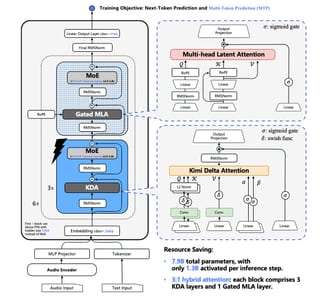
    inclusionAI/Ming-3.0-asr-tiny combines Ling-tiny-v3 language backbone and audio encoder, supporting single-round Chinese and English speech transcription and recognition of 15 dialects, improves professional term recognition rate through hot words or dialogue context, model parameter size not mentioned, evaluated in noisy speech and 5 application areas, provides PyTorch/Transformers inference examples and MIT license.

  4. StepFun · Hugging Face new models

    Step-5-Preview-NVFP4 model release by LeapX Stars

    LeapX Stars releases flagship model Step-5-Preview-NVFP4, with 600B total parameters and 27B active parameters, supporting up to 1M context windows, excels in software engineering, professional knowledge work, and financial fields, capable of processing text, images, and video, deployable via OpenAI-compatible API or offline generation.

  5. Google DeepMind

    Google DeepMind collaborates with the Singapore government to develop a fine-tuned AI model for fraud detection

    Google DeepMind partnered with the Singapore government's tech agency, GovTech Singapore, to fine-tune the privacy-preserving device-side fraud detection model Gemma to combat over half of the crime in Singapore (over 4 billion SGD in losses). The model issues real-time warnings by analyzing conversation patterns on the device, and as it runs on the device side, user privacy is not compromised.

  6. Google DeepMind

    Google DeepMind releases Gemini 4 Argon and emphasizes security protection

    Gemini 4 Argon demonstrates cutting-edge capabilities in coding, finance, law, and other fields, particularly enhancing cybersecurity defense functions. Its effectiveness has been validated through the Fairwind project and internal testing. The model performs excellently on benchmark tests like MMLU and employs a three-layer real-time protection mechanism (input filtering, internal introspection, continuous monitoring) and automated bias monitoring, significantly reducing the risk of harmful requests and violations. It successfully intercepts over 99% of external biosecurity jailbreak attempts while reducing shortcut behavior in coding tasks to 2%.

  7. GitHub Blog · AI & ML

    GitHub's secret detection model: Discover more secrets with less noise

    GitHub released a dedicated secret detection model that combines a fine-tuned ModernBERT classifier with regular expressions, reducing false positives by 11.5% while achieving a higher acceptance rate and shortening post-push scan execution time by 86%, with a cost reduction of 98%. The model distinguishes real credentials from similar items by analyzing file paths, variable names, and contextual code, making general secret detection extendable to push protection possible.

  8. Google DeepMind

    Gemini 4 Argon brings breakthrough progress to robotics technology

    Gemini 4 Argon has achieved major breakthroughs in physical understanding, code generation, and visual semantic reasoning, achieving a pure reasoning score of 87% on the Embodied Reasoning (ERQA) benchmark test, surpassing all leading models. Argon can be applied to all stages of the robot's lifecycle, including mobile manipulation practice using MuJoCo, zero-shot robot control, and closed-loop steering of video world models.

  9. Google AI Blog90

    Google has released the Gemini 4 Argon cutting-edge model.

    Google has released Gemini 4 Argon, opening it up to developers, businesses, and researchers, with API pricing at $2 per million input tokens and $10 per million output tokens, offering a 95% discount on cached input tokens.

    Why it matters: Official pricing, baseline rankings, and multiple internal implementation cases are provided, allowing judgment on its position in coding and research workflows.

Oct 13Tue
  1. Google Developers Blog

    Gemini 4 Argon optimized the performance of a 200,000-line Python codebase

    Gemini 4 Argon has been running for 11 hours without human intervention, proposing 6 optimization suggestions by analyzing the ADK Python repository with 205,000 lines of code. Ultimately, 2 of them were adopted and deployed, reducing the memory session preparation time by about 40% and increasing the cold package import speed by 21%. The model followed the repository maintainer's guidelines during the optimization process and ran all 16,892 unit tests.

Oct 9Fri
Oct 8Thu
  1. NVIDIA Blog

    NVIDIA and Microsoft team up to usher in a new era of AI agents for Windows PCs: RTX Spark and local AI calculator

    NVIDIA and Microsoft collaborate to launch RTX Spark laptops and Windows AI agent infrastructure, supporting local running of 125B parameter Qwen 3.8 Flash Next models; Microsoft releases MXC operating system-level container to ensure agent secure operation, pre-orders for RTX Spark open today, paired with Grace Blackwell chip, offering up to 20 PFLOPS inference performance.