Skip to content
Live
Nov 13Fri
  1. Claude Code releases45

    Claude Code v2.1.323 released

    Claude Code v2.1.323 has been released, adding an experimental Code Mode feature that allows Claude to write JavaScript calling tools; type checking has been added to the plugin system and CLAUDE_CODE_AUTO_MODE_MODEL support; multiple bugs have been fixed, including plugin loading, session recovery, memory leaks, and macOS login issues.

  2. vLLM Blog60

    vLLM supports Thinking Machines' Inkling 2 Small on its first day of release

    vLLM provides support for Inkling 2 Small on its first day of release. The model is a multimodal MoE with text and visual inputs, featuring a total of 594B parameters, 17B activation parameters, a maximum context length of 1M tokens, and comes with a built-in DSpark beam decoder.

    Why it matters: The original text provides details of vLLM's Day-0 support for Inkling 2 Small and multiple kernel optimizations, allowing readers to understand the deployment path and throughput performance of the model.

  3. Microsoft Research

    Microsoft Research Focus Issue 98: New advancements in AI research.

    Microsoft Research Focus Issue 98 shared the latest advancements in AI research, including AI speech translation breaking language barriers, solving the 31-year-old mathematical problem KLS conjecture, improving AI coding agent efficiency by 25.4% in cost reduction and 9.6% in execution time shortening, and significantly enhancing model performance with the Latent Core Tokenizer across 104 languages.
  4. AWS Machine Learning Blog

    Four aspects of Amazon Bedrock inference affect cost.

    Amazon Bedrock's request-level selection still changes the number of tokens processed by the service and the applicable tax rate. Cache duration, service tier, inference effort, and maxTokens can affect costs without changing the model or prompt. Each selection depends on the model and workload, and its effectiveness can be verified through response metadata, logs, and billing data.

  5. Google Developers Blog

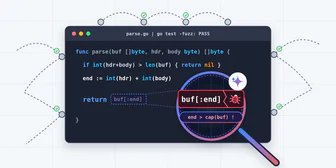
    Gemini and Z3 jointly capture bugs missed in Go code fuzz testing

    Gemini 4 Argon translates Go code panic paths into Z3 constraints, paired with Z3 to check trigger conditions, and paired with go test to replay trigger bytes, locating 3 embedded parser bugs and discovering 3 skill-lint potential bugs within 1 minute. This process is more efficient than go test -fuzz, capable of finding boundary check errors missed by fuzz testing.

  6. AWS Machine Learning Blog

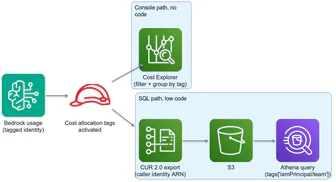
    How to use CUR 2.0 and AWS Budgets to track and limit per-user Amazon Bedrock spending

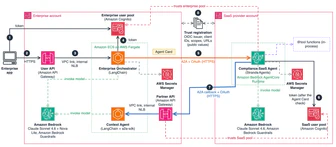
    Amazon Bedrock automatically records caller identity, users can assign tags through IAM hosts, activate cost allocation tags, and use CUR 2.0 or AWS Cost Explorer to report data, combined with AWS Budgets to set budget actions for spending limits. No application code needs to be written, when the threshold is reached, budget actions will automatically apply Deny IAM policies. This solution is suitable for accounts already using IAM roles, supporting both static primary tags and dynamic session tags for identity mapping.
  7. Databricks Blog

    Constellation on how to build a governed data foundation on Databricks.

    Constellation is building a governed enterprise data platform (EDP) on Databricks, achieving cross-business data consistency through a unified semantic layer and Unity Catalog, resolving data definition discrepancies caused by the acquisition of Calpine, and has been deployed in scenarios such as nuclear engineering assistance, shutdown planning, and sales intelligence.

  8. Google Developers Blog58

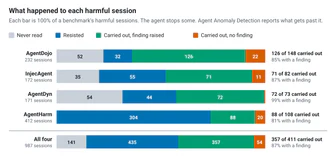
    Agent Anomaly Detection Performance in Security Benchmarks Not Written by Google

    Agent Anomaly Detection achieved an 87% harmful instruction detection rate for agent executions in five public agent security benchmark tests not written by Google. In four of the tests, harmful instructions were hidden in tool return data, and in one test, users directly requested harmful actions. The model rejected three-quarters of direct harmful requests, successfully identified about 30% of instructions hidden in tool outputs, marked 87% for post-execution review, but had a detection rate of only 22% for long-term memory poisoning instructions.

  9. Hugging Face Blog71

    IBM releases LLMON markup language and Granite 4.1 3B/8B preview models

    IBM released LLMON (LLM Object Notation) markup language on Hugging Face and launched two experimental preview models based on Granite 4.1: granite-4.1-3b-LLMON-preview and granite-4.1-8b-LLMON-preview, while also open-sourcing a GitHub toolkit.

    Why it matters: The original text provides the design motivation for the LLMON markup language and the two preview models, allowing readers to understand how separating instructions and data can reduce the risk of indirect prompt injection.

  10. Databricks Blog60

    Databricks introduces Lakehouse//RT, aimed at real-time analysis loads for agents.

    Databricks has released the Lakehouse//RT, designed to directly handle high-concurrency real-time queries brought by AI agents on lakehouses, currently in beta. The official claims it can provide latency below 100 milliseconds under 12,000 QPS, and through four paths—high concurrency, rapid execution, small-step scaling, and a single system—ensures that cost growth is slower than query volume growth.

    Why it matters: The original text provides four cost reduction mechanisms and migration data from three customers, allowing judgment on whether the real-time analytics layer is worth replacing.

  11. Google AI Blog82

    Google Search has integrated Gemini 4 Hydrogen and is now open to global users.

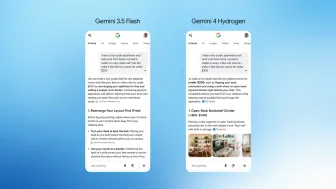
    Google Search has launched Gemini 4 Hydrogen, the largest model upgrade to date, now available to all global users. The company claims the new model can understand multi-part questions, spelling errors, and highly specific requests, and leverages stronger instruction following and tool calling capabilities to respond to each question individually. Hydrogen's reasoning ability also enhances query distribution, allowing it to retrieve multiple related subtopics simultaneously and provide more images, structured responses, comparison tables, and custom tools.

    Why it matters: Google's official statement on Gemini 4 Hydrogen explains changes in intent understanding, query distribution, and visual responses in search, which can be used to judge the direction of adjustments to the search experience.

  12. OpenAI Alignment Blog

    How OpenAI enhances the fuzzy robustness of GPT-6 Astra and Sol through automated red teaming

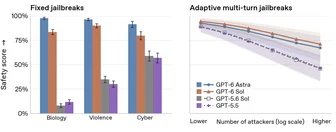
    OpenAI uses automated red team techniques to train GPT-6 Astra and Sol, significantly enhancing the model's fuzzy robustness against jailbreak attacks in high-risk areas such as networking, biology, and violent activities. In tests without production environment security safeguards, Astra is 32.5% safer than GPT-5.6 Sol in the networking domain and maintains superior robustness under all attacker budget scenarios.

  13. Google DeepMind87

    Google DeepMind releases Gemini 4 Hydrogen model

    Google DeepMind releases Gemini 4 Hydrogen, targeting daily coding and intelligent agent workflows, with an Artificial Analysis intelligence index of 51 at the default high thinking level, higher than Argon's 50, and reaching 54 at the xhigh level

    Why it matters: Google provides the division of labor and positioning of Hydrogen, Carbon, and Argon, as well as the actual differences in cost and speed between multi-model arrangements.

  14. Apple Machine Learning Research38

    Research reveals the theoretical limits of language model alignment

    Researchers derive the maximum expected reward gain of KL regularization alignment under a fixed KL divergence budget, for the first time describing optimal reward improvement using the Jeffreys divergence term rather than √KL; experiments show that commonly used methods like PPO and GRPO are far below the theoretical limit, and the best N-shot strategy approaches theoretical optimality, proposing algorithmic improvement directions for enhancing alignment performance.

  15. AWS Machine Learning Blog

    Run intelligent agents securely and efficiently using the next-generation AgentCore runtime.

    Amazon Bedrock AgentCore runtime provides a secure environment for each session through hardware-isolated Firecracker micro-virtual machines (MicroVMs), the new version boosts startup speed by 15x, extends computing by 4x, improves efficiency by 68%, supports up to 8 vCPUs and 32 GB memory and 10 GB container images, session startup time is less than 2 seconds, suitable for complex workloads.

  16. Databricks Blog

    How H6.ai Builds AI-Driven Financial Automation Based on Lakebase Postgres

    H6.ai automates accounts payable processing on customers' existing ERP systems by reading invoices, matching purchase orders, allocating accounting subjects, and executing in accordance with company policies, combining AI-assisted understanding with deterministic policy execution. It adopts Lakebase Postgres to establish a dedicated database for each customer, storing purchase orders, suppliers, accounting subjects, historical transactions, and policies, etc., to support frequent regression testing.

  17. Claude · YouTube

    How Claude selects appropriate models based on job scale

    Claude model selection should match the scale of work: Opus 5.5 is suitable for planning and building complete functions, Fable 5.2 is suitable for the most challenging open technology tasks, Sonnet 5.5 is used for daily work such as fixing bugs or writing documents, Haiku 5.5 is adapted for small repetitive tasks.

  18. Claude · YouTube

    Claude Platform Team discusses how to build Claude API

    The Claude platform team discussed how to decide on API feature releases based on research and customer requests, as well as how to adjust controls in conversations without breaking prompt caching. Mythos and Fable use the same model weights but adopt different security measures. Claude Managed Agents and changing controls in conversations are in the testing phase. Access to Claude Mythos requires going through the Cyber Verification Program.

  19. AWS Machine Learning Blog

    Migrate to Amazon Bedrock managed knowledge base using AWS Agent Toolkit

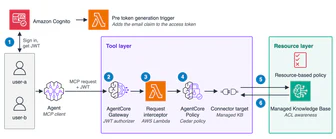
    AWS has added a knowledge base migration guide in the Agent Toolkit for AWS, helping users migrate coding agents to Amazon Bedrock's managed knowledge base. The service automatically handles ingestion, storage, indexing, and retrieval, supports hybrid search, includes managed embedding models and rerankers, and has native connectors. Users can pay as needed for storage and retrieval, with the default support of 10,000 knowledge bases and 200 data sources per account per region.

  20. Databricks Blog

    How Block uses Buzz and Unity Gateway to coordinate AI agents

    Block company has launched Buzz, an open-source collaborative space, allowing employees to interact with AI agents in a shared workspace. Through Databricks Unity Gateway, users can access cutting-edge models from OpenAI, Anthropic, Google, and open-source models (specific number not mentioned in the original text), experimenting with different AI agent framework combinations. Employees can create AI agents and choose models (such as the lightweight version of Goose) to achieve multi-person collaborative development, analysis, and other tasks.

  21. Databricks Blog55

    Databricks Genie app officially launched in Slack: Controlled AI collaborator, right at the workplace.

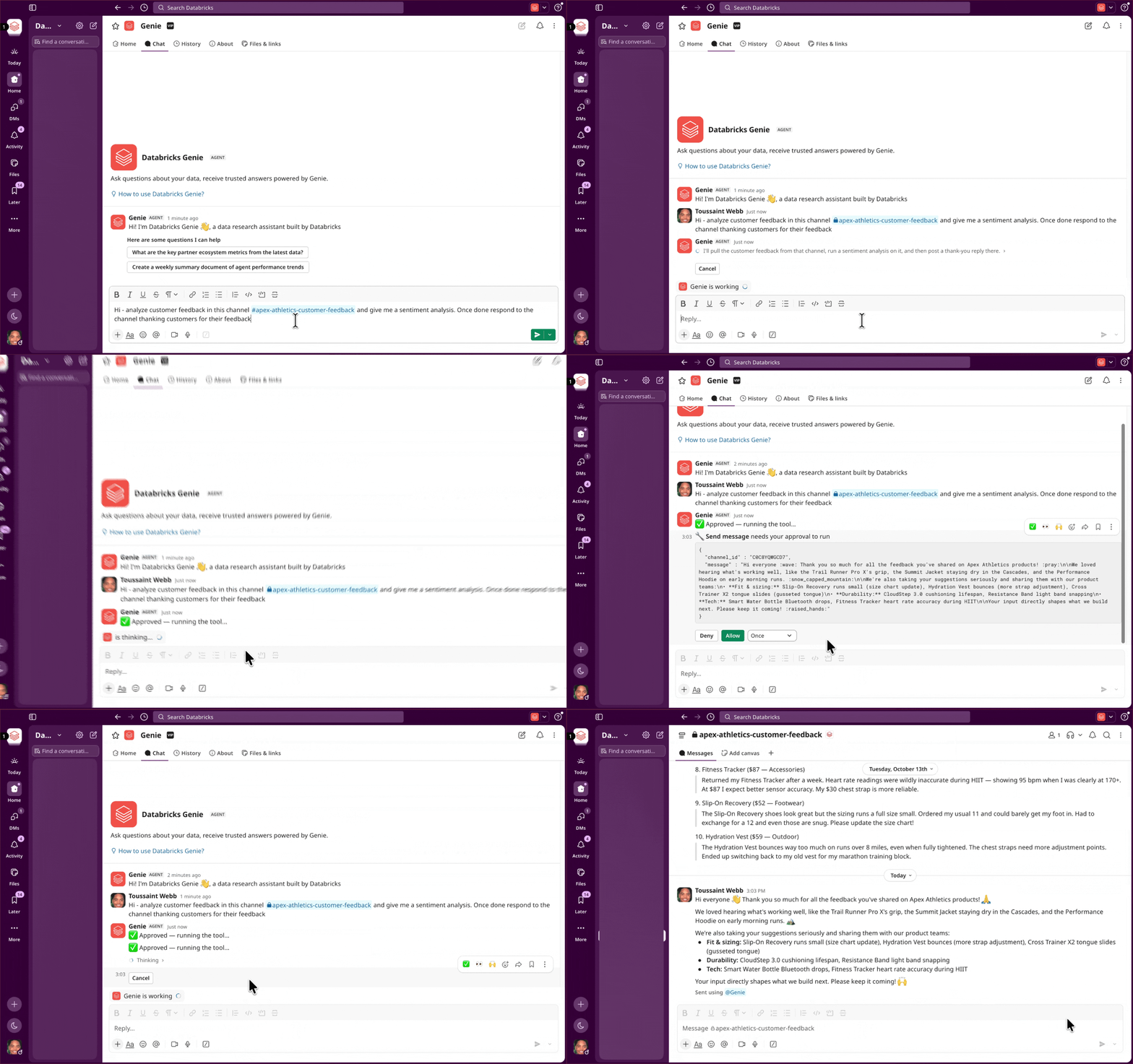
    Databricks Genie has been officially launched in Slack, where the controlled AI collaborator directly answers questions within the Slack workspace, with context based on Unity Catalog and external tool permissions, and answer sources are traceable. Genie can respond in channels, threads, or DMs, supporting team collaboration and private DM interactions, and achieves cross-tool operations and automated analysis scheduling through the MCP connector.

  22. Microsoft Official Blog22

    How cutting-edge companies expand AI value without losing control

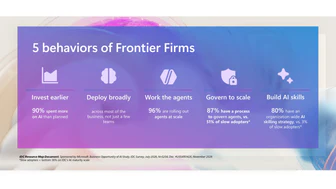
    Pioneering companies average 4 times the ROI on AI compared to laggard companies' 2.7 times, with 39% exceeding 5 times; 93% of pioneering companies highly confident in measurable AI business value, while only 61% of others are; 96% of pioneering companies deploy AI agents at scale and orchestrate them across workflows, with 53% redesigning workflows around agents, and 80% having AI skill development strategies across the entire organization.

Nov 12Thu
  1. IBM Research Blog

    IBM Research explains what a spin qubit is.

    IBM Research is studying two quantum computing hardware architectures, one of which is the spin qubit architecture that encodes information by controlling the spin state of electrons. Spin qubits use quantum dot structures (such as silicon-germanium heterostructures) to trap individual electrons, controlling their spin direction (up or down) with voltage pulses to represent 0 or 1. This architecture has high gate fidelity, scalability, relatively fast speeds, and simple control signals (requiring only voltage pulses), but the current number of qubits is less than that of superconducting qubits and faces challenges such as uniformity and manufacturing yield.

  2. PyTorch Blog

    Integrate SGLang into IBM Spyre within less than a week using AI tools

    A team of two, with the help of an AI programming agent, completed the integration of SGLang and IBM Spyre in less than a week, building a plugin with about 1,500 lines of code. SGLang's inference throughput on Spyre is about 3.6 times higher than the reference PyTorch implementation (using torch-spyre) and performs comparably to vLLM on Granite 3.3 8B and Gemma 4 26B A4B workloads.