Skip to content
Live
Oct 14Wed
  1. Mistral AI · Hugging Face new models

    Mistral AI releases Timestral-5M time series base model

    Mistral AI releases Timestral-5M time series base model, the 5M parameter version supports zero-shot prediction, context length up to 32,768 time steps, single forward prediction can cover 1,024 time steps, and outputs 21 quantiles. In GIFT-Eval, TIME, and fev-bench evaluations, Timestral-209M achieves state-of-the-art accuracy for zero-shot prediction, and all Timestral models outperform other models at their parameter scale.
  2. Ant Group inclusionAI · Hugging Face new models

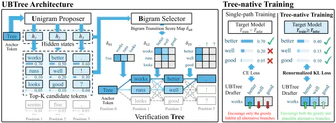
    inclusionAI/Ling-3.0-flash-UBTree released: Speculative decoding model based on UBTree technology

    inclusionAI released the Ling-3-Flash-UBTree-B16 model, combining a five-layer DFlash backbone and a learned bigram selector, proposing multiple candidate continuations for Ling3-Flash for target model validation, with 482M parameters, achieving 3x+ E2E speed improvement on benchmarks like MMLU, and the UBTree adaptation is not yet open source, with SGLang integration support expected to be released soon.

  3. Ant Group inclusionAI · Hugging Face new models

    inclusionAI/Ming-3.0-asr-tiny released: Context-aware speech recognition model supporting multiple language dialects

    inclusionAI/Ming-3.0-asr-tiny combines Ling-tiny-v3 language backbone and audio encoder, supporting single-round Chinese and English speech transcription and recognition of 15 dialects, improves professional term recognition rate through hot words or dialogue context, model parameter size not mentioned, evaluated in noisy speech and 5 application areas, provides PyTorch/Transformers inference examples and MIT license.

  4. NVIDIA Blog

    Multiple cities in Europe have deployed NVIDIA-driven AI agents to improve urban operational efficiency.

    Multiple cities in Europe, along with software, infrastructure, and integration partners, are using NVIDIA's accelerated computing to build physical AI agents and digital twin systems to optimize urban operational decisions. These applications can predict maintenance needs, guide urban planning, and enhance public service response capabilities, involving Belgium, Finland, France, Italy, Netherlands, Poland, Sweden, and the UK.

  5. Google DeepMind

    Google DeepMind collaborates with the Singapore government to develop a fine-tuned AI model for fraud detection

    Google DeepMind partnered with the Singapore government's tech agency, GovTech Singapore, to fine-tune the privacy-preserving device-side fraud detection model Gemma to combat over half of the crime in Singapore (over 4 billion SGD in losses). The model issues real-time warnings by analyzing conversation patterns on the device, and as it runs on the device side, user privacy is not compromised.

  6. Apple Machine Learning Research27

    Whisper-small performs excellently on the Code-Switching Detection task

    Whisper-small achieved an average F1 score of 0.798 across 14 language pairs in the CS-FLEURS benchmark test, surpassing CNN's 0.776 and HuBERT's linear baseline's 0.751. The method detects language switching directly from speech by identifying the language-selective hidden state dimension in pre-trained speech encoders, and only requires a small amount of code to convert the dataset to fine-tune decision rules.

  7. GitHub Blog · AI & ML

    GitHub's secret detection model: Discover more secrets with less noise

    GitHub released a dedicated secret detection model that combines a fine-tuned ModernBERT classifier with regular expressions, reducing false positives by 11.5% while achieving a higher acceptance rate and shortening post-push scan execution time by 86%, with a cost reduction of 98%. The model distinguishes real credentials from similar items by analyzing file paths, variable names, and contextual code, making general secret detection extendable to push protection possible.

  8. IBM Research Blog38

    IBM will launch the 7-nanometer nanoscale stacking technology early research and development process design kit (PDK) in the first quarter of 2027.

    IBM announced that it will launch an early research and development process design kit (PDK) for 7-nanometer nanoscale stacking technology in the first quarter of 2027, to help semiconductor companies evaluate the technology before large-scale adoption. The kit will provide a standard cell library for logic functions and SRAM design examples, supporting layout and routing, early module-level layout, and density and power performance evaluation. Nanoscale stacking technology achieves 3D layout at the transistor level for the first time on logic wafer technology by stacking transistors vertically rather than placing them side by side, which is significantly different from current nanosheet transistor architectures.

Oct 13Tue
  1. IBM Research Blog58

    IBM Research uses an open-source agent factory to achieve 52-fold acceleration in quantum error correction chip design with a cost of $26

    IBM Research uses an open-source agent factory to optimize quantum error correction hardware, achieving 52x acceleration with a cost of about $26; with the same budget, a closed-source cutting-edge model configuration costs $299 (11.5x higher) but provides 204x acceleration, with the open-source configuration achieving hardware optimization with a smaller area; the agent factory assigns tasks to parallel working agents through a coordinator, combining code modification with hardware effect evaluation, exploring various architectural possibilities.

  2. LangChain Blog

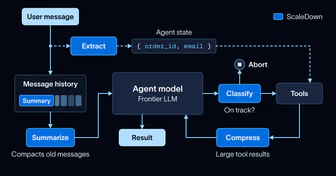
    How ScaleDown optimizes context management for long-running agents through compression and extraction techniques

    ScaleDown optimizes context management for long-running agents through compression and extraction techniques, its model is 41 times cheaper and 2.7 times faster than general models like GPT-5.5 in benchmark tests. ScaleDown provides four models: Summarize, Compress, Extract, and Classify, respectively for summarization, compression, extraction, and classification, supporting up to 1M tokens of input, and supporting image and PDF input.

  3. Google Developers Blog

    Gemini 4 Argon optimized the performance of a 200,000-line Python codebase

    Gemini 4 Argon has been running for 11 hours without human intervention, proposing 6 optimization suggestions by analyzing the ADK Python repository with 205,000 lines of code. Ultimately, 2 of them were adopted and deployed, reducing the memory session preparation time by about 40% and increasing the cold package import speed by 21%. The model followed the repository maintainer's guidelines during the optimization process and ran all 16,892 unit tests.

  4. GitHub Blog · AI & ML

    GitHub Copilot Application Introduction: How to Teach Copilot to Understand Your Codebase

    GitHub Copilot can allow users to convey project rules, encapsulate repeatable processes, provide professional guidance, and connect external tools to improve collaboration efficiency through custom instructions, proxy skills, custom agents, and the Model Context Protocol (MCP) server. Custom instructions define code standards, proxy skills encapsulate repetitive tasks, custom agents handle complex work, and MCP servers extend Copilot functionality.

  5. Microsoft Research

    Microsoft Research open-sources multi-modal model StudentSim for simulating student learning behavior

    Microsoft Research has open-sourced the multimodal model StudentSim for simulating student learning behavior. It is trained on publicly anonymized learning records to create a personalized student simulator that outperforms benchmarks in areas such as chess, English writing, and mathematics. It provides early feedback signals for AI tutoring systems but is not intended to replace teachers or classroom teaching.

Oct 12Mon
  1. NVIDIA Blog

    NVIDIA open-sources Vera Rubin architecture at OCP Global Summit to help scale global AI factories

    NVIDIA announced at the OCP Global Summit that it will open-source the NVIDIA Vera Rubin rack and compute shelf design. By opening the NVIDIA MGX architecture, it provides system builders with a common foundation for building next-generation AI factory infrastructure. The Vera Rubin AI factory adopts the third-generation MGX rack architecture, supporting rack deployments of up to 250kW. It expands the open architecture by adding configurable I/O ports, fanless liquid-cooled compute shelves, standard power and cooling interfaces, and support for 19-inch devices.

Oct 11Sun
Oct 9Fri
  1. AWS Machine Learning Blog

    How BlockRun and Incarna use Amazon Bedrock AgentCore Pay to enable AI agents to pay per inference

    AgentCore Pay allows AI agents to pay as needed, Incarna uses it to enable agents to pay per request to BlockRun for model inference, BlockRun offers on-demand billing inference services for over 90 models. AgentCore Pay reduces the workload of adding x402 support from months to days through hosted wallets, native protocol handling, infrastructure layer spending governance, and auditable settlements.

  2. AWS Machine Learning Blog

    Use Amazon SageMaker HyperPod to share GPU clusters between teams and achieve isolation and fairness.

    Amazon SageMaker HyperPod provides centralized authentication through AWS IAM Identity Center, uses the SageMaker AI domain to provide a customized user experience, combines Kubernetes namespaces to achieve workload isolation, and leverages HyperPod task governance for fair resource allocation, supporting multiple teams in efficiently sharing a single HyperPod EKS cluster.

Oct 8Thu
  1. Google Developers Blog

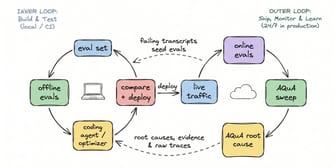
    AQuA: An agent that can diagnose agent issues in a production environment.

    AQuA runs alongside the production agent, analyzing production trajectories through a five-stage process (sampling, review, clustering, validation, tracking), clustering common issues, and generating actual/expired findings to help teams continuously monitor and improve agent quality. It uses target files written by developers and custom metrics to guide the review process and supports integration with AutoRaters on the Gemini platform.

  2. Anthropic Research

    Anthropic has launched an open-source software vulnerability discovery service.

    Anthropic has launched an optional vulnerability discovery service, OSS Scanner, which uses large models like Claude Mythos to scan open-source code, providing free security audits, but outputs are not manually reviewed. The service has disclosed 97 high-risk vulnerabilities to 48 projects, of which 88% meet CVD standards, receiving positive feedback from projects such as PostgreSQL and OpenSSL.

  3. NVIDIA Blog

    NVIDIA and Microsoft team up to usher in a new era of AI agents for Windows PCs: RTX Spark and local AI calculator

    NVIDIA and Microsoft collaborate to launch RTX Spark laptops and Windows AI agent infrastructure, supporting local running of 125B parameter Qwen 3.8 Flash Next models; Microsoft releases MXC operating system-level container to ensure agent secure operation, pre-orders for RTX Spark open today, paired with Grace Blackwell chip, offering up to 20 PFLOPS inference performance.

Oct 7Wed
  1. AWS Machine Learning Blog

    AWS has launched an automated value model, redefining the business case for agent automation.

    AWS has proposed an automated value model, redefining the business case for agent automation. Traditional RPA investment return models overlook the value of agent automation in exception handling, decision quality, process adaptability, and value realization. Enterprises need to consider the redeployment value of released labor time or the reduction in cash costs, as well as the cost of exception correction, to build a credible business case.

  2. LangChain Deep Agents releases35

    LangChain Deep Agents deepagents-code v0.1.82 released

    LangChain Deep Agents deepagents-code v0.1.82 released, adding features such as auto or manual generation of persistent thread names, custom terminal labels, and distinguishing skill read records, fixing bugs like thread selector staying open during thread ownership conflicts, retaining remote message completion markers, and extending triple-click selection to code blocks.

  3. Google Developers Blog

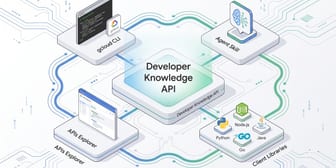
    The Google Developer Knowledge API ecosystem helps developers build AI tools efficiently.

    The Google Developer Knowledge API is Google's official developer documentation programmable source, providing semantic search, intelligent document chunking, and reliable Q&A capabilities for Google Cloud, Firebase, Android, and other Google ecosystems, reducing hallucinations in AI tools due to the expiration of LLM training deadlines.

Oct 6Tue
  1. Google Research

    Google Earth AI's Population Dynamics Foundation Model (PDFM) provides a planetary geospatial foundation model for global public health.

    Google Earth AI's Population Dynamics Foundation Model (PDFM) compresses search trends, population flows, building environment density, and environmental factors into location embeddings, enhancing epidemiological research performance in various disease fields and geographical environments without specific task fine-tuning.

  2. LangChain Deep Agents releases35

    LangChain Deep Agents 0.1.81 released

    LangChain Deep Agents 0.1.81 released, supporting discovery of marketplace plugins, opening effort selector at runtime, displaying cost details, adding `--no-tracing` option and explicit tracing status indicator. Fixed issues with concurrent local thread writes and hook execution context changes, improved server-side model directory and interactive model metadata processing.

  3. Mistral AI

    Mistral AI has launched the public beta version of Mistral Large 4.

    Mistral Large 4 is a native multimodal large language model with 100 billion parameters, featuring 52 billion active parameters. It excels in coding, agent workflows, and multimodal understanding, reaching the level of the world's strongest open-source model. It also leads in critical enterprise workloads such as cybersecurity, finance, and law. The model will be open-sourced by the end of this month and is currently available for experience through the public beta API of Mistral Studio.