 Claude · YouTube
Live
All AI updates
- Claude · YouTube
 Google Developers BlogFeatured6262
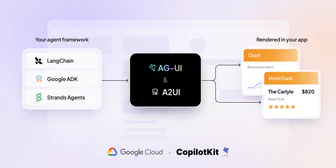
Build generative UI applications with A2UI and CopilotKit agents
Google introduces its framework-agnostic open standard A2UI, allowing agents to describe interfaces declaratively in JSON, rendered by applications using existing components, and integrated with the AG-UI protocol of CopilotKit to connect to agent frameworks like LangChain, Google ADK, Mastra, Strands, etc.
Why it matters: The original text provides complete integration code and bidirectional interaction examples for A2UI and CopilotKit, which can be used to determine the implementation method for generative UIs.
 OpenAI News5050
Ropes & Gray collaborates with OpenAI to develop AI for transaction due diligence
Ropes & Gray is collaborating with OpenAI to develop AI for transaction due diligence, where lawyers provide advice to clients by reviewing documents, summaries, and reports.
- OpenAI News
OpenAI updates model guidelines, guided by five core values to create a more powerful AI
OpenAI updates model guidelines, guided by five core values to create a more powerful AI; the new guidelines aim to ensure AI has sound judgment, respects human autonomy, and is loyal to human intentions.
 AWS Machine Learning Blog5555
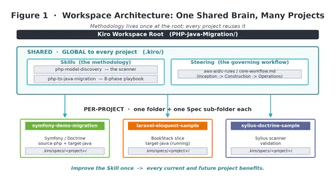
Building a reusable migration engine from PHP to Java with Kiro
Kiro combines AI agents with codebases to migrate PHP applications to Java through a repeatable eight-stage workflow, supporting developer interactive review or AWS Transform automation, and achieving methodology unification through shared skill files.
- AWS Machine Learning Blog3434
How Epsilon uses Amazon Nova Act to build an intent-driven UI testing platform
Epsilon has built an intent-driven UI testing platform using Amazon Nova Act and Amazon Bedrock AgentCore Browser Tool, combining natural language test cases (such as 'confirm reward balance visibility') with existing Playwright regression test suites.
 Codex releases4545
Codex 0.166.0 released: adding keyboard driver transcription selection, Markdown rendering optimization, and GPT-6.1 Terra support
Codex 0.166.0 released, adding keyboard driver transcription selection (supporting word, line, and page operations), integrated search and configurable shortcuts, as well as consistent Markdown rendering in asynchronous questions, options, answers, and transcription responses. Also supports GPT-6.1 Terra and adds codex queue --resume feature to resume unloaded threads.
 Databricks Blog2828
How to evaluate Postgres management services: a checklist for technical buyers
When evaluating Postgres management services, focus on infrastructure operations and maintenance, disaster recovery, and compatibility, rather than just the feature list. Key validation points include: operational scope (patches, upgrades, tuning permissions), high availability (automatic failover, cross-availability zone switching), backup and recovery (PITR, retention period), compatibility (supported PostgreSQL versions and extensions), migration paths and costs. Red flags include managing only virtual machines, no clear RPO, critical extensions not supported, or data export restrictions.
 Amazon Science
 explores technology to accelerate language models in travel applications
Amazon Science combines knowledge distillation (KD) and the Medusa framework to optimize the travel platform LLM. After fine-tuning, KD training, and Medusa head modification, the TinyLlama 1.1B model achieves performance close to the 70B parameter Llama-3.1 teacher in AI travel planning, intelligent filtering, and accommodation description generation scenarios, with costs reduced by two-thirds and speed increased by 10-20 times.
- OpenAI NewsSame story · 2 outlets
How does OpenAI detect front-line model alignment issues
OpenAI uses hierarchical monitoring to detect front-line model alignment issues and unauthorized agent behavior to intervene before the event escalates
Same story · 2 outletsHow the accounts differ:OpenAI News mentions layered monitoring for alignment issues and unauthorized agent behavior, while OpenAI Alignment Blog specifies the system covers training, evaluation, internal use, and external deployment, and details the multi-layer architecture with L0, L1, and L2 components.
- AWS Machine Learning Blog4242
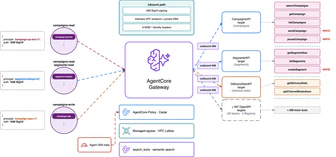
MoEngage on how to use AgentCore Gateway to convert 400 APIs into intelligent agent tools
MoEngage transforms 400 internal APIs into permission-controlled intelligent agent tools through Amazon Bedrock AgentCore Gateway, solving multi-team API integration challenges. This solution eliminates the need to set up MCP servers or configure networks, reducing the time to launch new APIs from days to hours while meeting constraints such as keeping APIs within the VPC, controlling identities from the server side, and ensuring tool definitions do not occupy the reasoning context window.
- AWS Machine Learning Blog
AWS Batch adds quota management features for SageMaker Training jobs, supporting cross-team resource borrowing.
AWS Batch introduces quota management features, allowing administrators to allocate computing resources by team or project and supporting cross-team resource borrowing (LEND) and borrowing (BORROW) to maximize GPU utilization. Administrators can configure quota share (quota share) resource sharing policies and enable priority-based in-share preemption to prioritize high-priority workloads.
- AWS Machine Learning Blog4242
Using NVIDIA Nemotron models to accelerate AI agents on Amazon EKS and SageMaker HyperPod EKS
NVIDIA has launched the 120B parameter Nemotron 3.5 Super VL model on AWS, which processes one token with 12B parameters activated, combining inference and tool use, supporting text, image, document, and video understanding.
 Meta EngineeringFeatured6666
Meta rolls out JiTTesting to production: Use LLM to generate tests and catch bugs before code merge
Meta announced that Catching JiTTests has been put into internal production, using LLM to automatically generate executable tests for diffs to be merged, exposing behavioral differences before the code is landed
Why it matters: Meta has disclosed the production deployment details and quantitative results of JiTTests, available for evaluating the implementation of LLM-generated tests in ultra-large-scale codebases.
 Hugging Face Blog
Project ProtoStar project release: Promoting the AI compatibility of publicly funded scientific research
Project ProtoStar is announced, aiming to unlock the potential of publicly funded scientific research by making datasets, models, and code more accessible and reusable. The project brings together universities, research institutions, industry, and the open science community, supporting the release of scientific achievements in AI-compatible, machine-actionable formats, and demonstrating its value through a series of public challenges. The first challenge, hosted by Carnegie Mellon University, will launch on November 2.
- Databricks Blog
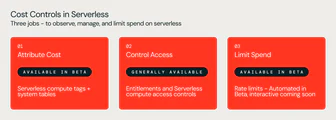
Databricks introduces smarter cost control features for serverless computing
Databricks expands cost control features to serverless computing, implementing cost attribution through tags, currently in Beta; also provides budget, alerts, and dashboard monitoring features, now fully launched; also introduces access control to determine who can run serverless computing, now fully launched.
 IBM Research Blog3535
IBM Research Zurich's 70-year journey shaping the future of algorithms
IBM Research Zurich held a series of events for its 70th anniversary to review its innovative journey. The institute continuously addresses major challenges in science and business by attracting top talent and global collaboration. Director Alessandro Curioni emphasized the core role of algorithms in computing and pointed out that the unique combination of a global talent structure and corporate partnerships is key to the institute's success.
 vLLM BlogFeaturedSame story · 2 outlets7878
vLLM supported Mistral Large 4 on the first day
vLLM announced support for Mistral Large 4 on the release day, which is a 1 trillion parameter, 49B token-activated MoE native multimodal model, using MLA with DSA sparse indexer, and built-in DSpark speculative decoding draft model.
Same story · 2 outlets- Hugging Face BlogFeaturedSame story · 2 outlets8585
Mistral Large 4 (Le Chonk) released on Hugging Face
Mistral releases multimodal MoE model Mistral Large 4 (Le Chonk), with approximately 1T total parameters, 49B activation parameters, a context window of 1M tokens, offering two official versions FP8 and NVFP4, as well as GGUF made by Unsloth and llama.cpp teams.
Same story · 2 outletsWhy it matters: The original text provides specific scores for the 1T total parameter, 49B activation multimodal MoE model on cybersecurity and coding benchmarks, along with measured throughput for local and endpoint deployment.
- Hugging Face Blog
Hugging Face Granite Switch 4.1.1 released: software-based model update
Hugging Face releases Granite Switch 4.1.1, an incremental update based on 4.1, maintaining full backward compatibility. New features include multilingual speech-to-text models (supporting 10 languages with native punctuation) and a decision adapter for improved performance on the Jev decision index test set. The team achieves rapid deployment by updating only the adapter without recalculating the base model, and future support for third-party custom adapters is planned.
 Mistral AIFeatured8282
Mistral releases open-source model Mistral Large 4 (Le Chonk) with trillion parameters
Mistral releases open-weight version of its flagship trillion-parameter native multimodal model Mistral Large 4 (Le Chonk), which has been in public preview for three weeks.
Why it matters: The official provides data on the encoding, security, and inference efficiency of the trillion-parameter open-source model, as well as weight downloads and self-hosting paths.
 NVIDIA Blog5555
GeForce NOW releases the Phantom Blade Zero game from S-GAME
GeForce NOW launches Phantom Blade Zero from S-GAME, a game that combines martial arts with punk fantasy elements, developed using Unreal Engine 5, featuring 30 main weapons and 20 Phantom Edges, supporting cross-platform cloud gaming, Ultimate members can use GeForce RTX 5080 level performance.
- Hugging Face Blog5050
Introducing AnySpeechRecognizer and AnyDecisionModel: Open-source speech and decision models for the Apple platform.
Hugging Face releases open-source speech recognizer AnySpeechRecognizer and decision model AnyDecisionModel, supporting NVIDIA Parakeet and Alibaba Cloud Qwen3-ASR engines, and can run locally on Apple platforms.
 ByteDance Seed · Hugging Face new models
ByteDance-Seed/GenFirst releases: A generative pre-reconstruction method for stable end-to-end latent generation modeling
ByteDance-Seed/GenFirst trains a latent VAE and combines it with a generative prior to avoid latent collapse, which usually makes end-to-end training unstable. The two-stage plan of this method is used for prior and entropy weights: the first stage lets the prior shape the latent geometry, and the second stage reduces both weights tenfold, allowing the decoder to recover details.
- Databricks Blog
How Procore leverages OpenSharing to drive construction analytics
Procore uses OpenSharing to programmatically share connected construction data into clients' existing environments, supporting Power BI, Tableau, Snowflake, BigQuery, Databricks workspaces or local SQL Server for reporting and downstream analytics.
 Sakana AI
 has launched the early access program for the enterprise-grade API platform Sakana API Platform.
Sakana AI has launched the enterprise-grade API platform Sakana API Platform and initiated an early access program, allowing users to use Sakana AI LLM via API and manage members and costs within the organization. The platform is compatible with OpenAI API, initially offering the Sakana Fugu and Sakana Fugu Ultra models, with subsequent releases of Sakana Namazu and Sakana Fugu Max.
- Databricks Blog3838
How Procore leverages OpenSharing to drive construction analytics
Procore shares connected construction data programmatically with clients' existing environments through OpenSharing, supporting Power BI, Tableau, Snowflake, BigQuery, Databricks workspaces or local SQL Server for analysis.
- Codex releases00
GitHub Copilot 0.166.0-alpha.6 has been released
GitHub Copilot released version 0.166.0-alpha.6, no specific update content mentioned.
 NVIDIA Newsroom4040
NVIDIA sets conference call to discuss third-quarter earnings report for fiscal year 2027
NVIDIA will hold a conference call at 2 PM Pacific Time (5 PM Eastern Time) on November 17 to discuss the third quarter earnings report for fiscal year 2027 ending October 25, 2026.
- Google Developers Blog
LiteRT released in Google Play services, supporting smaller apps and faster GPU inference
LiteRT has received a major upgrade in Google Play services, with GPU inference speed about 1.4 times faster than traditional GPU accelerators, achieved through the newly introduced CompiledModel API, driven by the open-source GPU engine ML Drift
- OpenAI News
OpenAI and ServiceNow expand collaboration, integrating OpenAI models and agents into enterprise workflows.
OpenAI and ServiceNow integrate OpenAI models and agents into ServiceNow enterprise workflows, providing support through ChatGPT and Codex.
 Anthropic Newsroom
Anthropic will expand the AI for Science project to research institutions and foundations
Anthropic expands the AI for Science project, providing free Claude credits to 20 global research institutions, foundations, and research centers to support high-impact science research.
- OpenAI News3535
Evernote turns AI-powered discovery features into paid subscriptions
Evernote promotes its note-taking app through ChatGPT Ads, tracking the frequency of free trials converting into paid subscriptions
- Databricks Blog
Databricks launches voice agents, delivering real customer value through context.
Databricks releases voice intelligence agents, which adjust responses in conversations based on real-time contextual decisions, enabling language switching, transferring to a human, or providing personalized services. These agents need to process customer requests within 200 milliseconds and rely on the context, ontology, and governance capabilities provided by Databricks. They integrate customer, order, product, and policy data, and follow the access rules of the enterprise data catalog.
- AWS Machine Learning Blog
Use Amazon Nova Act to automate and accelerate software delivery with intelligent agent QA – Part 3
QA Studio organizes tests and reports health metrics, allows team-level user management to control access, monitors test coverage through health scores and trend charts, and implements application-level permission management with five roles (admin, team lead, editor, executor, viewer).
- AWS Machine Learning Blog
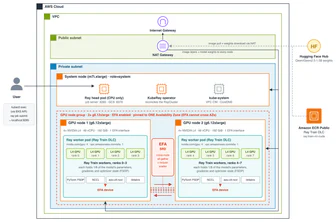
Using Ray Train DLCs and EFA for distributed training on EKS.
AWS releases Ray Train DLCs, simplifying container configuration for PyTorch distributed training on EKS using EFA, supporting Qwen2.5-1.5B model fine-tuning on eight NVIDIA L4 GPUs with FSDP, without needing to build custom images, configuring cluster shape and training tasks through environment variables and scripts.
- AWS Machine Learning Blog5858
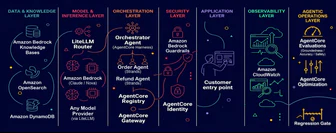
Build an enterprise-grade agent platform based on Amazon Bedrock AgentCore
Amazon Bedrock AgentCore provides modular services such as runtime, gateway, identity, memory, policy, registration, and evaluation, supporting large-scale agent construction, deployment, and operation. The enterprise-grade agent platform blueprint based on AgentCore adds enterprise-level constraints such as ownership, account boundaries, software delivery, observability, cost governance, and retirement, achieving controlled access through inference gateway and tool gateway, and including an evaluation process to ensure agents are validated before production deployment.
- Google Developers Blog5858
How Agents CLI optimizes Agent quality through Hill-Climbing
Agents CLI v1.8.0 achieves Hill-Climbing optimization of Agent quality through commands like eval generate, eval grade, etc., using the custom_response_quality metric to rate 4 cases from 1 to 5, finding that changing the system prompt to a chef role reduced the average score from 4.0 to 2.75. This tool supports model backend experiments and automatic alerts, improving Agent performance through iterative cycles.
- OpenAI News3737
How does AI enter the organizational structure.
AI may enter the organizational structure through bottom-up, side, and internal ways.
 LangChain Blog
How to use crons to build proactive agents with LangChain
LangChain found that nearly 70% of Managed Deep Agents run from scheduled tasks. Crons enables agents to have proactivity, personalization, and ambient characteristics by implementing mechanisms such as memory ('dreaming'), proactivity (exploring new actions), intelligent filtering (monitoring event streams), and reminders (scheduled tasks).