Skip to content
Live
Oct 20Tue
  1. Claude · YouTube

    Claude has launched Claude Dashboards and Claude Motion

    Claude has launched Claude Dashboards and Claude Motion, with the former supporting the real-time conversion of data platform or CRM data into dashboards in all paid plans, and the latter supporting the generation of animated explanatory videos from reports or charts in Team and Enterprise plans, both generated in code form without a video model, with content that can be modified and exported as MP4 or edited.

Oct 19Mon
  1. LangChain Blog

    How Nu company builds AI health coaches using LangGraph and LangSmith and prioritizes evaluation

    Nu company, while developing AI health coach Nu, prioritized building evaluation criteria to avoid boundary-crossing medical diagnoses. Using the LangGraph framework and LangSmith tools, it ensures the system meets health guidance needs while complying with regulatory requirements through LLM judges scored by category and open-ended behavior tests. The evaluation framework is designed separately for single responses and complete conversations, supporting rapid migration between two leading model providers. Safety probes and guard nodes review conversation content in real-time, ensuring the product stays within compliance boundaries.

  2. Google Developers Blog

    LiteRT Tensor API release: A new solution for native model development on edge devices.

    LiteRT Tensor API is released, supporting developers to write and optimize models natively in C++ on edge devices, enabling cross-platform deployment (CPU/GPU/NPU) without script conversion. Developers can fully control the computational graph structure and directly load model weights, achieving zero-copy data transfer through shared accelerator buffers, while providing building blocks for AI coding agents.

  3. Ollama Blog

    Cloudflare's 27B multimodal decision model Clef has landed on the Ollama cloud platform

    Cloudflare's 27B multimodal decision model Clef has landed on the Ollama cloud platform, users can run it locally or use cloud services. Clef transforms state and typed question patterns into decisions, supports text and image input, is compatible with Jev and System One APIs, is fine-tuned based on Qwen3.8-27B, and adopts the Apache 2.0 license. In Cloudflare's decision index evaluation, Clef outperforms Jev and performs leading in most benchmark tests.

  4. Together AI Blog

    Together Post-Training: Flexible and efficient model fine-tuning service

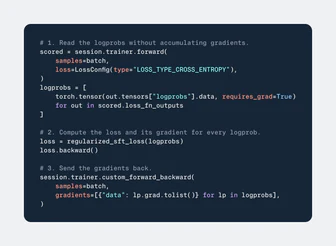
    Together AI has launched Post-Training services, supporting the construction of custom models through reinforcement learning and supervised fine-tuning without complex infrastructure. The service provides flexible training loop definition capabilities and optimizes the underlying system and infrastructure to improve model quality and training speed. It supports mainstream open-source models such as Muse Spark Open, GLM 5.3, Kimi K3, and Qwen 3.8-27B, running on dedicated GPU resources to ensure efficient and numerically consistent training.

Oct 18Sun
  1. NVIDIA Blog

    NVIDIA RTX Spark laptops are officially launched, featuring Blackwell RTX GPUs and an AI platform.

    NVIDIA RTX Spark laptops are now available, equipped with Blackwell RTX GPUs, up to 128GB unified memory, and the full NVIDIA AI platform, starting at $2399. They are launched by ASUS, Dell, HP, Lenovo, Microsoft, and MSI, bringing powerful local AI, content creation, and gaming capabilities to portable devices. NVIDIA held global launch events, including one in Berlin, where founder Jensen Huang made a surprise appearance.

Oct 17Sat
  1. LangChain Deep Agents releases17

    LangChain Deep Agents 0.1.86 Released

    LangChain Deep Agents released version 0.1.86, adding NVIDIA OpenShell as a sandbox provider, fixed multiple bugs including improved alias matching, accurate reporting of workspace rejection, replacing duplicate thread recovery errors, replacing chat input on recall prompts, displaying expiration prompts in the footer, providing actionable errors when Groq tools are limited, and comparing effective interpreter permissions, etc.

  2. AWS Machine Learning Blog

    Amazon Bedrock AgentCore: Building Trustworthy AI Agents with a Production-Ready Evaluation Framework

    Amazon Bedrock AgentCore Evaluation Framework helps AWS internal sales team handle business problems with multi-agent systems, identifying differences in agent performance between demonstrations and actual production; through services like Amazon Bedrock Guardrails and Amazon CloudWatch, the framework verifies answer accuracy before release and during ongoing production, tracing errors back to data, prompts, or code, avoiding user trust breakdown due to agents answering confidently yet incorrectly.

Oct 16Fri
  1. Tencent Hunyuan · Hugging Face new models

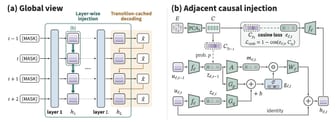
    Qwen3-8B-DSpine-b16 released: Speculative decoding model with parallel drafting and deep conditional injection

    Qwen3-8B-DSpine-b16 released by Qwen, employing speculative decoding technology with parallel drafting and deep conditional injection, achieving an average acceptance length score of 10.55 on Qwen3-8B. The model supports a context length of 8192 tokens, uses bfloat16 data type and fa3 attention backend, installation requires git clone and pip install, and runs via sglang serve.

  2. Meta Engineering

    Meta How to Build Forum Applications with Native AI Engineering

    Meta uses AI agents to participate in the construction of engineering processes for Forum applications, viewing AI as a participant in the engineering process rather than an auxiliary tool. This experiment measures success by production-ready outcomes rather than lines of code, using a Human-On-The-Loop model to allow AI to autonomously execute planning, implementation, testing, and validation, with engineers responsible for setting goals, supervision, and acceptance.

  3. Google DeepMind

    How does Google Antigravity accelerate the discovery of antibacterial peptides?

    The Google Antigravity platform works through its intelligent agent workbench and ProtNLM model, helping biologists quickly discover, structure evaluate, and prioritize potential antimicrobial peptide targets, compressing searches previously scattered across multiple databases into a single session. The platform uses ProtNLM to predict protein function and supports researchers in scanning millions of uncharacterized proteins in the UniProt database. Researchers collaborate with AI agents on a shared 3D canvas, compressing the time required for the antimicrobial peptide discovery process from several days to a single session.

  4. Microsoft Research

    Magnetar achieves provable general computation

    Magnetar proves that programs written in Rust, Go, or C are, on average, 10 to 39 times faster than the fastest comparable systems, and achieves security solely by relying on standard hash functions, solving the three major challenges of zero-knowledge proofs: efficiency, generality, and usability. It significantly reduces proof overhead by leveraging repetitive computations and early termination of the proof process, making proof generation as routine as running a program, and can be used in scenarios such as AI agent behavior verification and financial transaction validation.

Oct 15Thu
  1. Mistral AI

    Mistral AI launched the Timestral time series foundational model family

    Mistral AI released the Timestral time series foundational model family, with the smallest model at only 209M, ranking first in three major benchmark tests (GIFT-Eval, TIME, and fev-bench), outperforming models with larger parameter sizes; this series includes four sizes ranging from 5M to 209M parameters, supports past and future covariates, runs efficiently on CPUs, and can be fine-tuned for specific domains via Mistral Forge.

  2. Google Developers Blog

    How to evaluate AI agents: Beyond sensory checks.

    Evaluating AI agents cannot rely solely on perception checks, as agents may fall into retry loops or produce hallucinatory responses that still appear normal, leading to soaring cloud costs and token usage. A repeatable evaluation process should be established, starting with defining key user journeys (CUJ), using simulated user testing, and employing multiple layers of checks such as unit tests, deterministic metrics, LLMs as judges for scoring standards, and integration tests. Combining manual review tracking with automated validation can detect latent regressions early in development and expand the evaluation framework as agent capabilities grow.

  3. Mistral AI · Hugging Face new models

    Mistral AI releases Timestral-123M time series base model

    Mistral AI releases Timestral-123M time series base model, with 123M parameters, using a patch-based Transformer architecture, context length of 32,768 time steps, single prediction covers 1,024 time steps, outputs 21 quantiles. The model achieves optimal accuracy in zero-shot prediction on GIFT-Eval, TIME, and fev-bench evaluations, and is licensed under the Modified MIT License.

  4. LangChain Blog

    How LangChain Deep Agents Manage Context Windows Through Middleware

    LangChain Deep Agents manage context windows through middleware, preventing unnecessary information from entering and filtering existing content. It employs techniques such as offloading (saving large tool results and user messages to files), summarization (compressing old messages), skills (loading on demand), sub-agents (separating noisy tasks), and long-term memory (preserving learning across sessions). These techniques are implemented by inserting middleware at critical points like model calls and tool calls, allowing users to use them without writing code.

  5. Google Research

    Deep Review: Google's intelligent document verification system

    Google has launched the Deep Review intelligent document verification system, providing rigorous feedback and technical validation for complex documents, supporting PDF and plain text input, offering 2 free reviews per week, and integrating advanced API, collaborating with 4 top computer conferences such as STOC 2026 and ICML 2026, processing over 16,000 pre-submission feedbacks for papers.