Skip to content
Live
Jun 1Mon
May 27Wed
Apr 24Fri
Apr 16Thu
Apr 2Thu
Mar 8Sun
Feb 25Wed
Feb 10Tue
  1. Dify Blog

    Dify guides: Preparing LLM application prompts for workflows

    Dify guides on how to design workflow-ready LLM application prompts by defining clear optimization goals, constructing prompts that include task descriptions, examples, and context, and separating system rules from user input. System prompts contain permanent constraints (such as roles, formats, and safety boundaries), while user prompts contain requests for specific content (such as documents and questions). It requires the model to output structured results (such as JSON) and provide evidence to support scoring to reduce hallucinations and improve the usability of the output in downstream steps.

Jan 14Wed
Jan 6Tue
Jul 6Sun
  1. Hamel Husain65

    How to efficiently sample production tracking data for review.

    Claude Code uses clustering methods to select examples from each cluster for review, combining active learning techniques to update fault classification and find similar cases or different faults by monitoring the annotations. file. The review method needs to be experimentally optimized based on the target and retain random samples to discover fault patterns not described by the current signal.

May 20Tue
  1. Dify Blog

    Dify Deep Research Workflow: Step-by-Step Guide

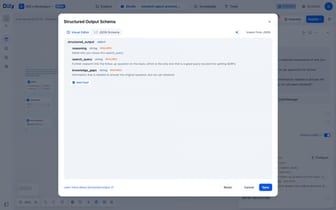
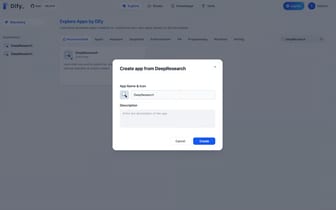
    Dify builds deep research workflows using loop variables, structured output, and Agent nodes to achieve iterative exploration and comprehensive report generation. The workflow includes three stages: intent recognition, dynamic research loops (tracking six variables), and research synthesis. Agent nodes utilize exa_search, exa_content, and think tools for information collection and processing. The final output is a cited Markdown report, accelerating the automation of expert-level research methods.

Apr 18Fri
  1. Anthropic Research62

    Anthropic releases Claude Code best practices for intelligent agent coding

    Anthropic releases Claude Code best practices covering CLAUDE.md configuration, tool permission management, MCP access, common workflows, and multi-Claude parallelism. The article suggests exploring and planning with sub-agents before writing code and provides specific processes such as test-driven development, screenshot iteration, and headless mode automation. This article has been moved to the official documentation, and the original blog is no longer maintained.

    Why it matters: Anthropic's official system has organized the configuration, workflows, and multi-instance parallel methods of Claude Code, which can be used as a reference for setting up intelligent agent coding processes.

Apr 17Thu
  1. Dify Blog

    How Dify Integrates with InfraNodus to Achieve Advanced Q&A and Creative Generation

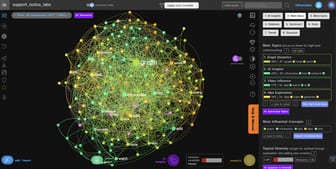
    Dify users can create advanced AI chatbots by integrating InfraNodus. The chatbot not only answers questions but also mines insights and generates new ideas from the knowledge base. InfraNodus can visualize the knowledge base as a knowledge graph, identifying 'structural gaps' in concept connections, and its API generates insight-oriented questions targeting these gaps. Users can seamlessly integrate this capability into Dify applications to initiate conversations, content development, or provide smart prompts for Dify AI agents, thereby embedding enhanced chatbots on websites.

Mar 26Wed
  1. Dify Blog

    Enhance Dify RAG with InfraNodus: Expand Your LLM Context

    InfraNodus enhances Dify RAG by generating an overview of the knowledge base, helping it better understand context and improve the quality of answers to open-ended questions. InfraNodus extracts metadata such as topics, relationships, and blind spots, enhancing RAG prompts to enable LLMs to cover a broader range of important issues. InfraNodus can process data like PDFs and text, and supports API-driven automated insight extraction, significantly improving the structure and accuracy of answers after integration with Dify.

Feb 19Wed
Feb 13Thu
Feb 7Fri
  1. Dify Blog

    How does Dify ensure the stable operation of DeepSeek-R1 applications?

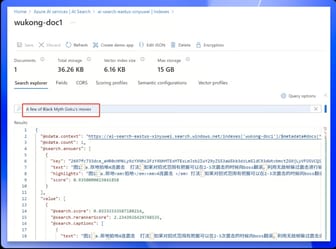
    Dify provides three solutions to ensure the stable operation of DeepSeek-R1: official API integration supports multi-key load balancing; access Azure AI Foundry and other MaaS services as backups; locally deploy Ollama to meet privacy requirements. Through Dify, official API and MaaS can be switched between primary and backup to ensure that applications supporting 1000+ models remain online.

Jan 22Wed
Dec 10Tue
Nov 5Tue
  1. Dify Blog65

    How Dify Enhances GPT-Researcher Through Parallel and Advanced Iterative Features

    Dify Workflow accelerates GPT-Researcher's research tasks through parallel mode and advanced iterative features, breaking down the problem into 4-6 independent sub-problems, parallel extracting topics to form subheadings, calling the Tavily API to search and analyze results, and finally integrating them into a structured report, significantly shortening research time and isolating error handling.

Sep 13Fri
Jun 5Wed
  1. Dify Blog65

    Dify vs. LangChain comparison analysis

    Dify.AI and LangChain are two popular AI application construction tools. Dify.AI enables non-technical users to quickly develop LLM applications through a visual workflow interface, significantly reducing development time and complexity; LangChain requires users to code and debug themselves. Dify.AI has a BaaS architecture, RAG, and rich API features, and relies on an expert team to ensure reliable performance under high load, while LangChain depends on third-party code contributions, which may have maintenance issues.

Mar 11Mon
  1. LangChain Blog

    How does Dosu improve the reliability of large language models through evaluation-driven development?

    Dosu enhances the reliability of large language models through evaluation-driven development (EDD), using LangSmith to monitor and search activities to address challenges brought by growth. The team adopts the EDD process to improve core logic, models, or prompts, ensuring maintenance of performance and improvement of weak points. The LangSmith SDK provides the necessary fine-grained control and customization, supporting the management of prompts as code and tracking metadata.

Nov 21Tue
  1. Dify Blog

    Dify Blog: Introducing hybrid search and re-ranking to improve the retrieval accuracy of RAG systems.

    Hybrid search and re-ranking techniques significantly improve the document recall and accuracy of RAG systems. Hybrid search combines the advantages of semantic relevance and keyword matching, while re-ranking techniques optimize the ordering of candidate results, making them suitable for scenarios such as customer service robots and corporate knowledge bases.

Aug 1Tue
  1. Dify Blog

    Text Embedding: Basic Concepts and Implementation Principles

    Embedding converts concepts into numerical sequences, enabling computers to understand the relationships between concepts. The distance in its vector space is related to the semantic similarity of the original text. OpenAI's text-embedding-ada-002 outputs a 1536-dimensional vector, helping computers understand subtle semantic differences in text. Embedding is like a student with a cheat sheet, capable of efficiently answering questions outside the training data, but limited by the maximum number of tokens per input (GPT-4 supports 32K tokens).

Apr 12Wed
  1. Dify Blog

    Dify guides developers on how to build effective GPT-based applications

    When developers use OpenAI's GPT API, the AI may not produce the expected output or may 'be uncooperative'. To address these challenges and improve GPT performance, it is necessary to follow three key steps: guide model behavior through prompt engineering, use single-point or few-shot learning techniques, and leverage embeddings to extend model context, and can adapt the model to specific domains through fine-tuning.

Apr 11Tue
  1. Dify Blog65

    Dify Explores the Concept of Ops in LLMOps

    Ops in LLMOps refers to the operational level of AI application development, deployment, and continuous improvement based on large language models (LLMs) such as GPT-4. Dify simplifies this process through features like multi-user collaboration, plugins, datasets, logs, and annotations, with its platform aimed at filling the gap in current user-friendly LLMOps solutions.

Mar 15Tue
  1. Dify Blog65

    How to develop ChatGPT plugins: A comprehensive guide

    Developing ChatGPT plugins can extend AI client functionality by integrating additional features through APIs. Developers need to create an ai-plugin. file describing the plugin's functionality and deploy it to Serverless platforms like AWS Lambda. Dify supports integrating internal and third-party plugins to achieve AI application orchestration.