Skip to content
Live
Oct 23Fri
  1. ITHome · AI70

    Wccftech reports that the unofficial PC port of 'Bloodborne' has achieved 1080p at 220 FPS on an RTX 4070 graphics card

    The non-official PC port of 'Bloodborne' by Super Medo supports NVIDIA DLSS Frame Generation technology on the RTX 4070 graphics card, achieving stable performance above 220 FPS at 1080p resolution, which is over 7 times better than the original console version; with native 4K resolution enabled and DLAA, the average frame rate is about 40 FPS, and with DLSS 3 Frame Generation in quality mode, it exceeds 100 FPS, while in performance mode, it reaches about 130 FPS.


  2. MIT Technology Review · AI
    EXL explores the design principles of enterprise-level AI service frameworks

    EXL research finds that a company's AI competitive advantage depends more on the engineering systems around the model rather than the model itself; business load constraints should be defined first, then select appropriate models and service architectures, rather than doing the opposite; reliable, cost-effective, and large-scale AI application delivery needs to be achieved by measuring bottlenecks, targeted optimization, and building scalable architectures.

  3. Databricks Blog60

    Databricks Talks AI Billing: How to Reduce the Unit Cost of Coding Agents by 90%

    Databricks executive Patrick reviews the process where the cost of AI coding agents increased exponentially after the company fully adopted them, and then reduced the unit cost by up to 90% by controlling the layer. He mentions that shifting traffic to cheaper new models contributed to more than 50% of the reduction, and Smart Router reduced the average task cost by more than 30% while maintaining near the quality of the most expensive model. This internal solution was later productized as Unity Gateway, which is now used by thousands of customers.

    Why it matters: Databricks executive reviews the process of its own AI coding costs from out of control to reducing the unit cost by 90%, providing migratable practices for gateways, routing, and self-built evaluations.

  4. n8n Blog

    How does n8n manage stateful and stateless contexts in AI agent construction?

    n8n allows engineering teams to choose between stateful or stateless architectures in AI agent construction based on requirements. Stateful architectures achieve continuity by retaining information across requests or sessions but require additional infrastructure management for state; stateless architectures improve scalability and fault tolerance by processing each request independently. Stateful systems are suitable for scenarios that depend on previous interactions (such as conversations, multi-step processes), while stateless systems are more adaptable for applications like REST APIs that require rapid scalability and simple maintenance.

Oct 22Thu
Oct 21Wed
  1. GitHub Blog · AI & ML33

    How GitHub Copilot continues a session in VS Code

    GitHub Copilot users can directly open a GitHub Copilot app session in VS Code to continue their conversation, code changes, and context. Users can review Copilot's modifications line by line, make manual edits directly in VS Code, and run and validate the project locally. The session and code workspace remain connected, supporting interactive iterative optimization with Copilot, and finally submitting updates to the associated pull request.

  2. Claude · YouTube25

    How Anthropic engineers use Claude Docs

    Anthropic engineer Doug shares methods of using Claude Docs in stand-up meetings and release reviews; Claude collaborates in documents, automatically extracts data, verifies claims, and responds to comment questions; the tool is designed for team collaboration, supporting real-time editing by multiple people and intelligent analysis.

Oct 20Tue
  1. Tessl Blog

    Tessl Blog: Stop line-by-line code review, start verifying intent

    Tessl Blog stops line-by-line code review and starts verifying intent. The team's merged PR volume is four times that of last year and almost all AI-generated, making review a bottleneck. The team shifts to reviewing intent before code generation (acceptance criteria, constraints, and edge cases), and transforms repetitive review comments into machine-executable rules (invariants), thus shifting the focus of review from the code itself to decision-making and rule ownership.

  2. Hamel Husain

    How to use a decision model for evaluation

    When using a decision model for evaluation, the default threshold of 0.50 needs to be adjusted according to the task to optimize results. On the 100 conversation log dataset of apartment rental agents, Jev 1.13, Perplexity Decider 1.1 27B, Liquid d1/d1-ultra, Cloudflare Clef Flash, and OpenAI Decisions (GPT-6 Luna) were tested to evaluate their performance and cost.

Oct 19Mon
  1. O'Reilly Radar65

    The Monday Morning Agent project trains AI analysts using American football data.

    The Monday Morning Agent project uses the NFL public dataset to analyze a controversial American football topic every two weeks, gradually equipping AI agents with analytical capabilities. The project uses 250,000 game clips and current season data, each episode having AI explain a specific tactic (such as 'establishing the offensive line') and verify its analysis results. The AI must state data limitations during analysis and refuse requests beyond the task scope (such as predicting game outcomes).

  2. LangChain Blog

    How Nu company builds AI health coaches using LangGraph and LangSmith and prioritizes evaluation

    Nu company, while developing AI health coach Nu, prioritized building evaluation criteria to avoid boundary-crossing medical diagnoses. Using the LangGraph framework and LangSmith tools, it ensures the system meets health guidance needs while complying with regulatory requirements through LLM judges scored by category and open-ended behavior tests. The evaluation framework is designed separately for single responses and complete conversations, supporting rapid migration between two leading model providers. Safety probes and guard nodes review conversation content in real-time, ensuring the product stays within compliance boundaries.

  3. IBM Research Blog22

    Coursera's new course 'AI Data Stream Architecture: From Principles to Practice' teaches the principles of modern accelerator operation

    Coursera's new course 'AI Data Stream Architecture: From Principles to Practice' teaches engineers how to work across GPUs, TPUs, Cerebras WSE, Groq LPU, and IBM Spyre accelerators. The course is taught by Kaoutar El Maghraoui, a senior research scientist at IBM Research, covering execution models, compilation, memory systems, debugging, and performance modeling through six courses and hands-on experiments, emphasizing how different architectures affect model performance and the key role of compiler optimization.

Oct 18Sun
  1. Browser Use

    What is a browser agent? Its working principle and applicable scenarios

    The browser agent operates web pages through AI models to achieve goals. After the user describes the task, the agent automatically opens pages, navigates, selects operations, and checks results to continue. It is particularly suitable for uncertain workflows that require flexibility and decision-making, composed of three parts: the model (decides actions), the suite (provides context, tools, and loops), and the browser (manages website sessions). Main uses include data extraction, research, form filling, etc., but there are drawbacks such as inconsistent results, task failure, website blocking, prompt injection, and unpredictable costs.

Oct 16Fri
  1. Dify Blog65

    How Dify Chooses AI Agent or Workflow

    Dify supports selecting AI Agent or Workflow based on whether the task is repetitive, whether judgment is needed, and whether there is a clear result. Agents are chosen by the model selection tool or action, while Workflows are defined by developers. The Hybrid mode combines both. In Dify, Agents are suitable for repetitive tasks requiring explanation of requests and selection of the next step, while Workflows are suitable for SOPs with fixed steps, where Agent nodes can be embedded to handle flexible steps within the Workflow.

  2. LangChain Blog

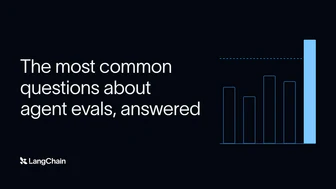
    LangChain blog: Frequently Asked Questions about Agent Evals

    The LangChain blog introduces how to use Agent Evals to test AI agent behavior, including analyzing behavior through trace logs, building test datasets containing inputs and expected outputs, running offline benchmark tests (such as Terminal-Bench) and online real-time evaluations, as well as using four types of evaluators: code inspection, LLM scoring, and manual review. Offline evaluations are used to test new prompts or models and catch regression issues, while online evaluations are used to monitor production quality and discover dataset gaps.

Oct 15Thu
  1. Google Developers Blog

    How to evaluate AI agents: Beyond sensory checks.

    Evaluating AI agents cannot rely solely on perception checks, as agents may fall into retry loops or produce hallucinatory responses that still appear normal, leading to soaring cloud costs and token usage. A repeatable evaluation process should be established, starting with defining key user journeys (CUJ), using simulated user testing, and employing multiple layers of checks such as unit tests, deterministic metrics, LLMs as judges for scoring standards, and integration tests. Combining manual review tracking with automated validation can detect latent regressions early in development and expand the evaluation framework as agent capabilities grow.

  2. LangChain Blog

    How LangChain Deep Agents Manage Context Windows Through Middleware

    LangChain Deep Agents manage context windows through middleware, preventing unnecessary information from entering and filtering existing content. It employs techniques such as offloading (saving large tool results and user messages to files), summarization (compressing old messages), skills (loading on demand), sub-agents (separating noisy tasks), and long-term memory (preserving learning across sessions). These techniques are implemented by inserting middleware at critical points like model calls and tool calls, allowing users to use them without writing code.

Oct 14Wed
  1. Claude · YouTube

    Detailed Explanation of Claude Code Cloud Chat Function

    Claude Code's cloud sessions run on cloud virtual machines, allowing offline continuous operation, supporting phone startup, and parallel processing. Suitable for scenarios requiring continuous operation or remote collaboration, supporting GitHub connection and environment configuration. This feature is included in the Pro, Max, Team plans, as well as enterprise advanced or Chat + Claude Code seats, counted towards plan limits with no additional compute costs.

Oct 13Tue
  1. GitHub Blog · AI & ML

    GitHub Copilot Application Introduction: How to Teach Copilot to Understand Your Codebase

    GitHub Copilot can allow users to convey project rules, encapsulate repeatable processes, provide professional guidance, and connect external tools to improve collaboration efficiency through custom instructions, proxy skills, custom agents, and the Model Context Protocol (MCP) server. Custom instructions define code standards, proxy skills encapsulate repetitive tasks, custom agents handle complex work, and MCP servers extend Copilot functionality.

Oct 12Mon
  1. Browser Use75

    What is browser fingerprinting? Its working principles and limitations.

    Browser fingerprinting identifies users by collecting browser features such as user agent strings, language, screen size, available fonts, and canvas rendering, hashing them to generate a unique identifier for user tracking, fraud prevention, bot detection, etc. Passive fingerprinting uses HTTP headers, IP addresses, and TLS handshake features, while active fingerprinting collects data such as screen size, text measurement, graphics rendering, and audio processing via JavaScript. Websites can combine multiple methods to identify users, but browser updates or privacy protection can change the results.

Oct 11Sun
Oct 10Sat
  1. Cohere Blog

    Cohere discusses the choice of shared or dedicated inference for Embed & Rerank workloads.

    When analyzing Embed & Rerank workloads, shared inference is suitable for batch processing (such as e-commerce indexing) to improve cost-effectiveness, while dedicated inference is better for re-ranking with a high number of candidate documents (such as fine-tuning search results); the choice should be based on request characteristics (batch processing/single query/candidate count), traffic patterns (continuous/bursty), and utilization, rather than purely price comparison.

Oct 9Fri
  1. Simon Willison65

    Simon Willison uses GPT-6 Astra High to build new blog features through voice

    Simon Willison interacted with GPT-6 Astra High via voice to build the Newsletters page of his blog, implementing a subscription list indexing feature, including weekly free Substack and monthly exclusive updates for sponsors. He used the Codex voice chat mode of the ChatGPT desktop application to complete the model, migration, view code, template, and database import functions in a local development environment and integrated the website search engine.