Skip to content
Live
Nov 9Mon
  1. Hacker News · AI hot posts65

    How do I cope with AI job fatigue brought by Claude Code and Codex?

    When working with Claude Code or Codex from the terminal, users often experience mental exhaustion due to multi-threaded task processing. The author manages tasks in git by organizing work in a way similar to a priority queue, with each task being a markdown file and its status as a git snapshot. The AI agent processes new tasks in a loop, runs tests, and performs browser checks, but cannot make decisions and requires the user to handle them in the 'Owner Inbox' by viewing tasks with the Claude tool on a single page, closing them after completion to process one task at a time.

  2. Simon Willison65

    Hide the redundant information of Claude Code PR descriptions: Use HTML details/summary elements to optimize the code review experience.

    Claude Code or Codex generated PR descriptions are too verbose, but hiding them in HTML details/summary elements can optimize the reading experience. Use the model name and effort level as the summary, for example, 'Claude Opus 5.5 Medium', so readers can quickly get the core information. GitHub Markdown supports this feature; click the expand arrow to view the full content, making the PR no longer appear messy.

  3. Hacker News · 300+78

    llama-modchip enables the 284B DeepSeek-V4-Flash to run on a 64GB memory without GPU

    llama-modchip releases a set of ggml/llama.cpp core patches and quantization transcoding tools, compressing the 284.33B DeepSeek-V4-Flash to 56.56 GiB (1.71 bpw), which can run on a pure CPU machine with 64 GB memory, with a peak memory of 57.61 GiB under 256K context and no need for swap.

    Why it matters: The project provides a quantization scheme and core patches for running 284B MoE on 64 GB memory, along with measured data for each hardware, which can be used to determine the feasible boundary for pure CPU deployment.

Nov 8Sun
  1. QbitAI42

    Qualcomm showcased the edge-side MoE intelligent agent at the CIIE, driving edge-side AI from single-point applications to intelligent agent experiences

    Qualcomm showcased its edge-side MoE intelligent agents at the 9th CIIE, driving edge-side AI from single-point applications to intelligent agent experiences. MoE technology enhances the intelligence level of edge-side models through mixed expert modules, achieving higher complexity task completion in the 2 billion to 3 billion parameter scale. Qualcomm collaborated with Infris AI, Changelong, and Jieyu Xingchen to optimize models, inference, storage, and chip platforms, demonstrating a systematic solution for edge-side AI ecosystem synergy.

  2. ITHome · AI65

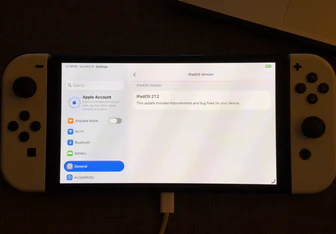
    The remastered version of 'The Legend of Zelda: Ocarina of Time' runs on jailbroken PS5 and iPhone

    After the Nintendo 'The Legend of Zelda: Ocarina of Time' remastered version launched on Switch 2 on November 5, developers have successfully run it on jailbroken PS5 and iPhone. The PS5 version is based on the EglantinePS5 project, with a frame rate of about 15-20 FPS under the 12.40 firmware, but there are memory issues and rendering problems, with the patch written by Claude.

Nov 7Sat
  1. Claude · YouTube42

    How Salesforce leverages Claude Code to improve AI coding efficiency and output quality

    Salesforce expanded Claude Code to thousands of engineers, doubling effective output and reducing the number of bugs per line of code. The 'effective output' scoring system, co-built by the company's engineering leadership and Stanford researchers, measures AI coding ROI, and the intelligent agent maturity curve guides engineers from simple prompts to fully autonomous agents.

Nov 6Fri
  1. Browser Use

    Claude Code v2.1.159 release

    Claude Code v2.1.159 released, supports 8k context window, performs excellently on SWE-bench Verified; Anthropic launches Browser Use open-source library, allowing AI agents to control browsers via Chrome DevTools Protocol, providing Browser Use Cloud and Browser Use Agents services.

  2. Databricks Blog

    Databricks Apps Builder Guide: How to Scale Application Performance and Elasticity

    When the user base of Databricks Apps grows from a few to thousands, how to make the application respond quickly and highly available. Performance (e.g., p95 latency) and scalability (e.g., peak user count) goals must be determined during the design phase, and the architecture should be planned to separate state and dependencies. The AppKit framework is recommended, moving heavy computation tasks to the Databricks Sandbox, and horizontal scaling (adding instances) and vertical scaling (upgrading compute specifications) should be used to handle increasing loads.

Nov 5Thu
  1. LangChain Blog

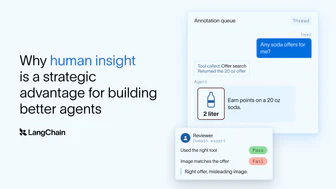
    How human insight constructs better intelligent agents - LangChain's three principles of human feedback

    LangChain explores three principles of human feedback to enhance agent development: expert judgment defines quality standards, comprehensive context evaluation, and converting feedback into reusable data; through agent trace to record user interactions and model behavior, manually labeled scoring with reasons, used to calibrate automated evaluators, improve evaluation criteria, and build golden datasets, forming reusable expert knowledge assets.

  2. IBM Research Blog38

    HRL Laboratory's MEMS inertial sensor can rival GPS

    HRL Laboratory develops an inertial measurement unit (IMU) using advanced algorithms, providing an uninterrupted GPS alternative. Its MEMS inertial sensor is the size of a can of soup, with accuracy close to GPS, and solves the long-standing problem of bias drift. Through the AutoCal automatic calibration system, it continuously corrects errors, achieving unlimited navigation support. The IMU uses ASIC and advanced packaging technology to optimize cost and size, making it suitable for light vehicles such as drones.

  3. ITHome · AI65

    Claude Code Helps Users Bypass iFIT Subscription Wall on Running Machines

    Netizens Successfully Bypass iFIT Subscription Wall on NordicTrack Running Machine Using Claude Code, Transforming the Device's Large Screen into a Free-Use Streaming Interface. The Modification Process Took About 1.5 Days to Complete, and the Project Has Been Opened on GitHub, Integrating Apps Like Netflix, Crunchyroll. Netflix Launch Time Is Reduced to About 21 Seconds, but Only Supports Standard Definition Quality and May Affect Warranty.

  4. NVIDIA Technical Blog65

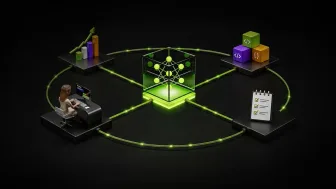
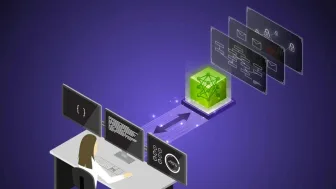
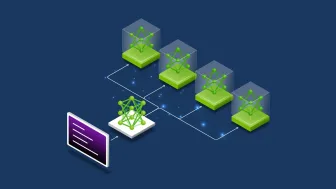
    How NVIDIA Uses AI Agents to Simplify AI Factory Operations

    NVIDIA has developed the AI Factory Operations Agent to simplify operations within DGX SuperPOD, automatically correlating compute, network, hardware, and scheduling issues through a single interface to help SREs identify the causes of training performance degradation. The agent can process data from multiple dashboards, improving operational efficiency.

  5. AWS Machine Learning Blog60

    The four-layer context engineering of production-level AI agents: The practice of Deep Insight in runnable code.

    The AWS team, referencing the open-source multi-agent data analysis solution Deep Insight, has broken down the context engineering of production-level AI agents into four layers: multi-agent architecture isolation of context, using prompts to limit output, externalizing heavy content to the file system, and using a validation agent with a fallback mechanism.

    Why it matters: The AWS team has broken down the context engineering into four layers and provided specific code and token-saving data from the open-source reference implementation, which can be directly used to modify your own Agent.

  6. NVIDIA Technical Blog65

    Use NVIDIA NeMo to Turn Agent Failures into Tests and Utilize Solutions

    NVIDIA NeMo can transform agent failures in production into priority issues and generate customized evaluations to help improve prompts, tools, models, memory, skills, and code. When building agents for specific domains, general benchmark scores may not explain their failure reasons, such as the agent choosing the wrong tool, following the wrong workflow branch, omitting relevant context, or using unnecessary high-cost models.

  7. O'Reilly Radar65

    How to Measure AI's Impact on Delivery Speed

    Does AI make software development faster? Delivery speed is not productivity, but the ratio of value output to cost. Since software deliverables are not standardized, metrics like lines of code and PR numbers are unreliable, and estimations are inaccurate. Measuring delivery speed requires comparing a team's performance before and after. Through randomized controlled trials, alternating between tasks using AI and tasks not using AI can reduce interference from other process improvements, thus more accurately assessing the actual impact of AI on delivery speed.

Nov 4Wed
  1. OpenHands Blog71

    OpenHands and Snowflake introduce a workflow for training models using their own Agent harness

    OpenHands partnered with Snowflake AI Research, allowing developers to directly use the existing OpenHands Agent harness for reinforcement learning and training without rebuilding the harness in the training framework.

    Why it matters: The original text provides specific configuration methods and code locations for directly using the existing Agent harness for RL training, allowing readers to judge whether training and deployment can share a single harness.

  2. NVIDIA Newsroom38

    How AI is reshaping the work of semiconductor wafer factories - engineers accelerating decision-making due to it

    AI is changing the way semiconductor wafer factories work, accelerating decision-making for engineers. NVIDIA's cuDSS library accelerates COMSOL's multiphysics simulation 10 times, Applied Materials' Ginestra platform simulation 10 times, ACE+ platform 35 times, and Siemens' Calibre lithography software simulation 17 times. NVIDIA's PhysicsNeMo framework enables Lam Research to predict plasma behavior at the millisecond level, replacing full simulations that took days.

Nov 3Tue
  1. ITHome · AI65

    Developers flash Apple iOS 16.5 test firmware pack for Xiaomi REDMI K20 Pro

    Developer 'You say you like it but you're lying' has flashed the Apple iOS 16.5 test firmware package for Xiaomi REDMI K20 Pro phone, supporting dual systems and data persistence, requiring Android data to be cleared and TWRP Recovery to be replaced. It can switch systems through normal startup or Magisk module under Root privileges, but the developer emphasizes that this solution is a test version and carries the risk of bricking.

  2. NVIDIA Technical Blog65

    Use NVIDIA Attribution to diagnose distributed AI workload failures

    NVIDIA Attribution can help users locate the initial failure point in distributed AI workloads by analyzing NCCL errors, scheduler state changes, and downstream message cascading symptoms, revealing the source of anomalies rather than just reporting the stop location. This tool is suitable for diagnosing cross-node issues caused by GPU or network fabric events, by visualizing and tracing the root cause of problems through thousands of message links.

  3. LangChain Blog38

    LangChain points out new challenges in late 2026 for agent context engineering

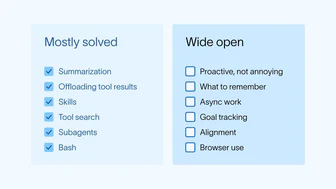
    LangChain points out new challenges for agent context engineering in late 2026, including how to proactively notify users without being annoying, agent memory management, asynchronous task processing, goal tracking and alignment, and browser usage, among other difficulties. These challenges involve how agents balance notification frequency when running in the background, decide on memory content, coordinate asynchronous tools and sub-agents, break down and iterate on goals, and prevent agents from over-optimizing goals.

Nov 2Mon
  1. O'Reilly Radar65

    How Claude Code Implements Four Types of Loop Engineering

    Claude Code provides three loop trigger methods: goal, time, and active, as well as a manual loop mode. Task iteration is achieved through commands like /goal, /loop, /schedule. For goal loops, success criteria must be defined, such as an Lighthouse score of 90 or above.

Nov 1Sun
  1. Databricks Blog58

    Databricks Lakebase branching helps CI/CD: experience from 100 PR databases

    Databricks Lakebase reduces the creation time of each PR branch to seconds with its copy-on-write database branching feature, supporting up to 100 concurrent branches, with each branch having independent read/write, compatible with standard Postgres, and supports large JSONB/LOB columns, meeting Snorkel AI's needs for fast, secure, and low-cost testing of production data in CI/CD processes.