Skip to content
Live
Nov 14Sat
  1. Baseten Labs65

    Claude Code v2.1.159 release

    Claude Code v2.1.159 released, adopting a gradient alignment reward mechanism, using the Qwen3-8B model on arithmetic tasks, rewarding by calculating the gradient similarity between student output and expert demonstrations, experiments show the model may overfit the precise wording of expert examples.

Nov 13Fri
  1. Hugging Face Daily Papers

    Duo: A Reciprocal World Model for Full-Duplex Interaction

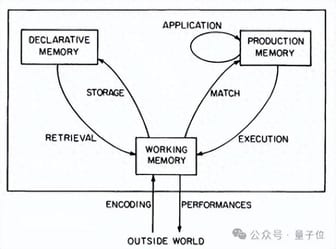
    Duo v1 introduces the Reciprocal World Model (RWM), which jointly models intentions and reality through autoregressive reasoning, synchronized attention, and dual inference distillation, achieving real-time full-duplex audio-video interaction. The model continuously perceives audio-video input while responding to users in real time, treating intelligence and physical reality as equal foundational components of the world, supporting interactions such as dialogue, sharing objects, and reshaping virtual scenes. The first batch of models has been open-sourced.
  2. Hugging Face Daily Papers

    BirdDreams: Joint Perspective and BEV Video Generation for Reasonable, Reactive Driving World Models

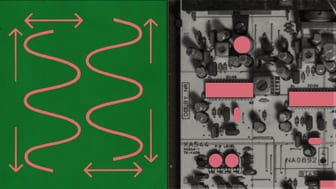
    BirdDreams jointly generates bird's-eye view (BEV) videos and bird's-eye view videos, making scene layout a part of predicting the future. By providing an overhead view of vehicle position and movement through BEV, it reduces occlusion, while the perspective video retains scene details. On PhysicalAI-AV and nuScenes, BirdDreams more faithfully follows the input trajectory of its own vehicle and generates more reasonable self-motion without HD map or vehicle state input.

  3. Google Developers Blog

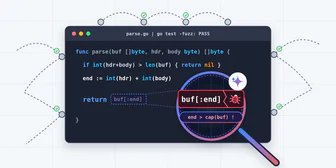
    Gemini and Z3 jointly capture bugs missed in Go code fuzz testing

    Gemini 4 Argon translates Go code panic paths into Z3 constraints, paired with Z3 to check trigger conditions, and paired with go test to replay trigger bytes, locating 3 embedded parser bugs and discovering 3 skill-lint potential bugs within 1 minute. This process is more efficient than go test -fuzz, capable of finding boundary check errors missed by fuzz testing.

Nov 12Thu
  1. IBM Research Blog

    IBM Research explains what a spin qubit is.

    IBM Research is studying two quantum computing hardware architectures, one of which is the spin qubit architecture that encodes information by controlling the spin state of electrons. Spin qubits use quantum dot structures (such as silicon-germanium heterostructures) to trap individual electrons, controlling their spin direction (up or down) with voltage pulses to represent 0 or 1. This architecture has high gate fidelity, scalability, relatively fast speeds, and simple control signals (requiring only voltage pulses), but the current number of qubits is less than that of superconducting qubits and faces challenges such as uniformity and manufacturing yield.

  2. QbitAI

    Galaxy Smart Learning's Little Deer Love Learning introduces a dual-core technology architecture to support scalable personalized instruction.

    Galaxy Smart Learning has launched an AI education product, Xiao Lu Ai Xue, which adopts a dual-core architecture of the Doubao large model and a self-researched intelligent learning engine. It achieves learning situation diagnosis by analyzing students' answer records and develops functions such as learning situation diagnosis, ability assessment, learning difficulty matching, and task planning. The student-side intelligent agent recommends learning tasks and explains the basis, while the teacher-side intelligent agent summarizes student performance for personalized guidance reference. The product has served over 500 schools, covering 24 provinces, and supports teachers in adjusting teaching strategies through a human-machine co-education model.

  3. OpenRouter Blog

    How to Benchmark LLM with OpenRouter

    Running the same tasks on OpenRouter, GPT-6.1 Sol passed 180/180 tests in 60 synthetic tasks, DeepSeek had the lowest cost passing 157/180 times, but the correlation with the public ranking is low (Spearman correlation coefficient 0.109). Need to check the number of task repetitions, the number of answers, and billing verification.

  4. Google Research58

    Google Research has released a wearable device-driven CKM risk assessment framework

    Google Research releases a wearable device-driven CKM risk assessment framework, predicting future health trajectories through an explainable health age model (CHA). The framework is trained on wearable data from 2.2 million weeks using the SensorWM model, providing personalized 12-week counterfactual health simulations combined with language models to generate clinically validated guidance plans. The CHA model integrates modifiable indicators such as heart rate, steps, and sleep to predict disease risk over 68,000 person-years, improving the predictive performance of clinical indicators.

  5. Apple Machine Learning Research

    Gating Mechanisms of State Space Models (SSMs): Memory and Contextual Learning Research

    State Space Models (SSMs) lag behind Transformers in contextual learning and precise retrieval tasks, as their gating mechanism leads them to first learn memory solutions, delaying or preventing the convergence of correct contextual learning solutions, but the gating mechanism is beneficial for improving long sequence generalization.

Nov 11Wed
  1. Ant Group inclusionAI · Hugging Face new models

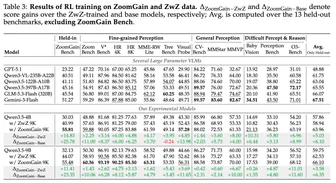
    inclusionAI/ZoomGain-4B released: A fine-grained visual supervision model based on global-to-local visual perception gaps

    inclusionAI has released the ZoomGain-4B large language model, achieving a score of 61.08 on ZoomGainBench and performing excellently on multiple fine-grained perception and general perception benchmark tests; the model is built with supervision based on the global-to-local visual perception gap mined from global image details, supporting English and Chinese Q&A, and can be downloaded via Hugging Face.

  2. Hugging Face Daily Papers65

    The DexForesight framework enhances dexterous manipulation performance through implicit spatial foresight.

    The DexForesight framework implicitly learns spatial foresight by injecting a dynamic perception world representation into the latent space of dexterous strategies, increasing the success rate of basic strategies from 49.4% to 60.5% on 11 DexJoCo simulation tasks and achieving a 58.3% success rate on 3 real robotic dexterous operation tasks.

  3. Hugging Face Daily Papers65

    Infrathon: A benchmark for language intelligent agents used in long-term AI infrastructure optimization in the real world.

    Infrathon conducted 150 long-term AI infrastructure optimization task evaluations on six models, consuming a total of 10,000 GPU hours, and found that the model rankings changed with the evaluation duration. 135 tasks achieved further optimization in the latter half of the budget, and Claude Opus 5.5 increased the KV cache compression rate from 6.82% to 19.86%, exceeding human design baselines. Analysis shows that task violations, unreliable testing, and premature completion are the main obstacles to continuous optimization.

  4. Hugging Face Daily Papers

    dNaViT releases: Discrete code as a general visual representation

    dNaViT is a discrete native resolution vision Transformer that matches or exceeds specific baselines in visual understanding, generation, and editing tasks through grouped product quantization and dual-branch targets. It performs excellently on 12 visual understanding benchmarks, 4 generation benchmarks, and one image editing benchmark, proving that discrete vocabulary can be a universal visual representation

  5. OpenRouter Blog

    LLM Quantization: The Impact of fp8 and fp4 on Quality and Price

    Testing on OpenRouter, fp8, fp4, and fp16 showed no precision differences in 240 scoring tasks, with all six endpoint scores ranging from 98.3% to 99.2%. Lower precision is generally cheaper, but there were 7 models where fp8 was more expensive than fp16, and 7 models where 4-bit was more expensive than 8-bit. The fp4 endpoint performed the worst among 40 workflows without multiplication tasks, but the difference might be due to chance.

  6. AWS Machine Learning Blog40

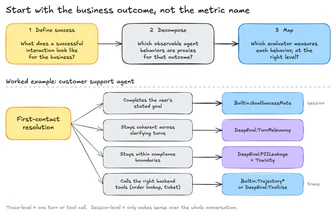
    How Amazon Bedrock AgentCore Evaluations use built-in, DeepEval, and AutoEval to assess agents.

    Amazon Bedrock AgentCore Evaluations provides three evaluators—built-in, DeepEval, and AutoEval—to assess agents. The built-in evaluator is developed and tested by AWS, covering common dimensions; DeepEval and AutoEval are third-party open-source libraries, with AgentCore hosting them in production environments. The evaluation process requires first defining business success criteria, breaking them down into observable behaviors, and then mapping them to the appropriate evaluator level.

  7. OpenAI Alignment Blog

    GPT-6 Astra's CoT monitoring capability is affected by pre-training, architecture, reinforcement learning, and model-generated data

    GPT-6 Astra shows a decrease in CoT monitoring ability in non-adversarial settings, an increase in CoT evasion ability in adversarial tests, and no significant improvement in CoT capability. During pre-training, CoT capability does not increase with the decrease of the base model's perplexity, and the architecture has a limited impact. Reinforcement learning enhances CoT control ability, and model-generated data fine-tuning can transfer CoT control ability. Model perplexity is positively correlated with CoT capability and control ability.

  8. The Decoder

    Nvidia's GR00T 2 model learns tasks by observing human actions through video and imagines itself as a robot

    Nvidia's GR00T 2 AI model learns new tasks for robots by analyzing human video actions without remote control, trained on 400,000 hours of video data, with lab test success rates of 10-80%, and combined with GPT-6 Astra achieves 97% success rate for toy model assembly, but tactile processing and language model latency remain challenges.

  9. Meta Engineering

    Meta open-sources Triton Low-Level Extensions (TLX): a hardware-native GPU compiler optimized for large-scale production ML

    Meta open-sources Triton Low-Level Extensions (TLX) compiler, enhancing GPU performance by introducing explicit warp-group and cluster-level orchestration, supports RecSys training/inference and LLM pre-training, achieving end-to-end performance improvements over standalone libraries on NVIDIA and AMD GPUs.

Nov 10Tue
  1. Hugging Face Daily Papers

    Frontier3DBench: A 3D creation benchmark test for code intelligent agents in open worlds across objects, scenarios, and interactions

    Frontier3DBench uniformly evaluated the ability of code agents in object, scene, and interactive 3D world creation across 145 tasks, GPT-6.1-sol performed best at the object and scene levels, with a total score of 66.02/100, but all configurations had reference reconstruction scores lower than text-driven generation in object and scene tasks. The generated world averaged 83.08/100 in local mechanisms, but only 20.82 and 30.26 respectively in motion removal and stateful workflow, showing that coordinated activity completion remains a core bottleneck

  2. Hugging Face Daily Papers

    LingBot-Touch Released: An Heterogeneous Tactile Representation Learning Model Supporting General Dexterity Operations

    LingBot-Touch is a tactile foundational model that learns a unified, scalable representation across different tactile sensors (resistive, magnetic, visual tactile), producing plug-and-play tactile tokens, and continuously enhancing the dexterity of diffusion strategies and visual language action (VLA) models (such as π_{0.5} and LingBot-VLA). Experiments show that this tactile representation significantly improves performance in complex manipulation tasks in both simulation and real robot deployment while maintaining strong computational efficiency.

  3. Hugging Face Daily Papers

    Fast and Exact Relative-Position Attention via Structure-Aware Kernels

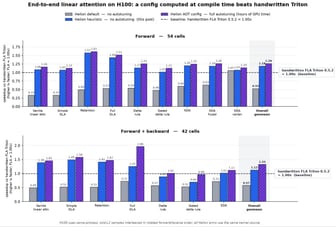
    A precise tile attention algorithm integrates additive relative position terms into the computation similar to FlashAttention, reducing memory and computational overhead, accelerating long-context relative position Transformers. The method (1) uses offset-aware tiles to avoid redundant index and memory access, (2) only computes necessary key/query relation products and reuses them in forward and backward passes, and (3) uses offset-based gradient sharding and aggregation to eliminate atomic contention.

  4. Hugging Face Daily Papers

    OneTrans-GSR: A generative ranking list paradigm, unifying re-ranking and hybrid sorting

    OneTrans-GSR generates unified recommendation ranking lists through a single autoregressive Transformer, improving business metrics and reducing re-ranking and hybrid sorting latency. After deployment in industrial recommendation systems, GMV/u increased by 2.63%, advertiser value increased by 2.06%, and repurchase rate increased by 2.03%, while end-to-end latency was reduced by 13%.