Skip to content
Live
Nov 14Sat
  1. MarkTechPost62

    Stanford has open-sourced Memorilla, a potential memory module for freezing LLM development

    Stanford researchers have open-sourced Memorilla, a potential memory system designed for frozen LLMs. It converts the entire document collection into 16 vectors for use by frozen LLMs. On FactKG, the frozen Qwen3-8B paired with Memorilla achieves an accuracy of 84.33%, which is 3.9% higher than using all document contexts, but only requires 16 memory tokens, reducing the number of document tokens by 108 times.

  2. ITHome · AI65

    Tsinghua University releases the single-cell proteomics foundational model ProtCell, successfully completing the 'virtual cell' pre-training reproduction using MolThread S5000 intelligent computing cards

    Tsinghua University releases the single-cell proteomics foundational model ProtCell, collecting about 380 million cells and 98 public datasets for pre-training and evaluation, MolThread S5000 intelligent computing cards complete the full process of pre-training reproduction, evaluation metrics differ from mainstream international GPUs by only about 0.2%

  3. Baseten Labs65

    Claude Code v2.1.159 release

    Claude Code v2.1.159 released, adopting a gradient alignment reward mechanism, using the Qwen3-8B model on arithmetic tasks, rewarding by calculating the gradient similarity between student output and expert demonstrations, experiments show the model may overfit the precise wording of expert examples.

  4. Hugging Face Blog40

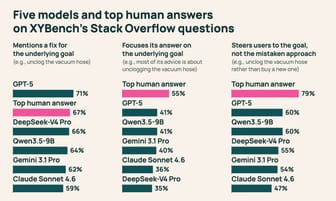
    Hugging Face releases XYBench benchmark to evaluate AI assistants' ability to solve problems based on misunderstandings

    Hugging Face releases XYBench benchmark, containing 8150 real-world problems, to evaluate AI assistants' ability to identify user misunderstandings and guide them to correct solutions. Claude Sonnet 4.6, GPT-5, Gemini 3.1 Pro, Qwen3.5-9B, and DeepSeek-V4 Pro tend to focus on user errors (Y) rather than actual goals (X), with only 35-41% of responses centered on the actual goals.

Nov 13Fri
  1. Hugging Face Daily Papers65

    Ropedia Xperience 2: A gold standard for extending physical AI environments and behaviors

    Ropedia Xperience 2 includes 1,589 published metric 3D scans and 4,230 viewpoint center records for 74 tasks (131 hours), each capture can be reused for robot learning, scene converted to physical interaction simulation environment, human motion redirected to full-body robot trajectories, additional robot behaviors obtained through virtual remote operation and automatic long-term trajectory generation, this joint capture proposed as the gold standard for physical AI data collection.

  2. ITHome · AI

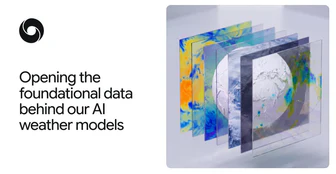
    Google open-sources dataset used in WeatherNext 3 weather model: Includes SatWeave satellite image mosaicking dataset and PARDIG global precipitation information

    Google DeepMind has open-sourced the WeatherNext 3 weather model dataset, SatWeave, and PARDIG. The former integrates 5 satellite images (updated hourly, 10-year historical archive), and the latter is based on a Transformer architecture (spatial resolution 10 km, time resolution 15 minutes, average delay 5 hours), both hosted on Google Cloud Storage and licensed under CC BY 4.0.

  3. Hacker News · AI hot posts80

    Unemployment Labs reports that the models DeepSeek, Kimi, MiniMax, and Ant have weights with a Blackwell hardware fingerprint.

    Unemployment Labs, by analyzing the random number initialization layout in public model weights, discovered DeepSeek-V4-Flash, DeepSeek-V4-Pro, Kimi K3.

    Why it matters: By reversing the random number layout in the model weights to train the hardware, it provides a reproducible technical evidence path for export control disputes.

  4. Databricks Blog22

    Clarification on the misunderstanding of the Lakebase architecture's LTAP.

    Lakebase architecture serves both Postgres and analytics with a single persistent data copy, without the need for CDC pipelines or a second database. This architecture stores data hierarchically in object storage and cache, not traditional replication. It supports both point-in-time and scan access paths, optimized respectively using Postgres heap pages and Parquet format, with no additional synchronization tasks.

Nov 12Thu
  1. Hugging Face Daily Papers

    TOME-Math: A mathematical proof supervisory corpus based on structured textbooks

    TOME-Math transforms 2,118 university mathematics textbooks into approximately 380K structured proof supervision records, preserving chapter order, proposition-proof links, and dependency references, used for fine-tuning to improve the mathematical reasoning ability of language models by 16.7 percentage points, surpassing all three public instruction datasets. This corpus will be released to promote structured mathematical supervision research.

  2. MIT News · AI

    MIT researchers have developed new technology to accelerate and enhance the credibility of AI models for climate prediction.

    MIT researchers have developed a training technique that significantly reduces data volume and improves the performance and adaptability of climate simulators (AI models), enabling them to quickly simulate the impact of human activities on future climate in seconds, such as predicting temperature or sea level changes, thereby more reliably testing thousands of climate scenarios and identifying unintended consequences of regional interventions. The algorithm generates optimized synthetic climate scenario data instead of relying on future emission scenarios based on real-world trajectories, significantly shortening production time and allowing the model to accurately predict scenarios not present in the training data.

  3. Hugging Face Daily Papers65

    One Table Benchmark launched: a benchmark test for general table models in generation, interpolation, and prediction tasks

    The One Table Benchmark tested the table generation, imputation, and prediction capabilities of 46 models on 56 datasets, finding that these tasks share conditional information but have different fidelity and target interactions. Fixed models exhibit a trade-off between utility and fidelity, while frozen base models perform outstandingly in prediction and numerical imputation, indicating that unified table models have the potential to improve classification reconstruction and joint sampling.

  4. MarkTechPost60

    Google DeepMind releases AlphaGenome 2 for cell-type specific variant effect prediction

    Google DeepMind releases AlphaGenome 2, a DNA model that predicts the effects of specific cell type mutations. The model reads 1 Mb DNA and target cell state, significantly improving single-cell eQTL prediction performance through conditional sequence to functional architecture, increasing recall from 23% to 43% on the TenK10K benchmark, and can adapt to unseen datasets without fine-tuning.

  5. Google Research58

    Google Research has released a wearable device-driven CKM risk assessment framework

    Google Research releases a wearable device-driven CKM risk assessment framework, predicting future health trajectories through an explainable health age model (CHA). The framework is trained on wearable data from 2.2 million weeks using the SensorWM model, providing personalized 12-week counterfactual health simulations combined with language models to generate clinically validated guidance plans. The CHA model integrates modifiable indicators such as heart rate, steps, and sleep to predict disease risk over 68,000 person-years, improving the predictive performance of clinical indicators.

Nov 11Wed
  1. Hugging Face Daily Papers65

    MMDM: Large-scale Multi-task Decision Model Evaluation Benchmark

    MMDM evaluated 28 decision models, showing that most models perform well on common knowledge but poorly on interdependent options, constrained decision-making, and multiple-choice tasks. For example, Perplexity Decider-V1.2 achieved 78.75% accuracy on single-choice knowledge, but only 53.95% and 47.95% respectively on option logic and constrained planning, while the best accuracy of all models on hard multiple-choice was only 36.81%.

  2. Hugging Face Daily Papers65

    Longtail-SWE: High-quality long-tail software engineering task set

    Longtail-SWE has released 202 problem-solving tasks covering 13 underrepresented programming languages, for engineering problems that are scarce in existing benchmarks. Built through a solver-judge-repairer pipeline, the model was evaluated under 9 configurations, including state-of-the-art models, analyzing task-solving performance, consistency of repeated attempts, and resource usage. All benchmark instances, execution environments, tools, and agent trajectories have been open-sourced.

Nov 10Tue
  1. Hugging Face Daily Papers

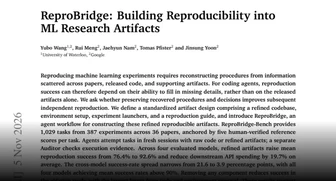
    ReproBridge: Building reproducibility for machine learning research artifacts

    ReproBridge enhances the success rate of machine learning experiment replication through standardized design (refined codebase, environment setup, experiment launchers, and replication guides), increasing the average replication rate of four models from 76.4% to 92.6% on ReproBridge-Bench. Refined artifacts reduce the average downstream API cost by 19.7%, narrow the success rate gap between models to 3.9 percentage points, and achieve a success rate above 90% for all models. Removing code or environment components significantly reduces replication effectiveness.

  2. Google Research

    Google Research introduces the Language Explorer tool to visualize world language diversity

    Google Research launches Language Explorer online platform, presenting global language diversity through visualization and data. The tool integrates the open-source LinguaMeta dataset, supporting 1,000 languages, aimed at helping researchers, educators, and enthusiasts explore language differences. The platform has been showcased as an interactive installation at the new exhibition at the Berlin Communication Museum and offers an online version for public access.

  3. Berkeley AI Research22

    BAIR at CoRL 2026

    BAIR team presented multiple research achievements at the Robot Learning Conference (CoRL) held from November 9 to 12, 2026, in Austin, Texas, including 33 main conference papers, 4 breakthrough posters, 10 oral presentations, and 7 thematic speeches, among which Professor Negar Mehr will deliver an early career keynote speech. The conference covers topics such as robotic vision-language-action models, embodied agents, fine-grained manipulation alignment, and hindsight reward editing.

  4. Latent Space58

    Frontier Labs purchased Handshake AI data for in-depth analysis.

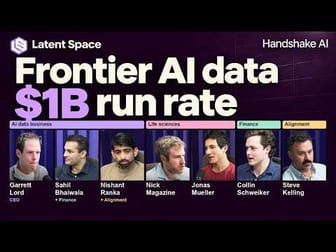
    Frontier Labs' AI training business reached $1 billion in revenue within a year. Handshake AI demonstrated its intelligent agent evaluation environments in finance, biology, and coding, including bank email processing, brain tumor tissue image recognition, and file access simulation tasks. VIALS, as a benchmark in the biology field, tests the model's ability to understand scientific images.

Nov 9Mon
  1. Hugging Face Daily Papers31

    Deep dive into intelligent agent evolution: What are we overlooking?

    Agent evolution enhances performance through recursive self-improvement (RSI) without updating model weights, but a high baseline score does not always lead to reliable, efficient, and transferable improvements. The study evaluated the performance of four methods on general and coding tasks, finding that all sixteen evolved agents gained new task capabilities but lost some old capabilities. One general task agent improved reliability by 5.2 points but lost ten old tasks. EvoAudit achieved the best performance through analysis, mutation, and gating mechanisms.

  2. MIT News · AI52

    WorldParticle: A single AI model simulates the behavior of multiple materials

    The WorldParticle model can simulate various material behaviors, from sliding sand to folded proteins, by decomposing objects into thousands or millions of three-dimensional particles and using neural networks to predict their motion without needing to write specific equations for each material and process. The model offers higher accuracy than numerical simulation methods in simulating deformable objects, granular materials, and proteins, and can optimize computational efficiency through hybrid techniques.

  3. ITHome · AI65

    Anthropic releases report: Scientists mainly use Claude for data analysis and writing

    Anthropic released a research report showing that scientists primarily use Claude for data analysis and writing, while less frequently using AI for collecting data and generating research hypotheses. The research is based on 207,000 scientific research session data from August to September 2026, with the highest usage rates in the fields of computer science, mathematics, and statistics. Data analysis accounts for 33.7% of Claude's scientific research sessions, while writing and communication account for 32%.

Nov 8Sun
  1. ITHome · AI75

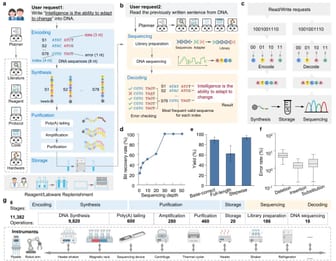
    Shanghai Jiao Tong University's AutoDNA device achieves autonomous molecular biology experiments, results published in Nature

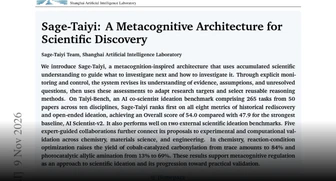
    Shanghai Jiao Tong University's Chen Haibo, Wang Zhao Guo team collaborates with Fan Chun Hai, Wang Fei team to construct AI-native scientific laboratory AutoDNA device (Siyuan No. 1), achieving autonomous molecular biology experiment operations, results published in Nature and featured on the homepage.

    Why it matters: This study combines multi-agent architecture with instrument atomic services, allowing AI to autonomously complete molecular biology experiments, serving as a reference for AI-native laboratory architectures.

  2. The Decoder71

    Alibaba and other teams released Co-Design Bench: coding intelligence agents only fully solve 26.4% of real tasks.

    Researchers from Alibaba and several Asian universities used real user change requests to build the coding intelligence agent benchmark Co-Design Bench. Among the ten tested models, the best-performing GPT-6 Astra only meets about 70% of the task requirements, but only 26.4% of the tasks are completely correct.

    Why it matters: A benchmark display composed of real user requests shows that the strongest model can only fully solve about one-quarter of the tasks, and the score difference for the same model in different environments is nearly 20 percentage points.

  3. ITHome · AI67

    OpenAI GPT-6.1 Sol involved in live mouse brain surgery: Continuous operation three times, positioning error halved

    OpenAI GPT-6.1 Sol performed three consecutive operations in the brain of a living mouse during surgery, improving its localization performance based on surgeon feedback, reducing the time from 169 seconds to 86 seconds, and reducing the localization error from 0.6 mm to 0.3 mm, a 50% reduction in error. The research team had the model participate in localization tasks for two key anatomical landmarks, Bregma and Lambda, on the surface of the mouse skull. Images, data, and correction records were saved after each operation for future reference.

Nov 7Sat
  1. The Decoder78

    Nine AI entities attempt autonomous research on open problems at US national laboratories, none reaching expert standards

    A study made Claude Opus 4.8, Claude Opus 5, Claude Fable 5, Claude Opus 5.5, GPT-5.6 Sol, GPT-6 Astra.

    Why it matters: This benchmark uses 15 unpublished research questions to test 9 agents and provides common failure patterns in 135 submissions, which can be used as a reference for evaluating autonomous research capabilities.

  2. ITHome · AI70

    Google's AI-PPG-ACC-HTN study published in Nature: Using consumer-grade smartwatches to detect hypertension without a cuff

    Google has released a multimodal AI system, AI-PPG-ACC-HTN, which does not require wristband calibration and passively detects persistent hypertension using a standard consumer-grade smartwatch. The results were published in Nature. The study included 196 participants across 5 clinical centers, using 24-hour ambulatory blood pressure monitoring as a reference. Initial screening showed a specificity of 90.0%, a positive predictive value of 80.6%, and a sensitivity of 65.8%. Diagnostic testing showed a positive predictive value of 96.7%, a specificity of 90.9%, and a sensitivity of 78.4%.

  3. The Decoder71

    Google AI detects hypertension using a regular smartwatch without a cuff

    Google Research's AI detects signs of hypertension without blood pressure cuff calibration, using only the pulse and motion sensors already in smartwatches, with related research published in Nature. The neural network learns pulse and heartbeat patterns by comparing short segments from nearly 500,000 hours of sensor data to identify which segments belong to the same person, then averages multi-day data to calculate the probability of hypertension.

    Why it matters: Readers can learn about a smartwatch blood pressure detection study that requires no cuff calibration, and its comparison results with traditional measurements in tests on 196 people.

  4. Hacker News · 300+60

    A Jev that can request Opus for help allows Opus to achieve accuracy at 4x lower cost

    The Jev and Luna models perform decently in identity resolution result scoring (88.8–97.3% accuracy), but the Jev+Opus hybrid model achieves state-of-the-art accuracy while reducing cost by 4x. Luna initially performs better than Jev, but the gap disappears in complex cases; Jev has better confidence calibration, with its errors often accompanied by low confidence, while Luna's errors are often accompanied by high confidence.