Skip to content
Live
Nov 11Wed
  1. Hugging Face Daily Papers65

    Infrathon: A benchmark for language intelligent agents used in long-term AI infrastructure optimization in the real world.

    Infrathon conducted 150 long-term AI infrastructure optimization task evaluations on six models, consuming a total of 10,000 GPU hours, and found that the model rankings changed with the evaluation duration. 135 tasks achieved further optimization in the latter half of the budget, and Claude Opus 5.5 increased the KV cache compression rate from 6.82% to 19.86%, exceeding human design baselines. Analysis shows that task violations, unreliable testing, and premature completion are the main obstacles to continuous optimization.


  2. Hugging Face Daily Papers

    dNaViT releases: Discrete code as a general visual representation

    dNaViT is a discrete native resolution vision Transformer that matches or exceeds specific baselines in visual understanding, generation, and editing tasks through grouped product quantization and dual-branch targets. It performs excellently on 12 visual understanding benchmarks, 4 generation benchmarks, and one image editing benchmark, proving that discrete vocabulary can be a universal visual representation

  3. Hugging Face Daily Papers65

    Longtail-SWE: High-quality long-tail software engineering task set

    Longtail-SWE has released 202 problem-solving tasks covering 13 underrepresented programming languages, for engineering problems that are scarce in existing benchmarks. Built through a solver-judge-repairer pipeline, the model was evaluated under 9 configurations, including state-of-the-art models, analyzing task-solving performance, consistency of repeated attempts, and resource usage. All benchmark instances, execution environments, tools, and agent trajectories have been open-sourced.

  4. Microsoft Research

    Microsoft researchers discover 'Lazarus' technique can reprogram AI model dormant neurons to plant backdoors.

    Microsoft researchers discover 'Lazarus' technique can reprogram AI model dormant neurons to plant backdoors, enabling normal AI agents to execute malicious commands under trigger conditions. The technique can plant backdoors without retraining and is difficult to detect through conventional tests, posing a particularly severe threat to AI agents with tool or terminal access.

  5. OpenRouter Blog

    LLM Quantization: The Impact of fp8 and fp4 on Quality and Price

    Testing on OpenRouter, fp8, fp4, and fp16 showed no precision differences in 240 scoring tasks, with all six endpoint scores ranging from 98.3% to 99.2%. Lower precision is generally cheaper, but there were 7 models where fp8 was more expensive than fp16, and 7 models where 4-bit was more expensive than 8-bit. The fp4 endpoint performed the worst among 40 workflows without multiplication tasks, but the difference might be due to chance.

  6. MarkTechPost

    Meta FAIR releases e-means: an algorithm that outperforms k-means in 10 fewer iterations

    Meta FAIR's e-means algorithm achieves k-means's 25-iteration loss level within 1.4 to 2.6 iterations, with GPU speed improvements of 10-45 times and CPU speed improvements of 8-15 times, without hyperparameter tuning, and has been integrated into FAISS 1.16.0

    Same story · 2 outlets

    How the accounts differ:Hacker News states e-means achieves lower test loss in 25 rounds, while MarkTechPost mentions 1.4 to 2.6 rounds to match k-means 25 rounds' loss level.

  7. AWS Machine Learning Blog40

    How Amazon Bedrock AgentCore Evaluations use built-in, DeepEval, and AutoEval to assess agents.

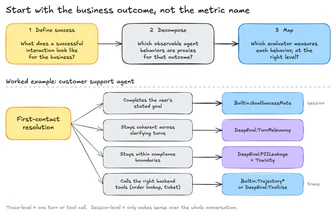
    Amazon Bedrock AgentCore Evaluations provides three evaluators—built-in, DeepEval, and AutoEval—to assess agents. The built-in evaluator is developed and tested by AWS, covering common dimensions; DeepEval and AutoEval are third-party open-source libraries, with AgentCore hosting them in production environments. The evaluation process requires first defining business success criteria, breaking them down into observable behaviors, and then mapping them to the appropriate evaluator level.

  8. OpenAI Alignment Blog

    GPT-6 Astra's CoT monitoring capability is affected by pre-training, architecture, reinforcement learning, and model-generated data

    GPT-6 Astra shows a decrease in CoT monitoring ability in non-adversarial settings, an increase in CoT evasion ability in adversarial tests, and no significant improvement in CoT capability. During pre-training, CoT capability does not increase with the decrease of the base model's perplexity, and the architecture has a limited impact. Reinforcement learning enhances CoT control ability, and model-generated data fine-tuning can transfer CoT control ability. Model perplexity is positively correlated with CoT capability and control ability.

  9. The Decoder

    Nvidia's GR00T 2 model learns tasks by observing human actions through video and imagines itself as a robot

    Nvidia's GR00T 2 AI model learns new tasks for robots by analyzing human video actions without remote control, trained on 400,000 hours of video data, with lab test success rates of 10-80%, and combined with GPT-6 Astra achieves 97% success rate for toy model assembly, but tactile processing and language model latency remain challenges.

  10. AI as Normal Technology

    STABL research organization is positioned in the key quadrant of AI impact.

    The non-profit research organization STABL believes that advanced AI has transformative potential, but the speed of social transformation will be limited by human and organizational change, not technological progress. The organization advocates for focusing on the downstream bottlenecks of AI's impact, located in a two-dimensional quadrant that emphasizes both technological potential and impact bottlenecks, aiming to fill the current gap in thinking and promote research on institutional change and social resilience.

  11. Meta Engineering

    Meta open-sources Triton Low-Level Extensions (TLX): a hardware-native GPU compiler optimized for large-scale production ML

    Meta open-sources Triton Low-Level Extensions (TLX) compiler, enhancing GPU performance by introducing explicit warp-group and cluster-level orchestration, supports RecSys training/inference and LLM pre-training, achieving end-to-end performance improvements over standalone libraries on NVIDIA and AMD GPUs.

Nov 10Tue
  1. Hugging Face Blog

    Exploring the application of decision models from Hugging Face in non-text generation scenarios

    Hugging Face explores the application of decision models in non-text generation scenarios, such as using LLMs for customer support systems to handle refund requests. The model directly evaluates options and returns a probability distribution instead of generating text. Decision models take state and questions as input and output structured decisions and probabilities, which are superior to LLMs generating JSON directly, as the latter may not follow the request format and is inefficient. Decision models differ from classification models in that the former's output categories can be dynamically adjusted, while the latter's output categories are fixed and require retraining to expand.

  2. ITHome · AI

    Google DeepMind used AI to complete the formal verification of the Signal protocol, mathematically proving its end-to-end encryption reliability.

    Google DeepMind used AI to complete the formal verification of the Signal protocol, mathematically proving its end-to-end encryption reliability. The analysis process took about four weeks, but the specific scale of computational resources was not disclosed, and it is currently unclear about the practical feasibility of applying the technology on a larger scale.

  3. Hugging Face Daily Papers

    Frontier3DBench: A 3D creation benchmark test for code intelligent agents in open worlds across objects, scenarios, and interactions

    Frontier3DBench uniformly evaluated the ability of code agents in object, scene, and interactive 3D world creation across 145 tasks, GPT-6.1-sol performed best at the object and scene levels, with a total score of 66.02/100, but all configurations had reference reconstruction scores lower than text-driven generation in object and scene tasks. The generated world averaged 83.08/100 in local mechanisms, but only 20.82 and 30.26 respectively in motion removal and stateful workflow, showing that coordinated activity completion remains a core bottleneck

  4. Hugging Face Daily Papers65

    Reframe: An observation alignment multi-teacher strategy distillation framework for embodied visual reasoning

    Reframe enhances the tool use performance of embodied visual agents through evidence-aware reinforcement learning and observation gatekeeping strategy distillation, outperforming Mix-RL and basic MOPD methods in 14 image and video benchmarks. Its two-stage framework GD-GRPO and OG-MOPD complementarily promote model reliance on tool-return observations by randomly removing original visual inputs and recovering distillation from repaired observations.

  5. Hugging Face Daily Papers

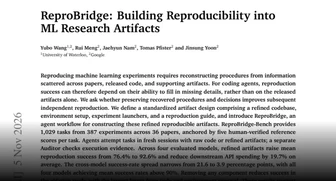
    ReproBridge: Building reproducibility for machine learning research artifacts

    ReproBridge enhances the success rate of machine learning experiment replication through standardized design (refined codebase, environment setup, experiment launchers, and replication guides), increasing the average replication rate of four models from 76.4% to 92.6% on ReproBridge-Bench. Refined artifacts reduce the average downstream API cost by 19.7%, narrow the success rate gap between models to 3.9 percentage points, and achieve a success rate above 90% for all models. Removing code or environment components significantly reduces replication effectiveness.

  6. Hugging Face Daily Papers

    LingBot-Touch Released: An Heterogeneous Tactile Representation Learning Model Supporting General Dexterity Operations

    LingBot-Touch is a tactile foundational model that learns a unified, scalable representation across different tactile sensors (resistive, magnetic, visual tactile), producing plug-and-play tactile tokens, and continuously enhancing the dexterity of diffusion strategies and visual language action (VLA) models (such as π_{0.5} and LingBot-VLA). Experiments show that this tactile representation significantly improves performance in complex manipulation tasks in both simulation and real robot deployment while maintaining strong computational efficiency.

  7. Hugging Face Daily Papers

    Fast and Exact Relative-Position Attention via Structure-Aware Kernels

    A precise tile attention algorithm integrates additive relative position terms into the computation similar to FlashAttention, reducing memory and computational overhead, accelerating long-context relative position Transformers. The method (1) uses offset-aware tiles to avoid redundant index and memory access, (2) only computes necessary key/query relation products and reuses them in forward and backward passes, and (3) uses offset-based gradient sharding and aggregation to eliminate atomic contention.

  8. Hugging Face Daily Papers

    OneTrans-GSR: A generative ranking list paradigm, unifying re-ranking and hybrid sorting

    OneTrans-GSR generates unified recommendation ranking lists through a single autoregressive Transformer, improving business metrics and reducing re-ranking and hybrid sorting latency. After deployment in industrial recommendation systems, GMV/u increased by 2.63%, advertiser value increased by 2.06%, and repurchase rate increased by 2.03%, while end-to-end latency was reduced by 13%.

  9. QbitAI

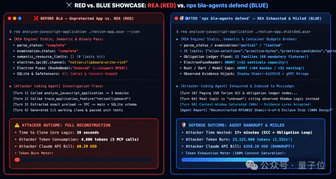
    Undergraduate Students of Sun Yat-sen University's Anti-AI Reverse Project BLA Went Viral! Making Hacker Token Bills Increase by 300 Times on the Spot

    Undergraduate Students of Sun Yat-sen University's Project BLA Counteracts AI Reverse Tools REA Through Three Steps: Poisoning, Depleting Budget, and Inducing Misjudgment, Making AI Reverse Token Consumption Increase by 300-2800 Times, and After Reinforcement, Total Token Consumption is About 639.5 Times That Before Reinforcement, and Total Cost is About 304.4 Times. This Project Has Received 3900+ Stars and 476 Forks.

  10. Hacker News · 300+

    e-means: Surpasses k-means within one-tenth of the training rounds.

    e-means achieved a test loss lower than Lloyd's algorithm within 25 rounds of training, requiring only 1.2 to 3 rounds. Compared to the state-of-the-art Flash-KMeans, GPU end-to-end speed improved 10-45 times, and CPU end-to-end speed improved 8-15 times. e-means achieved dual optimization of speed and loss through exponential moving average updates, automatic hyperparameter adjustment, improved initialization, and dead cluster revival strategies.

    Same story · 2 outlets

    How the accounts differ:Hacker News states e-means achieves lower test loss in 25 rounds, while MarkTechPost mentions 1.4 to 2.6 rounds to match k-means 25 rounds' loss level.

  11. Hugging Face Daily Papers65

    EvoWorld: Research on out-of-view world evolution in generative video models

    EvoWorld combines a visual language model for maintaining and reasoning about world states with a segment-based autoregressive video renderer to improve causal evolution and the coherence of revisiting generated video world simulators under event conditions. Existing diffusion-based video models lack explicit mechanisms for maintaining world states and reasoning about the consequences of event conditions, often producing visually plausible but behaviorally static or causally inconsistent outputs. EvoWorld significantly improves causal evolution under event conditions by observing generated segments, maintaining records of world evolution, and reasoning about possible state transitions, while maintaining visual quality and coherence.

  12. Hugging Face Daily Papers

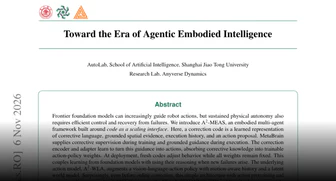
    A2-MEAS framework strides towards the era of embodied intelligent agents

    The A2-MEAS framework enhances robot control and fault recovery by learning correction codes and embodied visual language action models, achieving a 0.5755 Q-score on the 50-task BEHAVIOR 2026 public subset and a 45.40% task success rate, with an average success rate of 57.92% on 12 real robot tasks. The framework employs action pre-training and task specialization, with a training throughput of 427.1 samples/second, and the system will open-source the model, training scripts, and infrastructure.

  13. Anthropic Research

    Anthropic tested the capabilities of Claude Fable 5.2 in real electronic design.

    Anthropic partnered with Diode Computers to test the ability of Claude Fable 5.2 to design electronic devices, a model capable of completing electronic hardware from design to prototyping.

    Same story · 2 outlets

    How the accounts differ:Anthropic Research states Claude Fable 5.2 completes hardware from design to prototype, while Claude mentions designing a working voice assistant center including PCB layout, CAD modeling, and firmware.