Skip to content
Live
Oct 2Fri
Oct 1Thu
  1. Google Developers22

    Google adds Workspace knowledge to its developer documentation corpus

    Google's October 1 Developer Knowledge release notes add knowledge.workspace.google.com to the corpus. Earlier September updates made the developer-knowledge CLI generally available and introduced an agent skill that selects an MCP tool or falls back to the REST API. The API provides documentation search, document retrieval and grounded answers.

    Why it matters: Editorial takeaway: documentation retrieval can be part of an agent's toolchain instead of relying entirely on memorized APIs. Check supported domains and access requirements; this is a corpus update, not the API's original launch.

Sep 30Wed
  1. Baseten Blog

    Baseten collaborates with OpenAI to release an open-source model integration solution.

    Baseten collaborates with OpenAI to integrate support for open-source models into the agentic workflows of OpenAI customers, enabling organizations to optimize agentic workflows across open and closed models and route tasks to the best model. Baseten provides features such as Day zero model access, full-stack performance optimization, multi-cloud capacity and reliability, developer experience, and enterprise governance to support fast and reliable inference and seamless integration into enterprise toolchains.

Sep 29Tue
  1. OpenClaw Blog75

    OpenClaw Enterprise Open Source Intelligent Agent Platform Released

    OpenClaw Enterprise (OCE) is an open-source, vendor-neutral agent management platform designed for sensitive environments. The platform introduces an enterprise-grade control plane before the 1.0 release through multi-tenancy, hard security boundaries, and standardized agent primitives, supporting governance and auditing, and allowing core components like harness, models, and sandboxes to replace third-party or internal implementations.

Sep 28Mon
Sep 26Sat
Sep 25Fri
  1. OpenClaw Blog75

    Microsoft contributes upstream improvements to the OpenClaw project based on Autopilot

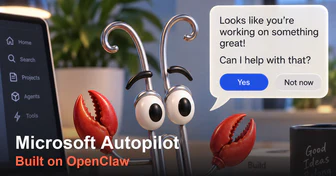
    Microsoft's released Autopilot personal agent based on OpenClaw, Microsoft and OpenClaw Foundation collaborate to enhance its enterprise-level runtime capabilities, has opened the preview to the first batch of customers. Microsoft improves OpenClaw through upstream contributions, including enhancing agent security configuration checks, building native Windows experience, improving interaction reliability, and optimizing background task processing and database recovery response.

  2. Baseten Blog75

    LangChain fine-tunes on Baseten Loops via LangSmith tracing

    LangChain announced the launch of the LangSmith fine-tuning feature at the Interrupt 26 conference in New York today. The feature is based on the open-source CLI smithtune, which reads LangSmith traces to generate supervised fine-tuning datasets and trains them on Baseten Loops, finally deploying them to Baseten's dedicated inference service. The CLI uses the user's Baseten API key, and training and inference costs are charged to the Baseten account.

  3. GitHub Blog · AI & ML

    GitHub Security Lab Taskflow Agent implements automated fuzzing

    GitHub Security Lab Taskflow Agent automates the fuzzing process for C/C++ projects using LLM, completing entry point identification, build system analysis, test case generation, AFL++ execution, coverage analysis, and vulnerability report writing without manual intervention. The Agent uses the Claude Sonnet 5 model and manages state via an SQLite database to achieve iterative coverage improvement, doubling the time budget for each iteration until coverage growth stagnates.

Sep 24Thu
  1. OpenHands Blog75

    OpenHands Enterprise new features: enhanced visibility, governance, and control capabilities.

    OpenHands Enterprise's latest version has added organizational-level features such as management credentials, usage, integration, and automation, and updated the interface aligned with Agent Canvas. Administrators can configure organizational key sharing, monitor usage through the 'Your Budget' dashboard, support OAuth authentication to connect to MCP servers, and achieve cross-organizational visibility and management automation.

  2. Google DeepMind

    Google DeepMind introduces Private AI Compute, achieving cross-device private persistent memory.

    Google DeepMind introduces Private AI Compute, a new architecture that achieves cross-device AI persistent memory through cloud-based encrypted storage and device key management, ensuring data privacy. The architecture temporarily decrypts user data in a cloud-isolated environment to process requests and immediately encrypts and stores new contexts, while the device holds the decryption keys. Users can verify the authenticity of server software and audit security protocols, supporting AI in maintaining device-level privacy standards even when processing complex tasks efficiently in the cloud.

Sep 23Wed
Sep 21Mon
  1. Browser Use65

    Browser Use vs Browserbase: Pricing, Stealth & Performance Comparative Analysis

    Browser Use and Browserbase are leading browser intelligence infrastructure options. Browser Use offers a $0.02/hour browser hour rate with 81% stealth success rate, no subscription and supports custom models; Browserbase uses a subscription model with hourly fees of $0.10-0.12 and a stealth success rate of 42% (basic)/70.3% (advanced), but advanced stealth features are only available for paid plans.

Sep 18Fri
Sep 16Wed
Sep 12Sat
Sep 10Thu
  1. Mistral AI

    Cloudera collaborates with Mistral to bring dedicated, sovereign intelligence to enterprise data

    Cloudera collaborates with Mistral to integrate Mistral models into Cloudera's hybrid data platform, enabling businesses to deploy AI models in private clouds, public clouds, on-premises, and fully isolated environments while maintaining full control; Mistral allows businesses to train AI models with proprietary data in a controlled environment, transforming decades of institutional data into custom AI models while retaining ownership of both data and intelligence.

  2. Cursor Changelog

    Cursor launches Projects feature

    Cursor launches the Projects feature today, supporting the handling of large workloads such as feature development, migration, or full applications, capable of maintaining context across months and automatically assigning tasks to thousands of sub-intelligent agents. The project runs independently in the cloud, synchronizing codebase knowledge and work preferences through shared files, coordinating agents responsible for planning and task allocation. The feature is currently in Beta and is gradually being rolled out to all users starting today.

Sep 9Wed
  1. Dify Blog65

    Dify market from discovery to response: tighter connection

    Dify has added featured banners and real-time update functions, allowing users to find works more conveniently and give likes, ratings, and text feedback. The market collects nearly 1000 plugins and over 300 templates, supporting the construction of applications on the existing basis. Featured banners display top works and platform updates, and the direct feedback mechanism ensures creators receive feedback on the real-world use experience, forming a closed loop from construction to learning.

Sep 8Tue
  1. Mastra Blog

    Mastra Factory Beta released: An open-source automated software factory

    Mastra Factory Beta released, this open-source software factory can now automate 25-35% of PRs and close 50-60% of issues, based on the Mastra infrastructure and changing collaboration processes. It connects GitHub, Linear, and Slack, supports configurable workflows, and each agent works in a sandbox environment. Since the alpha version was launched in July, the aforementioned efficiency improvements have been achieved.

Sep 4Fri
  1. LangChain Blog

    LangChain MCP: Stateless protocol, extraction functions, and other updates

    LangChain has moved MCP support into the main package and upgraded to the FastMCP protocol, enabling stateless interaction, tool list caching, and interruptible extraction features. The new protocol, supported by LangGraph, enables a 98x increase in ChatGPT tool calls, allowing clients to cache tool directories and handle model request parameters. MCPAdapter supports multi-server connections and OAuth 2.1 authentication, enabling servers to be independently configured for authentication and transport layers.

Sep 2Wed
  1. OpenHands Blog

    How does OpenHands Agent Canvas make it easier to manage agents, configure more securely, and automate more conveniently?

    Through eight updates, OpenHands Agent Canvas has made it easier to track agent work, configure more securely, and automate more conveniently, and has launched the Canvas Apps Beta version and new automation runtime stages, supporting running agent work in the correct environment, understanding the execution process, reviewing results, and reusing workflows. The new version has added agent activity indicators, context and cost monitoring, custom app support, and form-based configuration and automation runtime management features for pre-built workflows.