Skip to content
Live
Oct 8Thu
  1. NVIDIA Blog

    NVIDIA and Microsoft team up to usher in a new era of AI agents for Windows PCs: RTX Spark and local AI calculator

    NVIDIA and Microsoft collaborate to launch RTX Spark laptops and Windows AI agent infrastructure, supporting local running of 125B parameter Qwen 3.8 Flash Next models; Microsoft releases MXC operating system-level container to ensure agent secure operation, pre-orders for RTX Spark open today, paired with Grace Blackwell chip, offering up to 20 PFLOPS inference performance.

  2. AWS Machine Learning Blog

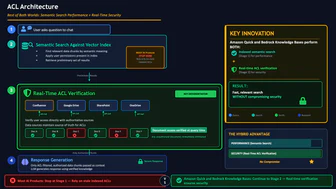
    How Amazon Quick and Amazon Bedrock Knowledge Bases perform RAG access control through real-time ACLs

    Amazon Quick and Amazon Bedrock Knowledge Bases address the RAG access control challenge through real-time access control list (ACL) access, verifying permissions directly with authoritative sources during queries, avoiding reliance on potentially outdated or incorrectly mapped ACL data. The system employs a two-phase architecture: the first phase performs pre-retrieval filtering, and the second phase calls the data source API in real-time to validate candidate documents, striking a balance between performance and security, ensuring AI responses always comply with the latest permission requirements.

Oct 7Wed
  1. LangChain Deep Agents releases35

    LangChain Deep Agents deepagents-code v0.1.82 released

    LangChain Deep Agents deepagents-code v0.1.82 released, adding features such as auto or manual generation of persistent thread names, custom terminal labels, and distinguishing skill read records, fixing bugs like thread selector staying open during thread ownership conflicts, retaining remote message completion markers, and extending triple-click selection to code blocks.

  2. Latent Space75

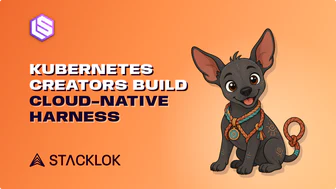
    Mecatl: An intelligent agent harness for the cloud

    Mecatl is an open-source cloud-native intelligent agent harness developed by Stacklok, the company founded by Kubernetes founder Craig McLuckie and Joe Beda, designed to separate the agent loop from the execution environment, achieve enterprise-level centralized management, reduce reliance on cutting-edge laboratories and ultra-large-scale cloud service providers, and whose architecture draws inspiration from Kubernetes' control loop and container orchestration concepts.

  3. Ars Technica · AI75

    Google has launched an improved SynthID AI content detector, now available globally.

    Google has extended the SynthID detector to all partner watermarks. Users can check whether AI content contains SynthID tags through the new website SynthID.com without relying on the Gemini model. The detector has been integrated with SynthID data from 180 billion images and videos and 240,000 years of audio from Google, now supporting cross-platform watermark recognition.

  4. Google AI Blog

    Google AI launches Playground: Create and share custom games without coding

    Google AI has launched Playground, an experimental platform where users can create, play, and share custom games without coding. Users can build games through text prompts and play across devices in the browser. The platform features a growing library of games, supports multiplayer and leaderboards, and is soon to launch an integration with Unity Spark, offering advanced features for professional creators.

  5. Claude app release notes

    Anthropic releases Claude Haiku 5.5, Max and Team plan to receive monthly API credit limits

    Anthropic released Claude Haiku 5.5, which is its cheapest, fastest, and most powerful micro-model, designed for high-volume, cost-sensitive tasks. Max and Team plan to now include monthly API credit limits for running their own applications and agents on the Claude platform, which can be claimed by associating the Claude console organization in Settings > Billing (Max) or Organization Settings > Billing (Team).

  6. Google Developers Blog

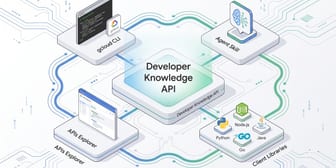
    The Google Developer Knowledge API ecosystem helps developers build AI tools efficiently.

    The Google Developer Knowledge API is Google's official developer documentation programmable source, providing semantic search, intelligent document chunking, and reliable Q&A capabilities for Google Cloud, Firebase, Android, and other Google ecosystems, reducing hallucinations in AI tools due to the expiration of LLM training deadlines.

  7. OpenRouter Blog75

    ElevenLabs has launched on the OpenRouter platform

    ElevenLabs has launched nine text-to-speech models and two speech-to-text models on the OpenRouter platform, supporting voice interaction for applications that have already called language models through OpenRouter. Eleven v4 can be used for long text voiceover and control tone and expression, v4 Turbo provides low-latency voice responses, and Scribe v2 supports meeting transcription with speaker tags. All models offer a 50% discount to OpenRouter customers before October 19.

  8. OpenRouter Blog

    OpenRouter's AI sales agent Rasp saves the sales team 600 hours per month

    OpenRouter's AI sales agent Rasp saves a 5-person sales team about 600 hours per month by handling inbound leads, sending the first email, writing call briefs, drafting notes, and updating CRM, allowing each representative to add about 2 calls per day, shortening the sales cycle by 34%, increasing the conversion rate by 2.6 times, and reducing costs from nearly 800 USD/day to 30 USD/day

  9. OpenHands Blog75

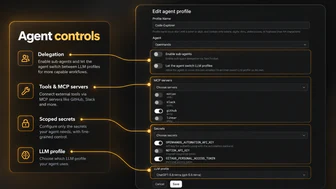
    OpenHands released in September: range agents, isolated runtime, persistent workflows

    OpenHands was released in September, introducing features such as scoped agents, isolated runtime, and persistent workflows. From version v1.17.0 to v1.24.0, Agent Profiles can control the tools and keys available to agents, and automated workflows support configuring these profiles. The Docker runtime provides isolated workspaces for agents. From version v1.18.0 to v1.21.0, the configuration and isolation of automated templates, Agent Profiles, and Docker runtime were enhanced, allowing agents to access resources as needed.

  10. Ars Technica · AI65

    OpenAI will default to watermarking ChatGPT for the EU

    OpenAI will default to adding watermarks to text generated by ChatGPT in the European Union region, aiming to comply with the EU AI regulation requirements that took effect in August. The EU-specific watermark technology is called textGrain, which uses proprietary algorithms to embed specific patterns into word selection that are difficult for humans to detect, requiring a dedicated detector to identify, but OpenAI acknowledges that it may be circumvented by individuals with basic technical skills. The company states it will provide detectors to a limited number of researchers and institutions and will establish an application process for other institutions to join.

  11. OpenAI News

    GPT-6 brings interactive answers to ChatGPT

    OpenAI announced a ChatGPT rollout combining GPT-6 with Intelligent UI: visual explanations, interactive comparisons and small tools generated inside a conversation. Availability depends on plan and rollout timing.

    Why it matters: Editorial takeaway: interactive answers could change how teams present information. This announcement concerns ChatGPT; it does not announce a change to the models powering Work or Codex.

  12. LangChain55

    Deep Agents loads tools only when the relevant skill is read

    LangChain updated Deep Agents with three controls: bind tools to a skill, pin requested skills before the first model call, and reload a skill library during a running thread. Bound tool schemas stay outside the context until needed; models supporting mid-conversation tools can retain the cached prompt prefix.

    Why it matters: Editorial takeaway: for a large skill library, load instructions and tools together rather than exposing every tool at startup. Check your model's support for mid-conversation tool changes; reloading changed skills still modifies the system prompt and can invalidate its cache.

Oct 6Tue
  1. LangChain Deep Agents releases35

    LangChain Deep Agents 0.1.81 released

    LangChain Deep Agents 0.1.81 released, supporting discovery of marketplace plugins, opening effort selector at runtime, displaying cost details, adding `--no-tracing` option and explicit tracing status indicator. Fixed issues with concurrent local thread writes and hook execution context changes, improved server-side model directory and interactive model metadata processing.

  2. Cursor Changelog

    Cursor iOS app adds local agent remote control feature.

    Cursor iOS app now supports viewing and responding to local agents running on the user's computer, default enabled (excluding enterprise organizations). After downloading the app and logging in, the user's computer account is automatically displayed. Remote management requires pairing and authorization via the desktop app. Remote control only connects to the agent, does not move its running location, and requires the computer to be powered on and connected to the network.
Oct 5Mon
  1. Cohere Blog

    Cohere Northbound 2.0: A no-compromise enterprise-grade AI platform

    Cohere releases Northbound 2.0 platform, ending the compromise in deploying AI agents for enterprises in terms of security, intelligence, cost, and control. The platform supports knowledge internalization, reusable agents, and automated processes, featuring enterprise-grade secure deployment, permission management, real-time monitoring, and cost tracking functions, adopted by companies such as LG CNS and Bell Cyber.

Oct 2Fri
  1. OpenAI Agents SDK releases7

    OpenAI Agents SDK v0.23.1 released

    OpenAI Agents SDK released version v0.23.1, fixing bugs related to release test recovery and readiness checks, and passed the release readiness review. API version is 0.23.1, including 28 file changes (added 622 lines / deleted 42 lines), involving release automation, test fixtures, integration/examples tools, and release metadata.

  2. NVIDIA Blog

    NVIDIA DGX Spark 64GB released, providing developers with more local AI building and expansion solutions

    The NVIDIA DGX Spark with 64GB unified memory, launched by Acer, ASUS, Dell, Gigabyte, HP, and MSI, supports developers, researchers, and AI enthusiasts to run models with up to 100 billion parameters locally without cloud dependency. Two devices can be clustered via NVIDIA Sync Cluster Assistant, merging memory to 128GB and boosting performance 1.7 times, priced from $4999.

  3. Prime Intellect Blog

    Prime Inference: Provides fast and reliable inference services for cutting-edge open-source models.

    Prime Inference is launched, providing fast and reliable inference services for cutting-edge open-source models, supporting serverless endpoints and reserved capacity, running models using GPU infrastructure across multiple data centers. Its first public deployment, GLM-5.3, went live on OpenRouter on September 22, and is currently one of the fastest GLM-5.3 endpoints on OpenRouter, with zero tool call error rates and 100% uptime.