Skip to content
Live

Reasoning · Page 2

Oct 30Fri21–37
  1. ITHome · AI74

    Qwenputer Launched: Embedding the RISC-V CPU instruction set into the model, AI arithmetic no longer relies on external tools

    Developer Divyansh Agrawal released the experimental model Qwenputer on October 22, built based on Alibaba's Qwen3.5-4B, which implements 32-bit RISC-V CPU and memory functions inside the neural network, allowing program execution and precise calculations without calling external tools like Python.

    Why it matters: Developers compiled the RISC-V instruction set into the Qwen3.5-4B weights, demonstrating with specific benchmark numbers the improvement in computational precision within the model and the trade-offs in volume and speed.


Oct 29Thu
  1. Hugging Face Blog85

    Mistral Large 4 (Le Chonk) released on Hugging Face

    Mistral releases multimodal MoE model Mistral Large 4 (Le Chonk), with approximately 1T total parameters, 49B activation parameters, a context window of 1M tokens, offering two official versions FP8 and NVFP4, as well as GGUF made by Unsloth and llama.cpp teams.

    Why it matters: The original text provides specific scores for the 1T total parameter, 49B activation multimodal MoE model on cybersecurity and coding benchmarks, along with measured throughput for local and endpoint deployment.

  2. QbitAI72

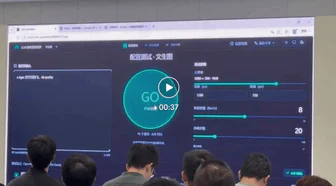
    Tenstorrent releases Tianhe 300 and Tongyang TY1200, on-site actual test targets NVIDIA H200 and Thor T5000.

    Tenstorrent releases cloud-based general-purpose GPU Tianhe 300 and edge product Tongyang TY1200 based on the Tianshu architecture, and compares them with NVIDIA H200, Jetson Thor T5000 on-site with random questions.

    Why it matters: On-site random tests, dual-track comparison of cloud and edge against NVIDIA, and providing reproducible test numbers and software stack implementation methods.

  3. QbitAI78

    PSI claims AI-assisted resolution of 5 open problems in quantum information

    Physical Superintelligence (PSI) claims to have achieved results on 5 open problems in quantum information theory with the help of its self-developed AI research system Emmy. Papers, Lean formal proofs, and verification code have been released on GitHub for review.

    Why it matters: Readers can see a new company challenging quantum open problems with a process that separates generation from formal verification, and learn about its team and funding background.

Oct 27Tue
  1. MarkTechPost71

    Baidu open-sources Unlimited OCR 2, supporting the parsing of hundreds of pages of documents.

    Baidu open-sources Unlimited OCR 2, a 3.34B parameter OCR visual language model that can parse hundreds of pages of books, financial reports, and reports in a single request. The weights are released under the MIT license, and the code is on GitHub.

    Why it matters: The original text provides a comparison of SR-SWA's sparse attention mechanism with the hundred-page document benchmark, showing how the contextual cost of long document OCR can be flattened.

  2. ITHome · AI86

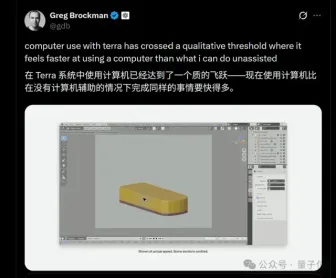
    OpenAI releases low-cost new model GPT-6.1 Terra, with a cost per task about one-ninth of Claude Opus 5.5

    OpenAI releases new model GPT-6.1 Terra, featuring lower costs for complex tasks requiring visual reasoning and desktop software operation, opening to Plus, Pro, Enterprise, and Edu users on October 27, available in ChatGPT Work and Codex, with the API model identifier as gpt-6.1-terra.

    Why it matters: The original text provides multiple benchmarks and cost per task comparisons, allowing readers to judge the trade-offs of low-cost models in desktop automation.

  3. Artificial Analysis Articles85

    OpenAI released GPT-6.1 Terra, focusing on cost efficiency.

    OpenAI released GPT-6.1 Terra, the first Terra-level model after GPT-5.6, with input/output pricing at $1/5 per million tokens, lower than the $2/12 per million tokens of GPT-5.6 Terra.

    Why it matters: The original text used the scores of the Intelligence Index and Coding Agent Index, along with the cost per task, to quantify the change in cost-effectiveness of GPT-6.1 Terra compared to GPT-5.6 Terra.

Oct 26Mon
  1. QbitAI78

    Rockchip Matrix, in collaboration with CUHK and CMU, has open-sourced EdgeRock-4B, reducing KV Cache by 99.1%.

    Rockchip Technology's Rockchip Matrix, in collaboration with CUHK and CMU, has released and open-sourced EdgeRock-4B, with a fixed KV Cache of 72MiB under 256K context, reducing the source model Qwen3.5-4B by 99.1%.

    Why it matters: The original provides a comparison of throughput under fixed memory, which can be used to judge the trend of GPU memory costs for long-context reasoning.

Oct 25Sun
  1. ITHome · AI75

    The open-source project GPU Unlock can release the hidden AI computing power of RTX 30 series graphics cards, with testing showing an increase of up to 60%

    The open-source project GPU Unlock, developed by GitHub user Zagitta, can remove the instruction emission rate limit of Ampere architecture consumer-grade GPUs in FP16/BF16 tensor core operations without modifying the driver or flashing VBIOS.

    Why it matters: The original text provides measured improvement data for multiple RTX 30 GPUs under GEMM and image generation workloads, also indicating limitations such as memory bandwidth.

  2. vLLM Blog60

    vLLM serves DeepSeek-V4.1-Flash on GB300 NVL72: performance matches DeepInfer and extends to the entire rack

    The vLLM team used P/D separation and Wide-EP to serve DeepSeek-V4.1-Flash on a single NVIDIA GB300 NVL72 rack, achieving 954K tokens/s per GPU and 196 tokens/s for single-user P90 on SemiAnalysis AgentX, which is 7.9 times the early single-node results.

    Why it matters: The vLLM team has released per-item optimization and measured data for serving DeepSeek-V4.1-Flash on GB300 NVL72, which can be compared with DeepSeek's own engine DeepInfer.

Oct 24Sat
  1. Simon Willison82

    Kimi K3.1 Pro goes live with Kimi API, promising to open source weights by November 4th.

    Kimi K3.1 Pro goes live with Kimi API today, weights not yet open, Moonshot promises to release complete model weights by November 4th, 2026. Pricing is $2.00/100 million tokens for input, $10/100 million tokens for output, the same as GPT-6.1 Sol, half of Claude Opus 5.5, also provides a Highspeed version that is 2-3 times faster and doubles the price.

  2. vLLM Blog62

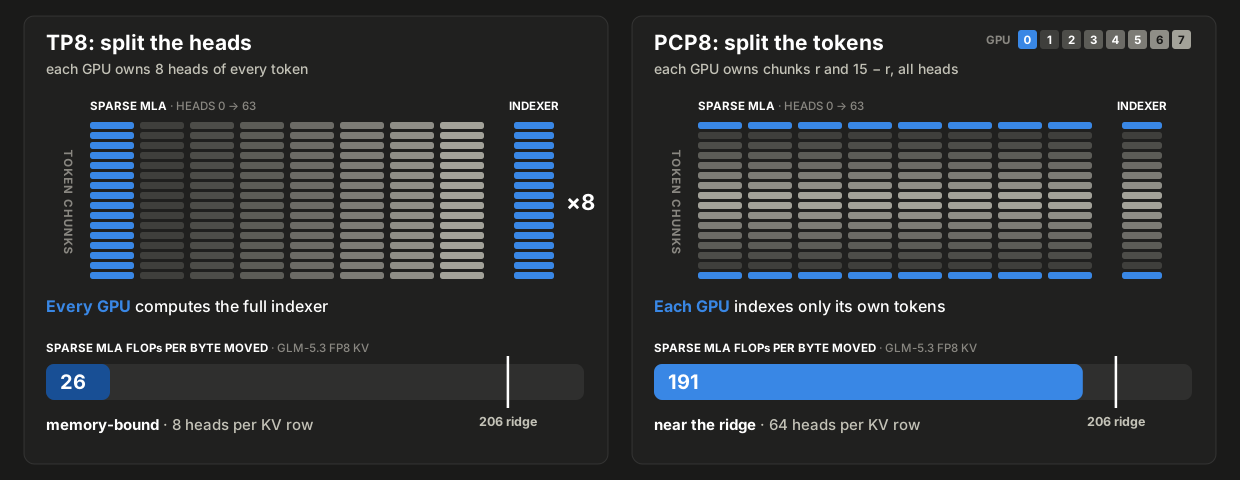
    vLLM provides an in-depth explanation of the optimization of PCP, DCP, and Hybrid HiSparse for GLM-5.3 on 16 H200s

    vLLM team releases the second part of GLM-5.3 optimization, deploying on 16 H200s with 1 pre-filled node and 1 decoding node, using PCP to split pre-fill by token and DCP to split KV cache by token, allowing 1M context to fit into the pre-fill node

    Why it matters: The vLLM team has dissected how PCP, DCP, and Hybrid HiSparse can be combined on 16 H200s, allowing readers to understand the memory and pre-fetch bottlenecks of long-context deployment.

Oct 23Fri
  1. ITHome · AI80

    OpenAI fully opens decision API based on GPT-6 Luna, with 0.1 USD per million tokens input

    OpenAI announces full launch of the Decision API built on GPT-6 Luna, targeting questions with limited answers, assisting applications and agents in making near real-time decisions based on text, images, and structured inputs, with response speeds up to 10 times faster than calling GPT-6 Luna through the Responses API.

    Why it matters: The original text provides the pricing, latency improvement, and single request limit changes for the Decision API, allowing readers to judge which type of agent workflow it suits.

Oct 22Thu
  1. Hugging Face Blog78

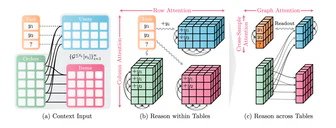
    NVIDIA releases Kumo Relational relational foundation model, capable of prediction without training

    NVIDIA releases pre-trained relational foundation model Kumo Relational, enabling direct prediction on enterprise databases without task-specific training, feature engineering, or table flattening. The model outperforms supervised relational deep learning and expert feature engineering gradient boosting trees on 41 tasks across 15 databases, achieving an MRR 8% higher than AutoGluon ensemble on the SAP SALT benchmark.

    Why it matters: The original provides a comparison result of pre-trained relation models on 41 tasks and an open-source entry, allowing readers to judge whether it can replace the existing XGBoost pipeline.

Oct 21Wed
  1. NVIDIA Blog62

    NVIDIA expands its family of open models to cover language, robotics, biology, and quantum computing

    NVIDIA expands its family of open models to cover language, robotics, biology, and quantum computing, including the new Nemotron 3.5 Super VL and Nemotron 3.5 Bolt.

    Why it matters: NVIDIA has rolled out open models across four lines: language, robotics, biology, and quantum, allowing readers to judge the coverage of its open-source ecosystem based on this.

Oct 14Wed
  1. Google AI Blog90

    Google has released the Gemini 4 Argon cutting-edge model.

    Google has released Gemini 4 Argon, opening it up to developers, businesses, and researchers, with API pricing at $2 per million input tokens and $10 per million output tokens, offering a 95% discount on cached input tokens.

    Why it matters: Official pricing, baseline rankings, and multiple internal implementation cases are provided, allowing judgment on its position in coding and research workflows.