Skip to content
Live

Industry · Page 2

Nov 7Sat21–35
  1. The Verge · AI80

    The METR report stated that Anthropic's models are self-accelerating their R&D, causing researchers' concerns.

    AI safety research organization METR released a report after an internal investigation of 11 weeks with Anthropic, stating that the capability improvement rate of Anthropic's models is about twice as fast as a year ago, achieving about two years of historical progress in the past year, and researchers are confident that the acceleration mainly comes from AI rather than computational power expansion.

    Why it matters: METR provided quantitative evidence of AI accelerating its own R&D after an internal investigation of 11 weeks with Anthropic, also revealing transparency issues with the report being heavily edited.

  2. QbitAI78

    Anthropic's three internal models exposed, strongest Model 4's AECI exceeds Opus5.5

    A new report from the third-party evaluation agency METR reveals that Anthropic's three unnamed internal models, Model 2, Model 3, and Model 4, were trained in July, August-September, and September-October of this year, respectively.

    Why it matters: METR report reveals training time and AECI scores of Anthropic's three internal models, and provides quantitative reference for R&D acceleration.

  3. TechCrunch · AI71

    Ramp data shows AI spending stagnation, as Anthropic's IPO is approaching.

    Ramp's report shows that corporate token spending only increased by 1.5% from August to September, while it grew by 42% month-on-month in July, and token usage is still rising. Ara Kharazian, chief economist at Ramp, believes that the price cuts by OpenAI and Anthropic and corporate discounts make AI usage cheaper, and the top 1% of spending companies are slightly below the monthly per capita peak of $10,000 in summer. Ramp data shows AI spending stagnation, coinciding with Anthropic's upcoming IPO. Ramp's spending data gives a price signal opposite to usage growth, which can be used to observe the tension between model companies' revenue and IPO valuations.

    Why it matters: Ramp's spending data provides a price signal opposite to usage growth, which can be used to observe the tension between model companies' revenue and IPO valuations.

Nov 6Fri
  1. The Decoder78

    METR audit finds Anthropic may have already crossed its AI acceleration warning threshold in July

    METR's internal audit of Anthropic shows that since October 2025, the rate of improvement in its model test scores has been about 1.9 times faster than before (from March 2024 to October 2025). AECI's annual growth rate has increased from approximately 15 points to 29 points, equivalent to completing two years of progress in one year.

    Why it matters: METR's audit of Anthropic's internal data shows the model's improvement rate is about 1.9 times faster than before, but a large amount of key evidence has been deleted, and readers can judge the boundaries of external audits in terms of transparency based on this.

  2. QbitAI75

    Tencent's Hy4 calls have increased tenfold, WorkBuddy has been expanded, Agent Arena's first open-source model

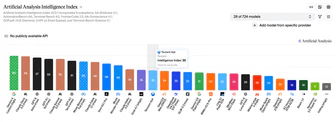
    Tencent announced on November 5 that due to the surge in Hy4 calls, WorkBuddy has been expanded tenfold and the free experience quota for users has been increased. Hy4 ranks second among Chinese models on the Artificial Analysis Intelligence Index and is ranked 13th on the Agent Arena overall list, ranking first among open-source models.

    Why it matters: After the release of Tencent Hy4, calls surged and were expanded tenfold, while also providing a comparison of the rankings in Artificial Analysis and Agent Arena and the cost per single task.

  3. The Verge · AI80

    AI industry in the US faces regulatory and data center construction resistance after the midterm elections

    After the Democratic Party won both the Senate and House in the US midterm elections, the AI industry is facing the prospect of tighter regulation and slower data center construction, with 43 out of 44 local data center bans passed in the vote. Elected officials have promised to summon CEOs of AI companies to testify, and experts believe that Trump and the Republican Party in Congress have basically ended their efforts to ban state-level AI restrictions.

    Why it matters: The midterm election results and the vote on local data center bans provide specific signals for observing the direction of US AI regulation.

Nov 5Thu
  1. ITHome · AI72

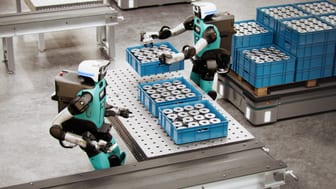
    Agility Robotics listed on the Nasdaq this week, backed by Foxconn and NVIDIA

    American humanoid robotics company Agility Robotics will list on Nasdaq this Thursday local time, with the stock code AGLT, having previously completed a merger with Churchill Capital Corp. XI

    Why it matters: Agility Robotics becomes the first humanoid robot company to list in the US, its funding scale, order backlog, and deployment plans can serve as a reference for observing the commercialization of this industry.

  2. 36Kr · AI88

    OpenAI automated vulnerability chain discovery identified 1724 Linux kernel vulnerabilities

    OpenAI's automated vulnerability research chain identified 2308 candidate samples of Linux kernel vulnerabilities, dynamically reproduced 1724 vulnerabilities, and generated 948 local privilege escalation (LPE) exploits.

    Why it matters: OpenAI disclosed a five-stage process and cost-benefit comparison of its automated vulnerability research pipeline, which can help understand the actual output of agents in security research.

  3. OpenAI News67

    OpenAI's own pipeline discovered and patched 948 local privilege escalation vulnerabilities in the Linux kernel

    OpenAI has built an autonomous pipeline to find, verify, and generate patches for 948 local privilege escalation vulnerabilities in the Linux kernel. The material only provides this result, not disclosing the specific methods of the pipeline, vulnerability details, or patch implementation status.

    Why it matters: OpenAI uses an autonomous pipeline to locate and verify 948 local privilege escalation vulnerabilities in the Linux kernel, observable level of automation in the security research process.

  4. Ars Technica · AI80

    Several measures restricting AI and data centers were passed in the U.S. midterm elections, with the tech industry calling it anti-Trump rather than anti-technology.

    In the U.S. midterm elections, 38 out of 44 measures restricting data centers in 10 states were passed, including multiple moratoriums and bans; Democrat Gina Hinojosa won the Texas gubernatorial election, planning to delay projects until legislation involving water, electricity, air, and property rights is passed.

    Why it matters: The election results and industry statements create a contrast, allowing readers to judge the policy resistance faced by U.S. AI infrastructure expansion.

  5. TechCrunch · AI86

    Google plans to shut down Search for schools that restrict AI, prompting criticism from various parties.

    Google announced that schools using its K-12 software will not be able to use Search if they do not choose to enable AI tools like Gemini, and students will only see a message indicating that the school-provided service is unavailable.

    Why it matters: Google's policy of bundling Search with AI tools has drawn criticism from politicians and antitrust officials, highlighting the controversy surrounding AI in schools.

Nov 4Wed
  1. OpenAI News60

    OpenAI announced the acquisition of Pierre Computer Company.

    OpenAI announced its acquisition of Pierre Computer Company to expand the tool capabilities of Codex in code construction, understanding, and review. The original text did not disclose the transaction amount, timeline, or specific arrangements for the team and products after the acquisition.

    Why it matters: Official disclosure of the acquisition move, readers can understand Codex's reinforcement direction in code construction and review tools.

  2. The Decoder74

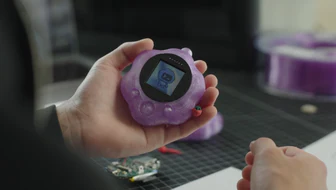
    OpenAI claims GPT-6 Astra designed a hardware device from scratch in less than a week.

    OpenAI states its hardware team used GPT-6 Astra to design a device that can communicate with Codex encoding agents as a side project, completed in less than a week. Astra handled all aspects including casing design, PCB layout with component selection and routing, firmware, and user interface. Contract manufacturers produced small batches of prototypes in less than a month, but due to Astra not always considering manufacturing constraints, tolerances, and assembly details, several rounds of modifications were required.

    Why it matters: OpenAI reveals the end-to-end hardware design process for GPT-6 Astra, also pointing out its shortcomings in manufacturing constraints.

Nov 3Tue
  1. TechCrunch · AI71

    Anthropic warns of nearing RSI capabilities in the revised S-1

    Anthropic, in the revised S-1A risk factors section submitted on Monday, states that its internal estimates show it may soon meet the definition of 'rapid acceleration of progress brought by AI' in its Responsible Scaling Policy, but has not yet designated any existing models as exceeding that threshold.

    Why it matters: Anthropic admits it may soon hit its self-defined RSI threshold in the revised S-1's risk factors, providing public text on how leading labs assess their safety boundaries.