Skip to content
Live
Aug 25Tue
Aug 24Mon
Aug 19Wed
Aug 18Tue
  1. Anthropic Research78

    How does Claude accelerate protein design and analysis chemistry?

    Anthropic announced two experimental results: Claude (Mythos Preview and Opus 4.8) designed protein binders for 15 targets, successfully covering 14, with a hit rate of 35.1% in single-target mode, higher than the common 10-15% in current protein design activities.

    Why it matters: Anthropic announced Claude's experimental results in protein design and analysis chemistry, providing wet lab validation data and prompts.

Aug 13Thu
  1. Factory News75

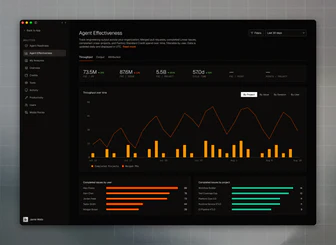
    Factory introduces Agent Effectiveness for integrated usage and delivery outcomes

    Factory's Agent Effectiveness feature is now live, linking data with delivery cycles, work intentions, and delivered outcomes to help engineering leaders understand delivery acceleration points, robot work content, and how usage maps to actual output. This feature provides an operational view of AI investment return by connecting Droid usage with delivery results, addressing questions about delivery speed changes, profit concentration points, and whether new capabilities are used for priority work.

Jul 31Fri
  1. Thinking Machines

    Thinking Machines has released the open-source Inkling and Inkling-Small language models.

    Thinking Machines releases open-source language models Inkling and Inkling-Small, allowing users to own, run, and customize them. To reduce the risk of abuse, models must pass security tests and research whether dangerous capabilities can be decoupled from general intelligence, while also building a layered defense ecosystem. Phased releases, supporting defenders, and collaboration with security researchers will enhance resilience. Internal evaluations and external tests show that releasing Inkling does not introduce significant incremental risks already present in existing open-source models.

Jul 30Thu
Jul 26Sun
  1. Berkeley AI Research

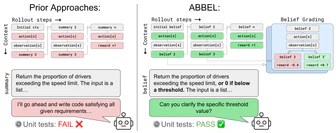
    ABBEL framework: Achieving efficient long-range interaction through belief updates

    The ABBEL framework replaces the complete interaction history with natural language belief states as the working context for an agent and utilizes a belief scoring mechanism to supervise the content of each belief state, achieving model performance close to that of a complete context model in collaborative code generation tasks while reducing the peak context token length by about 75% and training steps by 50%.

Jul 22Wed
  1. Prime Intellect Blog

    Prime Intellect Integrates 365,000+ Software Engineering, Terminal, and Search Environments for Agent Reinforcement Learning

    Prime Intellect integrates 23 agent task sets for software engineering, terminal, and search, providing a unified API, runtime/sandbox hooks, including approximately 198,000 software engineering tasks, 28,600 terminal tasks, and 137,600 search tasks. It decomposes the environment into three layers of task sets, sandbox, and runtime through verifiers v1, standardizes the scoring logic for different task sets, and provides 135,000 pre-built open-source task images.

Jul 14Tue
  1. Baseten Labs65

    Can language models continue to learn facts in weights?

    The experiment on writing model weights for the Qwen3 model shows that training data breadth determines the type of knowledge, diverse rephrasing can reduce the gap in Q&A; written facts can be behaviorally forgotten in subsequent writing but retain weights, and prompt supplementation can partially restore capabilities; no intervention measures can continuously maintain early fact accessibility, context is more reliable than weights.

Jul 7Tue
  1. Berkeley AI Research

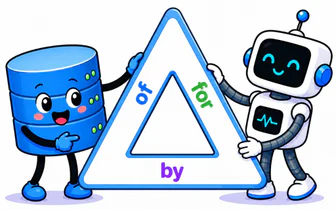
    GPT-4-class capabilities cost less than $1 per month, how data systems serve agents, and whether they belong to agents or are built by agents.

    GPT-4-class capabilities cost has dropped to less than $1 per month, with reasoning prices decreasing by over 50 times annually. Agents will dominate data system workloads, creating three new challenges: designing data systems for agents that support agentic speculation and optimize repetitive queries; building agent-specific data systems capable of managing agent cluster states and coordinating consensus; enabling agents to synthesize trustworthy custom data systems.

Jun 29Mon
Jun 22Mon
Jun 17Wed
Jun 16Tue
Jun 2Tue
Apr 16Thu
Apr 7Tue
  1. Cognition Blog

    SWE 1.6 Released: Enhancing the software engineering agent model experience.

    SWE 1.6 is the latest model built specifically for software engineering agents, providing general support on Windsurf with a speed of 950 tok/s and free for the next 3 months. Compared to SWE-1.5, SWE 1.6 improves by over 10% on SWE-Bench Pro by jointly optimizing user experience and reasoning fluency, significantly reducing behaviors like overthinking and redundant tool calls, making model interactions more efficient.

Mar 30Mon
Mar 13Fri
  1. Berkeley AI Research

    How do SPEX and ProxySPEX algorithms scale to identify LLM interactions

    The SPEX algorithm identifies key interactions of LLMs through signal processing and coding theory, analyzing the impact of features, data, and model components with only a small amount of disturbance, achieving high fidelity in sentiment analysis tasks even with thousands of features; The ProxySPEX algorithm leverages model hierarchical structure characteristics, reducing the number of disturbances by 10 times while maintaining performance.

Mar 5Thu
  1. Anthropic Research

    Anthropic has released a new metric observed exposure to evaluate AI replacement risk.

    Anthropic introduces a new metric, observed exposure, to quantify AI replacement risk, combining LLM theoretical capabilities with actual usage data, focusing on automated work scenarios; the study finds that current AI coverage is only a fraction of the theoretical value, high-risk occupations are mostly highly educated, high-income women, and unemployment rates have not significantly increased since the end of 2022, but hiring for exposed occupations among young workers has slowed.

Jan 15Thu
  1. Anthropic Research50

    How scientists use Claude to accelerate research and discovery

    Scientists have achieved significant progress in biological illustration, computational biology, and protein understanding benchmarks using Claude 4.5, a model now available to top researchers worldwide via API for free, and has built custom systems that go beyond literature reviews or coding assistance. In the lab, Claude serves as a collaborative partner throughout the research process, compressing projects that usually take months into hours using various tools, and discovering large-scale data patterns that humans might overlook, eliminating bottlenecks in knowledge-intensive tasks, and even enabling entirely new research approaches that traditional methods cannot adopt.

Nov 26Wed
Oct 30Thu
  1. Dify Blog

    Dify Integrates TiDB Vector: Enhancing Knowledge Pipelines with Distributed Vector Storage

    Dify Knowledge Pipeline has officially integrated TiDB Vector, allowing developers to seamlessly reuse processes like parsing tables, extracting entities, and embedding text for knowledge construction in downstream AI applications. TiDB Vector supports hybrid SQL + vector search, filtering structured metadata via SQL syntax before performing semantic retrieval to ensure precise, context-aware responses, and leverages TiDB's distributed architecture for enterprise-grade scalability and stability.

Oct 21Tue
Jul 10Thu
  1. Prime Intellect Blog

    Prime Intellect releases SYNTHETIC-2: a dataset of four million collaboratively generated reasoning trajectories.

    Prime Intellect releases the SYNTHETIC-2 dataset, containing four million verified reasoning trajectories, covering the most comprehensive complex reinforcement learning tasks and validators to date. The dataset is generated through a pipeline parallel distributed reasoning collaboration involving global computing contributors, with 1,253 GPUs (including 49 8xH200 nodes, 43 8xH100 nodes, and a large number of consumer-grade 3090 and 4090 GPUs) participating in its creation over 3 days.

Jul 6Sun
  1. Hamel Husain65

    How to efficiently sample production tracking data for review.

    Claude Code uses clustering methods to select examples from each cluster for review, combining active learning techniques to update fault classification and find similar cases or different faults by monitoring the annotations. file. The review method needs to be experimentally optimized based on the target and retain random samples to discover fault patterns not described by the current signal.

Jun 23Mon
May 20Tue
  1. Prime Intellect Blog

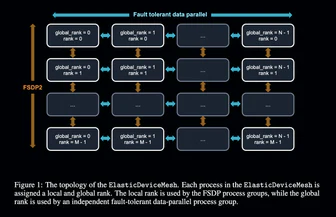
    PCCL - Prime Collective Communications Library Released: A fault-tolerant communication library designed for global distributed training.

    PCCL released, designed for global distributed training, with fault tolerance, supports operation on the public internet, bandwidth up to 45 Gbit/s between each pair of data centers, training bandwidth up to 25 Gbit/s between North America and Western Europe, supports dynamic member joining and rejoining, verified its high fault tolerance through long-term stress tests on major sockets (Linux, macOS, Windows WSA).

May 11Sun
  1. Prime Intellect Blog

    INTELLECT-2 Released: The first 32B parameter model trained through global distributed reinforcement learning

    INTELLECT-2 is the first 32B parameter model trained using global distributed reinforcement learning, employing fully asynchronous RL across dynamic heterogeneous computing contributor groups to train reasoning language models. It has open-sourced the training framework PRIME-RL and components such as TOPLOC and SHARDCAST, while improving the GRPO training recipe and data filtering techniques, enhancing QwQ-32B performance on mathematical and coding tasks.

Apr 27Sun
  1. Liquid AI Blog65

    Effective State-Size (ESS): A proxy metric for measuring model memory utilization

    Effective State-Size (ESS) is a proxy metric for measuring model memory utilization. By analyzing the input dependency matrix T(u) of deep learning sequential models (such as attention, SSM, gated convolution), ESS is defined as the rank of the submatrix of T(u), revealing key characteristics of model state compression, initialization and characterization, and state modulation. Research findings show that LLMs with effectively regulated ESS perform better in high recall tasks.

Apr 15Tue
  1. Prime Intellect Blog

    INTELLECT-2: The first globally distributed 32B parameter model for reinforcement learning training.

    INTELLECT-2 Released, First to Achieve Global Distributed 32B Parameter Model Reinforcement Learning Training, Anyone Can Contribute Heterogeneous Computing Power Without Permission, Eliminates Communication Bottlenecks Through Asynchronous Reinforcement Learning Paradigm, Supports Heterogeneous Inference Nodes, Inference Nodes Only Need 4×RTX 3090 GPUs to Participate in Training.

Mar 26Wed
  1. Dify Blog

    Enhance Dify RAG with InfraNodus: Expand Your LLM Context

    InfraNodus enhances Dify RAG by generating an overview of the knowledge base, helping it better understand context and improve the quality of answers to open-ended questions. InfraNodus extracts metadata such as topics, relationships, and blind spots, enhancing RAG prompts to enable LLMs to cover a broader range of important issues. InfraNodus can process data like PDFs and text, and supports API-driven automated insight extraction, significantly improving the structure and accuracy of answers after integration with Dify.

Feb 6Thu
Jan 6Mon
  1. Prime Intellect Blog

    MetaGene-1: A 7B parameter metagenomic base model for epidemic monitoring.

    MetaGene-1 is a 7B parameter metagenomic base model pre-trained on 1.5T DNA/RNA sequencing data for epidemic monitoring and pathogen detection. It achieves SOTA on pathogen detection and metagenomic embedding benchmarks, with a 512-token context length suitable for short sequence anomaly detection, but limited for complex task applications. The model was developed in collaboration by USC, Prime Intellect, and the Nucleic Acid Observatory, and is open-sourced.

Nov 29Fri
  1. Prime Intellect Blog

    INTELLECT-1 Released: The First Global Jointly Trained 10B Parameter Model

    INTELLECT-1 is released, the first 10B parameter language model trained through global collaboration, based on the Llama-3 architecture, completing 1T token training on 112 H100 GPUs across 5 countries and 3 continents, with the PRIME framework achieving a 400x reduction in communication bandwidth, 96% computational utilization, supporting sequence lengths of 8192 and a vocabulary of 128256, with the model code and data open-sourced.

Oct 29Tue
  1. Dify Blog

    How Dify.AI empowers this global consumer electronics leader to integrate generative AI

    The global consumer electronics leader serving over 100 million users has integrated generative AI into its operations through Dify.AI, bridging the gap between business and technology. Dify.AI's low-code platform allows novice users to quickly utilize mainstream models, expert users to independently customize solutions, and developers to enhance efficiency through component-based workflows. More than 200 AI applications have been created within a month, with 60 in use, reducing user voice analysis time from 8 hours to 3 hours.

Oct 11Fri
  1. Prime Intellect Blog

    INTELLECT–1 globally distributed training the first 10B parameter model

    INTELLECT-1 launches the world's first 10B parameter model distributed training, inviting the public to contribute computing power to advance the open-source AGI process. The training is based on the OpenDiLoCo open-source implementation, extending the 1B parameter scale of DeepMind DiLoCo's method by 10 times, significantly reducing communication frequency (up to 500 times), and lowering bandwidth requirements by 2000 times through quantized pseudo-gradients (int8) and 500-step outer optimizer synchronization.

Jul 11Thu
  1. Prime Intellect Blog

    OpenDiLoCo: An open-source global distributed low-communication training framework

    OpenDiLoCo successfully replicated and extended DeepMind's DiLoCo experiment to a 10B parameter model scale, achieving cross-continent, three-country distributed training through Hivemind and PyTorch FSDP, maintaining 90-95% computational resource utilization. The framework is based on the open-source implementation of Hivemind, supporting dynamic resource joining/leaving and fault-tolerant training, significantly reducing communication requirements by 500x while maintaining performance on 1.5B parameter models.