Skip to content
Live
Oct 13Tue
  1. LangChain Blog

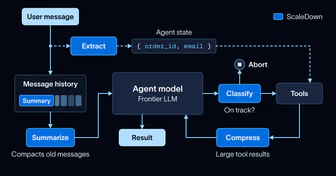
    How ScaleDown optimizes context management for long-running agents through compression and extraction techniques

    ScaleDown optimizes context management for long-running agents through compression and extraction techniques, its model is 41 times cheaper and 2.7 times faster than general models like GPT-5.5 in benchmark tests. ScaleDown provides four models: Summarize, Compress, Extract, and Classify, respectively for summarization, compression, extraction, and classification, supporting up to 1M tokens of input, and supporting image and PDF input.

  2. Amp News70

    How to use Puck in ChatGPT and Claude

    Users can interact with Puck through MCP, brainstorm tasks in ChatGPT or Claude, and then send them to Puck for implementation and management. Puck knows the user's projects in Amp and routes them to the correct module, supporting direct viewing of Amp work progress in ChatGPT. MCP provides the puck tool for Amp interaction and the orbs tool to display the interaction view of running modules.

  3. Prime Intellect Blog

    Moondream has joined Prime Intellect and launched version 3.1.

    Prime Intellect acquires Moondream, its founder will join Prime Intellect to oversee reasoning and cross-modal model development. Moondream 3.1 performs excellently in object detection, aerial images, charts, and crowded scenes (such as shelves), processing 34 requests per second, 24 times faster than the next accurate open-source model, and costs only one-thousandth of Meta's new model Muse Wonder when achieving 80% accuracy.

  4. Latent Space75

    How Anthropic's dynamic workflow coordinates Claude agents (including video updates)

    Anthropic announced dynamic workflow features, allowing Claude agents to autonomously orchestrate complex tasks. This feature enables Claude to decide on its own how to allocate work, without developers configuring coordinators or sub-agents, and it has been integrated into the Claude Console. Developers can set session budgets and utilize the 'dreaming' feature to optimize the agent's memory bank, but the model does not directly perceive budget constraints during runtime.

Oct 12Mon
  1. NVIDIA Blog

    NVIDIA open-sources Vera Rubin architecture at OCP Global Summit to help scale global AI factories

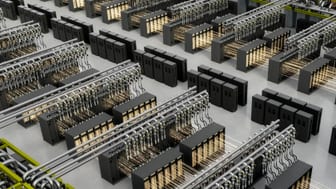
    NVIDIA announced at the OCP Global Summit that it will open-source the NVIDIA Vera Rubin rack and compute shelf design. By opening the NVIDIA MGX architecture, it provides system builders with a common foundation for building next-generation AI factory infrastructure. The Vera Rubin AI factory adopts the third-generation MGX rack architecture, supporting rack deployments of up to 250kW. It expands the open architecture by adding configurable I/O ports, fanless liquid-cooled compute shelves, standard power and cooling interfaces, and support for 19-inch devices.

  2. Microsoft Official Blog

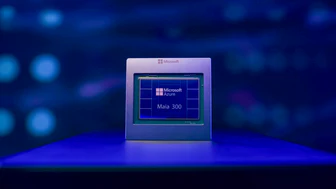
    Microsoft expands the Azure Maia system to multi-gigawatt deployment

    Microsoft is expanding the Azure Maia system to multi-gigawatt deployment, Maia 200 has entered production, and Maia 300 will be launched in 2027. Maia 200 is serving Microsoft's production workloads, including Microsoft Copilot, and supports the MAI team in developing next-generation models. GitHub Copilot and Microsoft Foundry will be launched by the end of this year.

Oct 11Sun
Oct 10Sat
  1. Latent Space

    How Standard Bots (Standard Bots) build AI systems for reliable execution: Lessons from the industrial robotics field.

    Standard Bots develop AI systems for industrial robots by sharing a base model, combined with demonstrations and fine-tuning. Their maximum model parameter count is in the billions, emphasizing data quality over scale, and leveraging unique customer data to address edge cases. The model handles perception tasks (like machine loading and unloading), traditional programming handles motion and logic, and reasoning runs on local devices to ensure reliability and real-time performance in scenarios like factories.

Oct 9Fri
  1. The Decoder75

    Anthropic has introduced new features for Claude: generating animation explanation videos and real-time data dashboards from text.

    Anthropic has introduced two new beta features for Claude: Dashboards can generate automatically updated real-time dashboards by connecting to data sources like BigQuery and Databricks via text prompts, with results outputtable to tools like Amplitude and Grafana; Motion can create editable code animation explanation videos from text, charts, and images and export them as MP4.

  2. AWS Machine Learning Blog

    How BlockRun and Incarna use Amazon Bedrock AgentCore Pay to enable AI agents to pay per inference

    AgentCore Pay allows AI agents to pay as needed, Incarna uses it to enable agents to pay per request to BlockRun for model inference, BlockRun offers on-demand billing inference services for over 90 models. AgentCore Pay reduces the workload of adding x402 support from months to days through hosted wallets, native protocol handling, infrastructure layer spending governance, and auditable settlements.

  3. TechCrunch · AI

    Google is pushing Gemini AI into the agent era, with the first phase targeting enterprises

    Google announced at the cloud services conference the launch of a unified agent for Gemini AI, which not only answers questions but also represents users to complete tasks, initially focusing on enterprise applications. The agent can accept goals rather than instructions and connects to internal enterprise systems through custom skills and tools, defaulting to the best model (including third-party Anthropic Claude model), which will be extended to open-source and private model selection in the future.

  4. AWS Machine Learning Blog

    Use Amazon SageMaker HyperPod to share GPU clusters between teams and achieve isolation and fairness.

    Amazon SageMaker HyperPod provides centralized authentication through AWS IAM Identity Center, uses the SageMaker AI domain to provide a customized user experience, combines Kubernetes namespaces to achieve workload isolation, and leverages HyperPod task governance for fair resource allocation, supporting multiple teams in efficiently sharing a single HyperPod EKS cluster.

Oct 8Thu
  1. Sakana AI40

    The Evidence Finder, a search tool for doctors, adopts Sakana Namazu: A Japanese-specification AI that thrives in medical settings.

    The Evidence Finder, an evidence search tool for doctors, adopts Sakana Namazu. Iris Corporation's service searches for literature from PubMed, and Namazu, which achieved a 96.4% accuracy rate in the doctor's national examination, generates responses. Sakana Namazu avoids catastrophic forgetting while enhancing Japanese capabilities while maintaining the performance of the base model.

  2. The Verge · AI

    Google launches universal Gemini AI agent for cross-application and device operation in work scenarios

    Google has released a universal Gemini AI agent that can operate across applications and devices in work scenarios. The tool provides a single interface through the Gemini Enterprise app, supporting chat with the agent and task assignment, and can work directly within Workspace applications like Gmail, Drive, Docs while maintaining cloud context. It is currently only available to business customers for private preview, as Google had previously launched the consumer-focused Gemini Spark agent in May.

  3. The Verge · AI65

    Meta Muse and OpenAI Dots: Competition in the landscape of next-generation consumer AI agents

    Meta Muse and OpenAI Dots are both AI model-based proxy platforms designed to provide personal assistant services to users. Muse is free to use, while Dots is paid. Both can handle tasks ranging from simple ones (such as restaurant reservations and email filtering) to more complex ones (such as marketing, legal work, and accounting).

  4. Ars Technica · AI58

    Microsoft's new product launch introduces AI-supported new hardware and Windows 11 updates

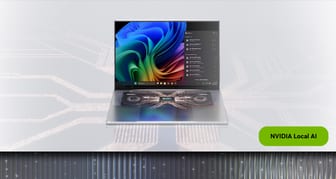
    Microsoft unveiled the Surface Laptop Ultra at its new product launch, featuring the Nvidia RTX Spark SoC, with a starting price of $2,599, equipped with 5120-core or 6144-core Blackwell GPUs and up to 128GB LPDDR5x memory, starting shipping on October 16; also announced the Windows 11 update, supporting local AI and intelligent agent workflows.

  5. Google Developers Blog

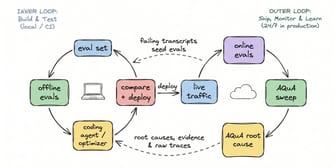
    AQuA: An agent that can diagnose agent issues in a production environment.

    AQuA runs alongside the production agent, analyzing production trajectories through a five-stage process (sampling, review, clustering, validation, tracking), clustering common issues, and generating actual/expired findings to help teams continuously monitor and improve agent quality. It uses target files written by developers and custom metrics to guide the review process and supports integration with AutoRaters on the Gemini platform.

  6. Artificial Analysis Articles75

    Harvey LAB-AA v1.1 released: Adds hallucination check functionality for intelligent legal work.

    Harvey LAB-AA v1.1 version adds hallucination check functionality for legal work. It scores by auditing the match between model submission content and task source files. GPT-6 Astra averages 0.03 major hallucinations per task, while Gemini 3.8 Flash averages 13.96. The checker GPT-6 Sol (high) confirmed 99 major hallucinations in 20 tasks.

  7. Anthropic Research

    Anthropic has launched an open-source software vulnerability discovery service.

    Anthropic has launched an optional vulnerability discovery service, OSS Scanner, which uses large models like Claude Mythos to scan open-source code, providing free security audits, but outputs are not manually reviewed. The service has disclosed 97 high-risk vulnerabilities to 48 projects, of which 88% meet CVD standards, receiving positive feedback from projects such as PostgreSQL and OpenSSL.