Skip to content
Live
Nov 26Wed
Nov 21Fri
  1. Dify Blog70

    Kakaku uses Dify to accelerate AI applications: fast, secure, and scalable

    Kakaku has addressed speed, security, and scalability issues in AI application development through the Dify platform, making 30% of employees AI builders and launching a product data extractor within 3 hours, cumulatively building nearly 950 internal applications. Dify Enterprise provides a multi-workspace architecture, single sign-on, sandbox environment, and production-grade infrastructure, achieving a combination of central control and local freedom.

Nov 13Thu
Nov 12Wed
  1. Anthropic Research

    Project Fetch: Can Claude Train a Robot Dog?

    Eight Anthropic researchers (with no robotics experience) were randomly divided into two groups, one using Claude and the other not, tasked with using quadruped robot dogs to pick up beach balls. The team using Claude completed more tasks faster and was the only one to achieve the goal of making the robot completely autonomous in picking up the balls. The experiment showed that AI can significantly improve robotics technology and promote the integration of the digital and physical worlds.

Oct 30Thu
  1. Dify Blog

    Dify Integrates TiDB Vector: Enhancing Knowledge Pipelines with Distributed Vector Storage

    Dify Knowledge Pipeline has officially integrated TiDB Vector, allowing developers to seamlessly reuse processes like parsing tables, extracting entities, and embedding text for knowledge construction in downstream AI applications. TiDB Vector supports hybrid SQL + vector search, filtering structured metadata via SQL syntax before performing semantic retrieval to ensure precise, context-aware responses, and leverages TiDB's distributed architecture for enterprise-grade scalability and stability.

Oct 29Wed
  1. Dify Blog70

    Dify integrates Qdrant high-performance vector database, accelerating the development of next-generation AI applications

    Dify Platform now integrates Qdrant high-performance Rust vector database, providing faster retrieval, hybrid search, and scalable performance for building reliable, production-grade AI applications. This integration enables developers to choose Qdrant without becoming vector search experts through simple configuration, achieving millisecond-level retrieval for millions of documents, complex metadata-based retrieval strategies, and hybrid search capabilities, supporting high-performance scaling from prototype to production.

Oct 27Mon
  1. Prime Intellect Blog75

    Prime Intellect is expanding the scale of its open-source environment project to become a global open evaluation and reinforcement learning environment center.

    Prime Intellect is expanding its open-source environment project into a global open evaluation and reinforcement learning environment center, committing millions of dollars in prizes and seeking partners to accelerate the development of open superintelligence. Over the past two months, more than 400 cutting-edge reinforcement learning environments and evaluations have been collected through bounty programs and reinforcement learning residencies. A new large-scale bounty program will expand to thousands of open-source environments, divided into open access and task-only categories, with prize amounts ranging from 100 to 5000 dollars.

Oct 21Tue
Oct 17Fri
  1. Dify Blog65

    Dify platform integrates Tavily API to achieve real-time web data knowledge pipeline construction

    Dify platform now supports Tavily Real-time Web Search API, allowing users to directly embed web data into knowledge pipelines to enhance accuracy and timeliness; Tavily can be used as a data source plugin in Dify Marketplace, paired with Dify knowledge pipelines, which support modular components from upload and parsing to chunk embedding; users can install the plugin, obtain an API key, and configure LLM nodes to use Tavily search results for generating Q&A pairs and storing them in a knowledge base.

Oct 6Mon
  1. Anthropic Research71

    Anthropic open-sources security audit tool Petri

    Anthropic has released an open-source auditing tool, Petri (Parallel Exploration Tool for Risky Interactions), where automated agents test target models through multi-round dialogues, and then LLM reviewers score them based on safety dimensions and select the most worthy dialogues for manual review.

    Why it matters: Anthropic has open-sourced the automated auditing tool Petri and provided cross-comparison results for 14 cutting-edge models on behaviors such as deception, sycophancy, and self-preservation.

Sep 15Mon
  1. Dify Blog75

    Dify and TrueFoundry AI Gateway Integration Guide

    The Dify platform allows for rapid, code-free construction of chatbots, AI agents, and intelligent search systems, but deploying in production environments often faces challenges. TrueFoundry AI Gateway seamlessly connects development and production, offering cost control, security reinforcement, service degradation, and supplier switching capabilities, supporting real-time cost tracking, role-based access control, multi-region load balancing, and cross-model compatibility.

Sep 4Thu
  1. Dify Blog75

    Dify collaborates with Arize: How to evaluate, monitor, and improve agents

    Dify collaborates with Arize to bring observability tools Phoenix and AX into the Dify ecosystem to evaluate, monitor, and improve agents. Phoenix can automatically track model calls, tool calls, and chain steps, collecting inputs, outputs, latency, and metadata, and supports annotation tracking, building structured test datasets, creating custom evaluations, and running tests.

Aug 27Wed
Aug 18Mon
Jul 10Thu
  1. Prime Intellect Blog

    Prime Intellect releases SYNTHETIC-2: a dataset of four million collaboratively generated reasoning trajectories.

    Prime Intellect releases the SYNTHETIC-2 dataset, containing four million verified reasoning trajectories, covering the most comprehensive complex reinforcement learning tasks and validators to date. The dataset is generated through a pipeline parallel distributed reasoning collaboration involving global computing contributors, with 1,253 GPUs (including 49 8xH200 nodes, 43 8xH100 nodes, and a large number of consumer-grade 3090 and 4090 GPUs) participating in its creation over 3 days.

Jun 25Wed
Jun 23Mon
Jun 12Thu
Jun 5Thu
  1. Dify Blog65

    Dify has received 100,000 GitHub stars, thanks to the open-source community's support

    Dify has surpassed 100,000 GitHub stars and joined the top 100 global open-source projects. The platform was open-sourced two years ago, aiming to make it easier for developers to build LLM applications, and has continued to grow thanks to community contributions. The project especially thanks 10 core contributors who have driven platform progress through code submissions, feature development, and documentation improvements.

May 20Tue
  1. Prime Intellect Blog

    PCCL - Prime Collective Communications Library Released: A fault-tolerant communication library designed for global distributed training.

    PCCL released, designed for global distributed training, with fault tolerance, supports operation on the public internet, bandwidth up to 45 Gbit/s between each pair of data centers, training bandwidth up to 25 Gbit/s between North America and Western Europe, supports dynamic member joining and rejoining, verified its high fault tolerance through long-term stress tests on major sockets (Linux, macOS, Windows WSA).

May 11Sun
  1. Prime Intellect Blog

    INTELLECT-2 Released: The first 32B parameter model trained through global distributed reinforcement learning

    INTELLECT-2 is the first 32B parameter model trained using global distributed reinforcement learning, employing fully asynchronous RL across dynamic heterogeneous computing contributor groups to train reasoning language models. It has open-sourced the training framework PRIME-RL and components such as TOPLOC and SHARDCAST, while improving the GRPO training recipe and data filtering techniques, enhancing QwQ-32B performance on mathematical and coding tasks.

Apr 28Mon
  1. Prime Intellect Blog

    Prime Intellect previews its distributed reasoning stack, building a reasoning engine for the public internet.

    Prime Intellect previews its distributed reasoning stack, designed for consumer-grade GPUs and public internet 100ms latency, and releases three open-source code repositories PRIME-IROH, PRIME-VLLM, PRIME-PIPELINE to achieve latency-aware pipeline parallelism, aiming to achieve the openness and democratization of AGI through consumer-grade hardware and network connections.

Apr 17Thu
  1. Dify Blog

    How Dify Integrates with InfraNodus to Achieve Advanced Q&A and Creative Generation

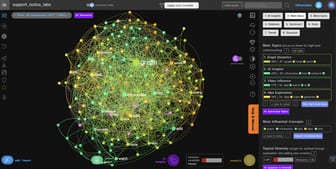
    Dify users can create advanced AI chatbots by integrating InfraNodus. The chatbot not only answers questions but also mines insights and generates new ideas from the knowledge base. InfraNodus can visualize the knowledge base as a knowledge graph, identifying 'structural gaps' in concept connections, and its API generates insight-oriented questions targeting these gaps. Users can seamlessly integrate this capability into Dify applications to initiate conversations, content development, or provide smart prompts for Dify AI agents, thereby embedding enhanced chatbots on websites.

Apr 15Tue
  1. Prime Intellect Blog

    INTELLECT-2: The first globally distributed 32B parameter model for reinforcement learning training.

    INTELLECT-2 Released, First to Achieve Global Distributed 32B Parameter Model Reinforcement Learning Training, Anyone Can Contribute Heterogeneous Computing Power Without Permission, Eliminates Communication Bottlenecks Through Asynchronous Reinforcement Learning Paradigm, Supports Heterogeneous Inference Nodes, Inference Nodes Only Need 4×RTX 3090 GPUs to Participate in Training.

Apr 14Mon
  1. Dify Blog

    Dify applications transform into MCP servers through the mcp-server plugin.

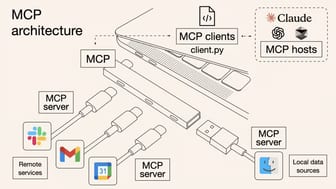
    Dify's mcp-server plugin can transform any Dify application into a server-side endpoint compliant with the MCP protocol, allowing external MCP clients to access it directly. The plugin handles client requests via HTTP and SSE protocols, supporting the use of Dify applications as a single MCP tool for Cursor, Claude Desktop, and others, and allows operation in private network environments to enhance security.

Apr 2Wed
Apr 1Tue
  1. Dify Blog

    Dify MCP Plugin Quick Start Guide: Achieve easy tool calls for AI agents through Zapier

    Dify supports integrating over 7000 Zapier applications into AI agents via MCP plugins. Developers can use the MCP SSE plugin to dynamically call external tools or use the Agent Strategy plugin to enable agents to make autonomous decisions on tool calls. The Zapier MCP server provides over 30000 actions, supporting automated tasks like sending emails via Gmail, requiring server endpoint configuration and setting GPT-4o prompts to control calls.

Mar 26Wed
  1. Dify Blog65

    Cursor how to build SSH plugin for server management in a no-code way

    Dify's newly released SSH plugin achieves server management through AI-driven automation, capable of automated deployment, file processing, script execution, and troubleshooting. This plugin is developed based on the Cursor tool, supporting SSH remote command execution and file transfer with a context length of up to 8k. It is easy to install and can independently complete server configuration, application deployment, and issue resolution through an AI intelligent agent.

  2. Dify Blog

    Dify integrates the Open Audio Fish Audio plugin, making AI applications for TTS and voice cloning simple.

    Dify integrates Fish Audio plugin from Open Audio into its platform, providing real-time text-to-speech (TTS) and voice cloning functions for AI applications. Fish Audio supports formats such as Opus, MP3, WAV, and cloning voice takes only 30-45 seconds. Users can control output parameters through WebSocket API. Developers can install the plugin on Dify marketplace and configure API keys to automatically convert LLM generated text into audio clips of specified voices.

Mar 24Mon
  1. Dify Blog

    Agora's conversational AI extension has launched on the Dify market platform.

    Agora's conversational AI extension, as a plugin, has launched on the Dify market platform, providing developers with real-time voice AI capabilities. The extension supports multiple LLMs, featuring industry-leading speech-to-text and mainstream text-to-speech services, achieving rapid response and global reliability through Agora's low-latency SD-RTN™ technology. Developers can quickly deploy virtual assistants or customer service robots. The Dify market platform now hosts over 120+ plugins, supporting community sharing and local deployment.

Mar 13Thu
  1. Dify Blog65

    Dify.AI showcased AI innovation achievements at NVIDIA GTC 2025

    Dify.AI will attend the NVIDIA GTC conference from March 17 to 21, 2025, demonstrating the latest innovative achievements in Room 3226, including the plugin system, workflow mechanism, and NVIDIA NIM integration. The core of the company is to help developers define AI applications through prompts, context, and plugins. Version 1.0.0 introduced the plugin mechanism, workflow enhancements, and an open ecosystem.

Mar 12Wed
Mar 6Thu
  1. Dify Blog

    Dify x Brave Search: Use the Brave Search API plugin to enhance real-time search functionality for AI applications.

    Dify v1.0.0 introduces a plugin system, allowing developers to easily integrate real-time search functionality through the Brave Search API plugin. Create smart agents or workflows in Dify Studio, choose models like Claude-3.5 Sonnet, and add the Brave Search tool to enable search. Deploy in workflows or integrate custom plugins to extend functionality.

Mar 4Tue
Feb 19Wed
Feb 7Fri
  1. Dify Blog

    How does Dify ensure the stable operation of DeepSeek-R1 applications?

    Dify provides three solutions to ensure the stable operation of DeepSeek-R1: official API integration supports multi-key load balancing; access Azure AI Foundry and other MaaS services as backups; locally deploy Ollama to meet privacy requirements. Through Dify, official API and MaaS can be switched between primary and backup to ensure that applications supporting 1000+ models remain online.

Feb 6Thu