Skip to content
Live
Apr 24Fri
Apr 20Mon
  1. Berkeley AI Research

    Berkeley AI Research launches the gradient-based long-term world model planner GRASP

    GRASP is a new gradient-based world model planner that achieves temporal parallel optimization by elevating trajectories to virtual states, explores by directly adding randomness to state iterations, and provides clear signals for actions by reshaping gradients, while avoiding fragile 'state-input' gradients generated by high-dimensional visual models, making long-term planning possible.

Apr 16Thu
Apr 14Tue
  1. Moonshot AI · Hugging Face new models

    Kimi K2.6 released: Open-source multimodal agent model breaks performance in long-term encoding and autonomous execution

    Kimi K2.6 is an open-source multimodal intelligent agent model that has made significant progress in long-term encoding, encoding-driven design, proactive autonomous execution, and group task orchestration. It has 1 trillion parameters, a context length of up to 256k tokens, achieving a score of 54.0 on the HLE-Full benchmark and 86.3 on the BrowseComp (agent group) benchmark, and supports 300 sub-agents executing 4,000 coordinated steps in parallel.

Apr 10Fri
  1. LangChain Blog

    Deep Agents Deploy: An open-source alternative for deploying intelligent agents, replacing Claude Managed Agents.

    Deep Agents Deploy Officially Released as an Open Source Alternative to Claude Managed Agents for Intelligent Agent Deployment, Supporting Any LLM Model, Achieving Model-Agnostic, Production-Ready Deployment via the `deepagents deploy` Command, Users Can Customize AGENTS.md Instruction Sets and Agent Skills, and Choose a Sandbox Environment to Ensure Memory Ownership is Not Locked.

Apr 7Tue
  1. Cognition Blog

    SWE 1.6 Released: Enhancing the software engineering agent model experience.

    SWE 1.6 is the latest model built specifically for software engineering agents, providing general support on Windsurf with a speed of 950 tok/s and free for the next 3 months. Compared to SWE-1.5, SWE 1.6 improves by over 10% on SWE-Bench Pro by jointly optimizing user experience and reasoning fluency, significantly reducing behaviors like overthinking and redundant tool calls, making model interactions more efficient.

Apr 3Fri
Apr 2Thu
Mar 30Mon
Mar 17Tue
Mar 16Mon
Mar 13Fri
  1. Berkeley AI Research

    How do SPEX and ProxySPEX algorithms scale to identify LLM interactions

    The SPEX algorithm identifies key interactions of LLMs through signal processing and coding theory, analyzing the impact of features, data, and model components with only a small amount of disturbance, achieving high fidelity in sentiment analysis tasks even with thousands of features; The ProxySPEX algorithm leverages model hierarchical structure characteristics, reducing the number of disturbances by 10 times while maintaining performance.

Mar 10Tue
  1. Dify Blog65

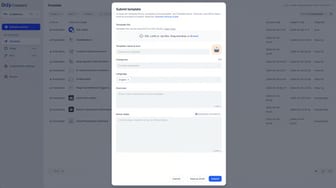
    Dify Launches Creator Center and Template Marketplace, Making Workflow Template Sharing and Discovery More Convenient

    Dify Introduces Creator Center and Template Marketplace, Where Creators Can Upload Workflow Templates, and Users Can Discover and Adopt Them with One Click. Creator Center Supports Template Submission and Management, Template Marketplace Provides Categorization, Tags, and Creator Browsing, Template Detail Pages Include Visual Preview and Guided Setup, Supporting Organization Account Management Permissions.

Mar 5Thu
  1. Dify Blog65

    Dify Cloud free trial upgrade: Supports OpenAI, Claude, Gemini, and Grok models

    Dify Cloud is upgrading the free trial experience, Message Credits now support four models: OpenAI, Claude (Anthropic), Gemini (Google), and Grok (xAI), and can be used without configuring an API Key; The Explore page has added a featured template trial function, providing 5 message credits covering scenarios such as file translation, personalized memory assistant, and patient information collection, without plugin configuration.

Mar 1Sun
Feb 25Wed
  1. Replit Blog65

    Replit launches the Pro plan, with the core plan price dropped to $20 per month.

    Replit has launched the Pro plan at $100 per month, offering features such as Agent mode, tiered discount credit limits, and priority support, suitable for professional developers; the core plan price has been reduced to $20 per month, with new collaboration features allowing up to 5 people to collaborate, and original Teams users will be automatically upgraded to the Pro plan.

Feb 23Mon
  1. Anthropic Research58

    Anthropic proposes a role selection model to explain AI human-like behavior

    Anthropic proposed a persona selection model to explain AI's human-like behavior, suggesting that large language models learn personas from text during pre-training and adjust rather than change their essence during post-training. This model can explain Claude's anti-Alignment behavior when trained to cheat, implying that developers need to focus on the psychological aspects of the personas behind the behavior rather than just judging the behavior itself, and recommending the introduction of more positive AI role models.

Feb 18Wed
Feb 12Thu
  1. Andrej Karpathy60

    Introduction to Andrej Karpathy's microgpt project

    Andrej Karpathy released an art project named microgpt, a single-file containing only 200 lines of pure Python code, which can train and infer GPT models without dependencies. The project implements all algorithmic content from dataset processing, tokenizer, automatic differentiation engine to GPT-2 style neural network architecture, Adam optimizer, training and inference loop. The code can be obtained from GitHub gist and karpathy.art, and has been released as a triptych.

Feb 10Tue
  1. Dify Blog

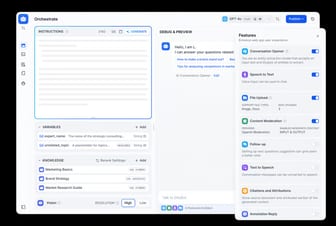
    Dify guides: Preparing LLM application prompts for workflows

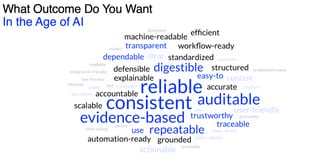
    Dify guides on how to design workflow-ready LLM application prompts by defining clear optimization goals, constructing prompts that include task descriptions, examples, and context, and separating system rules from user input. System prompts contain permanent constraints (such as roles, formats, and safety boundaries), while user prompts contain requests for specific content (such as documents and questions). It requires the model to output structured results (such as JSON) and provide evidence to support scoring to reduce hallucinations and improve the usability of the output in downstream steps.

  2. Prime Intellect Blog

    Prime Intellect Lab: An end-to-end platform for training custom models

    Prime Intellect Lab releases an end-to-end model training platform that integrates Environments Hub, hosting training and hosting evaluation, supporting large-scale agent reinforcement learning, reasoning, and evaluation without managing GPU clusters or algorithm details. The platform is built based on environments, including task datasets and executors, and has completed over 3000 reinforcement learning runs through private testing.

Jan 31Sat
  1. Browser Use

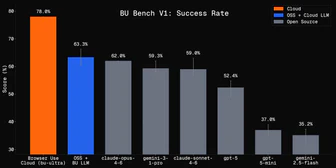
    Browser Use releases open-source browser automation benchmark BU Bench V1, Claude Fable-5 scores up to 80.0%

    Browser Use released the open-source browser automation benchmark BU Bench V1, containing 100 hardcore browser tasks, Claude Fable-5 scored the highest at 80.0%, leading GPT 5.5 by 12 points; Browser Use Cloud (bu-ultra) scored 78.0%, with a speed of approximately 14 tasks per hour. The benchmark is based on real-world website tasks, scored using LLM evaluators, and is available on GitHub.

Jan 29Thu
  1. LangChain Blog

    How does the LangChain Deep Agents SDK implement efficient context management?

    The LangChain Deep Agents SDK manages limited memory of AI agents through three compression techniques: offloading large tool results (>20,000 tokens) and inputs (>85% context window) to the file system, and using LLM to generate session summaries. The SDK triggers compression on Claude Sonnet 4.5 in terminal benchmark tests, retaining complete records through filesystem search and summaries, supporting frequent compression to optimize performance.

Jan 20Tue
  1. Factory News

    Factory introduces Agent Readiness tool to assess the level of AI agent support in codebases

    Factory introduces Agent Readiness tool, which evaluates the support of codebases in eight technical pillars and five maturity levels by running the /readiness-report command, and provides specific improvement suggestions. The tool aims to address performance differences caused by codebase environment issues in AI coding agent deployment, supporting three interaction methods: CLI, Dashboard, and API, and can quickly improve basic configuration file and document missing issues through automation repair features.

Jan 15Thu
  1. Anthropic Research50

    How scientists use Claude to accelerate research and discovery

    Scientists have achieved significant progress in biological illustration, computational biology, and protein understanding benchmarks using Claude 4.5, a model now available to top researchers worldwide via API for free, and has built custom systems that go beyond literature reviews or coding assistance. In the lab, Claude serves as a collaborative partner throughout the research process, compressing projects that usually take months into hours using various tools, and discovering large-scale data patterns that humans might overlook, eliminating bottlenecks in knowledge-intensive tasks, and even enabling entirely new research approaches that traditional methods cannot adopt.

Jan 14Wed
  1. Qoder Blog0

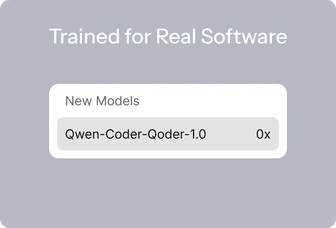
    Qoder NEXT model released: the next evolution towards intelligent editing with ActionRL preference alignment practices.

    The Qoder NEXT model upgrades editing capabilities from code completion to prediction, achieving more precise intelligent editing through ActionRL preference alignment technology. The model's context length reaches 128k, with a parameter size of 175B, demonstrating excellent performance in the SWE-bench reasoning benchmark, a 3.5x speed increase, and supporting open-source API interfaces.

  2. Anthropic Research67

    Anthropic uses Claude with property testing to find bugs in the Python ecosystem

    Anthropic's research team developed an agent based on Claude Code custom commands, which infers the properties that code should satisfy by reading type annotations, docstrings, and comments, and then uses Hypothesis to write property tests, discovering hundreds of potential bugs in over 100 popular Python packages such as NumPy, SciPy, and Pandas.

    Why it matters: Anthropic uses Claude agents to automatically write property tests to find bugs in packages like NumPy, SciPy, Pandas, and provides the efficiency after manual review and merged fixes

Jan 10Sat
  1. Berkeley AI Research

    Berkeley AI research proposes an information-driven imaging system design framework

    Berkeley AI research proposes an information-driven imaging system design framework, which quantifies the object's discrimination capability through mutual information measurement. It has been validated in four fields: color photography, radio astronomy, lensless imaging, and microscopy that information estimation can predict decoder performance. The optimized mutual information design scheme achieves end-to-end optimal results while reducing memory and computational load.

Jan 9Fri
Jan 8Thu
  1. Anthropic Research58

    Anthropic Collaborates with PNNL to Simulate Attacks with Claude to Defend Critical Infrastructure

    Anthropic partnered with the Pacific Northwest National Laboratory (PNNL) to use the Claude model to quickly simulate network attacks in a simulated water treatment plant network, proving that AI can accelerate defense drills, completing attack reconstruction in just three hours instead of weeks; Claude Sonnet 4 demonstrated resourcefulness in testing by bypassing the Windows UAC security feature through predefined tools and identifying alternative techniques to achieve the goal.

Jan 5Mon
  1. Liquid AI Blog

    Liquid AI has released LFM2.5: the next-generation edge AI model family

    Liquid AI has released the LFM2.5-1.2B model family, with its pre-training extended to 28T tokens and significantly improved post-training performance through reinforcement learning, showing excellent performance on knowledge, instruction following, math, and tool use benchmarks. This series includes Base, Instruct, Japanese, Visual Language, and Audio Language models, all of which are open-source and available on Hugging Face and LEAP. The audio models are 8 times faster than their predecessors and natively run on vehicles, mobile devices, and IoT devices.

Jan 1Thu
Dec 22Mon
Dec 18Thu