Skip to content
Live
Oct 6Tue
  1. Google Research

    Google Earth AI's Population Dynamics Foundation Model (PDFM) provides a planetary geospatial foundation model for global public health.

    Google Earth AI's Population Dynamics Foundation Model (PDFM) compresses search trends, population flows, building environment density, and environmental factors into location embeddings, enhancing epidemiological research performance in various disease fields and geographical environments without specific task fine-tuning.


  2. LangChain Deep Agents releases35

    LangChain Deep Agents 0.1.81 released

    LangChain Deep Agents 0.1.81 released, supporting discovery of marketplace plugins, opening effort selector at runtime, displaying cost details, adding `--no-tracing` option and explicit tracing status indicator. Fixed issues with concurrent local thread writes and hook execution context changes, improved server-side model directory and interactive model metadata processing.
  3. Mistral AI

    Mistral AI has launched the public beta version of Mistral Large 4.

    Mistral Large 4 is a native multimodal large language model with 100 billion parameters, featuring 52 billion active parameters. It excels in coding, agent workflows, and multimodal understanding, reaching the level of the world's strongest open-source model. It also leads in critical enterprise workloads such as cybersecurity, finance, and law. The model will be open-sourced by the end of this month and is currently available for experience through the public beta API of Mistral Studio.

  4. Cohere Blog

    Tiny Aya L2-Thinker Multilingual Reasoning Model Released: Data Mixing Technology Achieves In-User Language Reasoning

    Tiny Aya L2-Thinker model achieves in-user language reasoning through data mixing technology, with an inference accuracy of over 93% in 60 languages. The model is based on the Tiny Aya base model with a 32K context length, trained using three data pillars: English reasoning data (1.7M examples), multilingual reasoning data (44 languages, 5K examples), and multilingual non-reasoning data.

  5. Cursor Changelog

    Cursor iOS app adds local agent remote control feature.

    Cursor iOS app now supports viewing and responding to local agents running on the user's computer, default enabled (excluding enterprise organizations). After downloading the app and logging in, the user's computer account is automatically displayed. Remote management requires pairing and authorization via the desktop app. Remote control only connects to the agent, does not move its running location, and requires the computer to be powered on and connected to the network.

  6. Google Developers Blog

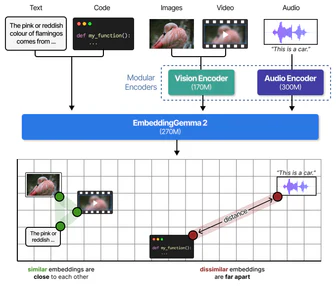
    EmbeddingGemma 2 Developer Guide

    EmbeddingGemma 2 is an open-source 740M parameter model developed based on Gemma 4, which maps text, code, images, video, and audio to a unified 768-dimensional space, supports modular loading (270M-740M parameters), and performs excellently in code search and cross-modal retrieval, can be used via the sentence-transformers library.

  7. Google Research

    Google Research explores the open and emergent challenges in agent privacy and security from a contextual perspective.

    Google Research has released a new report titled 'Privacy and Security Challenges of Open and Emergent Agents: A Contextual Perspective,' analyzing the fundamental privacy and security challenges faced by autonomous agents, requiring coordinated defense at the system, model, user, and ecosystem levels. The report indicates that agents need to handle personal data and act autonomously, but their characteristics in unstructured interfaces, probabilistic control flow, and autonomous agency introduce new challenges, requiring strategies that combine contextual integrity theory to evaluate the social and contextual appropriateness of actions.

Oct 5Mon
Oct 3Sat
  1. Baseten Blog

    MetaInfer skill toolbox: An inference engine optimizer built solely with knowledge achieves 50-90% faster engine performance.

    MetaInfer's skill toolbox constructs custom inference engines using only knowledge, making the Qwen-3.6-35B-A3B model 90% faster than vLLM 0.25.1 in single-stream decoding speed, and TTFT improves 2.33 times. This framework does not require model fine-tuning or dedicated adapters, enabling LLMs to achieve highly optimized inference engines for specific deployments by defining constraints and optimization goals.

Oct 2Fri
  1. OpenAI Agents SDK releases7

    OpenAI Agents SDK v0.23.1 released

    OpenAI Agents SDK released version v0.23.1, fixing bugs related to release test recovery and readiness checks, and passed the release readiness review. API version is 0.23.1, including 28 file changes (added 622 lines / deleted 42 lines), involving release automation, test fixtures, integration/examples tools, and release metadata.

  2. Prime Intellect Blog

    Prime Inference: Provides fast and reliable inference services for cutting-edge open-source models.

    Prime Inference is launched, providing fast and reliable inference services for cutting-edge open-source models, supporting serverless endpoints and reserved capacity, running models using GPU infrastructure across multiple data centers. Its first public deployment, GLM-5.3, went live on OpenRouter on September 22, and is currently one of the fastest GLM-5.3 endpoints on OpenRouter, with zero tool call error rates and 100% uptime.

  3. Baseten Labs

    Qwen2.5-1.5B achieves 500-step RL performance on MATH through single gradient step extension.

    Qwen2.5-1.5B achieved 66.7% accuracy (63.8%) on the MATH benchmark through a 1000x single gradient step length extension to 500 steps for reinforcement learning models, with the main improvement coming from fixing issues with the base model's cyclic output, but performance degrades on out-of-distribution tasks such as function calls and Knights & Knaves.

Oct 1Thu
  1. Anthropic Research78

    Anthropic researcher reflects on using Claude and BootLoops for interdisciplinary research.

    Anthropic researcher Matt reflected on the experience of using Claude with the open-source harness BootLoops for research, advancing 36 papers in 18 fields with 19 collaborators in three months, selecting from about 400 candidate problems.

    Why it matters: The author reflects on first-hand interdisciplinary practice, exploring the real boundaries of using agents for research, and providing reusable open-source harnesses and collaboration methods.

Sep 29Tue
  1. Microsoft Research

    Microsoft Research has released Quine: an AI research system designed for biological complexity.

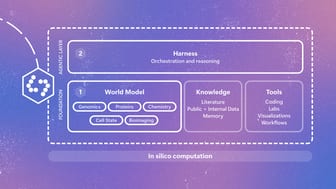
    Microsoft Research has released Quine, an AI research platform that combines a multi-modal biological world model with an interactive connection system, used to integrate models, scientific tools, literature, and researchers, and has been used to predict compounds driving tumor state changes and validate candidates; the system is designed for research, not for clinical or medical use, and its output may be incomplete or require verification by researchers, with future plans to expand access through Microsoft Discovery.

  2. OpenClaw Blog75

    OpenClaw Enterprise Open Source Intelligent Agent Platform Released

    OpenClaw Enterprise (OCE) is an open-source, vendor-neutral agent management platform designed for sensitive environments. The platform introduces an enterprise-grade control plane before the 1.0 release through multi-tenancy, hard security boundaries, and standardized agent primitives, supporting governance and auditing, and allowing core components like harness, models, and sandboxes to replace third-party or internal implementations.

Sep 28Mon
Sep 27Sun
Sep 25Fri
  1. Amazon Science

    Reactor and Amazon Neuron Science jointly optimize the Rolling Forcing model to achieve real-time video generation on Trainium

    Reactor and Amazon Neuron Science jointly optimize the Rolling Forcing model to achieve real-time video generation on Trainium, which combines the sequence prediction of large language models with the iterative optimization of diffusion models, running at 16 FPS standard video frame rate, generating 30-second high-quality videos through Rolling Forcing technology, and achieving low latency, high-efficiency real-time video generation on Trainium.

  2. OpenClaw Blog75

    Microsoft contributes upstream improvements to the OpenClaw project based on Autopilot

    Microsoft's released Autopilot personal agent based on OpenClaw, Microsoft and OpenClaw Foundation collaborate to enhance its enterprise-level runtime capabilities, has opened the preview to the first batch of customers. Microsoft improves OpenClaw through upstream contributions, including enhancing agent security configuration checks, building native Windows experience, improving interaction reliability, and optimizing background task processing and database recovery response.