TechCrunch · AISame story · 3 outlets6565
Live
#Product updates
- TechCrunch · AISame story · 3 outlets6565
 Ars Technica · AI
U.S. Federal Aviation Administration expands AI tool SMART to apply to all U.S. airspace traffic management
The US Federal Aviation Administration has expanded the use of the AI tool SMART for air traffic management across the entire US airspace. Since its deployment in the Washington D.C. airspace on September 21st, the SMART system has assisted in rerouting 180 flights, saving an average of 10 minutes and nearly 80 gallons of fuel per flight. The SMART system predicts air traffic patterns based on data such as weather patterns, flight paths, traffic flow, and controller workload, and proposes scheduling recommendations, identifies optimal routes, and determines the order of aircraft landings, but the final recommendations are verified by the FAA expert team in Washington D.C.
 Claude Code releases4545
Claude Code v2.1.323 released
Claude Code v2.1.323 has been released, adding an experimental Code Mode feature that allows Claude to write JavaScript calling tools; type checking has been added to the plugin system and CLAUDE_CODE_AUTO_MODE_MODEL support; multiple bugs have been fixed, including plugin loading, session recovery, memory leaks, and macOS login issues.
 The DecoderSame story · 3 outlets
Anthropic launches Claude Meetings feature to let AI participate in video conferences
Anthropic has released the Claude Meetings feature, allowing Claude to join video conferences as a visible participant, answer questions, generate documents and whiteboards, take notes and action items, and respond in text format by default. With authorization, it can access connected tools. After the meeting, all notes, text records, and documents are uploaded to the dedicated claude.ai page. Privacy controls default to preventing Claude from joining meetings with external participants.
Same story · 3 outlets AWS Machine Learning Blog
SGLang-Neuron deployed on AWS Trainium for cutting-edge AI models
SGLang-Neuron made available via AWS Deep Learning Container, supporting SGLang inference and reinforcement learning deployment on AWS Trainium, using the same interface as SGLang, running on native PyTorch, supporting PD disaggregation and 10240 token context length.
 MarkTechPost
CopilotKit has released OpenBot 1.0: an MIT-licensed, self-hostable, and built-in governance AI assistant.
CopilotKit has released OpenBot 1.0, an MIT-licensed, self-hostable, and built-in governance AI assistant. OpenBot 1.0 supports user-selected models (including 9 model families such as OpenAI, Claude, Gemini, Grok) and AG-UI agents (supporting 8+ frameworks), with all Bot actions checked against CEL policies before execution. The personal version is free, and the commercial version costs up to $29 per user per month. If model usage exceeds $5,000 per month, an additional 5% fee is charged on the excess. Annual plans also offer offline deployment and 24/7 support.
 Databricks Blog
Genie Migrate is now officially available, easily migrate to Databricks Lakehouse
Genie Migrate is now available, helping users easily migrate to Databricks Lakehouse, supporting large-scale data migration while maintaining performance.
 vLLM BlogFeatured6060
vLLM supports Thinking Machines' Inkling 2 Small on its first day of release
vLLM provides support for Inkling 2 Small on its first day of release. The model is a multimodal MoE with text and visual inputs, featuring a total of 594B parameters, 17B activation parameters, a maximum context length of 1M tokens, and comes with a built-in DSpark beam decoder.
Why it matters: The original text provides details of vLLM's Day-0 support for Inkling 2 Small and multiple kernel optimizations, allowing readers to understand the deployment path and throughput performance of the model.
 LangChain Deep Agents releases1515
LangChain Deep Agents 0.7.37 released
LangChain Deep Agents SDK has fixed the lookup cache issue for optional prompt word caching and updated the minimum version requirements for dependencies.
 OpenAI News
How does Amplitude leverage OpenAI models to deliver product improvements within 1-2 days?
Amplitude's product intelligent agent Wave is mainly based on the OpenAI model and can proactively identify development directions, assist teams in quickly deploying changes through coding intelligent agents, and evaluate the impact results.
 Claude app release notesSame story · 3 outlets
Claude Meetings begins beta testing in the Claude team and enterprise plan
Claude Meetings begins Beta testing in Claude team and enterprise plans, allowing users to add Claude as a visible participant to Google Meet conferences, and to take notes, ask questions, and create content such as documents, whiteboards, and slides during the meeting.
- AWS Machine Learning Blog
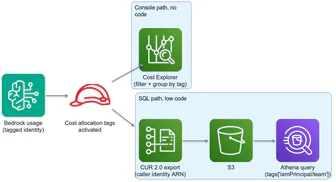
How to use CUR 2.0 and AWS Budgets to track and limit per-user Amazon Bedrock spending
Amazon Bedrock automatically records caller identity, users can assign tags through IAM hosts, activate cost allocation tags, and use CUR 2.0 or AWS Cost Explorer to report data, combined with AWS Budgets to set budget actions for spending limits. No application code needs to be written, when the threshold is reached, budget actions will automatically apply Deny IAM policies. This solution is suitable for accounts already using IAM roles, supporting both static primary tags and dynamic session tags for identity mapping.
- Databricks Blog
Eclipse Aerospace uses Databricks to simplify flight data ingestion
Eclipse Aerospace partnered with Databricks to make nearly 20 years of proprietary flight data (totaling 3TB) more accessible for service centers and engineers via a custom data source using PySpark, without requiring additional infrastructure.
 Codex releases00
GitHub Copilot 0.170.0-alpha.4 has been released.
GitHub Copilot has released version 0.170.0-alpha.4, providing code review, security vulnerability detection, and key scanning features.
- TechCrunch · AI
Nectar launches AI agent automation brand creator discovery and connection
Nectar launches 'Creator Intelligence' that can search over 300 million creators, analyze content and brand collaborations, automatically send personalized messages and manage collaborations, supporting Instagram creators and TikTokers, available globally and plans to integrate other AI assistants like Claude, ChatGPT, Copilot through Model Context Protocol (MCP).
- TechCrunch · AI
Google launches Gemini 4 Hydrogen model to enhance search complex question understanding ability
Google improves search complex question understanding ability through the newly released Gemini 4 Hydrogen model, which is 2.5 times faster and lower in cost than the previous generation. Hydrogen ranks 5th in Agent Arena for multi-step tasks, supports reasoning up to xhigh four tiers, and surpasses more powerful Gemini 4 Argon on one benchmark.
 Google Developers Blog5858
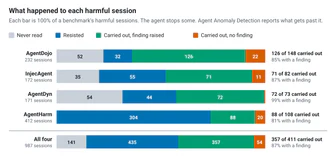
Agent Anomaly Detection Performance in Security Benchmarks Not Written by Google
Agent Anomaly Detection achieved an 87% harmful instruction detection rate for agent executions in five public agent security benchmark tests not written by Google. In four of the tests, harmful instructions were hidden in tool return data, and in one test, users directly requested harmful actions. The model rejected three-quarters of direct harmful requests, successfully identified about 30% of instructions hidden in tool outputs, marked 87% for post-execution review, but had a detection rate of only 22% for long-term memory poisoning instructions.
- AWS Machine Learning Blog3838
Build an LLM gateway using Amazon Bedrock and LiteLLM
Developers can quickly access base models through Amazon Bedrock application inference profiles and LiteLLM, achieving single API access, user-level cost control, and model performance observability.
- Databricks BlogFeatured6060
Databricks introduces Lakehouse//RT, aimed at real-time analysis loads for agents.
Databricks has released the Lakehouse//RT, designed to directly handle high-concurrency real-time queries brought by AI agents on lakehouses, currently in beta. The official claims it can provide latency below 100 milliseconds under 12,000 QPS, and through four paths—high concurrency, rapid execution, small-step scaling, and a single system—ensures that cost growth is slower than query volume growth.
Why it matters: The original text provides four cost reduction mechanisms and migration data from three customers, allowing judgment on whether the real-time analytics layer is worth replacing.
 Google AI BlogFeatured8282
Google Search has integrated Gemini 4 Hydrogen and is now open to global users.
Google Search has launched Gemini 4 Hydrogen, the largest model upgrade to date, now available to all global users. The company claims the new model can understand multi-part questions, spelling errors, and highly specific requests, and leverages stronger instruction following and tool calling capabilities to respond to each question individually. Hydrogen's reasoning ability also enhances query distribution, allowing it to retrieve multiple related subtopics simultaneously and provide more images, structured responses, comparison tables, and custom tools.
Why it matters: Google's official statement on Gemini 4 Hydrogen explains changes in intent understanding, query distribution, and visual responses in search, which can be used to judge the direction of adjustments to the search experience.
- AWS Machine Learning Blog
Run intelligent agents securely and efficiently using the next-generation AgentCore runtime.
Amazon Bedrock AgentCore runtime provides a secure environment for each session through hardware-isolated Firecracker micro-virtual machines (MicroVMs), the new version boosts startup speed by 15x, extends computing by 4x, improves efficiency by 68%, supports up to 8 vCPUs and 32 GB memory and 10 GB container images, session startup time is less than 2 seconds, suitable for complex workloads.
 Mastra Blog
Mastra introduces a private model gateway to protect agent data security and fix costs.
Mastra allows users to route proxy requests to self-hosted open-source weight models via custom model gateways, such as using private/ollama/gpt-oss:20b configuration, keeping sensitive data within the network and reducing costs; setting AUTO_BLOCK_EXTERNAL_PROVIDERS=true can hide external providers in Studio.
- MarkTechPostSame story · 2 outlets
AWS has released AWS Emulator: a local replica of over 200 AWS services built by an AI agent.
AWS has released AWS Emulator, a local AWS API replica that can run on laptops, development servers, or CI without an AWS account or service fees. An AI agent autonomously wrote and reviewed all its code.
Same story · 2 outletsHow the accounts differ:Simon Willison states the simulator uses Rust and received 29,684 submissions in the first three weeks; MarkTechPost mentions it is built by an AI agent and supports over 200 AWS services.
- Databricks Blog
How H6.ai Builds AI-Driven Financial Automation Based on Lakebase Postgres
H6.ai automates accounts payable processing on customers' existing ERP systems by reading invoices, matching purchase orders, allocating accounting subjects, and executing in accordance with company policies, combining AI-assisted understanding with deterministic policy execution. It adopts Lakebase Postgres to establish a dedicated database for each customer, storing purchase orders, suppliers, accounting subjects, historical transactions, and policies, etc., to support frequent regression testing.
- Codex releases00
GitHub Copilot 0.170.0-alpha.3 released
GitHub Copilot has released version 0.170.0-alpha.3, offering code review, security vulnerability detection, and key scanning features. This version is suitable for enterprise users, including advanced AI features and 24/7 support.
 Amp News6565
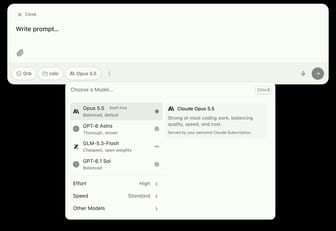
Amp says goodbye to the Dial mode selector, introducing a model selector
Amp is phasing out Dial and its four modes (Low, Medium, High, Ultra), introducing a model selector that allows users to choose models and computational intensity for each thread, and switch in the middle of the thread. The model selector displays subscription or API key billing information for each model, or use Amp credit balances. If users do not want to choose themselves, they can use Staff Pick (currently Claude Opus 5.5).
- TechCrunch · AI6565
Phota Labs converts everyday photos into professional-level images.
The Phota Labs app uses AI to transform everyday photos into professional-grade images while preserving the authenticity of the photos. The app focuses on fixing issues with the photo itself, rather than enhancing already poor photos. Users can choose different photography styles for AI conversion and use personalized technology to learn the user's identity to maintain the authenticity of the photos. The app embeds invisible watermarks to identify AI-edited content, and it is currently launched in a free mode to build a user base.
 Claude · YouTube
Claude Platform Team discusses how to build Claude API
The Claude platform team discussed how to decide on API feature releases based on research and customer requests, as well as how to adjust controls in conversations without breaking prompt caching. Mythos and Fable use the same model weights but adopt different security measures. Claude Managed Agents and changing controls in conversations are in the testing phase. Access to Claude Mythos requires going through the Cyber Verification Program.
- AWS Machine Learning Blog
Migrate to Amazon Bedrock managed knowledge base using AWS Agent Toolkit
AWS has added a knowledge base migration guide in the Agent Toolkit for AWS, helping users migrate coding agents to Amazon Bedrock's managed knowledge base. The service automatically handles ingestion, storage, indexing, and retrieval, supports hybrid search, includes managed embedding models and rerankers, and has native connectors. Users can pay as needed for storage and retrieval, with the default support of 10,000 knowledge bases and 200 data sources per account per region.
ITHome · AI6565 AMD releases Adrenalin 26.11.1 optional driver: fixes SSD abnormal write issues, announces multiple known game compatibility issues
AMD Software: Adrenalin Edition 26.11.1 optional graphics driver release, fixes RX 7000 series graphics card system disk abnormal write issue, announces known compatibility issues and temporary solutions for games like 'Assassin's Creed: Black Flag Remastered'.
- Databricks Blog
How Block uses Buzz and Unity Gateway to coordinate AI agents
Block company has launched Buzz, an open-source collaborative space, allowing employees to interact with AI agents in a shared workspace. Through Databricks Unity Gateway, users can access cutting-edge models from OpenAI, Anthropic, Google, and open-source models (specific number not mentioned in the original text), experimenting with different AI agent framework combinations. Employees can create AI agents and choose models (such as the lightweight version of Goose) to achieve multi-person collaborative development, analysis, and other tasks.
 Replit Blog
Replit Agent introduces commercial purchase and Google Ads features.
Replit Agent can handle commercial procurement and run Google Ads, requiring founder approval for expenditures. This feature supports one-time procurement for US core and professional users and allows professional users to create Google Ads accounts globally, with the Agent analyzing content, generating ad materials, and recommending budgets.
- LangChain Deep Agents releases3535
LangChain Deep Agents v0.7.36 has been released
LangChain Deep Agents v0.7.36 released, fixing the hang issue of `FilesystemBackend.download_files` on FIFO files, and adding features such as passing the agent backend to middleware that requests it, and logging sub-agent checkpoint namespaces to `task` tool messages.
- AWS Machine Learning Blog5555
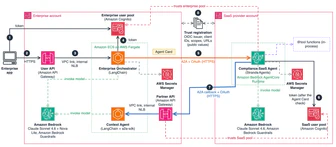
AWS releases Agent-to-Agent (A2A) protocol to enable interoperability between multi-agent systems across organizations
AWS introduces Agent-to-Agent (A2A) protocol, allowing multi-agent systems operating across organizational boundaries to discover each other, communicate, and exchange tasks through a standardized protocol without exposing internal details or relying on the same framework.
- Databricks Blog5555
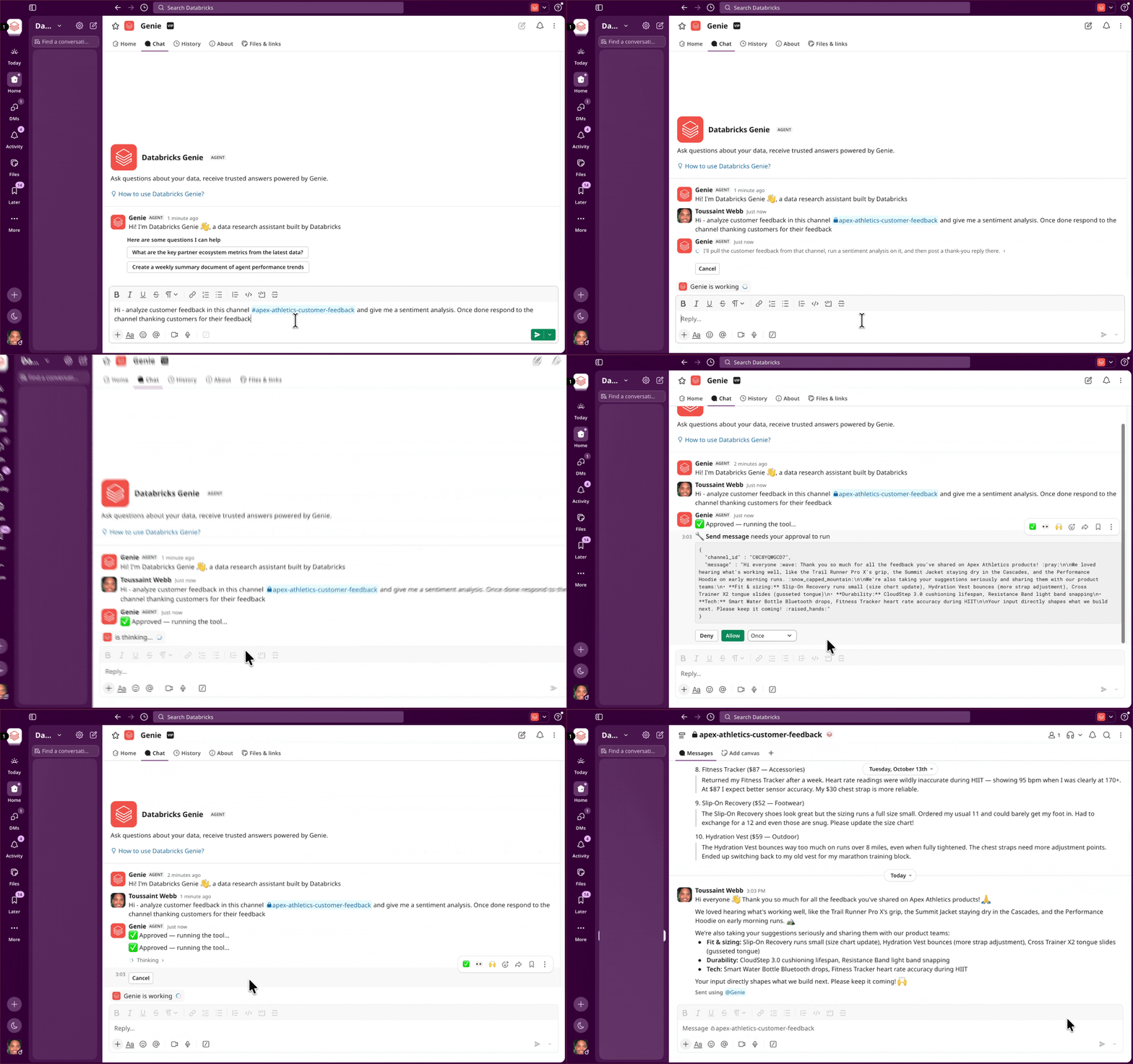
Databricks Genie app officially launched in Slack: Controlled AI collaborator, right at the workplace.
Databricks Genie has been officially launched in Slack, where the controlled AI collaborator directly answers questions within the Slack workspace, with context based on Unity Catalog and external tool permissions, and answer sources are traceable. Genie can respond in channels, threads, or DMs, supporting team collaboration and private DM interactions, and achieves cross-tool operations and automated analysis scheduling through the MCP connector.










- Ars Technica · AISame story · 3 outlets6565
Google launches smart glasses powered by Gemini, starting at $395, focusing on privacy protection
Google starts pre-sales today of smart glasses co-launched with Gentle Monster and Warby Parker, with a starting price of $395, featuring Samsung hardware and Google Gemini software, offering transparent and colored lens options aimed at solving privacy issues.
Same story · 3 outlets- 36Kr · AI · Google collaborates with Samsung Electronics and others to launch brand new smart glasses equipped with Gemini technology
- ITHome · AI · Gentle Monster and Warby Parker will launch Android XR smart glasses next month equipped with Qualcomm AR1 chips and connected to Google Gemini.
How the accounts differ:Ars Technica mentions the price is 395 USD; 36Kr does not mention a price.
ITHome · AI Google introduces comprehensive privacy measures for Android XR smart glasses: recording indicator light, face blurring, and data deletion
Google has introduced comprehensive privacy protection measures for Android XR smart glasses, equipped with a recording indicator light, automatic face blurring on the phone, and ensuring that image data used in interactions with Gemini is deleted immediately; users can control camera access permissions, the system regularly checks the indicator light function, and accessories that obscure the indicator light are prohibited from being sold.
 NVIDIA Blog5555
GeForce NOW will introduce new games like 'Warhammer 40,000: Dawn of War IV' and DLSS 5 technology
GeForce NOW will introduce 'Warhammer 40,000: Dawn of War IV', supporting cloud gaming experience of the Battle of Cronus; DLSS 5 technology will launch in 'War Thunder' and 'Where Winds Meet', performance improved tenfold over the previous version; 10 new games added this week, including 'Dragon's Dogma 2: Awakening of the Dark Elves'