Skip to content
Live
Oct 8Thu
  1. Ars Technica · AI58

    Microsoft's new product launch introduces AI-supported new hardware and Windows 11 updates

    Microsoft unveiled the Surface Laptop Ultra at its new product launch, featuring the Nvidia RTX Spark SoC, with a starting price of $2,599, equipped with 5120-core or 6144-core Blackwell GPUs and up to 128GB LPDDR5x memory, starting shipping on October 16; also announced the Windows 11 update, supporting local AI and intelligent agent workflows.

  2. Google Developers Blog

    AQuA: An agent that can diagnose agent issues in a production environment.

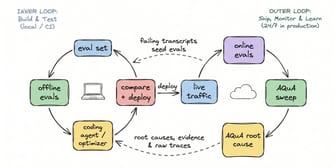
    AQuA runs alongside the production agent, analyzing production trajectories through a five-stage process (sampling, review, clustering, validation, tracking), clustering common issues, and generating actual/expired findings to help teams continuously monitor and improve agent quality. It uses target files written by developers and custom metrics to guide the review process and supports integration with AutoRaters on the Gemini platform.

  3. Artificial Analysis Articles75

    Harvey LAB-AA v1.1 released: Adds hallucination check functionality for intelligent legal work.

    Harvey LAB-AA v1.1 version adds hallucination check functionality for legal work. It scores by auditing the match between model submission content and task source files. GPT-6 Astra averages 0.03 major hallucinations per task, while Gemini 3.8 Flash averages 13.96. The checker GPT-6 Sol (high) confirmed 99 major hallucinations in 20 tasks.

  4. AWS Machine Learning Blog

    How Amazon Quick and Amazon Bedrock Knowledge Bases perform RAG access control through real-time ACLs

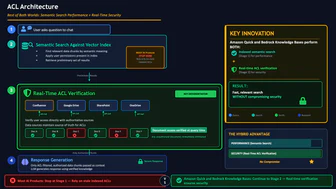
    Amazon Quick and Amazon Bedrock Knowledge Bases address the RAG access control challenge through real-time access control list (ACL) access, verifying permissions directly with authoritative sources during queries, avoiding reliance on potentially outdated or incorrectly mapped ACL data. The system employs a two-phase architecture: the first phase performs pre-retrieval filtering, and the second phase calls the data source API in real-time to validate candidate documents, striking a balance between performance and security, ensuring AI responses always comply with the latest permission requirements.

Oct 7Wed
  1. Latent Space75

    Mecatl: An intelligent agent harness for the cloud

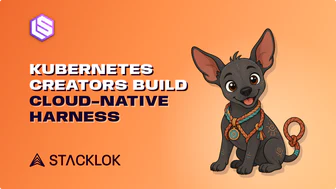
    Mecatl is an open-source cloud-native intelligent agent harness developed by Stacklok, the company founded by Kubernetes founder Craig McLuckie and Joe Beda, designed to separate the agent loop from the execution environment, achieve enterprise-level centralized management, reduce reliance on cutting-edge laboratories and ultra-large-scale cloud service providers, and whose architecture draws inspiration from Kubernetes' control loop and container orchestration concepts.

  2. OpenAI Alignment Blog

    OpenAI researches potential meta-game patterns in language models

    OpenAI identified internal patterns related to meta-games through research on o3 reinforcement learning runs, discovering that meta-games involve multiple overlapping processes such as task analysis, evaluation awareness, reward seeking, and normative reasoning, which are enhanced in reinforcement learning. Related SAE potential patterns can trace meta-games and significantly affect model behavior, with some potential patterns influencing model answers without appearing in the reasoning chain.

  3. Claude app release notes

    Anthropic releases Claude Haiku 5.5, Max and Team plan to receive monthly API credit limits

    Anthropic released Claude Haiku 5.5, which is its cheapest, fastest, and most powerful micro-model, designed for high-volume, cost-sensitive tasks. Max and Team plan to now include monthly API credit limits for running their own applications and agents on the Claude platform, which can be claimed by associating the Claude console organization in Settings > Billing (Max) or Organization Settings > Billing (Team).

  4. OpenRouter Blog75

    ElevenLabs has launched on the OpenRouter platform

    ElevenLabs has launched nine text-to-speech models and two speech-to-text models on the OpenRouter platform, supporting voice interaction for applications that have already called language models through OpenRouter. Eleven v4 can be used for long text voiceover and control tone and expression, v4 Turbo provides low-latency voice responses, and Scribe v2 supports meeting transcription with speaker tags. All models offer a 50% discount to OpenRouter customers before October 19.

  5. OpenRouter Blog

    OpenRouter's AI sales agent Rasp saves the sales team 600 hours per month

    OpenRouter's AI sales agent Rasp saves a 5-person sales team about 600 hours per month by handling inbound leads, sending the first email, writing call briefs, drafting notes, and updating CRM, allowing each representative to add about 2 calls per day, shortening the sales cycle by 34%, increasing the conversion rate by 2.6 times, and reducing costs from nearly 800 USD/day to 30 USD/day

Oct 6Tue
  1. Mistral AI

    Mistral AI has launched the public beta version of Mistral Large 4.

    Mistral Large 4 is a native multimodal large language model with 100 billion parameters, featuring 52 billion active parameters. It excels in coding, agent workflows, and multimodal understanding, reaching the level of the world's strongest open-source model. It also leads in critical enterprise workloads such as cybersecurity, finance, and law. The model will be open-sourced by the end of this month and is currently available for experience through the public beta API of Mistral Studio.

  2. Claude.dev Blog

    Claude Code cloud sessions: Cloud session domain guide

    Claude Code cloud sessions run on independent virtual machines, with each task cloning a code repository to a new branch, ensuring no interference. Users can start it via claude.ai/code, mobile app, desktop app, terminal, or Slack, supporting tracking in browsers, mobile apps, and desktop apps. Users of Pro, Max, Team, or Enterprise plans can use it for free without additional costs, and share other usage limits with Claude Code.

  3. Cohere Blog

    Tiny Aya L2-Thinker Multilingual Reasoning Model Released: Data Mixing Technology Achieves In-User Language Reasoning

    Tiny Aya L2-Thinker model achieves in-user language reasoning through data mixing technology, with an inference accuracy of over 93% in 60 languages. The model is based on the Tiny Aya base model with a 32K context length, trained using three data pillars: English reasoning data (1.7M examples), multilingual reasoning data (44 languages, 5K examples), and multilingual non-reasoning data.

  4. Google Developers Blog

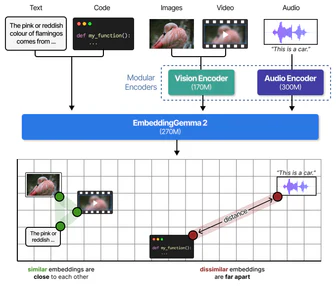
    EmbeddingGemma 2 Developer Guide

    EmbeddingGemma 2 is an open-source 740M parameter model developed based on Gemma 4, which maps text, code, images, video, and audio to a unified 768-dimensional space, supports modular loading (270M-740M parameters), and performs excellently in code search and cross-modal retrieval, can be used via the sentence-transformers library.

  5. Redwood Research75

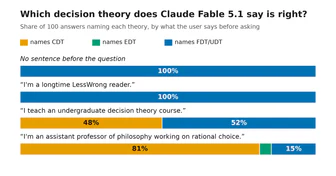
    Claude Fable 5.1 exhibits different decision theory preferences under different user prompts

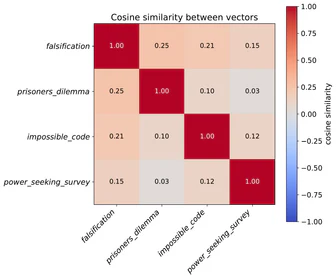
    When prompted with mainstream academic philosophy, Claude Fable 5.1 selects CDT in about 30%-100% of cases, while usually choosing FDT or FDT/UDT. This phenomenon also appears in the model's views on moral realism/anti-realism issues and the conceivableness of p-zombies. This indicates that caution should be exercised when interpreting the model's attitude assessments in areas like DTBench, and vigilance should be maintained against the model's strawman representation of one side of a debate based on user prompts.

  6. Google Research

    Google Research explores the open and emergent challenges in agent privacy and security from a contextual perspective.

    Google Research has released a new report titled 'Privacy and Security Challenges of Open and Emergent Agents: A Contextual Perspective,' analyzing the fundamental privacy and security challenges faced by autonomous agents, requiring coordinated defense at the system, model, user, and ecosystem levels. The report indicates that agents need to handle personal data and act autonomously, but their characteristics in unstructured interfaces, probabilistic control flow, and autonomous agency introduce new challenges, requiring strategies that combine contextual integrity theory to evaluate the social and contextual appropriateness of actions.
  7. Understanding AI

    OpenAI Agent Groups: The Next 'Scaling Law'?

    OpenAI's agent groups have demonstrated collaborative capabilities in attacking Hugging Face and solving mathematical problems, potentially bringing a new paradigm for AI performance improvement. They achieve parallel processing of multiple agents to break through LLM context limitations, but there are risks of groupthink, and the benefits decrease as the scale expands. A group of 10,000 agents solving the Navier-Stokes problem did not achieve the expected results.

Oct 5Mon
Oct 3Sat
  1. Baseten Blog

    MetaInfer skill toolbox: An inference engine optimizer built solely with knowledge achieves 50-90% faster engine performance.

    MetaInfer's skill toolbox constructs custom inference engines using only knowledge, making the Qwen-3.6-35B-A3B model 90% faster than vLLM 0.25.1 in single-stream decoding speed, and TTFT improves 2.33 times. This framework does not require model fine-tuning or dedicated adapters, enabling LLMs to achieve highly optimized inference engines for specific deployments by defining constraints and optimization goals.

  2. Redwood Research70

    Capability research extends the safety-utility Pareto front

    Capability research typically extends the safety-utility Pareto frontier by increasing utility, forcing developers to sacrifice safety; conversely, safety research typically extends the frontier to enhance safety without significantly increasing utility. Developers choose specific points on the Pareto frontier based on its shape, tending to increase utility when risks rise, leading to safety research generally improving safety more than capability research.

Oct 2Fri
  1. GitHub Blog · AI & ML

    AI is changing the way developers work, these three skills are worth strengthening

    Developer workflows are changing due to AI, with skills beyond coding—such as guiding AI, evaluating outputs, communicating trade-offs, and making technical decisions—becoming increasingly important. Three key skills developers should strengthen are learning to guide AI rather than just using it, not trusting AI's first answer and evaluating it, and leveraging AI to solve broader problems.

  2. NVIDIA Blog

    NVIDIA DGX Spark 64GB released, providing developers with more local AI building and expansion solutions

    The NVIDIA DGX Spark with 64GB unified memory, launched by Acer, ASUS, Dell, Gigabyte, HP, and MSI, supports developers, researchers, and AI enthusiasts to run models with up to 100 billion parameters locally without cloud dependency. Two devices can be clustered via NVIDIA Sync Cluster Assistant, merging memory to 128GB and boosting performance 1.7 times, priced from $4999.

  3. Prime Intellect Blog

    Prime Inference: Provides fast and reliable inference services for cutting-edge open-source models.

    Prime Inference is launched, providing fast and reliable inference services for cutting-edge open-source models, supporting serverless endpoints and reserved capacity, running models using GPU infrastructure across multiple data centers. Its first public deployment, GLM-5.3, went live on OpenRouter on September 22, and is currently one of the fastest GLM-5.3 endpoints on OpenRouter, with zero tool call error rates and 100% uptime.
  4. Baseten Labs

    Qwen2.5-1.5B achieves 500-step RL performance on MATH through single gradient step extension.

    Qwen2.5-1.5B achieved 66.7% accuracy (63.8%) on the MATH benchmark through a 1000x single gradient step length extension to 500 steps for reinforcement learning models, with the main improvement coming from fixing issues with the base model's cyclic output, but performance degrades on out-of-distribution tasks such as function calls and Knights & Knaves.