Skip to content
Live
Jun 17Wed
  1. LangChain Blog50

    LangChain explores the art of circular engineering

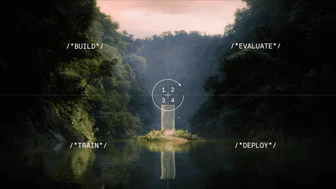
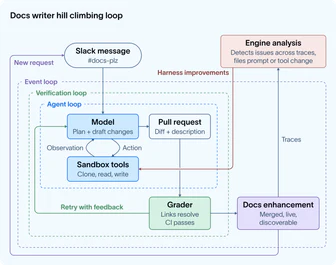
    LangChain enhances agent efficiency through four levels of circularity: basic loops for task execution, verification loops for quality assurance, event-driven loops for background operations, and climbing loops for self-analysis and optimization. Primitives like LangChain's create_agent, Grader, LangSmith Deployment, and Engine support the construction of each level, while emphasizing human review at critical nodes to supplement AI judgment.

Jun 11Thu
  1. Factory News

    Droid has launched an automated security review feature.

    Droid runs STRIDE-based security reviews on every non-draft PR, attaching severity level, CWE reference number, explanation, and repair suggestions to discovered vulnerabilities, and publishing them as inline comments directly on the code diff. This feature has been running in production code repositories and has discovered vulnerabilities such as CVE-2026-42876. Droid filters false positives by building lightweight threat models, scanning for vulnerabilities, and verifying candidate discoveries, generating only one summary comment per PR.

Jun 10Wed
Jun 4Thu
Jun 2Tue
  1. MiniMax · Hugging Face new models

    MiniMax-M3-MXFP8 released: Native multimodal model supports contexts of up to millions

    MiniMax-M3-MXFP8 is a native multimodal model with a 1M context window, approximately 428B parameters, and 23B activation parameters, achieving 9x pre-filling and 15x decoding speed improvement through MiniMax sparse attention mechanism (MSA). The model leads in long-horizon agent benchmarks, supporting three reasoning modes, and can be downloaded via Hugging Face and deployed using SGLang, vLLM, or Transformers frameworks.

Jun 1Mon
May 30Sat
  1. Prime Intellect Blog75

    Prime Intellect has released Hosted Evaluations, simplifying benchmark testing for large language models.

    Prime Intellect has released Hosted Evaluations, providing scalable infrastructure for users to test models in self-evaluation environments. The service supports running evaluations on the hundreds of community environments already available in Environments Hub, with users able to start them via the platform, CLI, or .toml files. It supports benchmark tests like GPQA, SWE-bench, and results can be published to corresponding leaderboards with transparent display. This aims to address the infrastructure needs of modern evaluations and improve testing efficiency and reproducibility.

May 29Fri
  1. Cognition Blog

    Cognition Blog: How to Scale Validate AI Agent Development

    The Cognition team is promoting asynchronous software engineering, with more Devin triggered by events and automation, requiring end-to-end cloud validation to ensure results are reliable. Devin Review can automatically fix code review issues, but needs further testing and validation. Devin runs in cloud virtual machines, controlled with a mouse and keyboard, able to test its own work, and can run 10-20 instances in parallel, saving local validation time. It improves reliability through test plans, deterministic scripts, and skill libraries.

May 27Wed
  1. Dify Blog75

    Dify Platform: A practical guide for marketers to build reliable AI workflows

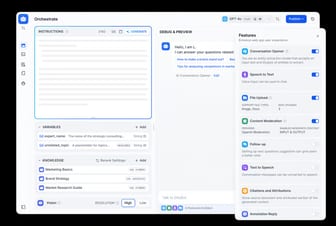
    Dify is an LLM application development platform that enables marketers to build structured, repeatable workflows containing LLMs, vector databases, external APIs, and logical steps through visual drag-and-drop. It supports multi-model generation (such as GPT-4, Claude, Gemini) for parallel content creation, automatic scoring and lead routing, knowledge base for marketing with Q&A, differing from tools like ChatGPT and Claude that only support single-model conversations.

May 25Mon
  1. Anthropic Research58

    How Anthropic limits Claude's access in its products

    Anthropic limited Claude's access in products by supervising agent behavior and implementing access boundaries to reduce risks. They developed Claude Code automatic mode to reduce user approval fatigue and adopted technologies such as sandboxes, virtual machines, and outbound control to set hard boundaries. The three main risks—user misuse, model bad behavior, and external attackers—need to be addressed through defense measures at the environmental, model, and external content levels, which should complement each other to limit the scope of agent damage.

May 22Fri
May 20Wed
May 19Tue
  1. Dify Blog70

    Dify Creator Center and Template Market officially launched

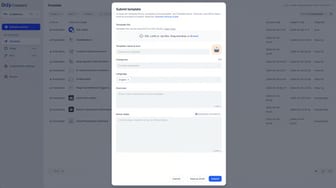
    Dify Creator Center and Template Market officially launched, allowing creators to publish workflow templates and users to quickly discover and use them. The new platform has optimized multilingual experience and content layout, integrating the publication and use of templates into a single path. Users can filter templates by category, tags, or creators. New users registering receive 200 free credit points.

May 14Thu
  1. LangChain Blog73

    LangChain is conducting a public beta of Managed Deep Agents on LangSmith Cloud.

    LangChain launches Managed Deep Agents on LangSmith Cloud. Users write intelligent agents as Python projects consisting of files like agent.py, instructions.md, skills/, and deploy them with a single command mda deploy, provided with persistent threads and streaming execution by LangSmith Agent Server.

    Why it matters: The original text explains how to organize the agent project by files and deploy it to LangSmith with one click, as well as the infrastructure managed runtime that takes on the basics for the team.

May 7Thu
  1. Prime Intellect Blog

    Releasing Lab: The training platform for self-improving intelligent agents is officially launched

    Releasing Lab is officially launching today as part of the Open Superintelligence Stack. This platform supports the full process of training self-improving agents, allowing users to specify tasks, define execution environments, evaluate models, train based on reward signals, check reasoning results, deploy adapters, and run reasoning.

Apr 24Fri
Apr 20Mon
  1. Berkeley AI Research

    Berkeley AI Research launches the gradient-based long-term world model planner GRASP

    GRASP is a new gradient-based world model planner that achieves temporal parallel optimization by elevating trajectories to virtual states, explores by directly adding randomness to state iterations, and provides clear signals for actions by reshaping gradients, while avoiding fragile 'state-input' gradients generated by high-dimensional visual models, making long-term planning possible.

Apr 16Thu
Apr 14Tue
  1. Microsoft AI News

    MAI-Image-2-Efficient released: Flagship quality, cost reduced by 41%

    MAI-Image-2-Efficient is a text-to-image model launched by Microsoft, the productivity version, with a 22% speed increase and 4 times efficiency. The cost is $5 per 1M text input tokens and $19.50 per image output token, a 41% reduction in cost compared to the flagship version, and on average 40% faster than other leading models. It is suitable for batch processing and real-time interactive workflows, already available on Microsoft Foundry and MAI Playground.

  2. Moonshot AI · Hugging Face new models

    Kimi K2.6 released: Open-source multimodal agent model breaks performance in long-term encoding and autonomous execution

    Kimi K2.6 is an open-source multimodal intelligent agent model that has made significant progress in long-term encoding, encoding-driven design, proactive autonomous execution, and group task orchestration. It has 1 trillion parameters, a context length of up to 256k tokens, achieving a score of 54.0 on the HLE-Full benchmark and 86.3 on the BrowseComp (agent group) benchmark, and supports 300 sub-agents executing 4,000 coordinated steps in parallel.

  3. Cognition Blog

    SWE-Check: 10x Faster Code Bug Detection Model Released

    The SWE-Check model achieves performance comparable to Opus 4.6 in internal evaluations (F1 score increased from 0.09 to 0) and shows significant improvement in external evaluations (F1 score increased from 0.49 to 0.29), with 10 times faster runtime and lower inference costs. The model, developed through integrating native production environment integration, reward linearization techniques, and multi-stage fine-tuning, is available for preview in Windsurf Next and will be officially released soon.

Apr 10Fri
  1. LangChain Blog

    Deep Agents Deploy: An open-source alternative for deploying intelligent agents, replacing Claude Managed Agents.

    Deep Agents Deploy Officially Released as an Open Source Alternative to Claude Managed Agents for Intelligent Agent Deployment, Supporting Any LLM Model, Achieving Model-Agnostic, Production-Ready Deployment via the `deepagents deploy` Command, Users Can Customize AGENTS.md Instruction Sets and Agent Skills, and Choose a Sandbox Environment to Ensure Memory Ownership is Not Locked.

Apr 8Wed
  1. Anthropic Research74

    Anthropic launched Claude Managed Agents, decoupling the agent's brain from its hands

    Anthropic has launched Managed Agents on the Claude Platform, splitting the agents into three replaceable interfaces - session, harness, and sandbox - for running long-term tasks.

    Why it matters: Anthropic has disclosed the architectural trade-offs of hosting agents, showing readers how latency and security boundaries change when sessions, harnesses, and sandboxes are separated.

Apr 7Tue
  1. Cognition Blog

    SWE 1.6 Released: Enhancing the software engineering agent model experience.

    SWE 1.6 is the latest model built specifically for software engineering agents, providing general support on Windsurf with a speed of 950 tok/s and free for the next 3 months. Compared to SWE-1.5, SWE 1.6 improves by over 10% on SWE-Bench Pro by jointly optimizing user experience and reasoning fluency, significantly reducing behaviors like overthinking and redundant tool calls, making model interactions more efficient.

Apr 2Thu
  1. Microsoft AI News

    MAI-Transcribe-1 released: Microsoft launches the world's most accurate 25-language speech-to-text model.

    MAI-Transcribe-1 achieved the lowest Word Error Rate for 25 languages in the FLEURS evaluation, outperforming competitors such as Scribe v2 and Whisper-large-V3, while maintaining high accuracy in 25 languages. The model offers a batch transcription speed 2.5 times faster than Microsoft's existing Azure Fast, priced at $0.36 per hour, and is now available in Microsoft Foundry for open preview.

  2. Qoder Blog65

    The evolution from inline completion to intelligent code editing of Qoder NEXT

    Qoder NEXT proactively identifies developers' coding intent, providing smarter code editing suggestions, significantly improving development efficiency. Its Agent SDK supports cloud agent integration, with a context length of up to 128k tokens, inference speed 3.5 times faster than baseline models, priced at $3/month/M tokens, currently provided as a closed-source API.

Mar 30Mon
Mar 18Wed
Mar 17Tue
Mar 16Mon
Mar 10Tue
  1. Dify Blog65

    Dify Launches Creator Center and Template Marketplace, Making Workflow Template Sharing and Discovery More Convenient

    Dify Introduces Creator Center and Template Marketplace, Where Creators Can Upload Workflow Templates, and Users Can Discover and Adopt Them with One Click. Creator Center Supports Template Submission and Management, Template Marketplace Provides Categorization, Tags, and Creator Browsing, Template Detail Pages Include Visual Preview and Guided Setup, Supporting Organization Account Management Permissions.

Mar 5Thu
  1. Anthropic Research

    Anthropic has released a new metric observed exposure to evaluate AI replacement risk.

    Anthropic introduces a new metric, observed exposure, to quantify AI replacement risk, combining LLM theoretical capabilities with actual usage data, focusing on automated work scenarios; the study finds that current AI coverage is only a fraction of the theoretical value, high-risk occupations are mostly highly educated, high-income women, and unemployment rates have not significantly increased since the end of 2022, but hiring for exposed occupations among young workers has slowed.

  2. Dify Blog65

    Dify Cloud free trial upgrade: Supports OpenAI, Claude, Gemini, and Grok models

    Dify Cloud is upgrading the free trial experience, Message Credits now support four models: OpenAI, Claude (Anthropic), Gemini (Google), and Grok (xAI), and can be used without configuring an API Key; The Explore page has added a featured template trial function, providing 5 message credits covering scenarios such as file translation, personalized memory assistant, and patient information collection, without plugin configuration.

Mar 3Tue
  1. Dify Blog

    Dify v1.13.0 introduces the Human Input node, integrating human judgment into automated workflows.

    Dify v1.13.0 has introduced the Human Input node, allowing pauses and waiting for human approval in workflows. This node supports two form delivery methods: Web App and Email, with form content that can include Markdown and dynamic variables, and branching paths can be defined through decision buttons. Configuration includes delivery methods, form content, and timeout policies, supporting pre-filled input fields and variable passing.

Feb 25Wed