Skip to content
Live
Oct 27Tue
  1. LangChain Blog58

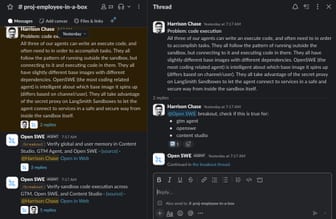
    How LangChain builds enterprise-level agents (company harness)

    LangChain's internal agents integrate with Slack to execute tasks as a user or with fixed credentials, featuring global and user-level memory, executing code in a sandbox, and supporting background scheduling. Its architecture includes three agents: GTM, OpenSWE, and Content Studio, which handle GTM activities, engineering code reviews, and marketing content creation, respectively. The 'breakout' feature optimizes user experience and addresses core issues like authentication.

  2. Apple Machine Learning Research

    GHARP: Real-time Gaussian head animation method based on large-scale reconstruction priors

    The GHARP method animates 3D heads in real-time using a small amount of input images and expression signals, divided into an offline identity phase (constructing geometry and appearance representations) and a runtime animation phase (predicting expression residuals). This method performs animation in the semantic structure latent space of the pre-trained reconstruction model, limiting the expression change space to achieve efficient residual prediction, and achieves SOTA quality on the Ava-256 benchmark, with a 13x speedup on A100 GPUs and an 8x reduction in the number of Gaussians.

  3. Latent Space42

    Supabase's AI App Backend Plan

    Supabase plans to run long-running workloads alongside its database using Supabase Compute, simplify schemas to make them easier for AI agents to understand, and design infrastructure that supports more applications. Its acquired Turso product supports scaling, and the company is using AI internally to improve efficiency while maintaining a parallel approach of open-source and commercial sales.

  4. AWS Machine Learning Blog48

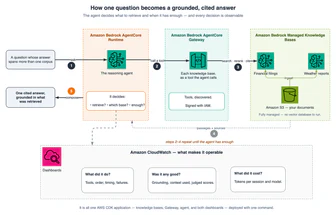
    Building enterprise-grade intelligent retrieval on Amazon Bedrock knowledge base using AWS CDK

    Building enterprise-grade intelligent retrieval on Amazon Bedrock knowledge base using AWS CDK, providing multi-round planning and tool-driven retrieval through the reasoning agent and AgenticRetrieveStream API, returning referenced answers. The solution deployment includes a CDK application with Amazon S3 corpus, knowledge base, and reasoning agent, supporting semantic routing and multiple retrievals, and built-in Amazon CloudWatch monitoring and evaluation features.

  5. Google Developers Blog58

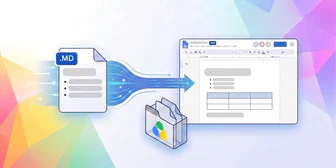
    Google Workspace allows users to natively preview, edit, and collaborate on Markdown (.md) files in Google Docs and Drive.

    Google Workspace allows users to natively preview, edit, and collaborate on Markdown (.md) files in Google Docs and Drive without converting file types, preserving the underlying document. This feature supports real-time collaboration, version history tracking, and allows formatted Markdown files to be previewed in Drive, facilitating work between humans and AI agents. Any user with a Google or Workspace account can start using it immediately.

Oct 26Mon
  1. IBM Research Blog58

    PyTorch supports IBM's dataflow AI accelerator Spyre through torch-spyre and Spyre vLLM plugin

    IBM and the PyTorch Foundation announce that Spyre accelerator will become the first-class backend for PyTorch and support multi-accelerator scheduling. The torch-spyre compiler, Spyre vLLM plugin, and continuous integration efforts enable models and workflows to run on Spyre, an architecture optimized for inference, suitable for IBM Z, LinuxONE, and Power systems.

  2. QbitAI38

    Wu Wen Xinqiong and Three-Body Universe jointly released the Zhizi Agent 1.0

    Wuwenshinqiong and Three-Body Universe have released the Zhizi Agent 1.0, an AI dialogue Agent with the role anchor of the 637th micro-universe administrator, achieving role consistency and interaction continuity through the AgentWorks platform, supporting cross-session memory, and relying on multi-agent collaborative mechanisms to ensure character and knowledge constraints. It adopts the PDD cross-cluster heterogeneous inference architecture to reduce the first Token latency by 51.5%.

  3. QbitAI78

    Rockchip Matrix, in collaboration with CUHK and CMU, has open-sourced EdgeRock-4B, reducing KV Cache by 99.1%.

    Rockchip Technology's Rockchip Matrix, in collaboration with CUHK and CMU, has released and open-sourced EdgeRock-4B, with a fixed KV Cache of 72MiB under 256K context, reducing the source model Qwen3.5-4B by 99.1%.

    Why it matters: The original provides a comparison of throughput under fixed memory, which can be used to judge the trend of GPU memory costs for long-context reasoning.

  4. Hugging Face Daily Papers31

    The Omni-Woodpecker framework reduces cross-modal hallucinations in multimodal large models through evidence-prioritized rebalancing.

    Omni-Woodpecker is a training-free framework that reduces cross-modal hallucinations in multimodal large models by identifying modal conflicts and rebalancing hidden representations, improving Qwen2.5-Omni-7B by 12.9 and 8.6 points on CMM and AVHBench, respectively, and consistently improving by 0.67-2.25 points on four general OLLM reasoning benchmarks, with the code open-sourced.

  5. Hugging Face Daily Papers49

    RSIHub: A composite framework for agent evolutionary methods

    RSIHub is an open-source framework that standardizes research on agent evolution by providing reusable components and a consistent evaluation infrastructure, used to build, compare, and extend related methods. Researchers can focus on evolutionary strategies while keeping evaluation external, with results associated with candidates and evaluation conditions.

  6. Hugging Face Daily Papers65

    UserArena: An Interactive User Simulation Benchmark for Long-Term Shopping Intelligent Agents

    UserArena introduces an e-commerce interaction benchmark containing 64,729 session trajectories, covering 11,010 users, 566,102 items, and 13 action types, supporting five-level evaluation; proposes On-Policy Trajectory Distillation technology to improve simulator fidelity, experiments show it works best under the UserArena evaluation protocol, closest to offline simulation effects of production strategies.

  7. 36Kr · AI65

    Vivix has launched real-time interactive models W1 and A1, aiming to reduce the cost of generating interactive content to the level of YouTube.

    Vivix has launched real-time interactive models W1 and A1, aiming to reduce the cost of generating interactive content to the level of YouTube. The W1 model's real-time generation cost is close to YouTube's approximately $0.2 per hour CDN bandwidth cost; compared to the current top video generation models, the cost of generating real-time interactive content can be 1-2 orders of magnitude lower, and the model can generate the next frame within 300-600 milliseconds after user operation. The Vivix team has grown to 150-160 people.

  8. Factory News65

    Factory Deployment Team: Pushing the boundaries of enterprise-level AI agent applications

    The Factory Deployment Team delves into the real software environment of customers to solve the challenges of deploying autonomous agents, transforming engineering autonomy into corporate results through practices in companies like Blackstone and Nvidia. The team deploys agents on customer-owned infrastructure, achieving reasoning capabilities across large single codebases, and developing reusable product features such as code review and security review. The team is composed of highly autonomous engineering leaders responsible for strategic customer deployments and validating agent automation capabilities.

  9. MarkTechPost66

    Hugging Face releases Carbon-X: the first open-source 14B model combining DNA and natural language

    Hugging Face has released Carbon-X, an open-source DNA language model with 14.8B parameters, which is the first to decode DNA into English answers. It achieved an average score of 66.7% on 5 DNA benchmark tests, outperforming all test models on BioReason Coding (74.9%) and NextBase (39.4%). The model can run on 1 x 80 GB GPU, and the official GGUF Q8_0 version is 15.8 GB.

Oct 25Sun
  1. MarkTechPost71

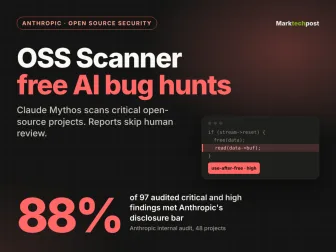
    Anthropic has launched a free open-source vulnerability scanner, OSS Scanner.

    Anthropic has released the OSS Scanner, which uses the strongest models including Claude Mythos to regularly audit key open-source projects, with reports sent directly to maintainers without manual review. As of October 19, 114 projects have been selected from approximately 650 applications, with 77 critical and 803 high-risk model ratings identified in the first 11 days of operation.

    Why it matters: The original text provides information on the scanner's operation, accuracy data, and comparisons with projects like OSS-Fuzz, allowing readers to judge the credibility of vulnerability reports without manual review.

  2. MarkTechPost52

    Stanford and Berkeley researchers launch TokenGate: Boosting the speed of long-context pre-filling by up to 11.3 times

    Researchers from Stanford and Berkeley have introduced the TokenGate module, which uses learnable token pruning techniques to improve the speed of long-context pre-filling by 1.4 to 11.3 times without losing accuracy, and reduces peak pre-filling memory consumption by 1.5 to 3.4 times. It outperforms 6 baseline models on 5 tasks, with the best performance showing an 11.3-fold speed increase and a 3.42-fold memory reduction on the NIAH 16k task. The code and checkpoints are open-sourced.

  3. ITHome · AI52

    KRAFTON AI previews the Raon-1 mini model: 30B-A4B parameter scale

    KRAFTON AI announces the Raon-1 mini preview model, adopting a hybrid expert architecture with linear attention, with parameter scale of 30B-A4B, supporting speculative decoding, balancing performance in Korean and English, Apache 2.0 open source, API limited-time free trial. The preview model is comparable to Meta Muse Glimmer 30B in programming and agent tasks, faster and more memory-efficient.

  4. Interconnects65

    Kimi K3.1 Pro release sparks controversy, analysis of its benchmark test performance and market response.

    Kimi K3.1 Pro release has sparked controversy, its benchmark tests surpassing GPT-6 Astra on Artificial Analysis but slightly underperforming on Terminal-Bench Science and ProgramBench. The model release is accompanied by suspected paid promotion, and its pre-training effectiveness is criticized as not meeting expectations.

    Same story · 3 outlets

    How the accounts differ:Artificial Analysis gives the score 55 and ranks fourth; MarkTechPost mentions the total parameters of 2.8T and the MoE model with 104B active parameters.

  5. The Decoder78

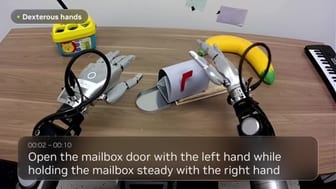
    Nvidia's open-source robot video annotation engine Flora claims to be 125 times cheaper than GPT-6 Astra.

    Nvidia's open-source data engine Flora, used for robot video annotation, claims to label one hour of video for about 0.72 USD, while GPT-6 Astra is about 88.50 USD. Flora consists of three fine-tuned Qwen3.5 models, each responsible for action segmentation, context-aware description, and reward scoring, covering three types of labels: action description, step-by-step scoring, and task success or failure judgment.

    Why it matters: The original text provides Flora's three types of annotation capabilities, cost estimates, and item-by-item comparison with GPT-6 Astra, allowing readers to judge the boundary of open-source alternatives for robot video annotation.

  6. ITHome · AI65

    Alibaba's AI assistant 'Qwen Go!' has launched the 'My Apps' feature

    Alibaba's AI agent 'Qwen Go!' launches 'My Applications' feature, allowing users to build applications for life, work, and study scenarios without programming, supporting sharing and continuous data updates. This feature integrates with Alibaba Cloud's AI application production platform Meoo (Instant Enlightenment), which can automatically complete application setup, database configuration, and deployment. Combined with Qwen Go's cloud-based Pro capabilities, it generates more personalized tools after authorization by accessing user personal data from Taobao, Gaode, and other platforms.

  7. ITHome · AI38

    Huawei, China Mobile, and others jointly build the Starling 3.0 standard, targeting full-scenario smart IoT and focusing on AI, passive, and millimeter-wave directions.

    The International Starling Alliance and institutions like the China Academy of Information and Communications Technology jointly release the results of the Starling 3.0 standard, aiming at full-scenario smart IoT and focusing on innovative AI, passive, and millimeter-wave directions. Starling SLE3.0 will be upgraded in terms of speed, coverage, and anti-interference. Three standards, including lossless audio, have been officially released, and a large number of standards are being developed. This series of standards will officially take effect from April 1, 2027.

  8. The Decoder72

    OpenMobile-2, an open-source smartphone AI model, claims to be comparable to proprietary models.

    Researchers from Nanjing University and institutions like SenseTime have released OpenMobile-2, which includes two AI models based on Qwen3.5 (9B) and Qwen3.6 (27B), and has publicly disclosed the training environment, data, and reproduction instructions.

    Why it matters: Research fixed the training data size while only increasing the number of applications, observing an improvement in success rates for unseen applications, providing a reproducible path for data construction of mobile agents.

  9. 36Kr · AI58

    Qianli Technology releases AI millimeter-wave radar integrated with a 10 TOPS NPU

    Qianli Technology releases AI millimeter-wave radar integrated with a 10 TOPS NPU, achieving internal target detection and classification for the first time, supporting edge-side, satellite, and three-compatible operating modes. This radar introduces data-driven models at the front end of the perception chain to break through the rule limits of traditional architectures, shortening response times and enhancing security. Through the acquisition of Ronggan Technology, Qianli Technology has closed the soft-hard integrated business loop, realizing joint optimization of self-developed algorithms and hardware.

  10. MarkTechPost80

    Microsoft Research open-sources Agensh: a multi-agent framework supporting 1024 agents

    Microsoft Research has open-sourced Agensh, a multi-agent framework without a central orchestrator, where each worker independently claims sub-tasks, shares discoveries, and merges code into the same Git repository.

    Why it matters: The original text provides scalability data for multi-agent frameworks without a central orchestrator on ProgramBench from 1 to 1024 agents, allowing for comparison with existing orchestration solutions.

  11. Ollama Blog62

    Ollama launches speech model, premiering Phonon text-to-speech

    Ollama adds text-to-speech capability, the first integrated speech model is the small TTS model family Phonon from Gradium, currently supporting macOS, Windows, and Linux with support for Linux to be released soon.

    Why it matters: The original text provides throughput comparison, accuracy, and OpenAI-compatible interface after Ollama integrates speech models, which can be used to judge the local TTS implementation method.