Skip to content
Live
Nov 11Wed
  1. Hacker News · AI hot posts

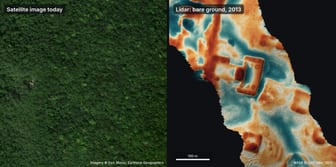
    Google SWE uses 48 AI agents to analyze NASA radar data, discovering unreported Mayan pyramids in Mexico within 72 hours

    Google SWE uses 48 AI agents to analyze NASA radar data, discovering unreported Mayan pyramids in Mexico within 72 hours; the agents process 1,200 km² of radar images, identifying suspected pyramids, plazas, and reservoir structures with right angles and sharp corners, which have been confirmed by the National Institute of Anthropology and History of Mexico as not being in the registered records.
    Same story · 2 outlets

    How the accounts differ:Hacker News states the AI agents are Gemini, ChatGPT, Claude, and Grok; AI Hot Post only mentions Google SWE.

  2. Ant Group inclusionAI · Hugging Face new models

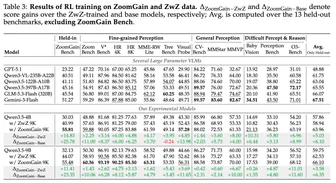
    inclusionAI/ZoomGain-4B released: A fine-grained visual supervision model based on global-to-local visual perception gaps

    inclusionAI has released the ZoomGain-4B large language model, achieving a score of 61.08 on ZoomGainBench and performing excellently on multiple fine-grained perception and general perception benchmark tests; the model is built with supervision based on the global-to-local visual perception gap mined from global image details, supporting English and Chinese Q&A, and can be downloaded via Hugging Face.

  3. Ant Group inclusionAI · Hugging Face new models

    inclusionAI/ZoomGain-4B-GGUF released: Multimodal model supporting image input

    inclusionAI/ZoomGain-4B-GGUF is a 175B parameter multimodal model supporting image input, using FP16, Q8_0, and Q4_K_M precision quantization. The model includes a language model and mmproj visual encoder/projector, converted to GGUF format via llama.cpp. It provides llama-mtmd-cli for command-line inference and llama-server for network chat functionality.

  4. Ant Group inclusionAI · Hugging Face new models

    inclusionAI/ZoomGain-9B-GGUF Released GGUF Format Weights

    The GGUF format weights for inclusionAI/ZoomGain-9B have been released, converted using llama.cpp, with the language model in FP16, Q8_0, Q4_K_M. The visual encoder and projector (mmproj) also adopt this quantization scheme. Both the language model and mmproj files need to be provided for image input, supporting CLI inference (llama-mtmd-cli) and Web Chat (llama-server) deployment.

  5. MarkTechPost

    MBZUAI's IFM releases PAN 2, an open 29B world model for physical AI

    MBZUAI's IFM releases PAN 2, an open 29B parameter diffusion Transformer (MMDiT) world model, which takes input text and optional first frame, outputs 704x1248 resolution 24 fps video (up to 20 seconds long), achieving a 34.0% complete plan success rate in 100-step multi-tasking, leading 6 test models, but with high failure rates for long plans and high hardware requirements, the code is open-sourced under Apache 2.0.

  6. Ant Group inclusionAI · Hugging Face new models

    inclusionAI/SingVL_S1_4B released: A multimodal decision-making model based on Qwen3.5

    Sing VL S1 is a multimodal decision-making model based on Qwen3.5, capable of answering named entity questions with text or JSON and up to four images, scoring options for each question using a single Transformers forward pass, performing excellently on 43 text datasets and 11 visual datasets, supporting Python 3.12 and PyTorch inference.

  7. Hugging Face Daily Papers

    dNaViT releases: Discrete code as a general visual representation

    dNaViT is a discrete native resolution vision Transformer that matches or exceeds specific baselines in visual understanding, generation, and editing tasks through grouped product quantization and dual-branch targets. It performs excellently on 12 visual understanding benchmarks, 4 generation benchmarks, and one image editing benchmark, proving that discrete vocabulary can be a universal visual representation

  8. ITHome · AI65

    MooreThread completes adaptation of the MiniMax H3-Image image generation model

    MooreThread announced that its MTT S5000 AI computing card and MUSA software stack have been adapted to the MiniMax H3-Image image generation model. This model can generate high-resolution images of 4096×4096 pixels within 10 seconds, achieving speeds five times faster than mainstream market offerings. MooreThread has optimized the entire chain based on MTT S5000, supporting text-to-image generation, image reference, and editing capabilities.

  9. Comfy Blog

    Seedream 5.5 is provided through partner nodes

    Seedream 5.5 is provided through partner nodes in ComfyUI, a multimodal model that generates content from text and edits from images. This version advances in transparent RGBA generation, precise local multi-round editing, poster and chart generation with readable text and structured layouts, more realistic portraits, and lighting control. In ComfyUI, all features are integrated into a single node, allowing for sequential editing processes and direct transparent output to synthesis nodes.

  10. OpenRouter Blog

    LLM Quantization: The Impact of fp8 and fp4 on Quality and Price

    Testing on OpenRouter, fp8, fp4, and fp16 showed no precision differences in 240 scoring tasks, with all six endpoint scores ranging from 98.3% to 99.2%. Lower precision is generally cheaper, but there were 7 models where fp8 was more expensive than fp16, and 7 models where 4-bit was more expensive than 8-bit. The fp4 endpoint performed the worst among 40 workflows without multiplication tasks, but the difference might be due to chance.

  11. The Decoder

    Nvidia's GR00T 2 model learns tasks by observing human actions through video and imagines itself as a robot

    Nvidia's GR00T 2 AI model learns new tasks for robots by analyzing human video actions without remote control, trained on 400,000 hours of video data, with lab test success rates of 10-80%, and combined with GPT-6 Astra achieves 97% success rate for toy model assembly, but tactile processing and language model latency remain challenges.

  12. Meta Engineering

    Meta open-sources Triton Low-Level Extensions (TLX): a hardware-native GPU compiler optimized for large-scale production ML

    Meta open-sources Triton Low-Level Extensions (TLX) compiler, enhancing GPU performance by introducing explicit warp-group and cluster-level orchestration, supports RecSys training/inference and LLM pre-training, achieving end-to-end performance improvements over standalone libraries on NVIDIA and AMD GPUs.

  13. MiniMax News80

    MiniMax releases open-source image generation model H3-Image

    MiniMax has released an open-source weight image generation model based on H3, H3-Image, which supports text-to-image, reference image generation, and image editing, capable of generating 4096 × 4096 4K images within 10 seconds, and supports up to 16 reference images.

    Why it matters: The official provides 4K generation speed, reference image quantity, and pricing range, which can be used to judge the gap between open-source image models and closed-source solutions.

Nov 10Tue
  1. ITHome · AI

    MiniMax open-sources H3-Image image generation model, 10 seconds to generate 4K images

    MiniMax H3-Image released and weights opened, capable of generating 4096x4096 pixel 4K images in 10 seconds. The model has text-to-image generation, image reference, and editing capabilities, achieving speeds five times faster than mainstream market models, supporting 16 reference images, and offering a 50% discount on 16MP generation requests in the first week.

  2. Hugging Face Daily Papers

    Frontier3DBench: A 3D creation benchmark test for code intelligent agents in open worlds across objects, scenarios, and interactions

    Frontier3DBench uniformly evaluated the ability of code agents in object, scene, and interactive 3D world creation across 145 tasks, GPT-6.1-sol performed best at the object and scene levels, with a total score of 66.02/100, but all configurations had reference reconstruction scores lower than text-driven generation in object and scene tasks. The generated world averaged 83.08/100 in local mechanisms, but only 20.82 and 30.26 respectively in motion removal and stateful workflow, showing that coordinated activity completion remains a core bottleneck

  3. Hugging Face Daily Papers65

    Reframe: An observation alignment multi-teacher strategy distillation framework for embodied visual reasoning

    Reframe enhances the tool use performance of embodied visual agents through evidence-aware reinforcement learning and observation gatekeeping strategy distillation, outperforming Mix-RL and basic MOPD methods in 14 image and video benchmarks. Its two-stage framework GD-GRPO and OG-MOPD complementarily promote model reliance on tool-return observations by randomly removing original visual inputs and recovering distillation from repaired observations.

  4. Hacker News · 300+65

    Show HN: Every satellite that passed over any place this week, and its photos

    A user developed a browser-based tool that allows inputting a location to query all satellites passing over it in the past 7 days and their real images (Sentinel-2/Landsat/NASA), rendering approximately 17,000 on-orbit objects via GPU and calculating Kepler's equations in real-time to achieve high-precision positioning. The tool only displays real satellite data and does not store user locations.

  5. ITHome · AI50

    Japanese KFC Uses AI to Create Product Promotional Images, Sparks Netizen Doubts

    KFC Japan used generative AI to create promotional images for some trial products, with ice cubes in the cups showing the same deep green as the soda and a jelly-like sheen, prompting netizens to question whether the images matched the actual products and whether the brand image was damaged. KFC admitted that the promotional images used AI but refused to respond to whether it would be applied to other products.

  6. QbitAI

    Seedream 5.5 released: Domestic AI models perform excellently in continuous image editing tasks

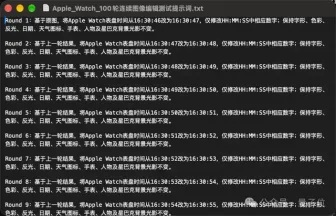
    Seedream 5.5 outperformed GPT-Image 2.6 in high-pressure tasks of continuous image editing for 100 rounds, showing greater stability. The model enhances realism, supports small text and multi-language rendering, transparent image generation and editing, as well as layer splitting and text secondary editing functions. Additionally, Seedream 5.5's API price has dropped to 0.28 yuan per image, with improved speed, maintaining the 'input image + output image' two-stage billing structure, and no text token fees.

  7. Hacker News · 300+

    e-means: Surpasses k-means within one-tenth of the training rounds.

    e-means achieved a test loss lower than Lloyd's algorithm within 25 rounds of training, requiring only 1.2 to 3 rounds. Compared to the state-of-the-art Flash-KMeans, GPU end-to-end speed improved 10-45 times, and CPU end-to-end speed improved 8-15 times. e-means achieved dual optimization of speed and loss through exponential moving average updates, automatic hyperparameter adjustment, improved initialization, and dead cluster revival strategies.

  8. AWS Machine Learning Blog38

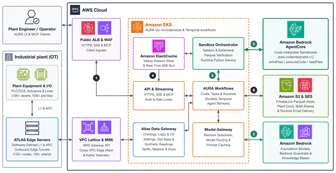
    CrossnoKaye on How to Achieve Industrial Physical AI with Amazon Bedrock AgentCore

    CrossnoKaye achieves industrial physical AI on Amazon Bedrock AgentCore through its ATLAS platform and AURA agent, improving production efficiency by 11-17% and reducing energy consumption by 21%. AURA leverages AgentCore's code interpreter capabilities to run Python workloads in isolated micro VMs to verify numerical calculations, while achieving closed-loop control through edge clusters and cloud optimization systems.

  9. Epoch AI

    How is Inference Performance Index (IPI) Measured for Inference Capability

    Nvidia GB300 offers a 25-fold improvement in capability compared to H100 for intelligent agent inference tasks, far exceeding the 2.5-fold increase in 8-bit FLOP/s. The IPI index measures inference capability by comparing the number of requests a chip can handle simultaneously under various output speed requirements. GB300 is set as the baseline value of 1, and chips scoring 1 can serve twice as many users under the same conditions. IPI version 1 combines results from four representative models, using GB300 as the reference benchmark.

  10. Berkeley AI Research22

    BAIR at CoRL 2026

    BAIR team presented multiple research achievements at the Robot Learning Conference (CoRL) held from November 9 to 12, 2026, in Austin, Texas, including 33 main conference papers, 4 breakthrough posters, 10 oral presentations, and 7 thematic speeches, among which Professor Negar Mehr will deliver an early career keynote speech. The conference covers topics such as robotic vision-language-action models, embodied agents, fine-grained manipulation alignment, and hindsight reward editing.

  11. Latent Space58

    Frontier Labs purchased Handshake AI data for in-depth analysis.

    Frontier Labs' AI training business reached $1 billion in revenue within a year. Handshake AI demonstrated its intelligent agent evaluation environments in finance, biology, and coding, including bank email processing, brain tumor tissue image recognition, and file access simulation tasks. VIALS, as a benchmark in the biology field, tests the model's ability to understand scientific images.

Nov 9Mon
  1. ITHome · AI67

    Google expands its TPU chip lineup with the launch of two new products, 8tx/8i Max, to challenge NVIDIA

    Google launches two new products, TPU 8tx and TPU 8i Max, targeting confidential computing and ultra-long context window AI applications, aiming to challenge NVIDIA's position in the AI chip market. TPU 8tx works with AMD chips, TPU 8i Max integrates two chips to provide stronger computing power. Both products are expected to launch next year.