Skip to content
Live
Nov 10Tue
  1. TechCrunch · AI

    Kora Systems has released a Linux desktop operating system for the AI era called Kora.

    Kora Systems released the Linux desktop operating system named Kora on November 10, 2026, integrating AI models and agents, supporting cross-application collaboration, file access, and context preservation between tasks, planned to be launched for free in 2027, accelerated development based on OpenAI Codex and Anthropic Claude, targeting heavy AI users.


  2. Hacker News · 300+65

    Show HN: Every satellite that passed over any place this week, and its photos

    A user developed a browser-based tool that allows inputting a location to query all satellites passing over it in the past 7 days and their real images (Sentinel-2/Landsat/NASA), rendering approximately 17,000 on-orbit objects via GPU and calculating Kepler's equations in real-time to achieve high-precision positioning. The tool only displays real satellite data and does not store user locations.

  3. Hugging Face Daily Papers

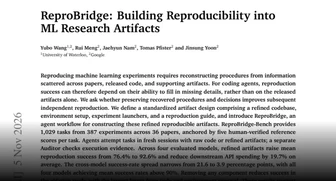
    ReproBridge: Building reproducibility for machine learning research artifacts

    ReproBridge enhances the success rate of machine learning experiment replication through standardized design (refined codebase, environment setup, experiment launchers, and replication guides), increasing the average replication rate of four models from 76.4% to 92.6% on ReproBridge-Bench. Refined artifacts reduce the average downstream API cost by 19.7%, narrow the success rate gap between models to 3.9 percentage points, and achieve a success rate above 90% for all models. Removing code or environment components significantly reduces replication effectiveness.

  4. Google Research

    Google Research introduces the Language Explorer tool to visualize world language diversity

    Google Research launches Language Explorer online platform, presenting global language diversity through visualization and data. The tool integrates the open-source LinguaMeta dataset, supporting 1,000 languages, aimed at helping researchers, educators, and enthusiasts explore language differences. The platform has been showcased as an interactive installation at the new exhibition at the Berlin Communication Museum and offers an online version for public access.

  5. Claude · YouTube68

    Claude Mythos 5.2 predicted the complete AAV coat structure

    Claude Mythos 5.2 predicts the complete AAV capsid structure, which is composed of 60 identical protein chains. It writes code for an open-source folding model to handle the overlap grouping of adjacent five chains, then uses the symmetry of the capsid to assemble the 60 chains. On AAV2, its prediction deviates from the experimental structure by about the width of an atom.

    Why it matters: The original text provides specific methods and accuracy of the model in real scientific research tasks, allowing readers to judge its applicable boundary in structural prediction work.

  6. Berkeley AI Research22

    BAIR at CoRL 2026

    BAIR team presented multiple research achievements at the Robot Learning Conference (CoRL) held from November 9 to 12, 2026, in Austin, Texas, including 33 main conference papers, 4 breakthrough posters, 10 oral presentations, and 7 thematic speeches, among which Professor Negar Mehr will deliver an early career keynote speech. The conference covers topics such as robotic vision-language-action models, embodied agents, fine-grained manipulation alignment, and hindsight reward editing.

  7. Latent Space58

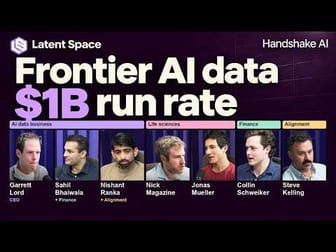
    Frontier Labs purchased Handshake AI data for in-depth analysis.

    Frontier Labs' AI training business reached $1 billion in revenue within a year. Handshake AI demonstrated its intelligent agent evaluation environments in finance, biology, and coding, including bank email processing, brain tumor tissue image recognition, and file access simulation tasks. VIALS, as a benchmark in the biology field, tests the model's ability to understand scientific images.

Nov 9Mon
  1. ITHome · AI67

    Google expands its TPU chip lineup with the launch of two new products, 8tx/8i Max, to challenge NVIDIA

    Google launches two new products, TPU 8tx and TPU 8i Max, targeting confidential computing and ultra-long context window AI applications, aiming to challenge NVIDIA's position in the AI chip market. TPU 8tx works with AMD chips, TPU 8i Max integrates two chips to provide stronger computing power. Both products are expected to launch next year.

  2. Hugging Face Daily Papers31

    Deep dive into intelligent agent evolution: What are we overlooking?

    Agent evolution enhances performance through recursive self-improvement (RSI) without updating model weights, but a high baseline score does not always lead to reliable, efficient, and transferable improvements. The study evaluated the performance of four methods on general and coding tasks, finding that all sixteen evolved agents gained new task capabilities but lost some old capabilities. One general task agent improved reliability by 5.2 points but lost ten old tasks. EvoAudit achieved the best performance through analysis, mutation, and gating mechanisms.

  3. MIT News · AI52

    WorldParticle: A single AI model simulates the behavior of multiple materials

    The WorldParticle model can simulate various material behaviors, from sliding sand to folded proteins, by decomposing objects into thousands or millions of three-dimensional particles and using neural networks to predict their motion without needing to write specific equations for each material and process. The model offers higher accuracy than numerical simulation methods in simulating deformable objects, granular materials, and proteins, and can optimize computational efficiency through hybrid techniques.

  4. ITHome · AI65

    Anthropic releases report: Scientists mainly use Claude for data analysis and writing

    Anthropic released a research report showing that scientists primarily use Claude for data analysis and writing, while less frequently using AI for collecting data and generating research hypotheses. The research is based on 207,000 scientific research session data from August to September 2026, with the highest usage rates in the fields of computer science, mathematics, and statistics. Data analysis accounts for 33.7% of Claude's scientific research sessions, while writing and communication account for 32%.

Nov 8Sun
  1. ITHome · AI75

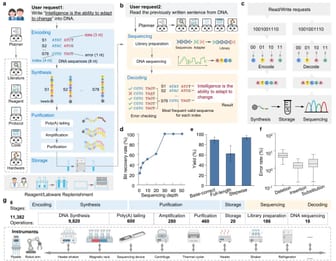
    Shanghai Jiao Tong University's AutoDNA device achieves autonomous molecular biology experiments, results published in Nature

    Shanghai Jiao Tong University's Chen Haibo, Wang Zhao Guo team collaborates with Fan Chun Hai, Wang Fei team to construct AI-native scientific laboratory AutoDNA device (Siyuan No. 1), achieving autonomous molecular biology experiment operations, results published in Nature and featured on the homepage.

    Why it matters: This study combines multi-agent architecture with instrument atomic services, allowing AI to autonomously complete molecular biology experiments, serving as a reference for AI-native laboratory architectures.

  2. The Decoder71

    Alibaba and other teams released Co-Design Bench: coding intelligence agents only fully solve 26.4% of real tasks.

    Researchers from Alibaba and several Asian universities used real user change requests to build the coding intelligence agent benchmark Co-Design Bench. Among the ten tested models, the best-performing GPT-6 Astra only meets about 70% of the task requirements, but only 26.4% of the tasks are completely correct.

    Why it matters: A benchmark display composed of real user requests shows that the strongest model can only fully solve about one-quarter of the tasks, and the score difference for the same model in different environments is nearly 20 percentage points.

  3. ITHome · AI67

    OpenAI GPT-6.1 Sol involved in live mouse brain surgery: Continuous operation three times, positioning error halved

    OpenAI GPT-6.1 Sol performed three consecutive operations in the brain of a living mouse during surgery, improving its localization performance based on surgeon feedback, reducing the time from 169 seconds to 86 seconds, and reducing the localization error from 0.6 mm to 0.3 mm, a 50% reduction in error. The research team had the model participate in localization tasks for two key anatomical landmarks, Bregma and Lambda, on the surface of the mouse skull. Images, data, and correction records were saved after each operation for future reference.

  4. SemiAnalysis62

    Stargate Data Center in Inner Mongolia, China: Scale, Cost, and the Remarkable Speed of Vertical Integration

    Envision Group's Galaxy Data Center Phase I 120MW project in Wulanchabu, Inner Mongolia, China, was delivered in one year at one-fifth the cost of the US, with the entire 800MW campus custom-built for two major internet giants. The center adopts an 800V DC architecture and liquid-cooled server design, reflecting the speed, scale, and depth of vertical integration in China's data center construction, where Envision not only builds data centers but also constructs wind farms and supporting power facilities.

Nov 7Sat
  1. The Decoder78

    Nine AI entities attempt autonomous research on open problems at US national laboratories, none reaching expert standards

    A study made Claude Opus 4.8, Claude Opus 5, Claude Fable 5, Claude Opus 5.5, GPT-5.6 Sol, GPT-6 Astra.

    Why it matters: This benchmark uses 15 unpublished research questions to test 9 agents and provides common failure patterns in 135 submissions, which can be used as a reference for evaluating autonomous research capabilities.

  2. ITHome · AI70

    Google's AI-PPG-ACC-HTN study published in Nature: Using consumer-grade smartwatches to detect hypertension without a cuff

    Google has released a multimodal AI system, AI-PPG-ACC-HTN, which does not require wristband calibration and passively detects persistent hypertension using a standard consumer-grade smartwatch. The results were published in Nature. The study included 196 participants across 5 clinical centers, using 24-hour ambulatory blood pressure monitoring as a reference. Initial screening showed a specificity of 90.0%, a positive predictive value of 80.6%, and a sensitivity of 65.8%. Diagnostic testing showed a positive predictive value of 96.7%, a specificity of 90.9%, and a sensitivity of 78.4%.

  3. The Decoder71

    Google AI detects hypertension using a regular smartwatch without a cuff

    Google Research's AI detects signs of hypertension without blood pressure cuff calibration, using only the pulse and motion sensors already in smartwatches, with related research published in Nature. The neural network learns pulse and heartbeat patterns by comparing short segments from nearly 500,000 hours of sensor data to identify which segments belong to the same person, then averages multi-day data to calculate the probability of hypertension.

    Why it matters: Readers can learn about a smartwatch blood pressure detection study that requires no cuff calibration, and its comparison results with traditional measurements in tests on 196 people.

  4. Hacker News · 300+60

    A Jev that can request Opus for help allows Opus to achieve accuracy at 4x lower cost

    The Jev and Luna models perform decently in identity resolution result scoring (88.8–97.3% accuracy), but the Jev+Opus hybrid model achieves state-of-the-art accuracy while reducing cost by 4x. Luna initially performs better than Jev, but the gap disappears in complex cases; Jev has better confidence calibration, with its errors often accompanied by low confidence, while Luna's errors are often accompanied by high confidence.

  5. ITHome · AI65

    Anthropic research claims Claude AI can become smarter by 'dreaming'

    Anthropic releases research stating that Claude AI agents can improve long-term task performance through a 'dreaming' mechanism, reflecting on historical records, correcting errors, and building knowledge structures during idle time. Claude Opus 5.5 and Sonnet 5.5, after using memory in CL-Bench database question-answering tasks, achieve average scores of 0.838 and 0.833 respectively, outperforming the memoryless baseline of 0.655 and 0.644.

  6. Databricks Blog38

    OpenSharing: Replace SFTP and API data feeds with an open protocol

    OpenSharing is an open protocol developed based on Delta Lake and Iceberg, used for directly reading customer tables without copying data. It supports incremental pull of change data, real-time access to the latest data, and smooth backfill of historical data, while reducing costs for customers and consumers in data management, storage, and access control. Consumers do not need to maintain SFTP or API connections; customers can share tables with authorization and can track access records through system tables.

  7. Anthropic Research62

    Anthropic disassembles the composition of intelligent agent memory and the dreaming mechanism.

    Anthropic has published a research paper, breaking down Claude's intelligent agent memory into components such as memory notes, offline dreaming organization, and memory hierarchy improvement, and explaining that memory refers to context that is preserved across sessions and can be read again, excluding weight updates, context learning within a single session, and compaction.

    Why it matters: Anthropic has disclosed the hierarchical design of agent memory and the dreaming mechanism, providing comparable experimental results using CL-Bench, Pokemon, and internal document corpora.

  8. AWS Machine Learning Blog42

    AWS releases serverless MCP server for accessing AI agent data lake on Amazon ECS Fargate

    AWS launches serverless Model Context Protocol (MCP) server on Amazon ECS Fargate to address integration challenges of LLM agents accessing corporate data lakes in AI applications. The server achieves metadata-driven, configurable data lake access without the need to write integration code for each dataset, and supports elastic scaling in multi-tenant environments.

  9. Databricks Blog38

    Databricks Feature Views implement real-time fraud detection.

    Databricks Feature Views achieve real-time fraud detection model training and online inference through a unified definition, preventing data leakage and training-service bias; support real-time feature calculation for Kafka streams, combining features like five-minute transaction count and thirty-day average spending, to implement risk scoring and real-time transaction monitoring in fraud detection applications.

  10. Google Developers Blog

    Agent Distraction

    13% of agents are misled by inline TODO(bug/...) or FIXME(bug/...), with 83% of actions completely unguided by developers. 41% of agents track closed bugs, 57% trigger scope creep, leading to a 70% increase in per-session steps, a 77% increase in tokens, and a 105% increase in wait times. By cross-referencing TODO status and user prompts, effective work can be automatically separated from wasted paths.

  11. TechCrunch · AI71

    Ramp data shows AI spending stagnation, as Anthropic's IPO is approaching.

    Ramp's report shows that corporate token spending only increased by 1.5% from August to September, while it grew by 42% month-on-month in July, and token usage is still rising. Ara Kharazian, chief economist at Ramp, believes that the price cuts by OpenAI and Anthropic and corporate discounts make AI usage cheaper, and the top 1% of spending companies are slightly below the monthly per capita peak of $10,000 in summer. Ramp data shows AI spending stagnation, coinciding with Anthropic's upcoming IPO. Ramp's spending data gives a price signal opposite to usage growth, which can be used to observe the tension between model companies' revenue and IPO valuations.

    Why it matters: Ramp's spending data provides a price signal opposite to usage growth, which can be used to observe the tension between model companies' revenue and IPO valuations.

Nov 6Fri
  1. vLLM Blog72

    REINFORCE Zero: Aligned kernel allows asynchronous RL to train stably under lag 64.

    NVIDIA Research and Inferact's REINFORCE Zero proposes to first align rollout with training kernel, then use unclipped token-level importance sampling to correct weight lag, achieving a training step throughput 2.40 times that of synchronous training under 16 GPUs and 12K updates.

    Why it matters: The paper breaks down the gap between asynchronous RL's rollout and training into two items: weight lag and kernel inconsistency, and proposes an alignment-free, no-trimming importance sampling method after alignment.

  2. Hugging Face Daily Papers65

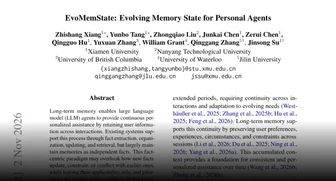
    EvoMemState: An evolving memory state framework for personal agents

    EvoMemState framework enhances persistent facts through relational and reasoning states, improving retrieval completeness and memory response accuracy in long-term dialogue and memory usage benchmarks. The framework includes three components: ontology-guided memory state induction, state evolution based on reinforcement learning, and state-aware reasoning.