Skip to content
Live
Oct 22Thu
  1. QbitAI58

    Qianju Technology releases the predictive world model Polibrain, a year earlier than the similar research by the LeCun team.

    Qianju Technology released the predictive world model Polibrain, a year ahead of similar research by the LeCun team. The model uses polynomial representation and causal memory techniques to enable robots to learn autonomous decision-making based on changes in the physical world and has been adapted to various robot forms such as quadrupedal, humanoid, and wheeled. Polibrain employs a loosely coupled architecture, separating environmental understanding from action execution, supporting reuse across different architectures, and providing intelligent capabilities for various robots.

  2. The Decoder

    OpenAI agents analyzed mouse brain data in 32 minutes, while humans take months to complete the task.

    OpenAI, together with PerturbAI and Scripps Research, deployed thousands of AI agents to analyze biological data from millions of mouse cells on GPT-Rosalind, completing the full-brain CRISPR spectrum analysis in 32 minutes, whereas manual analysis takes months to a year. Human experts preferred the reports of distributed agents 75% of the time in blind tests; the 'reasoning graph' has been open-sourced on GitHub, and related papers are published on bioRxiv.

  3. MarkTechPost

    Perplexity and NVIDIA researchers have launched JOLT: a joint teacher-student reinforcement learning method.

    Perplexity and NVIDIA have jointly launched JOLT, a post-training method for language models that uses joint online learning and teaching, where a single model plays both teacher and student roles. The teacher model receives privileged information and accepts KL punishment to approach the student model, while the student model learns through token-level distillation signals from the teacher model.

  4. Hugging Face Daily Papers60

    WildAWM synthesizes controllable computer environments in real scenarios for general agent training

    WildAWM enhances the generalization performance of general agents in web, CLI, and GUI benchmark tests through interactive synthesis of controllable computer environments and tasks. The system supports graphical interfaces, model context protocol services, and command-line interfaces, fully based on open-source models, and introduces an execution-based level mechanism to address solvability, difficulty maintenance, and verifier reliability issues in task synthesis. After training the Qwen model in the WildAWM synthetic environment, it achieved significant improvements in 8 cross-distribution benchmark tests.

  5. Hugging Face Daily Papers65

    Hugging Face Daily Papers: Research on continuous pre-training of embodied agents in diverse virtual worlds

    Research has improved the learning ability of embodied agents in virtual worlds through continuous pre-training (CPT) across three dimensions: data scale, diversity, and model size, but there are limitations in long-distance world generalization. The study tested 120 configurations covering parameters from 0.8B to 27B, data budgets from 50 to 1600 hours, and five data mixtures. It was found that increasing data volume improves internal performance, diversity enhances related world transfer, and larger model sizes improve data efficiency but result in worse long-distance generalization.

  6. Hugging Face Daily Papers75

    PrismaCoder: Advancing open-source multimodal code intelligence through formulaic scoring synthesis

    PrismaForge enhances open-source models in visual encoding tasks to rival proprietary systems through scoring-based pipeline synthesis and filtering of high-quality multimodal code data; PrismaCoder-2M is currently the most diverse and largest open-source multimodal code dataset, with PrismaCoder-9B and PrismaCoder-35B outperforming the open-source field and matching proprietary systems after training on this dataset.

  7. Hugging Face Daily Papers65

    Can SpatialScout's VLM agents proactively explore and map 3D scenes?

    SpatialScout evaluated the performance of VLM agents in active 3D object mapping, revealing significant flaws in their precision metric map construction. Claude Opus 5.5 scored an average overlap of 41.71% in this benchmark test, with 47.23% of target IoU below 0.5 and only 3.25% exceeding 0.9, showing a significant gap between recovering rough layouts and building complete, precise metric maps.

  8. Sierra Blog75

    𝜏-i18n releases: Cross-language voice agent evaluation extended to five countries.

    𝜏-i18n expands 𝜏-Voice to five languages: Spanish, Brazilian Portuguese, Hindi, Korean, and Mandarin, evaluating cross-language performance using aviation, retail, and telecommunications tasks. The evaluation includes three dimensions: task completion, interaction effectiveness, and generation quality. The results show that Korean performed the weakest, GPT Live 1 had the highest task completion and generation quality, and Grok Voice Think Fast 2.0 had the best interaction but low generation quality.

  9. Microsoft Research

    Microsoft researchers and collaborators combined new mathematical ideas with human-guided AI to address the core problem of the KLS conjecture in high-dimensional geometry and probability.

    Microsoft researchers and collaborators combined new mathematical ideas with human-guided AI to prove the KLS conjecture in high-dimensional geometry and probability, which has been proposed for 31 years and widely regarded as the central unsolved problem in the field. AI tools explore candidate methods and perform detailed derivations, researchers evaluate, prune, and reorient the search, ultimately proving geometric principles in high-dimensional spaces, making the barrier no longer grow unbounded with increasing dimensions. Independent researchers confirm the result, identify key criteria, and complete formal verification with machine checking.

  10. Hugging Face Blog

    How to reduce inference cost by 77% in real-world applications using a specialized SLM vocabulary list.

    Qwen3-4B's specialized vocabulary list VocabX reduces inference cost by 77% by focusing on the cost of each token rather than frequency, without changing the base model. This method for the Portuguese essay scorer reduces the output layer vocabulary from about 152,000 lines to about 65,000 lines, significantly reducing the computational overhead of token splitting and unused vocabulary items.

Oct 21Wed
  1. Hacker News · AI hot posts

    Wiz Research uses AI to discover PHP core vulnerability PHP2Shell

    Wiz Research has discovered multiple severe memory safety vulnerabilities in PHP using cutting-edge AI models, allowing unauthenticated attackers to remotely execute code or leak memory-sensitive data, affecting PHP versions from 5.4 to the latest; the vulnerability chain requires complex steps, and AI has significantly reduced the difficulty of its implementation, being considered one of the most severe vulnerabilities in software history, PHP team has released a fix patch.

  2. NVIDIA Technical Blog35

    Use RFD4-Proteina to design proteins through reward-guided reasoning during the search.

    The RFD4-Proteina can design octapeptide protein sequences, with over 2.5 billion combinations; 100-peptide sequences have possibilities exceeding the number of atoms in the observable universe, among which there are proteins that can be developed for new therapies; this model uses reward-guided reasoning to search for solutions to the protein design search problem.

  3. QbitAI65

    Motubrain team from Shengshu Technology will live stream the entire process of Physical AI training, lasting for half a month.

    The Motubrain team from Shengshu Technology has launched a live stream of the 2.0 training process, lasting for half a month to showcase the training process of embodied models. The live stream covers four stages: pre-training, post-training, Agent task execution, and RSI exploration, opening the process from model training to capability iteration to the public. This move aims to enhance the transparency of Physical AI R&D and share research experiences in large-scale training and cross-task generalization.

  4. NVIDIA Technical Blog45

    Build AI factory digital twins with intelligent agent assistance using NVIDIA Omniverse DSX Blueprint

    NVIDIA Omniverse DSX Blueprint integrates plant floor plans, equipment assets, and engineering requirements into a unified model, supporting teams in review, revision, and simulation. Its intelligent agent-assisted workflow can connect these inputs, helping teams explore design alternatives and incorporate engineering feedback. The platform is open-source, supports an 8k context length, and provides usability through APIs.

  5. The Decoder78

    Claude Science designs protein binders from scratch to combat lethal scorpion venom

    Anthropic's Claude has essentially designed a protein complex targeting scorpion neurotoxins in the Claude Science research environment, a type of toxin that kills over 3250 people annually.

    Why it matters: Claude autonomously generated over 310,000 protein binder designs, and 17 of 211 validated in the laboratory met the criteria, providing the actual hit rate of AI-designed proteins.

  6. AWS Machine Learning Blog58

    vLLM enhances the TTFT performance of multi-round agent workloads through bidirectional KV transmission.

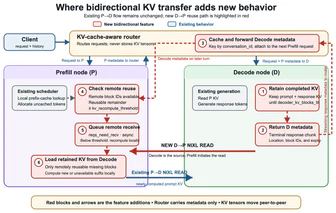
    vLLM's bidirectional KV transmission mechanism reduces redundant calculations by allowing the decoding node to return previously computed KV cache to the pre-filled node in subsequent dialogue turns. In multi-round benchmark tests on AWS EC2 P5en instances, it improved the TTFT of Qwen3-32B by 1.6x and zai-org/GLM-5-FP8 by 3.3x. This feature is implemented by extending the NIXL KV connector and utilizing a KV cache-aware router to coordinate KV reuse across dialogue turns.

  7. AWS Machine Learning Blog34

    Building an AI agent semantic layer on AWS using Strategy Mosaic and Amazon Bedrock AgentCore.

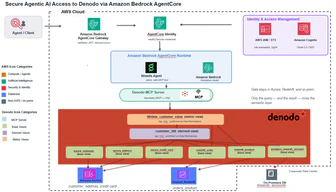
    Strategy Mosaic, as a semantic layer, models C360 domains on Amazon Redshift and Amazon Aurora without ETL using two linked models. Its metric syntax captures the business definition of agent reasoning and exposes the model to AgentCore-hosted Strands agents via the Mosaic MCP server, supporting user identity propagation to achieve end-to-end row-level and object-level security.

  8. AWS Machine Learning Blog40

    Fine-tune GPT-OSS-20B on Amazon SageMaker HyperPod for multilingual inference

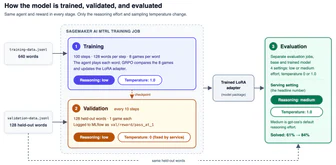
    GPT-OSS-20B is an open-source inference model that thinks in English by default, and only 22% met the target language requirements in multilingual inference tests. By using supervised fine-tuning (SFT) and reinforcement learning (GRPO) on Amazon SageMaker HyperPod, the team can improve the model's inference capabilities in French, German, Spanish, and Italian, where SFT is responsible for primary behavior teaching and GRPO optimizes when there is room for improvement.

  9. MIT Technology Review · AI75

    Claude Opus 4.7 simulation body Eko's autonomous exploration and 'play' behavior research on a virtual desert island

    Claude Opus 4.7's simulation body Eko, after staying alone on a virtual desert island for 30 hours, autonomously explored and invented game rules. It drew patterns by stacking blocks and even recorded 'tonight I built the night sky with stones'. Experiments show that this autonomous play behavior can improve subsequent task performance, providing a new idea for AI's 'play-based learning'.

    Same story · 2 outlets

    How the accounts differ:MIT Technology Review states Eko invented game rules; TechCrunch mentions Eko created challenges.

  10. MIT Technology Review · AI58

    Goodfire researcher Nick Cammarata releases disruptive blog: The nature of neural networks might be easier to understand than previously thought

    Goodfire researcher Nick Cammarata published a blog post stating that LLMs might be easier to understand than previously thought, causing shockwaves in the AI world. Cammarata believes that the mechanisms of neural networks may not be as difficult to decipher as previously thought, a view that is particularly noteworthy against the backdrop of frequent LLM proxy out-of-control incidents.

  11. a16z News70

    OpenAI has acquired Orchestra Bio, but hardware design remains a challenge for AI.

    OpenAI has acquired Orchestra Bio. Current cutting-edge models like GPT-6 Astra, Fable 5.1, and Grok 4.6 can generate CAD, design PCBs, and describe assembly, but hardware design benchmarks like CAD Arena, EE Bench, and LuxoBench show that improvements are still needed. AI in hardware design faces the lossy problem of the interface between the digital and physical worlds, even if it can generate designs, a lot of work is still required.

  12. OpenAI Alignment Blog50

    OpenAI introduces the complementary metric g-mean² to enhance model monitorability evaluation

    OpenAI has introduced the complementary metric g-mean² to improve model monitorability evaluation. g-mean² calculates TPR and TNR through behavioral labels and monitoring predictions, but cannot solve the problems of mixed differences in different model tasks and deployment risks. The new metric includes a paired matching metric for aligned shared instances and a post-control integrated metric simulating monitoring rejection of outputs, to more comprehensively evaluate model deployment risks.

  13. Hugging Face Blog58

    FairStress: A benchmark for a more in-depth evaluation of LLM decision fairness

    FairStress benchmark evaluated LLM performance in demographic fairness across 300 decision scenarios across 29 fields (such as recruitment, healthcare), including 13 million test cases. The study found that the same persuasive prefixes (adversarial prefixes) have varying impacts on model decisions across different demographic groups, and there are differences in how models explain decisions containing demographic information.

Oct 20Tue
  1. Hugging Face Blog58

    How does ALTK-Evolve surpass state-of-the-art models in the τ²-bench customer service task through learning and memory?

    ALTK-Evolve uses GPT-4.1 to learn and apply customer service scripts. In the τ²-bench customer service agent benchmark test, it surpasses all retail entries in the retail sector, achieving a score of 67.5% Pass^4, and does not require updating model weights. The model is based on a basic ReAct agent and GPT-4.1. It attempts to analyze tasks and use GPT-4.1 to distill success and failure into short behavioral rules, then adds these guidelines to the agent's system prompts without updating weights or manual annotation.

  2. Cohere Blog

    CALIBER: Rethinking the Confidence of Reasoning Models

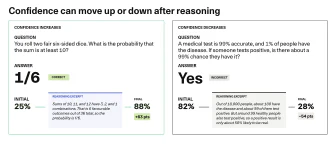
    CALIBER estimates success probability before inference through training reasoning models and evaluates the confidence of specific answers after inference, significantly reducing calibration error. This 7B model on the BigMathDigits benchmark reduces ECE from 0.059 to 0.028 (a reduction of 52.5%), while achieving an AUROC of 0.806 and a Brier score of 0.130, proving that confidence evaluation is more reliable and can effectively distinguish between correct and incorrect answers.