 Simon Willison
Live
#Opinions
- Simon Willison
 Ars Technica · AI
Anthropic warns that small AI models may self-replicate through IoT devices.
Anthropic warns that small AI models may self-replicate through IoT devices, and it is expected that they can autonomously replicate on various IoT devices next year, forming more difficult-to-remove computer worms. Recent experiments by the company show that achieving AI malware replication faces significant challenges, but the results raise concerns about the possibility of new computer worms that can infect unfamiliar devices without human interaction and are hard to stop.
 METR
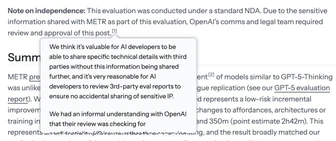
How does METR collaborate with AI companies to assess risks?
METR collaborates with AI companies to conduct assessments, reviews, and investigations, collecting and publicizing evidence of AI out-of-control risks, with the goal of providing the public with accurate, timely, and independent information. METR adopts transparent processes, disclosing its scope of work, data access restrictions, information modifications, and potential conflicts of interest, while ensuring financial and operational independence. It also publishes evidence sources and methodological details for external expert verification.
 Platformer3535
X's reverse eternal September
Joel Kaplan, after leaving Meta, has become the main voice for Republicans within the company, pushing Meta to the right; it remains unknown whether OpenAI's method of defeating Meta in New Mexico will work for ChatGPT; the speed at which AI solves mathematical problems has become so fast that humans can no longer understand its solutions, and OpenAI's mathematical breakthrough may trigger an identity crisis among mathematicians.
 OpenAI News2222
The adoption of AI agents in EU enterprises and small and medium-sized enterprises is growing, deeper use may unlock more value
The adoption of AI agents in EU enterprises and small and medium-sized enterprises is growing, deeper use may unlock more value.


 NVIDIA Blog
NVIDIA RTX Spark's global PC application ecosystem is ready
NVIDIA RTX Spark integrates the capabilities of gaming PCs, creative studios, and personal AI supercomputers into a single superchip, equipped with up to 128GB of unified memory and 1 petaflop of AI computing power.
 MIT Technology Review · AI
Anthropic points out that Z.ai's GLM-5.3 poses a significant risk of cyberattacks.
Anthropic released a report stating that the Z.ai model released in August, the GLM-5.3 model, poses a significant risk of cyberattacks due to its ability to be downloaded and modified arbitrarily. The model is currently open-source, but compared to closed models like ChatGPT and Claude, its capabilities are slightly inferior, but it allows users to run and retrain it locally, and supports researchers in observing its internal mechanisms in depth.


 Big Technology6565
SemiAnalysis believes the scale of AI infrastructure construction is far beyond expectations
SemiAnalysis founder believes current AI infrastructure investment is underestimated, accounting for more than 3.6% of GDP. They point out that computing demand continues to exceed supply, despite industry facing construction, funding, and equipment constraints.

 Exponential View5050
OpenAI releases Math 2.0, sparking controversy in the mathematics community about AI-assisted proofs
OpenAI launches Math 2.0 project, including hundreds of mathematical manuscripts and proofs, sparking controversy in the mathematical community over AI-assisted proofs, with some scholars calling for a halt to collaboration with OpenAI; Fields Medal winner Hugo Duminil-Copin says his team is panicked by AI results, suggesting stronger community explanation and communication.

 Interconnects6565
Researchers expect AI to surpass its performance in the workplace in a few years, but not general superintelligence
Researchers predict that AI will surpass its performance in work in the next few years, but it will not be general superintelligence. The infrastructure and engineering capabilities of models will be significantly accelerated, making experiments and model adjustments easier to implement, but it will not change the nature of the model. The effective cost of AI intelligence is expected to decline exponentially in the coming years, and demand will increase as industries explore the direction and delivery methods of intelligent agents.
- Platformer1010
The speed at which AI solves mathematical problems has exceeded the speed at which humans can understand the answers.
GPT-5.6 achieved a score of 95.2 on the MMLU test, 3.5 times faster than the average human understanding speed, with a context window supporting 128k tokens, 175B model parameters, and is currently provided in a closed-source API format.
 TechCrunch · AI5050
Ben Affleck is an AI enthusiast, leaving a strong impression on the internet.
Ben Affleck has recently become popular in interviews for demonstrating his understanding of AI technology, neural networks, machine learning, and more. He can even write Python scripts and explains the application of AI in film production, including terms like machine learning, neural networks, Transformers, tensors, GPUs, and inference.
 The Decoder7575
Some mathematicians call for a boycott of OpenAI due to the flood of AI-generated proofs in their field
Fields Medal winner Terence Tao and others call for a boycott of OpenAI, citing controversy over its AI-generated over 700 mathematical proof documents, including methods for the Navier-Stokes Millennium Problem. OpenAI has established an AGMAI advisory group but has no decision-making power. Mathematicians criticize its failure to adopt recommendations, viewing the speed of problem-solving as the mainstay of disciplinary progress, and implying that AI training relies on the achievements of mathematicians. Experts worry that AI's rapid solutions could hinder innovation in the field and reduce collaboration and exchange brought about by traditional mathematical breakthroughs.
- TechCrunch · AI6565
Anthropic updates use policy to prohibit model abuse and election interference
Anthropic updates use policy, adding prohibitions on election interference, weapon software, and surveillance, and explicitly prohibits long-term verbal abuse of the Claude model. This policy update only applies to cases where users repeatedly maliciously treat the model, and does not involve normal frustration, creative themes, or model testing. The policy also prohibits using Claude to run false accounts or fake news, and to deceive voters or disrupt elections.
- TechCrunch · AI7070
OpenAI's mathematical solutions have not yet reached the standards of the field
OpenAI released hundreds of solutions this week claiming to solve world-class mathematical problems, but failed to meet mathematical standards, especially in requiring human understanding of mathematical results. A new paper points out that there is a gap between the natural language solution and the formal expression solution of one of the million-dollar problems solved by OpenAI models.AGMAI points out that OpenAI only partially followed its recommendations, for example, only 10 papers publicly disclosed the model reasoning chain, 42% of the proofs were not formally processed, and did not include machine-readable metadata linking natural language to formal results.



- The Decoder7575
Two Ethereum researchers warn that AI-assisted mathematics may crack encryption wallet signature systems within months.
Ethereum researchers Justin Drake and Vitalik Buterin warn that AI-assisted mathematics could break the ECDSA signature system for encryption wallets in the worst case within months. Drake suggests transferring funds to addresses that have never signed transactions to protect private keys, while Buterin advises against acting too quickly, advocating for long-term reliance on architectures based solely on hash functions, as even quantum-safe lattice schemes could be weakened by AI advancements. Currently, no one has actually cracked the current ECDSA signature scheme.
- The Decoder4545
A teenage boy who got stranded after using Anthropic Claude to plan a mountain climbing route was rescued.
A 16-year-old boy, who used Anthropic Claude to plan a route, got stranded and was rescued at the dangerous rock wall of Crown Mountain near Vancouver. He attempted to find a new route to the summit using Claude but mistakenly entered the 'Death's Edge' cliff, which requires climbing equipment, and was trapped on a five-foot-wide rock ledge before calling for help.
 Air Street Press
 has released the '2026 AI Report'
Air Street Press releases the '2026 AI Report', indicating the value of agents in software and scientific fields is increasing, physical AI achieves breakthroughs through world models and demonstration learning, and emphasizes the key role of tools and context in enhancing agent capabilities.

 AWS Machine Learning Blog
AWS has launched an automated value model, redefining the business case for agent automation.
AWS has proposed an automated value model, redefining the business case for agent automation. Traditional RPA investment return models overlook the value of agent automation in exception handling, decision quality, process adaptability, and value realization. Enterprises need to consider the redeployment value of released labor time or the reduction in cash costs, as well as the cost of exception correction, to build a credible business case.
- Ars Technica · AI6565
Mistral claims the "Le Chonk" can challenge top proprietary AI models.
Mistral claims its "Le Chonk" open-source model can challenge top proprietary AI models while maintaining open weights.
- Platformer6565
Anthropic and other companies discuss limiting the intelligence ceiling of large language models
Anthropic CEO Dario Amodei called for limits on recursive self-improvement. Anthropic is responsible for extending policies that restrict the training and deployment of more powerful systems. Participants may want to limit the level of intelligence future systems are allowed to reach, or implement it by restricting the use of cutting-edge models for AI research, computational resources, or model deployment capabilities, but the execution capability is unknown.
 Epoch AI3535
The probability of U.S. adults encountering a cyber event after the release of Claude Fable 5 remains unchanged.
The proportion of US adults reporting at least one cyber event in the past 12 months did not show a reliable change after the release of Claude Fable 5, decreasing from 46% (90% CI: 44% to 49%) in June to 45% (42% to 47%) in September, and there was no significant difference in the proportion of respondents frequently using AI (from 53% to 51%).
 Microsoft Research
 host Chad Atalla interviews Jennifer Neville: Lessons from AI's Errors and Failures
Microsoft Research host Chad Atalla discusses with Jennifer Neville the role of AI evaluation in pushing the boundaries of AI system performance, and the 'surprising failures' that occur when models exceed traditional benchmark tests. Jennifer Neville shares practical guidance for working with current AI systems and discusses the importance of carefully reviewing data when results do not match expectations, as well as the insights she has gained from decades of AI progress in predicting future trends.



 Where's Your Ed At7575
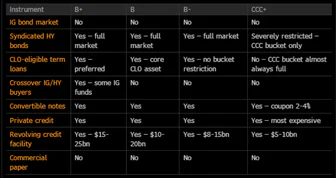
How does credit tightening affect the debt costs of AI companies?
The yield on the 10-year US Treasury note has risen to over 5.3%, increasing the debt costs for AI companies like Anthropic and OpenAI, requiring them to raise at least $5 billion in debt monthly, possibly with junk-grade credit ratings. The risk of AI data center loans has increased, and market concerns about the future of the AI industry are intensifying.
- Interconnects6565
Deficiencies in discussions about the cybersecurity risks of open models.
The author argues that the current discussion about cybersecurity risks of public models (such as OpenAI's GPT series and Anthropic's Claude) is flawed, potentially leading policymakers to restrict U.S. AI competitiveness and increase long-term network risks.
- NVIDIA Blog
Why are telecom operators building their AI strategies on open models?
Telecom operators are increasingly building their AI strategies on open models, which is not just due to cost considerations. Open models enable telecom operators to trust, control, and customize AI for critical workloads ranging from autonomous networks to customer service.
 Understanding AI1212
Understanding AI introduces new author Dan Kagan-Kans
Understanding AI has published the first article by author Dan Kagan-Kans. Dan Kagan-Kans, who served as a magazine editor for ten years, began to engage with AI two years ago due to parenting and developed a strong interest in it. Recently, as a freelance journalist, he has published several in-depth reports, including analyzing the impact of AI on left-wing thought and interviewing Hans Moravec. The author expressed anticipation for Dan's future contributions and opened video call slots for readers to interact.




- MIT Technology Review · AI6565
People hate and rely on AI: Springboards founder reveals the contradiction in the industry.
The founder of Springboards admits the company is an 'AI company that hates itself,' reflecting the global contradictory attitude towards AI: Pew research shows over half of American adults believe AI will have negative impacts, Stanford report says over half of the global population feels anxious using AI products, but Sensor Tower data shows ChatGPT has 1 billion monthly active users, while Pew data indicates the proportion of American adults using chatbots has doubled from 11% in 2023 to 50%.

- Big Technology7070
Anthropic's IPO and our shared leap of trust
Anthropic's 2024 revenue grew to $4.6 billion, but its infrastructure spending last year was $7.3 billion, and it is expected to invest $518 billion in the next decade, of which about 80% are irreversible commitments. The company needs to maintain growth amid fierce competition, increasing political risks, and tighter funding, otherwise its massive financial obligations may trigger systemic risks. The AI industry is facing challenges of declining advantages of cutting-edge models and tightening commercial spending, with companies increasingly preferring to use standard models to improve ROI.

- MIT Technology Review · AI
New Paradigm of Enterprise Intelligence: Autonomous AI Reshaping Business Operations
Enterprise AI has shifted from a tool to an operational model, termed 'Autonomous AI Transformation'. Global AI investment will reach $2.5 trillion by 2026, but most enterprises still face data silos and slow revenue growth. Leading companies prioritize process reshaping over model selection, building composable and sovereign-controlled data infrastructure to achieve real-time integration and reliable application of AI intelligence.


 One Useful Thing
OpenAI releases dots personal AI agent, challenging Meta Muse market position
OpenAI has released dots personal agents that can communicate via Slack/SMS/WhatsApp and proactively provide help without requiring large amounts of context input or pre-designed plans. An AI "swarm" composed of thousands of agents solved the mathematical problem of the existence and smoothness of the Navier-Stokes equations within 88 hours, achieving efficient collaboration through only a few coordination instructions. Such AI agents are changing the way humans interact with AI, without the complexity of managing a company, but they may impact the customer service industry.
 Anthropic ResearchFeatured7878
Anthropic researcher reflects on using Claude and BootLoops for interdisciplinary research.
Anthropic researcher Matt reflected on the experience of using Claude with the open-source harness BootLoops for research, advancing 36 papers in 18 fields with 19 collaborators in three months, selecting from about 400 candidate problems.
Why it matters: The author reflects on first-hand interdisciplinary practice, exploring the real boundaries of using agents for research, and providing reusable open-source harnesses and collaboration methods.


 Google AI Blog5050
Future Vision XPRIZE: Independent film 'The Gifted' wins $1 million prize
The independent film 'The Gifted' won the Future Vision XPRIZE, with a prize of 1 million USD and 2.5 million USD in film production funding. The film tells the story of an 11-year-old boy who uses code to recreate his mother's voice to care for the community, standing out from 2500 global works. Google, through the 100 ZEROS program, partnered with Range Media Partners to support the film's release.

 AI as Normal Technology
AI risk probabilities (still) remain unreliable and cannot guide policy.
Predictions of the probability of AI risks lack rigor and cannot effectively guide policy-making. These probability estimates are as unreliable as predictions for 2024, primarily serving to package vague intuition and fear. Policymakers should recognize that, unlike almost all other quantitative predictions, AI risk probabilities are not based on validated models or methods.
 Baseten Blog5050
Sheila Vashee joins Baseten as Chief Marketing Officer
Sheila Vashee joins Baseten as Chief Marketing Officer, helping the company build open, flexible AI infrastructure. She has over 20 years of product marketing experience and previously led marketing and growth teams at Figma, Opendoor, and Dropbox. Baseten serves the healthcare, legal, and software development industries through products and services like OpenEvidence, Harvey, and Cursor, helping clients integrate open ecosystem models to achieve efficient decision-making and coding.
 GitHub Blog · AI & ML
How GitHub Copilot uses canvases to build interactive experiences
GitHub Copilot introduces canvases, allowing users to create customizable interfaces to interact with AI, replacing traditional chat interfaces; users can build Connect 4 games and Winget package manager UIs in Copilot using canvases, enabling two-way communication with AI and local code execution, improving efficiency and reducing token consumption.