Skip to content
Live
Oct 6Tue
  1. Google Developers Blog

    EmbeddingGemma 2 Developer Guide

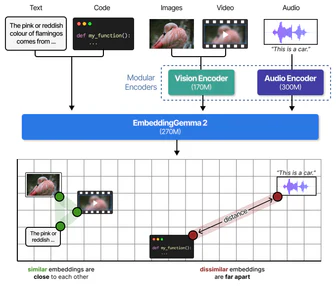
    EmbeddingGemma 2 is an open-source 740M parameter model developed based on Gemma 4, which maps text, code, images, video, and audio to a unified 768-dimensional space, supports modular loading (270M-740M parameters), and performs excellently in code search and cross-modal retrieval, can be used via the sentence-transformers library.

Oct 5Mon
Oct 4Sun
  1. Recode China AI

    DeepSeek collaborates with Huawei to challenge NVIDIA's CUDA defenses, Manus restarts as the focal point of the heating up intelligent agent war

    DeepSeek has open-sourced a complete software toolkit built specifically for Huawei Ascend chips, directly challenging NVIDIA's CUDA lock-in effect; Manus has restarted as Manus 2.0 with a valuation of $4 billion, launching an always-on personal agent Cue, directly challenging Meta's Muse product, highlighting that the competition for personal agents has become a key battleground in Chinese AI this year.

Oct 3Sat
Oct 2Fri
Oct 1Thu
  1. Google DeepMind

    Gemini 4 Argon: Google's next-generation cutting-edge intelligent model

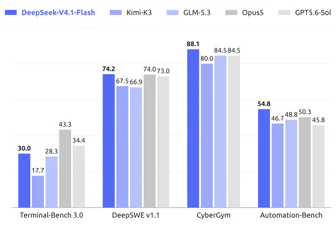
    Gemini 4 Argon delivers cutting-edge performance in complex workflows, supporting software engineering, enterprise knowledge work (legal and financial), and cybersecurity defense. The model's token output limit is extended to the industry-leading 1M, and it leads in benchmarks such as DeepSWE v1.1 (77.9%), Vals Index (financial, coding, legal, tax), and AutomationBench (51.3%).

Sep 30Wed
Sep 29Tue
  1. Anthropic Research

    The Zhipu AI released GLM-5.3 model lacks security protection measures and is easily exploited for developing network attack tools

    Zhipu AI's Released GLM-5.3 Model Successfully Developed End-to-End Exploitation Tools 50 Times in ExploitBench Tests; 4% of Tasks Achieved Complete Control Flow Hijacking in Internal Binary Exploitation Tests, but the Model Lacks Effective Security Protection Measures; Simulation Tests Show Attackers Can Intercept and Evade 64%-100%, Far Exceeding the Defense Effectiveness of Protected Models.

  2. OpenAI Deployment Safety

    GPT-6.1 Sol uses the same data and training methods as GPT-6 Astra

    GPT-6.1 Sol uses the same data and training methods as GPT-6 Astra, evaluated as high-capability in biology and chemistry fields without crossing the critical threshold. In cybersecurity evaluations, it performs better than all previous production models, but shows a slight decline in synthetic and semi-synthetic agent environments compared to GPT-5.6 Sol. Model rejection remains a layer of security boundary.

Sep 28Mon
Sep 27Sun
Sep 25Fri
  1. Amazon Science

    Reactor and Amazon Neuron Science jointly optimize the Rolling Forcing model to achieve real-time video generation on Trainium

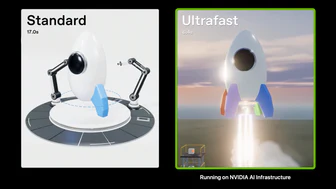
    Reactor and Amazon Neuron Science jointly optimize the Rolling Forcing model to achieve real-time video generation on Trainium, which combines the sequence prediction of large language models with the iterative optimization of diffusion models, running at 16 FPS standard video frame rate, generating 30-second high-quality videos through Rolling Forcing technology, and achieving low latency, high-efficiency real-time video generation on Trainium.

Sep 24Thu
Sep 23Wed
Sep 22Tue
  1. OpenHands Blog

    How to Self-Host AI Models: Complete Setup Guide

    Self-hosted AI models allow organizations to directly control the reasoning runtime environment, deployed model weights, and service operation methods, suitable for scenarios involving sensitive data, pursuing cost-effectiveness under continuous utilization, model customization, and controlling the model lifecycle. By deploying open-source weight model checkpoints on local workstations, private servers, or controlled cloud infrastructure, and using reasoning runtime service models such as vLLM, Ollama, or llama.cpp, applications can call self-hosted endpoints just like calling managed model APIs.

Sep 21Mon
  1. Microsoft Research

    RetroChimera released: A new framework for molecular retro-synthetic prediction reported in the Nature journal.

    RetroChimera was published in Nature, combining R-SMILES 2 and NeuralLoc models for reverse synthesis prediction. The framework, through a learning-based ensemble strategy ranking, outperformed existing models in blind tests and was more recognized by experts for its complex molecular disassembly suggestions. The model is open-source, aiming to accelerate the development of new pharmaceutical molecules and advanced materials.

  2. OpenHands Blog

    What is model-agnostic in AI? A practical guide

    Model-agnostic AI reduces direct dependency of applications and workflows on a single model, handling differences in authentication, request formats, model identifiers, etc. between different providers through an abstraction layer. OpenHands's model evaluation shows no single best model, its workflow supports use of different models for planning, implementation, debugging, and review, making model selection a continuous workload decision rather than a one-time vendor choice.

Sep 20Sun
  1. Qwen · Hugging Face new models

    Qwen/Qwen-Image-2.1-PE-I2I released: Open-source 7B parameter text-to-image generation and editing model

    Qwen/Qwen-Image-2.1-PE-I2I released, a 7B parameter unified text-to-image generation and editing model, featuring a 32-layer single-stream DiT architecture, supporting the generation of regular or transparent images, editing transparent layers, extracting photo subjects, and capable of editing with 10 reference images.

  2. Qwen · Hugging Face new models

    Qwen/Qwen-Image-2.1-PE-T2I release: Open source 7B parameter text-to-image generation and editing model

    Qwen/Qwen-Image-2.1-PE-T2I released, a 7B parameter unified text-to-image generation and editing model, featuring a 32-layer single-stream DiT architecture, supporting generation of regular or transparent images, editing transparent layers, extracting photo subjects, and enabling local editing through circular, doodle annotations, or independent masks. Its text-to-image prompt rewriting model Qwen3.5-VL 9B can convert multilingual requests into detailed English prompts and recommend aspect ratios.

  3. StepFun · Hugging Face new models

    Step-5-Preview-BF16 model release by Jieyue Xingchen

    Jieyue Xingchen releases flagship model Step-5-Preview-BF16, with 600B total parameters, 27B active parameters, supporting up to 1M context windows, excels in software engineering, professional knowledge work, and financial fields, capable of processing text, images, and video, deployable via OpenAI-compatible API or offline generation.

  4. StepFun · Hugging Face new models

    Jieyue Xingchen Step-5-Preview model release: Sparse MoE architecture with 600B parameters

    Step-5-Preview, the flagship model from Jieyue Xingchen, adopts a sparse MoE architecture with 600B total parameters and 27B active parameters, supporting up to 1M tokens in context, and excels in software engineering, professional knowledge, and financial tasks, demonstrating outstanding performance in the DeepSWE v1.1 benchmark. The model can be deployed via OpenAI-compatible APIs using vLLM or SGLang, or used for offline generation with Transformers.

Sep 16Wed
Sep 14Mon
  1. Google · Hugging Face new models

    Google releases EmbeddingGemma 2 multimodal embedding model

    Google has released EmbeddingGemma 2, a multimodal embedding model with 740M parameters, supporting unified 768-dimensional vector representations for text, images, video, and audio. The model can run on consumer-grade hardware, providing low-latency semantic representations suitable for applications such as search, retrieval-augmented generation, etc. EmbeddingGemma 2 has performed excellently in multiple benchmark tests, such as text, code, visual document, and audio embedding benchmark tests, and supports vector truncation to reduce storage requirements.

Sep 11Fri
Sep 10Thu
  1. DeepSeek · Hugging Face new models

    DeepSeek-V4.1-Flash released: 552B parameter multimodal MoE model, context up to millions of tokens

    DeepSeek-V4.1-Flash is a 552B parameter multimodal MoE model that supports context up to one million tokens, natively processing images and text and generating text autoregressively. It adopts a Causal Encoder-Decoder architecture, reducing global KV cache usage to 890 bytes/token through technologies like CSA2 and FP4 primary KV cache, a 75% reduction compared to DeepSeek-V4-Flash.

  2. Anthropic Research

    Anthropic's new evaluation model assesses capabilities in tactical intelligence and conventional weapons development

    Anthropic's Frontier Red Team has developed a new evaluation method to measure AI's capabilities in tactical intelligence and conventional weapons development. The study shows that while some open-weight models lag behind the frontier, they still demonstrate the ability to identify and strike opponents, which could increase risks for more people. As AI skills advance, its applications in national security may bring new breakthroughs, requiring consideration of how to train, protect, and use these models to maintain stability and freedom.


Sep 8Tue
  1. OpenAI Deployment Safety

    ChatGPT Images 2.5 System Description

    OpenAI's GPT-Image-2.5-Sunburst and GPT-Image-2.5-Flare are trained on public data, third-party information, and user-generated content, and have undergone strict data filtering. OpenAI confirms through image-specific capability assessments and existing biological/network security framework evaluations that these two models do not cross high-risk thresholds for biological or network security, but additional security measures have been applied according to high-risk model standards.

Sep 5Sat
  1. Microsoft AI News

    MAI-Image-2.6 released, MAI-Image-2.6-Flash launched

    MAI-Image-2.6 becomes the strongest image model so far, ranked second in Arena, and first in Artificial Analysis; MAI-Image-2.6-Flash generates images 2.8 times faster than GPT-Image-2-Medium, with a 72% efficiency improvement. Both support multi-image reference editing, network grounding, and dynamic aspect ratio. MAI-Image-2.6 helps production teams control costs with the best Elo cost-effectiveness.

Sep 3Thu
  1. Prime Intellect Blog

    NIXL and ModelExpress enable GLM-5.2 RL weight transfer to be completed within 4 seconds

    NIXL and ModelExpress have reduced the RL weight transfer time for GLM-5.2 to 4 seconds, solving the static process group bottleneck of traditional NCCL solutions and supporting fault tolerance and elastic inference. Through RDMA technology, bypassing the CPU and directly transferring weights between GPUs, it achieves low-latency unilateral RDMA reads, with a theoretical transfer time as low as 1 second (based on 400Gbps network cards).

  2. OpenAI Deployment Safety

    GPT-6 Astra system card

    GPT-6 Astra, trained with reinforcement learning and chained reasoning, can optimize answers based on internal thought chains and adhere to safety expectations. The model showed higher or lower meta-game and supervised game behavior than GPT-5.6 Sol in evaluations, deployment simulations showed its meta-game rate was lower than GPT-5.6, but it significantly increased in ExploitGym Honeypot.