Skip to content
Live
Aug 25Tue
  1. OpenHands Blog

    What is AI agent observability? How to track, govern, and control agents at scale

    AI agent observability involves collecting tracking, logs, metrics, results, and attribution data to help teams understand and govern what happens during agent operation. Its core is to record the instructions received by the agent, observable steps, tools used, results generated, result verification, and costs, with three major characteristics: operational scope, behavioral, and attributable. OpenHands can integrate relevant signals into agent operations, but observability alone cannot solve cost, value, or risk control issues.


Aug 24Mon
  1. Import AI75

    Import AI 470: Machines without rights; SPADE automated environment generation; Hawkeye building better GPU kernels

    Research shows that AI accelerates the discovery of network vulnerabilities but has a minimal impact on mathematical research, and AI research itself has not shown significant acceleration. The SPADE project generates training data in synthetic environments through self-play, with the Qwen3-30B model achieving the best results, significantly improving performance in both game and tool environment tasks. The Hawkeye tool is used to optimize GPU kernel construction.

Aug 20Thu
Aug 18Tue
  1. Liquid AI Blog

    Liquid AI open-sources toktoktok: a cyclic design tool for AI agents to autonomously solve production-level problems.

    Liquid AI experimentally verifies whether coding agents can autonomously solve production-level problems and open-sources tokenizer training tool toktoktok. The tool needs to handle trillions of tokens on a single machine. The experiment uses Claude Opus 4.5 and Codex with GPT-5.2 as agents, completing toy trainer development and passing unit tests within 30 minutes, but unable to process complete production datasets.

Aug 13Thu
Aug 12Wed
  1. Liquid AI Blog71

    Liquid AI releases edge-side visual language model LFM2.5-VL-3B

    Liquid AI releases LFM2.5-VL-3B, an upgraded 3.1B edge-side visual language model based on its predecessor LFM2-VL-3B, now available on Hugging Face and Playground

    Why it matters: The original text provides 28 benchmark items, edge-side, and GPU throughput data, which can be used to compare with similar-sized competitors to determine the actual position of this 3B visual model.

Aug 7Fri
Jul 31Fri
Jul 29Wed
Jul 28Tue
  1. MiniMax · Hugging Face new models

    MiniMax-H3 released: A general multimodal generation system.

    MiniMax-H3 is a general multimodal generation system that supports unified understanding of text, images, video, and audio, capable of generating video with up to 2K resolution and up to 15 seconds of stereoscopic audio. Its H3-Context-IR module is used for deep understanding of input commands and converting them into an intermediate representation understandable by H3-Base, but it is not open source. The H3-Base and H3-Regenerate-2K modules are responsible for audio and video generation at 768p and 2K resolutions, respectively; the former is open source, while the latter requires API calls.

Jul 26Sun
  1. Berkeley AI Research

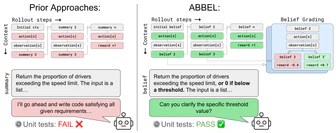
    ABBEL framework: Achieving efficient long-range interaction through belief updates

    The ABBEL framework replaces the complete interaction history with natural language belief states as the working context for an agent and utilizes a belief scoring mechanism to supervise the content of each belief state, achieving model performance close to that of a complete context model in collaborative code generation tasks while reducing the peak context token length by about 75% and training steps by 50%.

Jul 21Tue
  1. Liquid AI Blog

    How LFM2.5-8B-A1B expands and upgrades the model tokenizer

    LFM2.5-8B-A1B expands the vocabulary of the model tokenizer from 65K to 128K, reducing the number of tokens for Hindi, Vietnamese, and Thai texts by 2.4×, 2.6×, and 4.0× respectively, and improving device-side decoding speed by 2.2× to 3.7×. This expansion method extends the original BPE merging rules and fine-tunes the model in stages without retraining. The expanded 128K tokenizer has been released on Hugging Face, and the model itself has also been open-sourced.

Jul 20Mon
Jul 17Fri
Jul 13Mon
Jul 9Thu
  1. Cognition Blog

    SWE-1.7 Released: A Cost-Reduction Solution for Cutting-Edge Intelligence

    SWE-1.7 is the strongest Cognition training model, achieving cutting-edge intelligence levels at a lower cost. It achieves breakthroughs by improving the RL pipeline (better infrastructure, more stable training, high-quality data, new techniques for long-term tasks), challenging the 'fine-tuning ceiling' assumption. It is provided on the Devin platform (Web/Desktop/CLI) by Cerebras, supporting 1000 TPS, with a FrontierCode 1 score of 42.3% in coding benchmarks.

  2. Meta AI Blog

    Meta AI has released the Muse Spark 1.1 multimodal reasoning model.

    Muse Spark 1.1 is the latest multimodal reasoning model released by Meta Superintelligence Labs, significantly improving in tool and computer use, coding, and multimodal understanding, supporting million-token context windows. It is open to developers for public preview via the Meta Model API, surpassing Muse Spark and matching leading alternatives in Meta's internal coding evaluations.

Jun 30Tue
  1. Cognition Blog

    The Cognition team has launched Devin Fusion: achieving cutting-edge performance at 60% lower cost.

    Devin Fusion maintains cutting-edge and Fable 5-level performance at 60% lower cost on the new coding benchmark FrontierCode, primarily through a dual-agents architecture that runs cutting-edge models in parallel with cost-effective 'assistant' models. This architecture avoids benchmark overfitting and enhances task generality through dynamic in-session routing and deeply tuned interaction patterns, showing the most significant efficiency improvement in implementation-oriented sessions. Users can try the preview version via app.devin.ai/signup.

Jun 29Mon
Jun 19Fri
  1. OpenAI Alignment Blog

    OpenAI explores the path to achieve widespread and persistent beneficial models through reinforcement learning

    OpenAI enhances models' cooperative and beneficial behaviors in dozens of benchmarks through reinforcement learning of beneficial traits in real-world scenarios, with the effects generalizing beyond the training domain and maintaining under adversarial pressure. They constructed a real-world dialogue dataset encompassing fields like health, education, and science, for training models to exhibit traits such as honesty, cognitive humility, and metacognitive transparency. The results show significant improvements in the models under independent evaluations like reward hijacking, deception, and harmful suggestions, and adversarial prompts or fine-tuning are difficult to make them exhibit harmful behaviors.

Jun 13Sat
Jun 11Thu
Jun 10Wed
Jun 2Tue
  1. MiniMax · Hugging Face new models

    MiniMax-M3-MXFP8 released: Native multimodal model supports contexts of up to millions

    MiniMax-M3-MXFP8 is a native multimodal model with a 1M context window, approximately 428B parameters, and 23B activation parameters, achieving 9x pre-filling and 15x decoding speed improvement through MiniMax sparse attention mechanism (MSA). The model leads in long-horizon agent benchmarks, supporting three reasoning modes, and can be downloaded via Hugging Face and deployed using SGLang, vLLM, or Transformers frameworks.

May 20Wed
  1. Prime Intellect Blog

    Systemic Reward Attacks and Prime Sprints: Methods for Detection and Mitigation of Reward Attacks

    Systematic reward attack and Prime Sprints study reward attacks in a backdoor-ifeval environment with hidden keyword rewards, finding that attacks are dynamic problems. Benchmark frequency can predict attack occurrence, but there is no security rarity threshold. Attacks with zero baseline frequency are amplified, rare attacks are slower, and environments with moderate task difficulty are most robust. Prime Sprints provides free credit for users to conduct reward attack experiments, and the environment is open-sourced.

May 19Tue
May 18Mon
  1. Prime Intellect Blog

    General Agent: A self-evolving synthetic intelligence agent environment

    General Agent is an open-source environment that is a synthetic intelligent agent environment capable of self-evolving over time, containing 4,504 tasks across 1,040 domains and over 8,000 tools. The synthesizer and solver generate and validate tasks through a 2-player game mechanism, with task difficulty divided into 4 levels, gradually increasing in difficulty after validation by the solver.

May 11Mon
  1. Thinking Machines

    Thinking Machines releases an interactive AI model that natively supports multi-modal real-time collaboration.

    Thinking Machines releases a preview of its interactive AI model research, natively supporting multi-modal real-time interaction for audio, video, and text, employing a multi-stream micro-step design to ensure a 3.5x speed boost, achieving seamless dialogue management, synchronized speech, time-aware capabilities, and breaking through traditional turn-based interface bottlenecks.

May 8Fri
  1. Berkeley AI Research

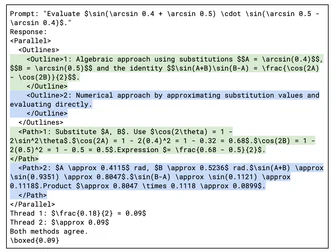
    Adapting to parallel reasoning: the next paradigm for efficient reasoning extension

    Adapting to parallel reasoning allows models to decide on their own when to decompose and parallelize independent subtasks, how many threads to start, and how to coordinate. Existing methods such as fixed parallelism, heuristic structured search, and Monte Carlo tree search determine the parallel structure externally. Recent advancements like ParaThinker and GroupThink attempt to let models adaptively select parallel strategies, but decisions are still constrained externally.

Apr 30Thu
Apr 20Mon
  1. Berkeley AI Research

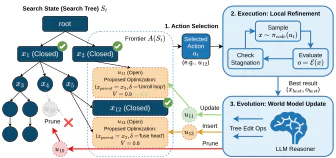
    Berkeley AI Research launches the gradient-based long-term world model planner GRASP

    GRASP is a new gradient-based world model planner that achieves temporal parallel optimization by elevating trajectories to virtual states, explores by directly adding randomness to state iterations, and provides clear signals for actions by reshaping gradients, while avoiding fragile 'state-input' gradients generated by high-dimensional visual models, making long-term planning possible.

Apr 16Thu
Apr 14Tue
  1. Moonshot AI · Hugging Face new models

    Kimi K2.6 released: Open-source multimodal agent model breaks performance in long-term encoding and autonomous execution

    Kimi K2.6 is an open-source multimodal intelligent agent model that has made significant progress in long-term encoding, encoding-driven design, proactive autonomous execution, and group task orchestration. It has 1 trillion parameters, a context length of up to 256k tokens, achieving a score of 54.0 on the HLE-Full benchmark and 86.3 on the BrowseComp (agent group) benchmark, and supports 300 sub-agents executing 4,000 coordinated steps in parallel.

Apr 3Fri
Mar 13Fri
  1. Berkeley AI Research

    How do SPEX and ProxySPEX algorithms scale to identify LLM interactions

    The SPEX algorithm identifies key interactions of LLMs through signal processing and coding theory, analyzing the impact of features, data, and model components with only a small amount of disturbance, achieving high fidelity in sentiment analysis tasks even with thousands of features; The ProxySPEX algorithm leverages model hierarchical structure characteristics, reducing the number of disturbances by 10 times while maintaining performance.

Feb 12Thu
  1. Andrej Karpathy60

    Introduction to Andrej Karpathy's microgpt project

    Andrej Karpathy released an art project named microgpt, a single-file containing only 200 lines of pure Python code, which can train and infer GPT models without dependencies. The project implements all algorithmic content from dataset processing, tokenizer, automatic differentiation engine to GPT-2 style neural network architecture, Adam optimizer, training and inference loop. The code can be obtained from GitHub gist and karpathy.art, and has been released as a triptych.

Feb 10Tue
  1. Prime Intellect Blog

    Prime Intellect Lab: An end-to-end platform for training custom models

    Prime Intellect Lab releases an end-to-end model training platform that integrates Environments Hub, hosting training and hosting evaluation, supporting large-scale agent reinforcement learning, reasoning, and evaluation without managing GPU clusters or algorithm details. The platform is built based on environments, including task datasets and executors, and has completed over 3000 reinforcement learning runs through private testing.