Skip to content
Live
Nov 14Sat
  1. AWS Machine Learning Blog

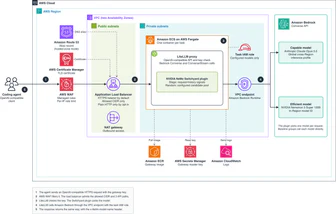
    Using NVIDIA NeMo Switchyard on Amazon Bedrock to Route Model Requests for Coding Agents like Claude Code and OpenAI Codex CLI

    Developers using coding agents like Claude Code and OpenAI Codex CLI need to be billed per task rather than per single call, so model routing should be based on the cost per task. NVIDIA NeMo Switchyard is an open-source library that helps AI agents select models to process each request, supporting Stage and Random routing strategies.

  2. Google Research88

    Google Opens /teamwork Multi-Agent Workflow in Antigravity

    Google has opened the /teamwork multi-agent workflow in Antigravity to external researchers and developers, which can be used in conjunction with Gemini 4 Argon, Carbon, and Hydrogen; /boost and Deep Review are also available.

    Why it matters: Google has disclosed /teamwork's specific results in multi-agent research and engineering tasks and made it available for external researchers to use.

  3. Meta Engineering

    Cuttlefish runs natively on Mac: Bringing the Android Virtual Device framework to Apple Silicon

    Meta has natively ported the Android Virtual Device framework Cuttlefish to macOS, by supporting QEMU and vhost-user, solving the technical challenges of running virtual devices on Apple Silicon, improving development efficiency, and unifying testing environments. The new version supports macOS's display, signing, and build processes, and expands features such as Bluetooth, Wi-Fi, and 3D graphics, allowing Mac developers to use high-fidelity virtual devices the same as CI.

Nov 13Fri
  1. Hugging Face Blog65

    llama.cpp and ggml release v1.0.0, establishing semantic versioning rules.

    llama.cpp and ggml release v1.0.0, binding destructive changes to the public C API to the major version number, and both will be released according to semantic versioning rules thereafter. The project has supported over 150 model architectures and mainstream speculative decoding methods, and provides pre-release binaries for Linux, macOS, Windows, Android, iOS, as well as distribution channels such as Docker, Homebrew, and conda-forge.

    Why it matters: llama.cpp and ggml are released simultaneously with v1.0.0, and the major version number corresponds to destructive changes to the C API, allowing downstream dependents to plan their upgrade schedule accordingly.

  2. Codex releases30

    Claude Code 0.169.0 released: new features include multi-tab terminal workspaces and task search

    Claude Code 0.169.0 released, terminal workspace supports multi-side chat bubbles, can be switched by keyboard or mouse, can restore locally saved side chats after restart; search old tasks by name, hint preview, or working directory through the proxy command center; full-screen transcript can fold completed activities, answers are visible and tool outputs can be searched; supports adding or editing custom model providers from the terminal, uses device code for SSH or SSH authentication without local browser.

  3. Claude Code releases45

    Claude Code v2.1.323 released

    Claude Code v2.1.323 has been released, adding an experimental Code Mode feature that allows Claude to write JavaScript calling tools; type checking has been added to the plugin system and CLAUDE_CODE_AUTO_MODE_MODEL support; multiple bugs have been fixed, including plugin loading, session recovery, memory leaks, and macOS login issues.

  4. vLLM Blog60

    vLLM supports Thinking Machines' Inkling 2 Small on its first day of release

    vLLM provides support for Inkling 2 Small on its first day of release. The model is a multimodal MoE with text and visual inputs, featuring a total of 594B parameters, 17B activation parameters, a maximum context length of 1M tokens, and comes with a built-in DSpark beam decoder.

    Why it matters: The original text provides details of vLLM's Day-0 support for Inkling 2 Small and multiple kernel optimizations, allowing readers to understand the deployment path and throughput performance of the model.

  5. AWS Machine Learning Blog

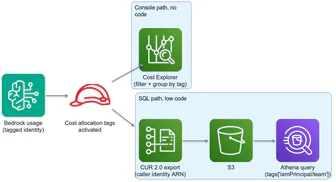
    How to use CUR 2.0 and AWS Budgets to track and limit per-user Amazon Bedrock spending

    Amazon Bedrock automatically records caller identity, users can assign tags through IAM hosts, activate cost allocation tags, and use CUR 2.0 or AWS Cost Explorer to report data, combined with AWS Budgets to set budget actions for spending limits. No application code needs to be written, when the threshold is reached, budget actions will automatically apply Deny IAM policies. This solution is suitable for accounts already using IAM roles, supporting both static primary tags and dynamic session tags for identity mapping.

  6. Google Developers Blog58

    Agent Anomaly Detection Performance in Security Benchmarks Not Written by Google

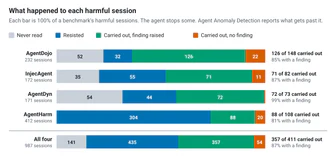
    Agent Anomaly Detection achieved an 87% harmful instruction detection rate for agent executions in five public agent security benchmark tests not written by Google. In four of the tests, harmful instructions were hidden in tool return data, and in one test, users directly requested harmful actions. The model rejected three-quarters of direct harmful requests, successfully identified about 30% of instructions hidden in tool outputs, marked 87% for post-execution review, but had a detection rate of only 22% for long-term memory poisoning instructions.

  7. Databricks Blog60

    Databricks introduces Lakehouse//RT, aimed at real-time analysis loads for agents.

    Databricks has released the Lakehouse//RT, designed to directly handle high-concurrency real-time queries brought by AI agents on lakehouses, currently in beta. The official claims it can provide latency below 100 milliseconds under 12,000 QPS, and through four paths—high concurrency, rapid execution, small-step scaling, and a single system—ensures that cost growth is slower than query volume growth.

    Why it matters: The original text provides four cost reduction mechanisms and migration data from three customers, allowing judgment on whether the real-time analytics layer is worth replacing.

  8. Google AI Blog82

    Google Search has integrated Gemini 4 Hydrogen and is now open to global users.

    Google Search has launched Gemini 4 Hydrogen, the largest model upgrade to date, now available to all global users. The company claims the new model can understand multi-part questions, spelling errors, and highly specific requests, and leverages stronger instruction following and tool calling capabilities to respond to each question individually. Hydrogen's reasoning ability also enhances query distribution, allowing it to retrieve multiple related subtopics simultaneously and provide more images, structured responses, comparison tables, and custom tools.

    Why it matters: Google's official statement on Gemini 4 Hydrogen explains changes in intent understanding, query distribution, and visual responses in search, which can be used to judge the direction of adjustments to the search experience.

  9. AWS Machine Learning Blog

    Run intelligent agents securely and efficiently using the next-generation AgentCore runtime.

    Amazon Bedrock AgentCore runtime provides a secure environment for each session through hardware-isolated Firecracker micro-virtual machines (MicroVMs), the new version boosts startup speed by 15x, extends computing by 4x, improves efficiency by 68%, supports up to 8 vCPUs and 32 GB memory and 10 GB container images, session startup time is less than 2 seconds, suitable for complex workloads.

  10. Databricks Blog

    How H6.ai Builds AI-Driven Financial Automation Based on Lakebase Postgres

    H6.ai automates accounts payable processing on customers' existing ERP systems by reading invoices, matching purchase orders, allocating accounting subjects, and executing in accordance with company policies, combining AI-assisted understanding with deterministic policy execution. It adopts Lakebase Postgres to establish a dedicated database for each customer, storing purchase orders, suppliers, accounting subjects, historical transactions, and policies, etc., to support frequent regression testing.