Skip to content
Live
Nov 11Wed
Nov 10Tue
  1. Berkeley AI Research22

    BAIR at CoRL 2026

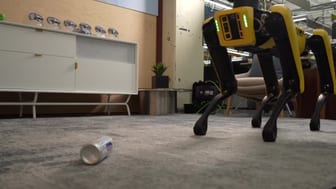
    BAIR team presented multiple research achievements at the Robot Learning Conference (CoRL) held from November 9 to 12, 2026, in Austin, Texas, including 33 main conference papers, 4 breakthrough posters, 10 oral presentations, and 7 thematic speeches, among which Professor Negar Mehr will deliver an early career keynote speech. The conference covers topics such as robotic vision-language-action models, embodied agents, fine-grained manipulation alignment, and hindsight reward editing.

Nov 6Fri
  1. Google Research72

    Google Research uses smartwatch sensors to identify signs of hypertension.

    Google Research published a multimodal AI system AI-PPG-ACC-HTN in Nature, which passively identifies hypertension status without wristband calibration, using only PPG and accelerometer data from consumer-grade smartwatches.

    Why it matters: The study passively identifies hypertension using PPG and accelerometer data from smartwatches, providing quantitative results for screening and confirmation in two stages, with 24-hour dynamic blood pressure monitoring as the gold standard.

Nov 5Thu
  1. IBM Research Blog38

    HRL Laboratory's MEMS inertial sensor can rival GPS

    HRL Laboratory develops an inertial measurement unit (IMU) using advanced algorithms, providing an uninterrupted GPS alternative. Its MEMS inertial sensor is the size of a can of soup, with accuracy close to GPS, and solves the long-standing problem of bias drift. Through the AutoCal automatic calibration system, it continuously corrects errors, achieving unlimited navigation support. The IMU uses ASIC and advanced packaging technology to optimize cost and size, making it suitable for light vehicles such as drones.

  2. Hugging Face Blog72

    Phonon TTS releases on-device speech models, topping multiple metrics on the Hugging Face open TTS leaderboard

    Phonon releases a small TTS model that can run on local devices, without a server and network, offering two versions of about 65 MB and 75 MB, covering English, French, German, Spanish, and Portuguese.

    Why it matters: The original text outlines the specifications, open-source license, and leaderboard performance of on-device TTS models, allowing judgment on the usability boundary of small models in local voice scenarios.

Nov 4Wed
Oct 28Wed
  1. Hugging Face Blog76

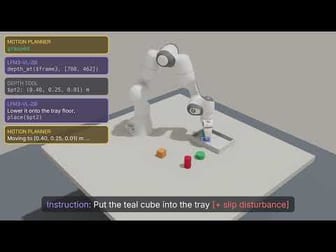
    Liquid AI releases LFM3 series: Same 2B backbone derived text, visual, audio, multimodal and decision models

    Liquid AI releases the new generation Liquid Foundation Models, LFM3, deriving six 2B-level models from the shared backbone LFM3-1.7B-Base, covering text, vision, audio, multimodal, and decision, all open weights on Hugging Face.

    Why it matters: Liquid AI derives six modality models from the same 2B-level backbone and provides single-card fine-tuning and edge deployment paths, which can be used to judge the specialization route for small models.

Oct 27Tue
  1. LangChain Deep Agents releases

    LangChain Deep Agents deepagents-code==0.2.2 release: Security and performance improvements

    The deepagents-code==0.2.2 version of LangChain Deep Agents has been released, including security and performance improvements. New features include GPT-6.1 Terra support, Chinese text input to chat, plugin update detection, etc.; bug fixes include project .env file trust value settings, terminal UI link limits, Git option limits, etc.; performance has been improved by reusing parent process context, optimizing server startup processes, and streamlining transcription rendering, etc. It is recommended to upgrade as soon as possible.

Oct 22Thu
Oct 20Tue
Oct 19Mon
  1. Google Developers Blog

    LiteRT Tensor API release: A new solution for native model development on edge devices.

    LiteRT Tensor API is released, supporting developers to write and optimize models natively in C++ on edge devices, enabling cross-platform deployment (CPU/GPU/NPU) without script conversion. Developers can fully control the computational graph structure and directly load model weights, achieving zero-copy data transfer through shared accelerator buffers, while providing building blocks for AI coding agents.

Oct 14Wed
  1. Google DeepMind

    Gemini 4 Argon brings breakthrough progress to robotics technology

    Gemini 4 Argon has achieved major breakthroughs in physical understanding, code generation, and visual semantic reasoning, achieving a pure reasoning score of 87% on the Embodied Reasoning (ERQA) benchmark test, surpassing all leading models. Argon can be applied to all stages of the robot's lifecycle, including mobile manipulation practice using MuJoCo, zero-shot robot control, and closed-loop steering of video world models.

Oct 13Tue
Oct 8Thu
Oct 1Thu
  1. Amazon Science

    Graph Center Agent: How to Utilize Graph Structures for Agent Reasoning

    Amazon Science has released Graph Center Agent technology, which combines a continuous synchronized graph (digital twin) representing the network with device attributes and connections, with cascade graph algorithms (decomposition, aggregation, tracing) and agent orchestration to achieve minute-level root cause analysis of complex network failures, achieving 95% accuracy in a demonstration at NTT DOCOMO's MWC.

Sep 30Wed
  1. Google Developers Blog

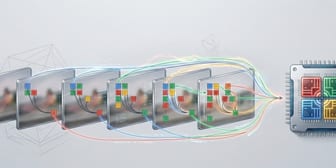
    How does Sparse VideoGen (SVG) accelerate temporal and spatial attention computation for video diffusion on TPUs

    Sparse VideoGen (SVG) dynamically routes attention heads to spatial or temporal masks by identifying the spatiotemporal structures of different attention heads in video diffusion models, converting theoretical sparsity into actual end-to-end speedup. On TPU v6e, SVG retains about 38.87% of query-key pairs, achieving 3.5x inference acceleration while maintaining output quality at a given sparsity level. The scheme employs custom JAX and Pallas Splash attention kernels to convert theoretical sparsity into physical sparsity on hardware.

Jul 27Mon
  1. Meta AI Blog

    Meta AI's DINOv3 and SAM models help the University of Pittsburgh reshape assistive robots

    Meta AI's DINOv3 and SAM models achieve real-time perception in edge computing, supporting the University of Pittsburgh's RAMMP project development of assistive robots, interacting through natural language and image data to reduce user cognitive load, already integrated in prototypes with automatic door button detection, cup recognition, and navigation assistance features, and plans to add voice and touch input support.

May 8Fri
  1. Berkeley AI Research

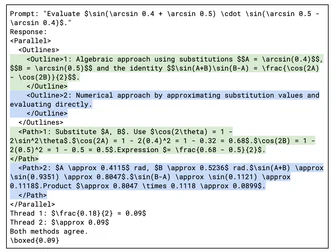
    Adapting to parallel reasoning: the next paradigm for efficient reasoning extension

    Adapting to parallel reasoning allows models to decide on their own when to decompose and parallelize independent subtasks, how many threads to start, and how to coordinate. Existing methods such as fixed parallelism, heuristic structured search, and Monte Carlo tree search determine the parallel structure externally. Recent advancements like ParaThinker and GroupThink attempt to let models adaptively select parallel strategies, but decisions are still constrained externally.