Skip to content
Live
Nov 14Sat
  1. AWS Machine Learning Blog

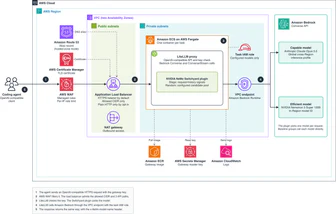
    Using NVIDIA NeMo Switchyard on Amazon Bedrock to Route Model Requests for Coding Agents like Claude Code and OpenAI Codex CLI

    Developers using coding agents like Claude Code and OpenAI Codex CLI need to be billed per task rather than per single call, so model routing should be based on the cost per task. NVIDIA NeMo Switchyard is an open-source library that helps AI agents select models to process each request, supporting Stage and Random routing strategies.
Nov 13Fri
  1. Ant Group inclusionAI · Hugging Face new models

    inclusionAI/Duo-1.0-causal-base released: A multimodal world model for full-duplex interaction

    inclusionAI releases Duo 1.0 causal-base model, a full-duplex multimodal world model for real-time audio-video interaction, including implementation weights and backbones, intent models and adapters, audio-video encoders, speech recognizers, and forced aligners. The model weights are based on MiniMax H3 initialization and are open-sourced.

  2. Ant Group inclusionAI · Hugging Face new models

    inclusionAI/SingVL_S1_4B_GGUF releases the SingVL-4B GGUF multimodal decision model

    SingVL-4B GGUF is the GGUF version of the 4B parameter multimodal decision-making model Sing VL S1 based on Qwen3.5, which can answer named entity questions with text or JSON and up to four images, and uses a full forward pass scoring option, scoring 69.76 in the Text evaluation and 73.94 in the Vision evaluation. The model uses the llama.cpp adapter, with a default context size of 4096 tokens, supporting text and image input.

  3. vLLM Blog60

    vLLM supports Thinking Machines' Inkling 2 Small on its first day of release

    vLLM provides support for Inkling 2 Small on its first day of release. The model is a multimodal MoE with text and visual inputs, featuring a total of 594B parameters, 17B activation parameters, a maximum context length of 1M tokens, and comes with a built-in DSpark beam decoder.

    Why it matters: The original text provides details of vLLM's Day-0 support for Inkling 2 Small and multiple kernel optimizations, allowing readers to understand the deployment path and throughput performance of the model.

  4. Google Developers Blog

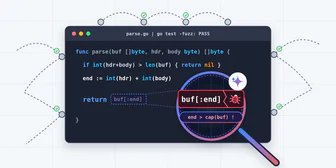
    Gemini and Z3 jointly capture bugs missed in Go code fuzz testing

    Gemini 4 Argon translates Go code panic paths into Z3 constraints, paired with Z3 to check trigger conditions, and paired with go test to replay trigger bytes, locating 3 embedded parser bugs and discovering 3 skill-lint potential bugs within 1 minute. This process is more efficient than go test -fuzz, capable of finding boundary check errors missed by fuzz testing.

  5. Google DeepMind87

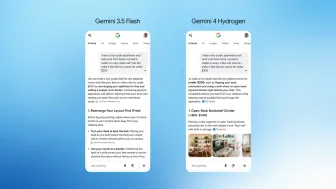
    Google DeepMind releases Gemini 4 Hydrogen model

    Google DeepMind releases Gemini 4 Hydrogen, targeting daily coding and intelligent agent workflows, with an Artificial Analysis intelligence index of 51 at the default high thinking level, higher than Argon's 50, and reaching 54 at the xhigh level

    Why it matters: Google provides the division of labor and positioning of Hydrogen, Carbon, and Argon, as well as the actual differences in cost and speed between multi-model arrangements.

  6. Databricks Blog

    How Block uses Buzz and Unity Gateway to coordinate AI agents

    Block company has launched Buzz, an open-source collaborative space, allowing employees to interact with AI agents in a shared workspace. Through Databricks Unity Gateway, users can access cutting-edge models from OpenAI, Anthropic, Google, and open-source models (specific number not mentioned in the original text), experimenting with different AI agent framework combinations. Employees can create AI agents and choose models (such as the lightweight version of Goose) to achieve multi-person collaborative development, analysis, and other tasks.

Nov 12Thu
  1. IBM Research Blog

    IBM Research explains what a spin qubit is.

    IBM Research is studying two quantum computing hardware architectures, one of which is the spin qubit architecture that encodes information by controlling the spin state of electrons. Spin qubits use quantum dot structures (such as silicon-germanium heterostructures) to trap individual electrons, controlling their spin direction (up or down) with voltage pulses to represent 0 or 1. This architecture has high gate fidelity, scalability, relatively fast speeds, and simple control signals (requiring only voltage pulses), but the current number of qubits is less than that of superconducting qubits and faces challenges such as uniformity and manufacturing yield.

  2. AWS Machine Learning Blog

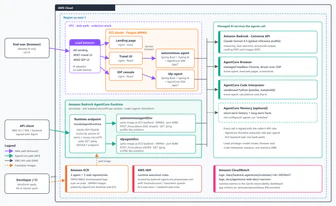
    Build autonomous AI agents using Amazon Bedrock and Spring AI

    Java teams can leverage Amazon Bedrock and Spring AI to build autonomous AI agents, addressing scalability, governance, security, and operational challenges. Spring AI brings AI capabilities to the JVM through the Spring framework (auto-configuration, dependency injection, composable advisors), while the Amazon Bedrock AgentCore platform supports framework and model-agnostic agent construction, connection, and optimization.

  3. AWS Machine Learning Blog

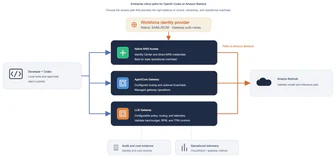
    Deploying OpenAI Codex on Amazon Bedrock Practice

    Developers use OpenAI Codex for code exploration and engineering work through Amazon Bedrock. Amazon Bedrock supports Codex inference and can be integrated with AWS Identity, IAM, and observability practices. It is recommended to start with Native AWS Access for small-scale pilots, use GPT-5.6 Sol for validation, authenticate through IAM Identity Center, and configure model permissions and observability targets.

  4. Google Research58

    Google Research has released a wearable device-driven CKM risk assessment framework

    Google Research releases a wearable device-driven CKM risk assessment framework, predicting future health trajectories through an explainable health age model (CHA). The framework is trained on wearable data from 2.2 million weeks using the SensorWM model, providing personalized 12-week counterfactual health simulations combined with language models to generate clinically validated guidance plans. The CHA model integrates modifiable indicators such as heart rate, steps, and sleep to predict disease risk over 68,000 person-years, improving the predictive performance of clinical indicators.

  5. Apple Machine Learning Research

    Gating Mechanisms of State Space Models (SSMs): Memory and Contextual Learning Research

    State Space Models (SSMs) lag behind Transformers in contextual learning and precise retrieval tasks, as their gating mechanism leads them to first learn memory solutions, delaying or preventing the convergence of correct contextual learning solutions, but the gating mechanism is beneficial for improving long sequence generalization.

  6. AWS Machine Learning Blog

    AWS Quick accelerates product development through AI-driven lifecycle management (AI-PDLC)

    AWS Quick's AI-driven product development lifecycle (AI-PDLC) transforms enterprise signals into validated prototypes through six specialized skill agents, combined with human approval. The Discovery agent analyzes pain points in enterprise data sources, and the Prioritize agent uses a 0-10 score framework to evaluate use case priorities, with all decisions requiring manual confirmation.

Nov 11Wed
  1. Databricks Blog58

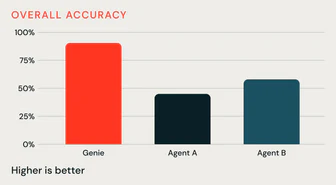
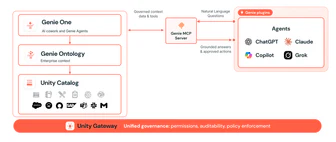
    Databricks Genie Ontology's enterprise context layer brings business understanding to ChatGPT, Claude, Microsoft Copilot Cowork, and Grok Bot

    Databricks releases Genie Ontology, an enterprise context layer, combining managed definitions with continuous learning of organizational knowledge to provide business understanding capabilities for AI agents. Genie plugins support ChatGPT, Claude, Microsoft Copilot Cowork, and Grok Bot, enabling teams to maintain business context in Databricks and use it across multiple agents.

  2. Databricks Blog58

    Databricks Genie Agents now support analyzing more data sources to transform workflows

    Databricks Genie Agents can now perform high-quality business analysis, analyze large volumes of documents, and connect enterprise tools to automate actions by supporting unstructured data analysis and new MCP connectors. The new OpenSharing feature allows users to share managed agents with pre-installed data, instructions, and knowledge with partners, suppliers, and customers, accelerating the generation of external insights.

  3. Ant Group inclusionAI · Hugging Face new models

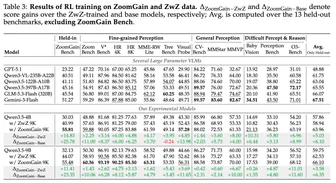
    inclusionAI/ZoomGain-4B released: A fine-grained visual supervision model based on global-to-local visual perception gaps

    inclusionAI has released the ZoomGain-4B large language model, achieving a score of 61.08 on ZoomGainBench and performing excellently on multiple fine-grained perception and general perception benchmark tests; the model is built with supervision based on the global-to-local visual perception gap mined from global image details, supporting English and Chinese Q&A, and can be downloaded via Hugging Face.

  4. Ant Group inclusionAI · Hugging Face new models

    inclusionAI/ZoomGain-4B-GGUF released: Multimodal model supporting image input

    inclusionAI/ZoomGain-4B-GGUF is a 175B parameter multimodal model supporting image input, using FP16, Q8_0, and Q4_K_M precision quantization. The model includes a language model and mmproj visual encoder/projector, converted to GGUF format via llama.cpp. It provides llama-mtmd-cli for command-line inference and llama-server for network chat functionality.

  5. Ant Group inclusionAI · Hugging Face new models

    inclusionAI/ZoomGain-9B-GGUF Released GGUF Format Weights

    The GGUF format weights for inclusionAI/ZoomGain-9B have been released, converted using llama.cpp, with the language model in FP16, Q8_0, Q4_K_M. The visual encoder and projector (mmproj) also adopt this quantization scheme. Both the language model and mmproj files need to be provided for image input, supporting CLI inference (llama-mtmd-cli) and Web Chat (llama-server) deployment.

  6. Ant Group inclusionAI · Hugging Face new models

    inclusionAI/SingVL_S1_4B released: A multimodal decision-making model based on Qwen3.5

    Sing VL S1 is a multimodal decision-making model based on Qwen3.5, capable of answering named entity questions with text or JSON and up to four images, scoring options for each question using a single Transformers forward pass, performing excellently on 43 text datasets and 11 visual datasets, supporting Python 3.12 and PyTorch inference.

  7. Hugging Face Blog

    Tether AI Research has launched the 0.8B parameter BotPsy model, used for device-side intelligent assistants and agent workflows

    Tether AI Research has launched the 0.8B parameter BotPsy model, built based on Qwen3.5-0.8B, specifically designed for function calls and agent workflows, suitable for on-device deployment. BotPsy outperforms all ≤1.2B parameter models in 6 tool use and agent benchmark tests, including Qwen3.5-2B-Think, achieving the highest scores in 5 tests, with a 2.5x speed increase and a 3x improvement in reasoning efficiency.

  8. AWS Machine Learning Blog40

    How Amazon Bedrock AgentCore Evaluations use built-in, DeepEval, and AutoEval to assess agents.

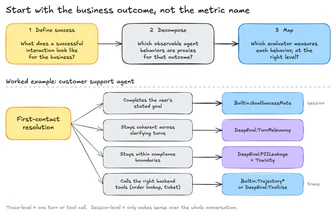
    Amazon Bedrock AgentCore Evaluations provides three evaluators—built-in, DeepEval, and AutoEval—to assess agents. The built-in evaluator is developed and tested by AWS, covering common dimensions; DeepEval and AutoEval are third-party open-source libraries, with AgentCore hosting them in production environments. The evaluation process requires first defining business success criteria, breaking them down into observable behaviors, and then mapping them to the appropriate evaluator level.

  9. OpenAI Alignment Blog

    GPT-6 Astra's CoT monitoring capability is affected by pre-training, architecture, reinforcement learning, and model-generated data

    GPT-6 Astra shows a decrease in CoT monitoring ability in non-adversarial settings, an increase in CoT evasion ability in adversarial tests, and no significant improvement in CoT capability. During pre-training, CoT capability does not increase with the decrease of the base model's perplexity, and the architecture has a limited impact. Reinforcement learning enhances CoT control ability, and model-generated data fine-tuning can transfer CoT control ability. Model perplexity is positively correlated with CoT capability and control ability.