Skip to content
Live
Nov 14Sat
  1. Meta Engineering

    Cuttlefish runs natively on Mac: Bringing the Android Virtual Device framework to Apple Silicon

    Meta has natively ported the Android Virtual Device framework Cuttlefish to macOS, by supporting QEMU and vhost-user, solving the technical challenges of running virtual devices on Apple Silicon, improving development efficiency, and unifying testing environments. The new version supports macOS's display, signing, and build processes, and expands features such as Bluetooth, Wi-Fi, and 3D graphics, allowing Mac developers to use high-fidelity virtual devices the same as CI.


Nov 12Thu
  1. Meta Engineering40

    Meta Develops Intelligent Delivery System: AI Optimizes Computational Resource Allocation to Enhance Ad Sorting Performance

    Meta's Intelligent Delivery system, through AI optimization of computational resource allocation, has boosted ad sorting performance by approximately 10% since 2017. The system includes a Resource Core Model that predicts the marginal utility of computational resources (6B sparse parameters + 20M dense parameters), multi-layer mechanisms for cross-system resource migration, and a framework that uses AI agents to continuously monitor and detect changes in the response system.

Nov 11Wed
  1. Meta Engineering

    Meta launches Your Algorithm tool to make Facebook recommendation content more transparently personalized

    Meta has launched the Your Algorithm tool, allowing users to edit interest lists ("Interested In"/"Not Interested In") in natural language to adjust Feed and Reels recommendations in real-time. The system uses LLM to process user preferences and integrate user behavior, achieving responsive adjustments through retrieval, reordering, and pushing optimization stages. New interest content will appear quickly but will not dominate recommendations.

Oct 30Fri
  1. Meta Engineering66

    Meta rolls out JiTTesting to production: Use LLM to generate tests and catch bugs before code merge

    Meta announced that Catching JiTTests has been put into internal production, using LLM to automatically generate executable tests for diffs to be merged, exposing behavioral differences before the code is landed

    Why it matters: Meta has disclosed the production deployment details and quantitative results of JiTTests, available for evaluating the implementation of LLM-generated tests in ultra-large-scale codebases.

Oct 28Wed
  1. Meta Engineering

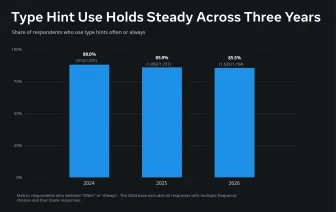
    2026 Python type hints survey: Changes in AI tools and inspectors landscape

    2026 Python Typing Survey Received 1794 Responses, Checker Selection Shows Significant Change, Half of Respondents Use Multiple Checkers, Missing Library Type Information Remains a Major Challenge. AI Tool Usage in Typing has Increased Substantially from 18.5% to 38.4%, with 42.5% of Respondents Using AI to Generate Typing, 61.0% Using AI to Fix Checker Errors, but 29.8% Express Uncertainty about the Practicality of AI-Assisted Coding.

  2. Meta Engineering

    Meta's PrivacyLib: Implementing privacy control at data access boundaries

    Meta's PrivacyLib implements privacy control at data access points through a general-purpose library, replacing the previous method of implementing the same logic individually in each system. The library performs hundreds of billions of checks per second, supporting internal AI agents to pass context on supported paths to monitor data access. The system only needs to be integrated once, and new privacy capabilities can be reused as modules without developing each system individually.

Oct 22Thu
Oct 20Tue
  1. Meta Engineering

    Meta introduces GenRecs Tokenization to reshape ad recommendations with a stable model vocabulary.

    GenRecs Tokenization enhances conversion rates by 0.35% for advertisers by representing items like ads and products with a stable semantic vocabulary, combined with Meta's Generative Ad Model (GEM) and adaptive ranking model. This technology leverages the world knowledge of pre-trained large models to enable recommendation systems to understand preferences of new items or users with no historical interaction, accelerates learning through shared concepts, achieves cross-activity transfer, and improves performance as large model scale increases, forming a feedback loop for performance improvement.

Oct 19Mon
Oct 16Fri
Oct 15Thu
Jul 21Tue
  1. Meta AI Blog

    Meta AI's SAM 3 and DINOv3 models drive the first wave of progress for the Genesis mission project

    Meta AI's open-sourced SAM 3 and DINOv3 models achieve 3D semantic segmentation and reconstruction of scientific images within 15 minutes using 300 A100 GPUs on the NERSC supercomputer, helping the U.S. Department of Energy's Genesis mission project overcome the analytical bottleneck caused by data explosion after ALS upgrade, and has realized a 20-fold increase in monthly expert annotation efficiency in grapevine drought cell-level research.

Jul 9Thu
  1. Meta AI Blog

    Meta AI has released the Muse Spark 1.1 multimodal reasoning model.

    Muse Spark 1.1 is the latest multimodal reasoning model released by Meta Superintelligence Labs, significantly improving in tool and computer use, coding, and multimodal understanding, supporting million-token context windows. It is open to developers for public preview via the Meta Model API, surpassing Muse Spark and matching leading alternatives in Meta's internal coding evaluations.

Jul 7Tue
Jun 29Mon