Skip to content
Live
Oct 16Fri
  1. Meta Engineering

    Meta How to Build Forum Applications with Native AI Engineering

    Meta uses AI agents to participate in the construction of engineering processes for Forum applications, viewing AI as a participant in the engineering process rather than an auxiliary tool. This experiment measures success by production-ready outcomes rather than lines of code, using a Human-On-The-Loop model to allow AI to autonomously execute planning, implementation, testing, and validation, with engineers responsible for setting goals, supervision, and acceptance.

  2. Microsoft AI News

    Microsoft AI has released an 80 billion parameter MoE large model MAI-Base-2.

    Microsoft AI has completed the pre-training of a new MoE large model MAI-Base-2, with 80 billion active parameters and 2.8 trillion total parameters, surpassing all open-source models in internal evaluations. The model is 4-12 times more efficient in pre-training FLOPs than the strongest open-source base model DeepSeek-V4-Pro-Base and is used to train larger models. Microsoft plans to license the model weights through Foundry using organic data pre-training and full-stack control.

  3. Google DeepMind

    How does Google Antigravity accelerate the discovery of antibacterial peptides?

    The Google Antigravity platform works through its intelligent agent workbench and ProtNLM model, helping biologists quickly discover, structure evaluate, and prioritize potential antimicrobial peptide targets, compressing searches previously scattered across multiple databases into a single session. The platform uses ProtNLM to predict protein function and supports researchers in scanning millions of uncharacterized proteins in the UniProt database. Researchers collaborate with AI agents on a shared 3D canvas, compressing the time required for the antimicrobial peptide discovery process from several days to a single session.

Oct 15Thu
  1. Google Developers Blog

    How to evaluate AI agents: Beyond sensory checks.

    Evaluating AI agents cannot rely solely on perception checks, as agents may fall into retry loops or produce hallucinatory responses that still appear normal, leading to soaring cloud costs and token usage. A repeatable evaluation process should be established, starting with defining key user journeys (CUJ), using simulated user testing, and employing multiple layers of checks such as unit tests, deterministic metrics, LLMs as judges for scoring standards, and integration tests. Combining manual review tracking with automated validation can detect latent regressions early in development and expand the evaluation framework as agent capabilities grow.

  2. Google Developers Blog

    Google OAuth Launches DPoP Support: Protecting Refresh Token Security

    Google OAuth Platform Launches DPoP Support, Encrypting Refresh Tokens and Client Key Pairs at the Application Layer to Prevent Token Theft and Replay Attacks. This scheme uses DPoP only for constrained long-lived refresh tokens, ensuring they cannot be replayed even if stolen, while short-lived access tokens remain standard Bearer tokens to maintain high performance. DPoP works with DBSC to defend against API and web session credential theft, but note the key sharing challenges in multi-agent workflows.

  3. LangChain Blog

    How LangChain Deep Agents Manage Context Windows Through Middleware

    LangChain Deep Agents manage context windows through middleware, preventing unnecessary information from entering and filtering existing content. It employs techniques such as offloading (saving large tool results and user messages to files), summarization (compressing old messages), skills (loading on demand), sub-agents (separating noisy tasks), and long-term memory (preserving learning across sessions). These techniques are implemented by inserting middleware at critical points like model calls and tool calls, allowing users to use them without writing code.

  4. Google Research

    Deep Review: Google's intelligent document verification system

    Google has launched the Deep Review intelligent document verification system, providing rigorous feedback and technical validation for complex documents, supporting PDF and plain text input, offering 2 free reviews per week, and integrating advanced API, collaborating with 4 top computer conferences such as STOC 2026 and ICML 2026, processing over 16,000 pre-submission feedbacks for papers.

Oct 14Wed
  1. NVIDIA Blog

    Multiple cities in Europe have deployed NVIDIA-driven AI agents to improve urban operational efficiency.

    Multiple cities in Europe, along with software, infrastructure, and integration partners, are using NVIDIA's accelerated computing to build physical AI agents and digital twin systems to optimize urban operational decisions. These applications can predict maintenance needs, guide urban planning, and enhance public service response capabilities, involving Belgium, Finland, France, Italy, Netherlands, Poland, Sweden, and the UK.

  2. StepFun · Hugging Face new models

    Step-5-Preview-NVFP4 model release by LeapX Stars

    LeapX Stars releases flagship model Step-5-Preview-NVFP4, with 600B total parameters and 27B active parameters, supporting up to 1M context windows, excels in software engineering, professional knowledge work, and financial fields, capable of processing text, images, and video, deployable via OpenAI-compatible API or offline generation.

  3. Claude · YouTube

    Detailed Explanation of Claude Code Cloud Chat Function

    Claude Code's cloud sessions run on cloud virtual machines, allowing offline continuous operation, supporting phone startup, and parallel processing. Suitable for scenarios requiring continuous operation or remote collaboration, supporting GitHub connection and environment configuration. This feature is included in the Pro, Max, Team plans, as well as enterprise advanced or Chat + Claude Code seats, counted towards plan limits with no additional compute costs.

  4. GitHub Blog · AI & ML

    GitHub's secret detection model: Discover more secrets with less noise

    GitHub released a dedicated secret detection model that combines a fine-tuned ModernBERT classifier with regular expressions, reducing false positives by 11.5% while achieving a higher acceptance rate and shortening post-push scan execution time by 86%, with a cost reduction of 98%. The model distinguishes real credentials from similar items by analyzing file paths, variable names, and contextual code, making general secret detection extendable to push protection possible.

  5. IBM Research Blog38

    IBM will launch the 7-nanometer nanoscale stacking technology early research and development process design kit (PDK) in the first quarter of 2027.

    IBM announced that it will launch an early research and development process design kit (PDK) for 7-nanometer nanoscale stacking technology in the first quarter of 2027, to help semiconductor companies evaluate the technology before large-scale adoption. The kit will provide a standard cell library for logic functions and SRAM design examples, supporting layout and routing, early module-level layout, and density and power performance evaluation. Nanoscale stacking technology achieves 3D layout at the transistor level for the first time on logic wafer technology by stacking transistors vertically rather than placing them side by side, which is significantly different from current nanosheet transistor architectures.

Oct 13Tue
  1. LangChain Blog

    LangSmith adds an AI search feature to optimize large language model agent debugging through behavior tracking

    LangSmith introduces an AI search feature that supports natural language queries for intelligent agent behavior tracking records. This feature can search for user inputs, agent reasoning, tool calls, and responses, helping teams discover specific behavior patterns, such as PII leaks or user frustration. The AI search combines SmithDB's data layer and decision models, achieving fast and efficient cross-SDK searches by analyzing standardized trajectories rather than raw long texts, prioritizing key information like user messages and agent responses.

  2. IBM Research Blog58

    IBM Research uses an open-source agent factory to achieve 52-fold acceleration in quantum error correction chip design with a cost of $26

    IBM Research uses an open-source agent factory to optimize quantum error correction hardware, achieving 52x acceleration with a cost of about $26; with the same budget, a closed-source cutting-edge model configuration costs $299 (11.5x higher) but provides 204x acceleration, with the open-source configuration achieving hardware optimization with a smaller area; the agent factory assigns tasks to parallel working agents through a coordinator, combining code modification with hardware effect evaluation, exploring various architectural possibilities.

  3. LangChain Blog

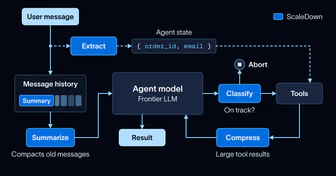
    How ScaleDown optimizes context management for long-running agents through compression and extraction techniques

    ScaleDown optimizes context management for long-running agents through compression and extraction techniques, its model is 41 times cheaper and 2.7 times faster than general models like GPT-5.5 in benchmark tests. ScaleDown provides four models: Summarize, Compress, Extract, and Classify, respectively for summarization, compression, extraction, and classification, supporting up to 1M tokens of input, and supporting image and PDF input.

  4. Google Developers Blog

    Gemini 4 Argon optimized the performance of a 200,000-line Python codebase

    Gemini 4 Argon has been running for 11 hours without human intervention, proposing 6 optimization suggestions by analyzing the ADK Python repository with 205,000 lines of code. Ultimately, 2 of them were adopted and deployed, reducing the memory session preparation time by about 40% and increasing the cold package import speed by 21%. The model followed the repository maintainer's guidelines during the optimization process and ran all 16,892 unit tests.

  5. GitHub Blog · AI & ML

    GitHub Copilot Application Introduction: How to Teach Copilot to Understand Your Codebase

    GitHub Copilot can allow users to convey project rules, encapsulate repeatable processes, provide professional guidance, and connect external tools to improve collaboration efficiency through custom instructions, proxy skills, custom agents, and the Model Context Protocol (MCP) server. Custom instructions define code standards, proxy skills encapsulate repetitive tasks, custom agents handle complex work, and MCP servers extend Copilot functionality.

  6. Microsoft Research

    Microsoft Research open-sources multi-modal model StudentSim for simulating student learning behavior

    Microsoft Research has open-sourced the multimodal model StudentSim for simulating student learning behavior. It is trained on publicly anonymized learning records to create a personalized student simulator that outperforms benchmarks in areas such as chess, English writing, and mathematics. It provides early feedback signals for AI tutoring systems but is not intended to replace teachers or classroom teaching.

Oct 12Mon
  1. NVIDIA Blog

    NVIDIA open-sources Vera Rubin architecture at OCP Global Summit to help scale global AI factories

    NVIDIA announced at the OCP Global Summit that it will open-source the NVIDIA Vera Rubin rack and compute shelf design. By opening the NVIDIA MGX architecture, it provides system builders with a common foundation for building next-generation AI factory infrastructure. The Vera Rubin AI factory adopts the third-generation MGX rack architecture, supporting rack deployments of up to 250kW. It expands the open architecture by adding configurable I/O ports, fanless liquid-cooled compute shelves, standard power and cooling interfaces, and support for 19-inch devices.

  2. Microsoft Official Blog

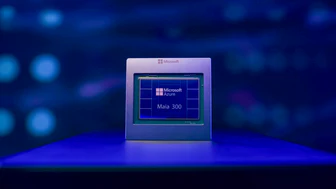
    Microsoft expands the Azure Maia system to multi-gigawatt deployment

    Microsoft is expanding the Azure Maia system to multi-gigawatt deployment, Maia 200 has entered production, and Maia 300 will be launched in 2027. Maia 200 is serving Microsoft's production workloads, including Microsoft Copilot, and supports the MAI team in developing next-generation models. GitHub Copilot and Microsoft Foundry will be launched by the end of this year.

Oct 9Fri
  1. AWS Machine Learning Blog

    How BlockRun and Incarna use Amazon Bedrock AgentCore Pay to enable AI agents to pay per inference

    AgentCore Pay allows AI agents to pay as needed, Incarna uses it to enable agents to pay per request to BlockRun for model inference, BlockRun offers on-demand billing inference services for over 90 models. AgentCore Pay reduces the workload of adding x402 support from months to days through hosted wallets, native protocol handling, infrastructure layer spending governance, and auditable settlements.

Oct 8Thu
  1. Google Developers Blog

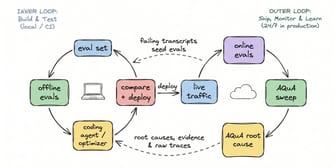
    AQuA: An agent that can diagnose agent issues in a production environment.

    AQuA runs alongside the production agent, analyzing production trajectories through a five-stage process (sampling, review, clustering, validation, tracking), clustering common issues, and generating actual/expired findings to help teams continuously monitor and improve agent quality. It uses target files written by developers and custom metrics to guide the review process and supports integration with AutoRaters on the Gemini platform.

  2. NVIDIA Blog

    NVIDIA and Microsoft team up to usher in a new era of AI agents for Windows PCs: RTX Spark and local AI calculator

    NVIDIA and Microsoft collaborate to launch RTX Spark laptops and Windows AI agent infrastructure, supporting local running of 125B parameter Qwen 3.8 Flash Next models; Microsoft releases MXC operating system-level container to ensure agent secure operation, pre-orders for RTX Spark open today, paired with Grace Blackwell chip, offering up to 20 PFLOPS inference performance.

  3. AWS Machine Learning Blog

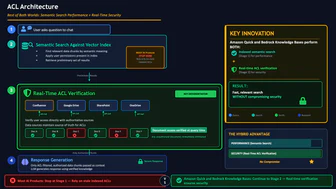
    How Amazon Quick and Amazon Bedrock Knowledge Bases perform RAG access control through real-time ACLs

    Amazon Quick and Amazon Bedrock Knowledge Bases address the RAG access control challenge through real-time access control list (ACL) access, verifying permissions directly with authoritative sources during queries, avoiding reliance on potentially outdated or incorrectly mapped ACL data. The system employs a two-phase architecture: the first phase performs pre-retrieval filtering, and the second phase calls the data source API in real-time to validate candidate documents, striking a balance between performance and security, ensuring AI responses always comply with the latest permission requirements.

Oct 7Wed
  1. AWS Machine Learning Blog

    AWS has launched an automated value model, redefining the business case for agent automation.

    AWS has proposed an automated value model, redefining the business case for agent automation. Traditional RPA investment return models overlook the value of agent automation in exception handling, decision quality, process adaptability, and value realization. Enterprises need to consider the redeployment value of released labor time or the reduction in cash costs, as well as the cost of exception correction, to build a credible business case.