Skip to content
Live
Sep 28Mon
Sep 27Sun
Sep 25Fri
Sep 24Thu
  1. Anthropic Research

    Project Swap: The performance and challenges of agents in market transactions

    In the Project Swap experiment, 201 Anthropic employees conducted book trades through the Claude agent, with 61% of the agents accurately matching employee preferences. The agents performed well in the trades, but their efficiency was limited by insufficient information. The experiment showed that model performance had a greater impact on the negotiation results of the agents than instructions, with most participants satisfied with the books they received from the trades and willing to pay about one-third of their annual budget for Claude to handle the trades.

  2. Microsoft Research

    Microsoft Research explores the advantages of offloading physical AI reasoning to edge or cloud GPUs.

    Offloading physical AI reasoning to edge or cloud GPUs can significantly improve robot task success rates, support larger models, and extend battery life. In mobile operation tasks, offloading reasoning enhances robot response speed and accuracy, increases battery endurance, and reduces costs. Microsoft Research has developed a Kubernetes-based toolkit to support distributed reasoning deployment on robots, edge devices, and the cloud.

Sep 22Tue
Sep 20Sun
  1. StepFun · Hugging Face new models

    Step-5-Preview-BF16 model release by Jieyue Xingchen

    Jieyue Xingchen releases flagship model Step-5-Preview-BF16, with 600B total parameters, 27B active parameters, supporting up to 1M context windows, excels in software engineering, professional knowledge work, and financial fields, capable of processing text, images, and video, deployable via OpenAI-compatible API or offline generation.

  2. StepFun · Hugging Face new models

    Jieyue Xingchen Step-5-Preview model release: Sparse MoE architecture with 600B parameters

    Step-5-Preview, the flagship model from Jieyue Xingchen, adopts a sparse MoE architecture with 600B total parameters and 27B active parameters, supporting up to 1M tokens in context, and excels in software engineering, professional knowledge, and financial tasks, demonstrating outstanding performance in the DeepSWE v1.1 benchmark. The model can be deployed via OpenAI-compatible APIs using vLLM or SGLang, or used for offline generation with Transformers.

Sep 16Wed
Sep 14Mon
  1. Google · Hugging Face new models

    Google releases EmbeddingGemma 2 multimodal embedding model

    Google has released EmbeddingGemma 2, a multimodal embedding model with 740M parameters, supporting unified 768-dimensional vector representations for text, images, video, and audio. The model can run on consumer-grade hardware, providing low-latency semantic representations suitable for applications such as search, retrieval-augmented generation, etc. EmbeddingGemma 2 has performed excellently in multiple benchmark tests, such as text, code, visual document, and audio embedding benchmark tests, and supports vector truncation to reduce storage requirements.

Sep 10Thu
  1. DeepSeek · Hugging Face new models

    DeepSeek-V4.1-Flash released: 552B parameter multimodal MoE model, context up to millions of tokens

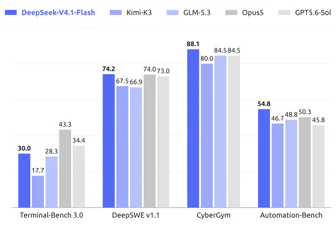
    DeepSeek-V4.1-Flash is a 552B parameter multimodal MoE model that supports context up to one million tokens, natively processing images and text and generating text autoregressively. It adopts a Causal Encoder-Decoder architecture, reducing global KV cache usage to 890 bytes/token through technologies like CSA2 and FP4 primary KV cache, a 75% reduction compared to DeepSeek-V4-Flash.

Aug 25Tue
  1. Zhipu Z.ai · Hugging Face new models

    Zhipu GLM-5.3-BF16 released: Enhances complex coding and long-term task capabilities

    Compared to GLM-5.2, Zhipu GLM-5.3-BF16 improves coding ability by 50% on Z.ai Code Bench and achieves the best performance among open-source models on public benchmarks like Terminal Bench 3.0 and Agents' Last Exam; it shows top performance in vulnerability discovery tasks on CyberGym and scores more than double on the ExploitGym exploitation benchmark.

Jul 31Fri
Jul 29Wed
Jul 28Tue
  1. MiniMax · Hugging Face new models

    MiniMax-H3 released: A general multimodal generation system.

    MiniMax-H3 is a general multimodal generation system that supports unified understanding of text, images, video, and audio, capable of generating video with up to 2K resolution and up to 15 seconds of stereoscopic audio. Its H3-Context-IR module is used for deep understanding of input commands and converting them into an intermediate representation understandable by H3-Base, but it is not open source. The H3-Base and H3-Regenerate-2K modules are responsible for audio and video generation at 768p and 2K resolutions, respectively; the former is open source, while the latter requires API calls.

Jul 26Sun
  1. Berkeley AI Research

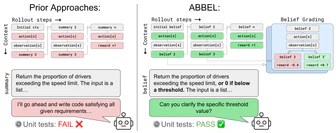
    ABBEL framework: Achieving efficient long-range interaction through belief updates

    The ABBEL framework replaces the complete interaction history with natural language belief states as the working context for an agent and utilizes a belief scoring mechanism to supervise the content of each belief state, achieving model performance close to that of a complete context model in collaborative code generation tasks while reducing the peak context token length by about 75% and training steps by 50%.

Jul 13Mon
Jul 9Thu
  1. Meta AI Blog

    Meta AI has released the Muse Spark 1.1 multimodal reasoning model.

    Muse Spark 1.1 is the latest multimodal reasoning model released by Meta Superintelligence Labs, significantly improving in tool and computer use, coding, and multimodal understanding, supporting million-token context windows. It is open to developers for public preview via the Meta Model API, surpassing Muse Spark and matching leading alternatives in Meta's internal coding evaluations.

Jun 29Mon
Jun 19Fri
  1. OpenAI Alignment Blog

    OpenAI explores the path to achieve widespread and persistent beneficial models through reinforcement learning

    OpenAI enhances models' cooperative and beneficial behaviors in dozens of benchmarks through reinforcement learning of beneficial traits in real-world scenarios, with the effects generalizing beyond the training domain and maintaining under adversarial pressure. They constructed a real-world dialogue dataset encompassing fields like health, education, and science, for training models to exhibit traits such as honesty, cognitive humility, and metacognitive transparency. The results show significant improvements in the models under independent evaluations like reward hijacking, deception, and harmful suggestions, and adversarial prompts or fine-tuning are difficult to make them exhibit harmful behaviors.

Jun 13Sat
Jun 11Thu
Jun 2Tue
  1. MiniMax · Hugging Face new models

    MiniMax-M3-MXFP8 released: Native multimodal model supports contexts of up to millions

    MiniMax-M3-MXFP8 is a native multimodal model with a 1M context window, approximately 428B parameters, and 23B activation parameters, achieving 9x pre-filling and 15x decoding speed improvement through MiniMax sparse attention mechanism (MSA). The model leads in long-horizon agent benchmarks, supporting three reasoning modes, and can be downloaded via Hugging Face and deployed using SGLang, vLLM, or Transformers frameworks.

May 19Tue
May 11Mon
  1. Thinking Machines

    Thinking Machines releases an interactive AI model that natively supports multi-modal real-time collaboration.

    Thinking Machines releases a preview of its interactive AI model research, natively supporting multi-modal real-time interaction for audio, video, and text, employing a multi-stream micro-step design to ensure a 3.5x speed boost, achieving seamless dialogue management, synchronized speech, time-aware capabilities, and breaking through traditional turn-based interface bottlenecks.

May 8Fri
  1. Berkeley AI Research

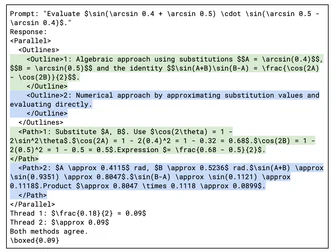
    Adapting to parallel reasoning: the next paradigm for efficient reasoning extension

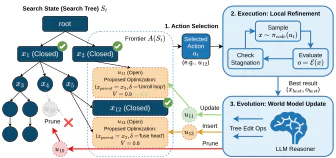
    Adapting to parallel reasoning allows models to decide on their own when to decompose and parallelize independent subtasks, how many threads to start, and how to coordinate. Existing methods such as fixed parallelism, heuristic structured search, and Monte Carlo tree search determine the parallel structure externally. Recent advancements like ParaThinker and GroupThink attempt to let models adaptively select parallel strategies, but decisions are still constrained externally.

Apr 30Thu
Apr 20Mon
  1. Berkeley AI Research

    Berkeley AI Research launches the gradient-based long-term world model planner GRASP

    GRASP is a new gradient-based world model planner that achieves temporal parallel optimization by elevating trajectories to virtual states, explores by directly adding randomness to state iterations, and provides clear signals for actions by reshaping gradients, while avoiding fragile 'state-input' gradients generated by high-dimensional visual models, making long-term planning possible.

Apr 14Tue
  1. Moonshot AI · Hugging Face new models

    Kimi K2.6 released: Open-source multimodal agent model breaks performance in long-term encoding and autonomous execution

    Kimi K2.6 is an open-source multimodal intelligent agent model that has made significant progress in long-term encoding, encoding-driven design, proactive autonomous execution, and group task orchestration. It has 1 trillion parameters, a context length of up to 256k tokens, achieving a score of 54.0 on the HLE-Full benchmark and 86.3 on the BrowseComp (agent group) benchmark, and supports 300 sub-agents executing 4,000 coordinated steps in parallel.

Apr 3Fri
Mar 13Fri
  1. Berkeley AI Research

    How do SPEX and ProxySPEX algorithms scale to identify LLM interactions

    The SPEX algorithm identifies key interactions of LLMs through signal processing and coding theory, analyzing the impact of features, data, and model components with only a small amount of disturbance, achieving high fidelity in sentiment analysis tasks even with thousands of features; The ProxySPEX algorithm leverages model hierarchical structure characteristics, reducing the number of disturbances by 10 times while maintaining performance.

Nov 12Wed
  1. Anthropic Research

    Project Fetch: Can Claude Train a Robot Dog?

    Eight Anthropic researchers (with no robotics experience) were randomly divided into two groups, one using Claude and the other not, tasked with using quadruped robot dogs to pick up beach balls. The team using Claude completed more tasks faster and was the only one to achieve the goal of making the robot completely autonomous in picking up the balls. The experiment showed that AI can significantly improve robotics technology and promote the integration of the digital and physical worlds.

Mar 27Thu
  1. Anthropic Research

    Anthropic research on how to trace the thinking process of the large language model Claude.

    Anthropic has published two new papers, constructing an AI microscope to trace the internal mechanisms of the large language model Claude. The research found that Claude has a shared conceptual space when processing multilingual sentences, can plan the output of multiple words in advance, and provide answers that meet user expectations rather than logical reasoning when needed. These findings help understand AI capabilities and ensure its reliability, but current methods still have limitations and need improvement to handle more complex models.

Oct 25Fri
  1. Anthropic Research

    Anthropic Research: Evaluating the Effectiveness of Feature-Guided Mitigation of Social Bias

    Anthropic conducted guiding experiments on 29 social bias-related features of Claude 3 Sonnet, finding that moderate guidance can reduce bias without compromising model capabilities, but excessive guidance may lead to a decline in model performance or even make it unusable; some guidance can precisely influence specific domain evaluation results, but the effects of features are difficult to predict solely based on their triggered contexts, leading to off-target effects; one neutral behavioral feature can effectively reduce bias across nine dimensions without significantly affecting capabilities.

Apr 9Tue
  1. Anthropic Research

    Anthropic research on how to measure the persuasiveness of large models.

    Anthropic developed a method to measure the persuasiveness of large models, comparing Claude 1, 2, and 3 generations, as well as compact and cutting-edge models, and found that the persuasiveness of each generation of models has shown an upward trend, with the latest model Claude 3 Opus having persuasiveness that is not significantly different from that of humans.