Skip to content
Live
Nov 4Wed
  1. AWS Machine Learning Blog32
    Amazon Quick integrates structured and unstructured data.

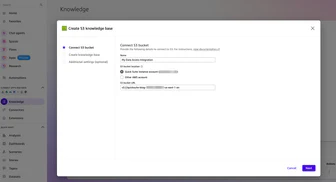
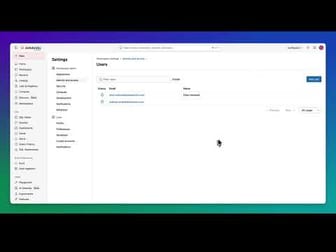
    Amazon Quick integrates structured and unstructured data by connecting Amazon S3 and creating a knowledge base, enabling users to query with a single conversational AI agent. This solution includes a data layer (unstructured content stored in S3 and structured data as semantic datasets), a workspace layer (integrating data types into a single workspace), and an agent layer (custom chat agents linked to the workspace and returning combined responses).

Nov 3Tue
  1. Ai2 Blog

    StateBench: Benchmark for testing large language models to track changes in long document states

    StateBench is a benchmark for testing large language models' ability to track entity state changes in long documents, including four difficulty levels: R-trivial, non-periodic, solvable, and general finite. Research finds that recurrent and hybrid models generalize far better than Transformers when directly trained on these tasks, while cutting-edge models like Gemini 3.8 Flash, Claude Opus 5.5, and GPT-6 Sol still struggle with more complex state tracking issues when input lengths vary.

  2. PyTorch Blog34

    Ray announces the Special Interest Group (SIG) for Accelerators

    Ray announces the Special Interest Group (SIG) for Accelerators, aiming to unite hardware vendors, Ray contributors, and application developers to create a neutral accelerator support roadmap. Initial focus will be on developing test infrastructure, hardware awareness capabilities, and network transmission, prioritizing shared hardware access, reproducible development and testing environments, and broader CI coverage.

  3. AWS Machine Learning Blog43

    Use knowledge distillation to build efficient intelligent agents on Amazon SageMaker AI

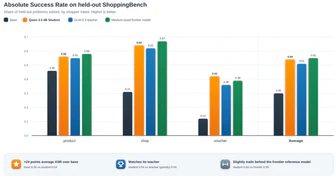
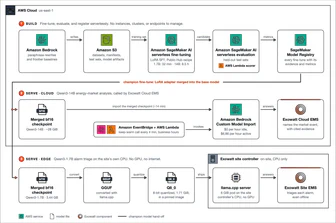
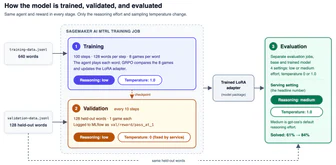
    Use knowledge distillation to fine-tune the shopping assistant on Amazon SageMaker AI, by transferring the behavior of cutting-edge models to small models through sequence-level knowledge distillation (SeqKD), generating reasoning trajectories for task-solving and using them for supervised fine-tuning to achieve efficient low-cost inference. SeqKD only requires the text output of the teacher model, without weights or logits, and is suitable for scenarios where access to the teacher model's internal information is not available, such as API models, and can evaluate the performance of student models through benchmark tests.

Nov 2Mon
  1. Moonshot AI · Hugging Face new models

    Kimi K3.1 Pro Released: Open-Weight Multimodal AI Model

    Kimi K3.1 Pro is an open-source multimodal AI model by Moonshot AI, with 2.8T parameters, 104B activation parameters, and a context window of 1M tokens, demonstrating excellent performance in areas such as coding, 3D creation, and financial research. Compared to Kimi K3, it adopts Gated DSA layers to improve long text processing efficiency and has outperformed competitors like Claude Fable 5.1 and GPT-6 Astra in benchmarks such as Terminal-Bench 4.0.

Oct 30Fri
  1. Ant Group inclusionAI · Hugging Face new models38

    inclusionAI/ZwZ2-9B-GGUF GGUF format weights release

    inclusionAI releases ZwZ2-9B GGUF format weights, belonging to the Zooming without Zooming v2 project, including language models (FP16, Q8_0, Q4_K_M) and visual encoders and projectors (mmproj, FP16, Q8_0, Q4_K_M), requiring pairing with llama.cpp Qwen3.5 multimodal support for use, supporting CLI inference and Web Chat deployment.

  2. Ant Group inclusionAI · Hugging Face new models

    inclusionAI/ZwZ2-4B-GGUF model weights released

    The inclusionAI/ZwZ2-4B-GGUF model weights have been released. This model is part of Zooming without Zooming v2 and is divided into a language model (FP16, Q8_0, Q4_K_M) and a visual encoder and projector (mmproj, FP16, Q8_0, Q4_K_M), offering multiple precision combinations. It needs to be used with llama.cpp (supporting Qwen3.5 multimodal).

  3. Codex releases45

    Codex 0.166.0 released: adding keyboard driver transcription selection, Markdown rendering optimization, and GPT-6.1 Terra support

    Codex 0.166.0 released, adding keyboard driver transcription selection (supporting word, line, and page operations), integrated search and configurable shortcuts, as well as consistent Markdown rendering in asynchronous questions, options, answers, and transcription responses. Also supports GPT-6.1 Terra and adds codex queue --resume feature to resume unloaded threads.

  4. Amazon Science

    Amazon Science explores technology to accelerate language models in travel applications

    Amazon Science combines knowledge distillation (KD) and the Medusa framework to optimize the travel platform LLM. After fine-tuning, KD training, and Medusa head modification, the TinyLlama 1.1B model achieves performance close to the 70B parameter Llama-3.1 teacher in AI travel planning, intelligent filtering, and accommodation description generation scenarios, with costs reduced by two-thirds and speed increased by 10-20 times.

Oct 29Thu
  1. Hugging Face Blog85

    Mistral Large 4 (Le Chonk) released on Hugging Face

    Mistral releases multimodal MoE model Mistral Large 4 (Le Chonk), with approximately 1T total parameters, 49B activation parameters, a context window of 1M tokens, offering two official versions FP8 and NVFP4, as well as GGUF made by Unsloth and llama.cpp teams.

    Why it matters: The original text provides specific scores for the 1T total parameter, 49B activation multimodal MoE model on cybersecurity and coding benchmarks, along with measured throughput for local and endpoint deployment.

  2. ByteDance Seed · Hugging Face new models

    ByteDance-Seed/GenFirst releases: A generative pre-reconstruction method for stable end-to-end latent generation modeling

    ByteDance-Seed/GenFirst trains a latent VAE and combines it with a generative prior to avoid latent collapse, which usually makes end-to-end training unstable. The two-stage plan of this method is used for prior and entropy weights: the first stage lets the prior shape the latent geometry, and the second stage reduces both weights tenfold, allowing the decoder to recover details.

Oct 28Wed
  1. Hugging Face Blog76

    Liquid AI releases LFM3 series: Same 2B backbone derived text, visual, audio, multimodal and decision models

    Liquid AI releases the new generation Liquid Foundation Models, LFM3, deriving six 2B-level models from the shared backbone LFM3-1.7B-Base, covering text, vision, audio, multimodal, and decision, all open weights on Hugging Face.

    Why it matters: Liquid AI derives six modality models from the same 2B-level backbone and provides single-card fine-tuning and edge deployment paths, which can be used to judge the specialization route for small models.

  2. Google Research58

    Google Research introduces a sleep framework: a new method for LLMs to acquire knowledge through continuous learning

    Google Research proposes a sleep framework that enables LLMs to achieve continuous learning through alternating active (awake) and sleep phases; the sleep phase utilizes the MoE and Hope architectures for parameter expansion and knowledge distillation, integrating short-term memory into long-term parameters, supporting the retention of long-context knowledge up to 10M tokens and enhancing complex reasoning capabilities.

  3. Google DeepMind84

    Google DeepMind releases world model Genie 4

    Google DeepMind releases world model Genie 4, which can generate interactive simulated worlds with native audio in real-time, and change weather, camera angles, and scene elements in real-time with text prompts. Genie 4 natively generates environmental sounds and voice conversations for the first time, with characters able to converse in real-time and respond to scene events; Gemini 3.8 Flash acts as a guiding intelligence in the loop, breaking down goals into steps and verifying frame by frame.

    Why it matters: The official disclosure of three capabilities—native audio, real-time text control, and Gemini-guided reasoning—can be used to judge the position of the world model in robotics and content preview.

Oct 27Tue
  1. IBM Research Blog38

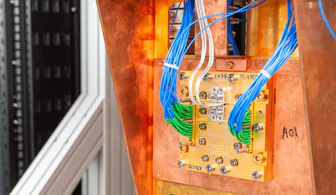
    IBM researchers use l-couplers to connect two IBM Quantum Nighthawk processors

    IBM researchers use four meter-scale l-couplers to connect two IBM Quantum Nighthawk processors, achieving 99% quantum state transfer fidelity, demonstrating reliable quantum information transfer between processors. This new inter-chip connection design is compatible with IBM Quantum Nighthawk and can be scaled to IBM Quantum Starling and more advanced quantum computers.

  2. Ant Group inclusionAI · Hugging Face new models38

    inclusionAI/Ling-3.0-flash-Sante-fp8 released: FP8 quantized medical dedicated large model

    inclusionAI/Ling-3.0-flash-Sante-fp8 released FP8 quantized version, retaining 124B parameters (5.1B/Token) and BF16 performance, reducing memory and improving deployment efficiency, supporting medical inference, research, and tool-assisted workflows, requiring professional manual review. Stable performance on benchmarks like Healthbench, ReDisQA, achieving efficient inference through block FP8 quantization (128x128 blocks).

  3. LangChain Deep Agents releases

    LangChain Deep Agents deepagents-code==0.2.2 release: Security and performance improvements

    The deepagents-code==0.2.2 version of LangChain Deep Agents has been released, including security and performance improvements. New features include GPT-6.1 Terra support, Chinese text input to chat, plugin update detection, etc.; bug fixes include project .env file trust value settings, terminal UI link limits, Git option limits, etc.; performance has been improved by reusing parent process context, optimizing server startup processes, and streamlining transcription rendering, etc. It is recommended to upgrade as soon as possible.

  4. Databricks Blog22

    How is Databricks Free Edition used for teaching?

    Databricks Free Edition allows teachers and students to run full data or AI courses in the browser for free, without a cloud contract or license management, suitable for students and educators worldwide. The platform offers features such as collaborative notebooks, Spark, Delta Lake, Lakeflow, Databricks SQL, and Genie code assistant, supporting courses from introductory programming to AI projects. Skills are applied directly to industry-standard tools, with no conversion costs between production environments and teaching sandboxes.

  5. AWS Machine Learning Blog48

    Building enterprise-grade intelligent retrieval on Amazon Bedrock knowledge base using AWS CDK

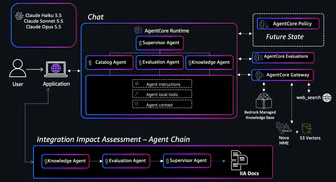
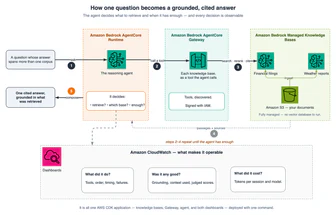
    Building enterprise-grade intelligent retrieval on Amazon Bedrock knowledge base using AWS CDK, providing multi-round planning and tool-driven retrieval through the reasoning agent and AgenticRetrieveStream API, returning referenced answers. The solution deployment includes a CDK application with Amazon S3 corpus, knowledge base, and reasoning agent, supporting semantic routing and multiple retrievals, and built-in Amazon CloudWatch monitoring and evaluation features.

Oct 25Sun
  1. Ant Group inclusionAI · Hugging Face new models58

    inclusionAI/Ling-3.1-flash-base released: a sparse MoE architecture large model with 560B parameters.

    inclusionAI/Ling-3.1-flash-base is released, a sparse MoE architecture large model with 560B total parameters and 25B active parameters. It adopts a hybrid linear attention mechanism (63 KDA + 9 Gated MLA) and performs excellently in 47 cross-domain benchmark tests spanning eight fields. It supports continuous pre-training, domain adaptation, and post-training research. The model is trained with FP8 precision and released with BF16 precision, following the MIT license.

Oct 24Sat
  1. Tencent Hunyuan · Hugging Face new models71

    Tencent Mixuan open-sources Hy-Nomas Interactive World Generation Model Diffusers version

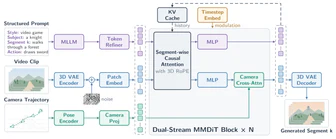
    Tencent's Huyuan has released Hy-Nomas' BF16 Diffusers format distilled weights on Hugging Face. This video world generation model supports multi-round free interaction through text instructions and camera control, generating the same world segment by segment.

    Why it matters: Officially releases distilled BF16 Diffusers weights and supporting benchmarks, allowing readers to judge the practical usage and threshold of multi-round interactive world generation.